Reading Skills Reading Fiction Worksheets for Ages 5-7
5 filtered results
-
From - To
Discover the perfect resource to enhance young learners' reading abilities with our Reading Skills Fiction Worksheets catered for ages 5-7. These engaging worksheets foster a love for reading through imaginative stories and creative illustrations. Each activity strengthens comprehension, vocabulary, and critical thinking while making learning fun and interactive. Structured to support guided or independent reading, our worksheets are specifically designed to align with educational standards, ensuring foundational literacy development. Equip your early readers with the skills they need to succeed and watch their confidence soar as they delve into the captivating world of fiction. Explore today at Kids Academy!
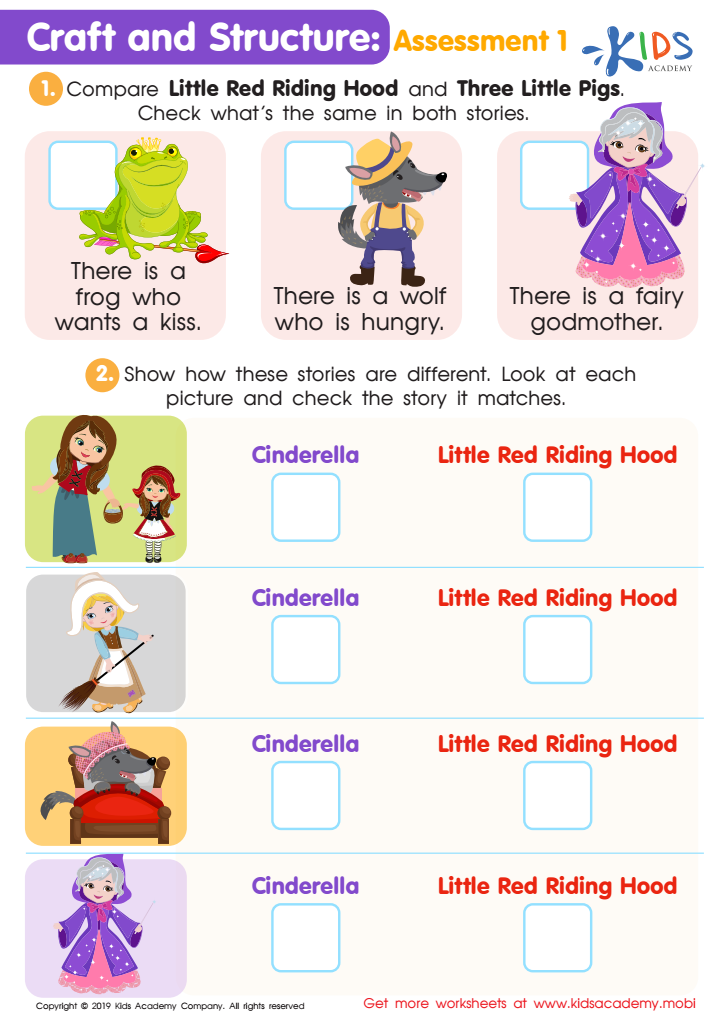
Craft and Structure: Assessment 1 Worksheet
 Assign to My Students
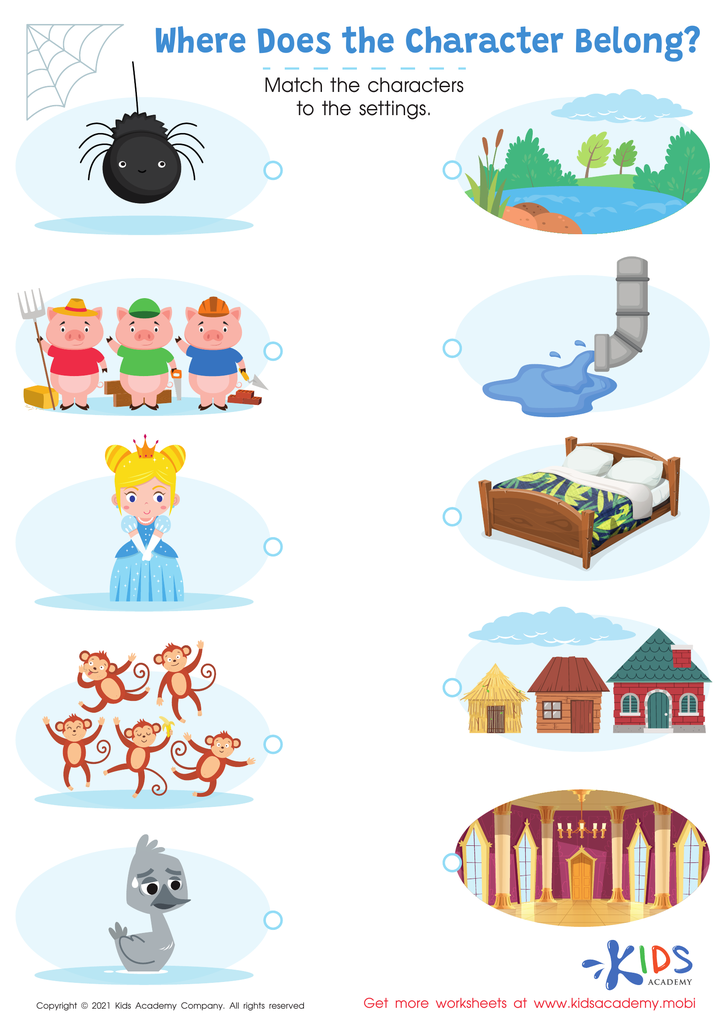
Where Does the Character Belong? Worksheet
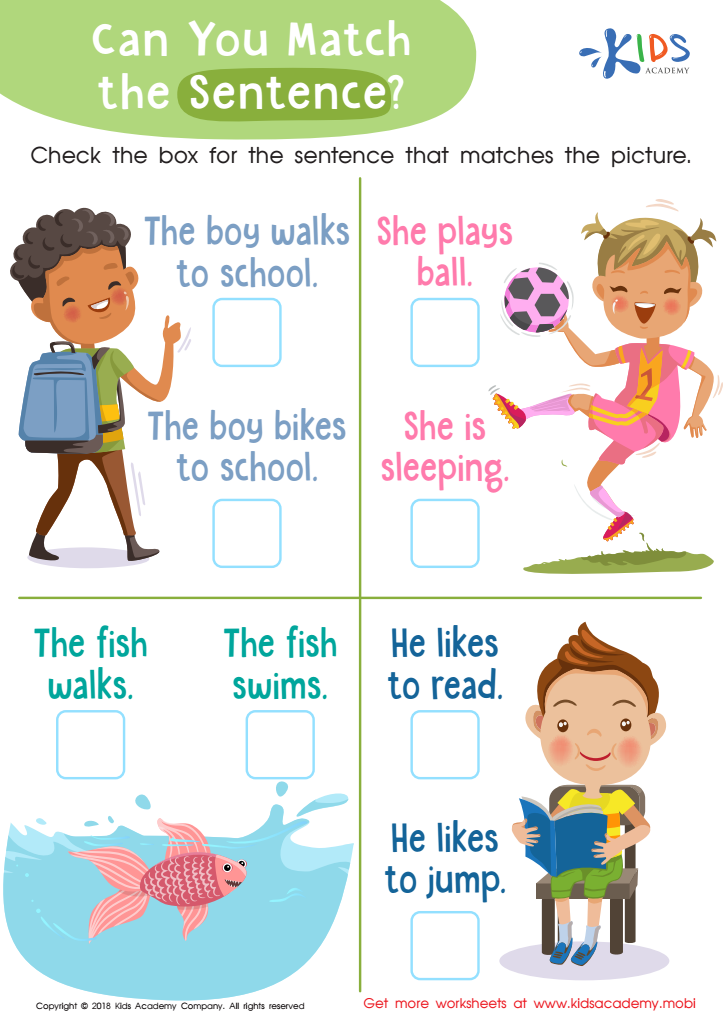
Can You Match the Sentence? Worksheet
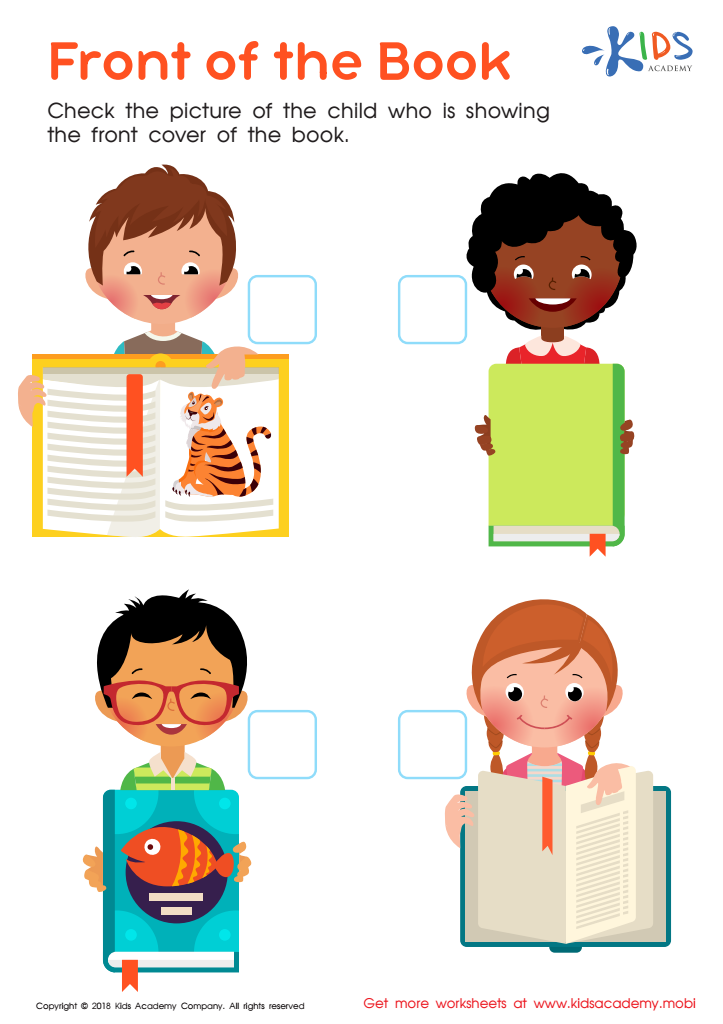
Front of the Book Worksheet
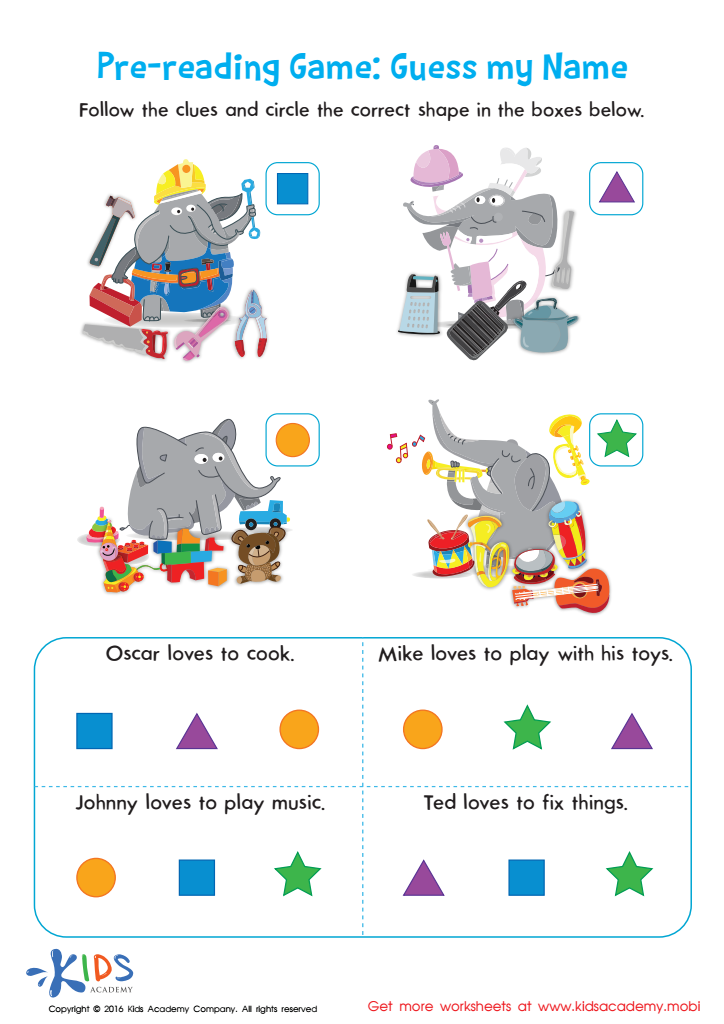
Pre Reading Worksheet Guess My Name








Reading skills, especially in the realm of fiction, are crucial for children aged 5-7 for several reasons. At this developmental stage, children are not just learning to read but reading to learn. Engaging with fiction enhances their vocabulary, comprehension, and general language skills. When children delve into stories, they encounter new words and concepts, broadening their linguistic prowess.
Moreover, reading fiction stimulates a child’s imagination and creativity. Characters, settings, and plots invite children to enter new worlds, think critically, and make connections, thus sharpening their cognitive abilities. These stories often embody moral lessons and highlight empathy, tolerance, and kindness, helping young readers develop emotional intelligence and ethical reasoning.
Social development is another pivotal benefit. Through fictional narratives, children learn to understand different perspectives, building their ability to empathize with others. Additionally, discussing stories with parents or teachers fosters bonding, encouraging a child's social and communication skills.
Lastly, early gratification from reading can instill a lifelong love for literature, promoting educational attainment and personal growth. Therefore, investing time and effort into nurturing reading skills through fiction for children aged 5-7 forms a foundation for future academic success and emotional wellbeing.








