Fine Motor Skills Reading Non-Fiction Worksheets for Ages 5-7
3 filtered results
-
From - To
Foster your child's fine motor skills while enhancing their reading abilities with our specialized non-fiction worksheets designed for ages 5-7. These engaging, educational resources combine fine motor skill exercises, such as tracing, cutting, and coloring, with captivating non-fiction content to keep young learners intrigued and motivated. By working through these worksheets, kids not only improve their dexterity but also develop essential reading comprehension skills. Perfect for both classroom and home use, our worksheets provide a fun, hands-on approach to learning, ensuring that children build a strong foundation in both motor abilities and reading.
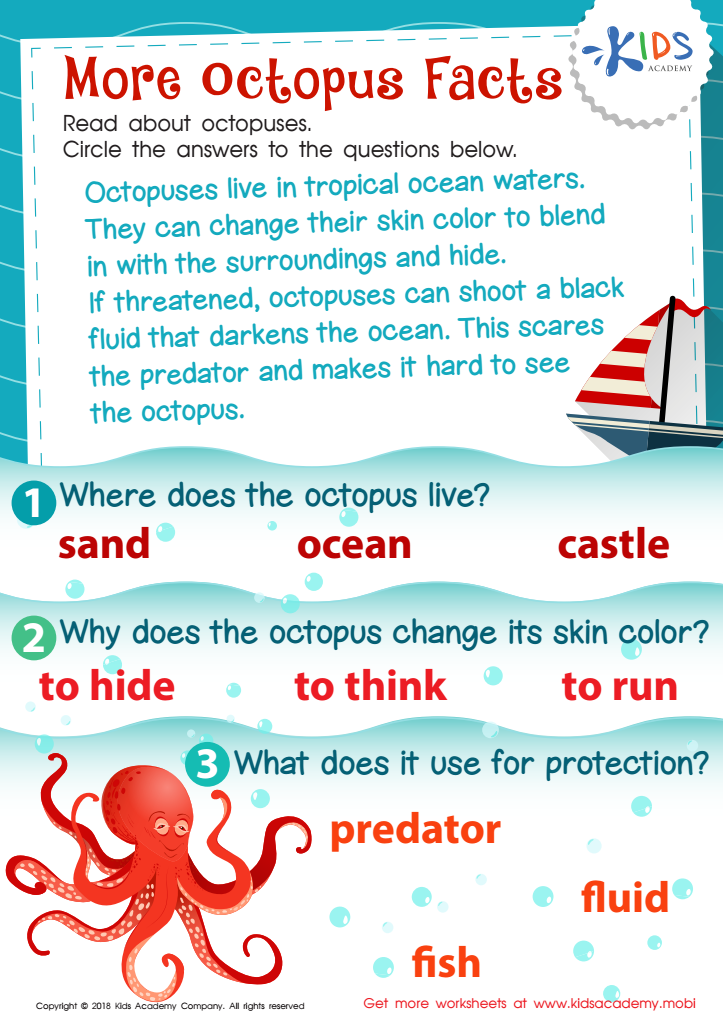
More Octopus Facts Worksheet
 Assign to My Students
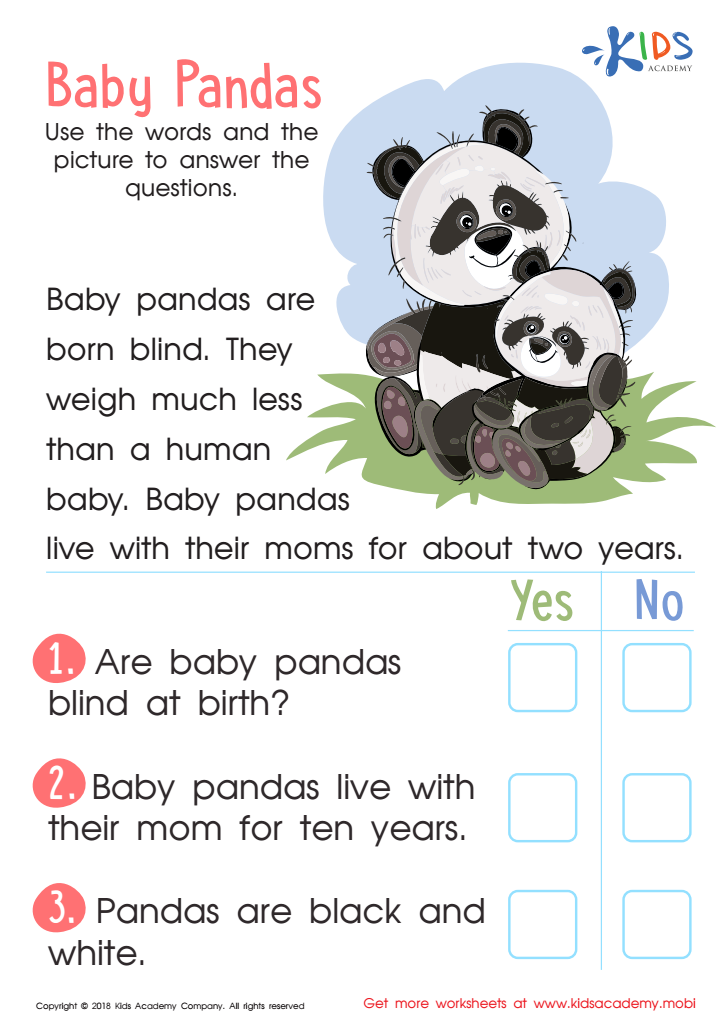
Baby Pandas Worksheet
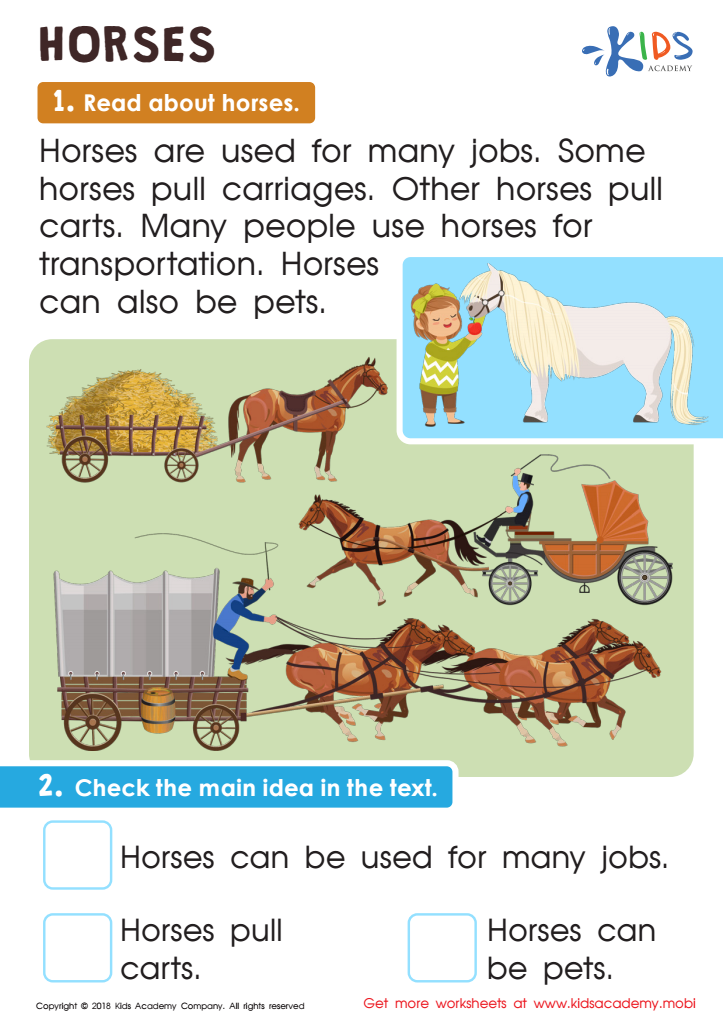
Horses Worksheet








Parents and teachers should place significant importance on the development of fine motor skills and the habit of reading non-fiction for children aged 5 to 7. Fine motor skills, which involve the coordination of small muscles in the hands and fingers, are crucial for a child's ability to perform everyday tasks such as writing, buttoning, and using scissors. Developing these skills early on lays a strong foundation for academic success by ensuring that children can efficiently navigate classroom activities and assignments.
Moreover, introducing children to non-fiction reading at a young age helps build foundational knowledge and critical thinking skills. Non-fiction texts offer an array of facts, real-world concepts, and specialized vocabulary that can enhance a child's understanding of the world. This genre also encourages curiosity, critical thinking, and effective information-processing skills, which are essential for academic development.
Combining fine motor skill activities with non-fiction reading—such as drawing labeled diagrams or writing short reports—allows for a multidisciplinary approach that integrates physical and cognitive growth. Such a holistic educational strategy enables children to become more well-rounded individuals equipped with the necessary skills to thrive both in and out of the classroom. Engaging children in these activities nurtures lifelong learners who are comfortable exploring various subjects and expressing their findings fluently.








