Understanding ecosystems Animals Worksheets for Ages 5-7
3 filtered results
-
From - To
Explore the wonders of nature with our Understanding Ecosystems Animals Worksheets designed specifically for children ages 5-7. These engaging and interactive worksheets introduce young learners to the fascinating relationships between animals and their environments. Through fun activities, kids will discover various ecosystems, identify different animal habitats, and learn about the essential roles animals play within these systems. Our carefully crafted resources promote critical thinking, observation skills, and a deeper appreciation for wildlife. Perfect for home or classroom use, these worksheets make learning about ecosystems enjoyable and educational. Dive into the adventure of nature with our vibrant and informative content!
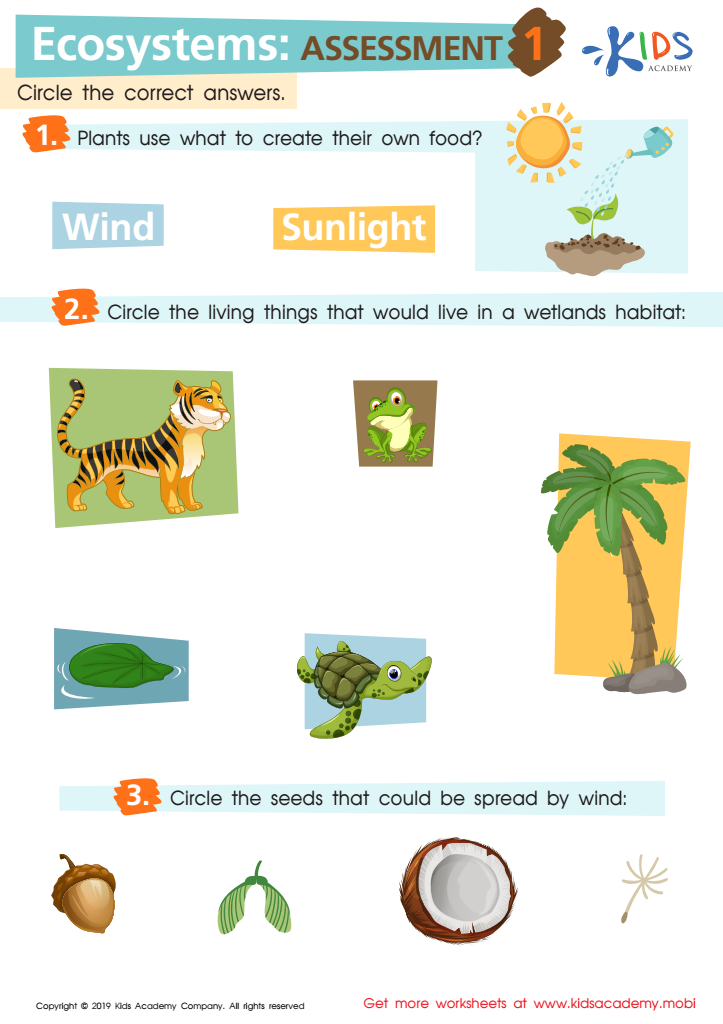
Ecosystems: Assessment 1 Worksheet
 Assign to My Students
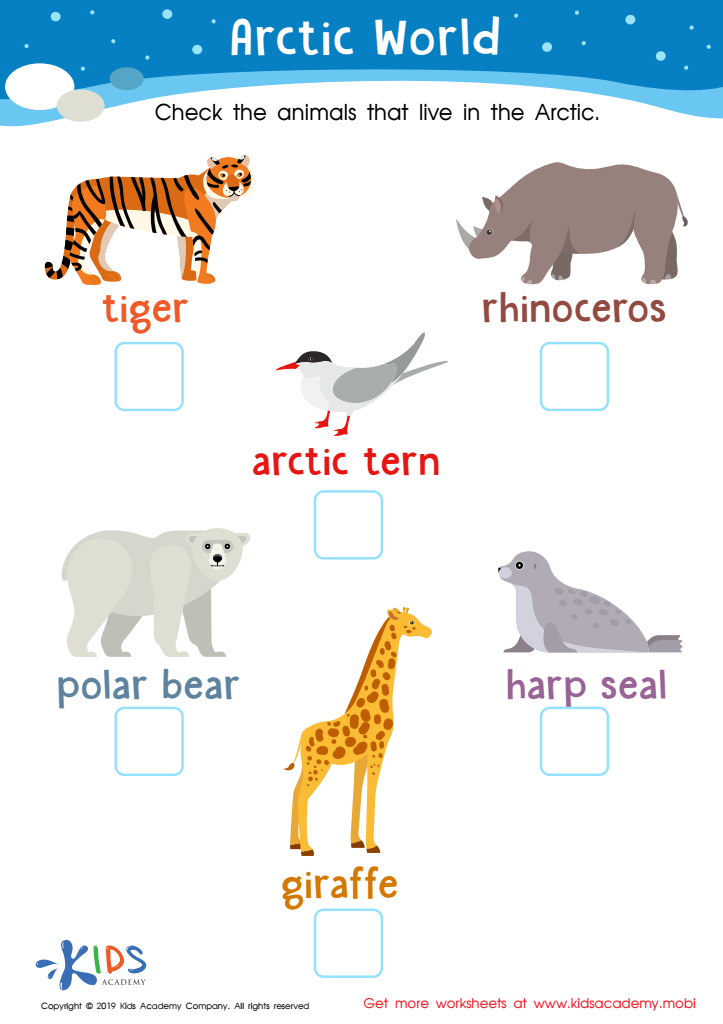
Arctic World Worksheet
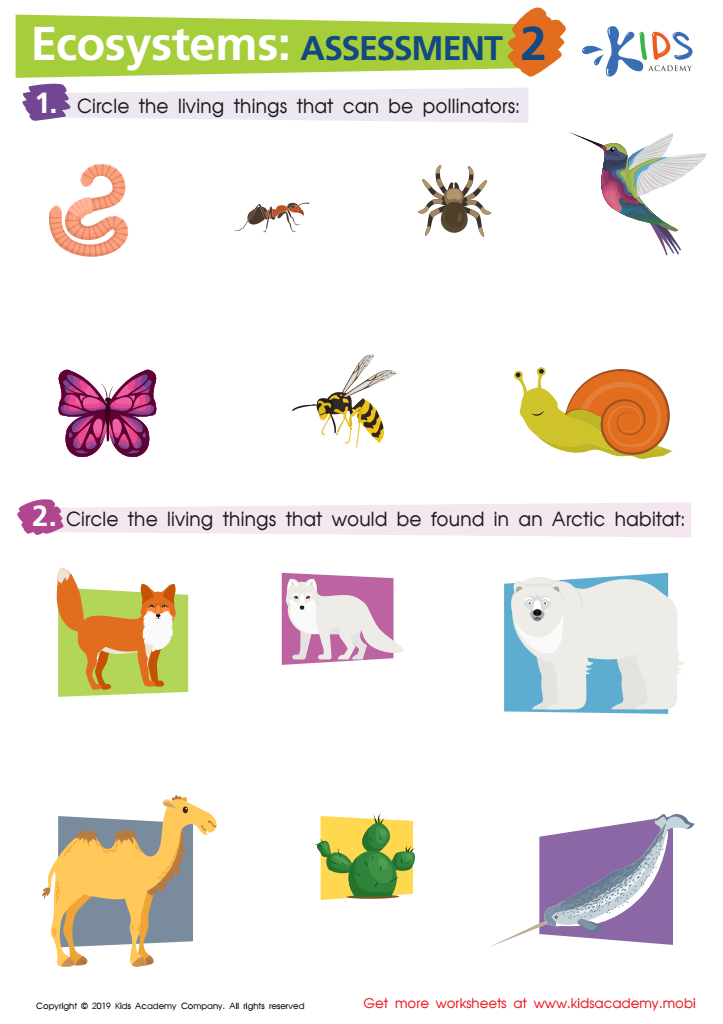
Ecosystems: Assessment 2 Worksheet








Understanding ecosystems and animals is crucial for children ages 5-7 as it lays the foundation for their environmental literacy and fosters a sense of stewardship. At this young age, children are naturally curious about the world around them, and integrating lessons about ecosystems can engage their imagination and develop critical thinking. By learning about animals and their habitats, kids gain an understanding of the interconnectedness of life; they see how individual species depend on one another and their environments to survive.
Teachers and parents play a pivotal role in nurturing this curiosity. By introducing concepts like food chains, habitats, and biodiversity, adults help children appreciate the delicate balance of ecosystems. This knowledge cultivates empathy towards animals and encourages responsible behavior, such as respecting nature and understanding the consequences of pollution and habitat destruction.
Moreover, these lessons nurture a basic understanding of science, which is essential for future learning. Early exposure to such topics can inspire a lifelong interest in ecology and conservation. Ultimately, by caring about children’s understanding of ecosystems, teachers and parents can help shape a generation of informed, compassionate individuals who are more likely to advocate for the planet’s health.








