Decision making skills Community Worksheets for Ages 5-7
3 filtered results
-
From - To
Foster essential decision-making skills in children aged 5-7 with our Community Worksheets. These expertly crafted resources engage young minds with fun, relatable scenarios, helping them learn to make smart choices. By exploring everyday situations, kids practice weighing options, considering consequences, and selecting the best outcomes. Perfect for classrooms or home use, these worksheets are designed to build confidence and critical thinking abilities in social settings. Encourage your child's growth and understanding of community dynamics while fostering a foundation for lifelong decision-making. Visit our webpage to download and start building invaluable skills today!

Is this a Home? Worksheet
 Assign to My Students
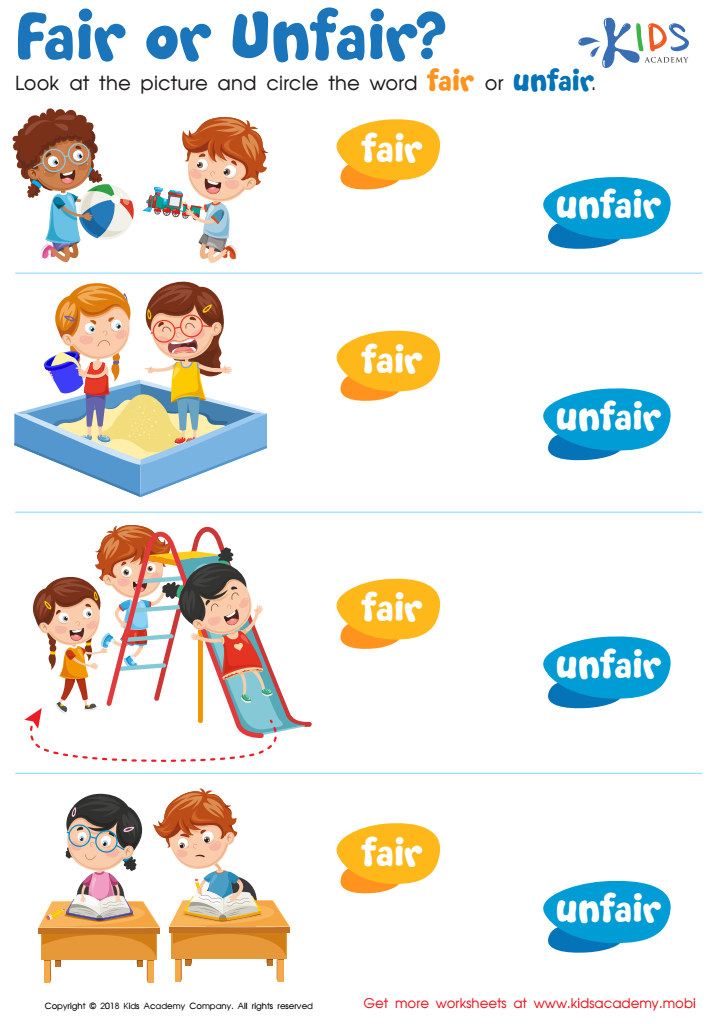
Fair or Unfair Worksheet

Towns Worksheet








Decision-making skills are crucial for young children, as they lay the groundwork for future independence and responsible behavior. For children ages 5-7, developing this skill set within a community setting is incredibly beneficial for several reasons.
Firstly, decision-making in a communal atmosphere gives children controlled environments to exercise choice, practice problem-solving, and observe the consequences of their actions. This immediate feedback loop helps youngsters understand the link between choices and outcomes, promoting smarter and more reasoned decisions in the future.
Secondly, being part of a community encourages collaborative decision-making, teaching children the importance of varying perspectives, empathy, and compromise. These skills not only enhance their social interactions but also build emotional intelligence early on.
Finally, when children feel included in decision-making processes at home, in classrooms, and community settings, their self-esteem and confidence get a significant boost. Parents and teachers who actively nurture these environments contribute to the child's sense of ownership and accountability, diminishing instances of defiance or rebellious behaviors.
Parents and teachers should prioritize incorporating decision-making exercises—such as simple classroom choices or family activity planning—into daily routines to cultivate these essential skills. Early practice in decision-making fosters resilient, thoughtful, and confident individuals well-prepared for the complexities of adolescence and adulthood.








