
Word association Grammar Worksheets for Ages 5-7
4 filtered results
Difficulty Level
Grade
Age
-
From - To
Subject
Activity
Standards
"Word association Grammar Worksheets for Ages 5-7" from Kids Academy offer young learners an engaging way to improve their language skills. These fun, educational worksheets help children connect words, boost vocabulary, and understand grammar in an intuitive manner. Perfect for kids aged 5-7, they inspire creativity and critical thinking, making learning enjoyable. Bright and colorful, these worksheets are designed to hold children's attention while teaching essential grammar concepts. Parents and educators alike will find them an invaluable tool to support early literacy development at home or in the classroom, ensuring foundational skills are built effectively and enjoyably.
Favorites
With answer key
Interactive
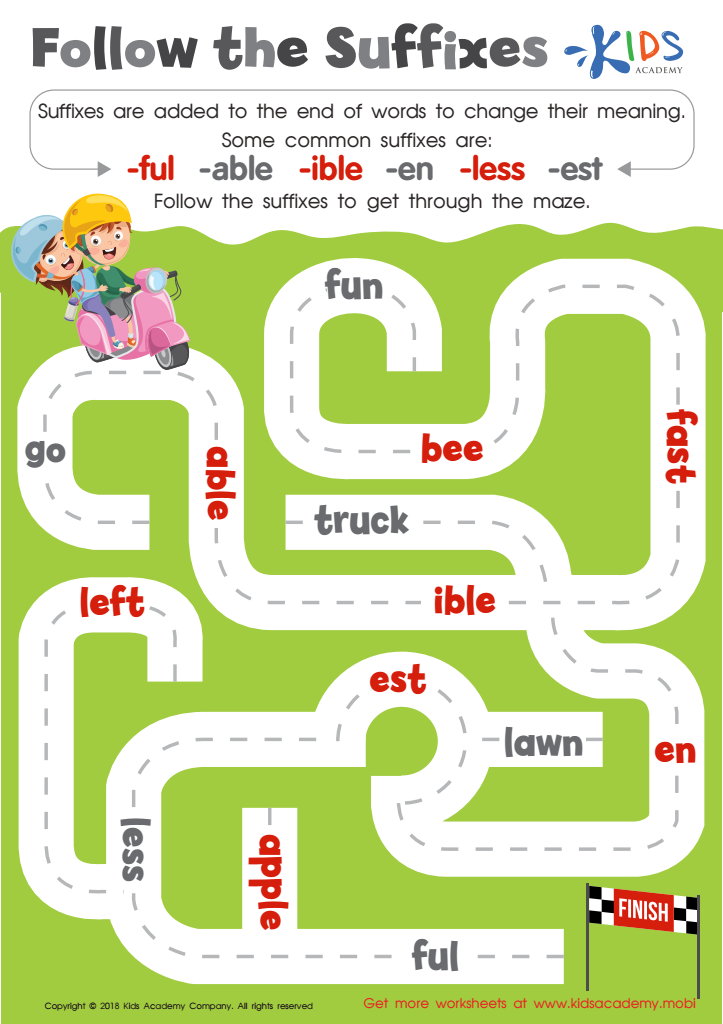
Reading: Follow the Suffixes Worksheet
Students use suffixes to find the right way through a maze in this enjoyable activity! Understanding suffixes helps kids decode and comprehend more words, leading to better reading fluency. A great addition to your reading classes, keep this printable close!
 Assign to My Students
Reading: Follow the Suffixes Worksheet
Worksheet
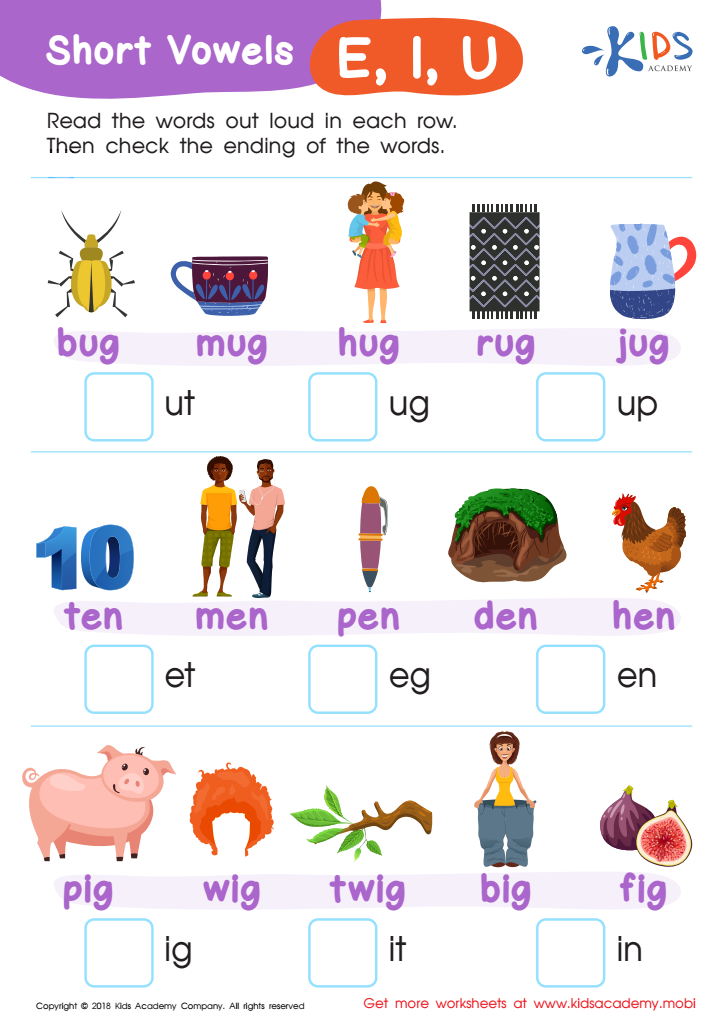
Short Vowels /e/, /i/, and /u/ Worksheet
Your emergent reader can have fun while practicing their short vowel sounds with this free, brightly colored worksheet. They'll identify one-syllable words by their pictures, then match the correct ending for each. They'll gain an understanding of how short vowel sounds vary in closed syllables with different endings, without even realizing it!
Short Vowels /e/, /i/, and /u/ Worksheet
Worksheet
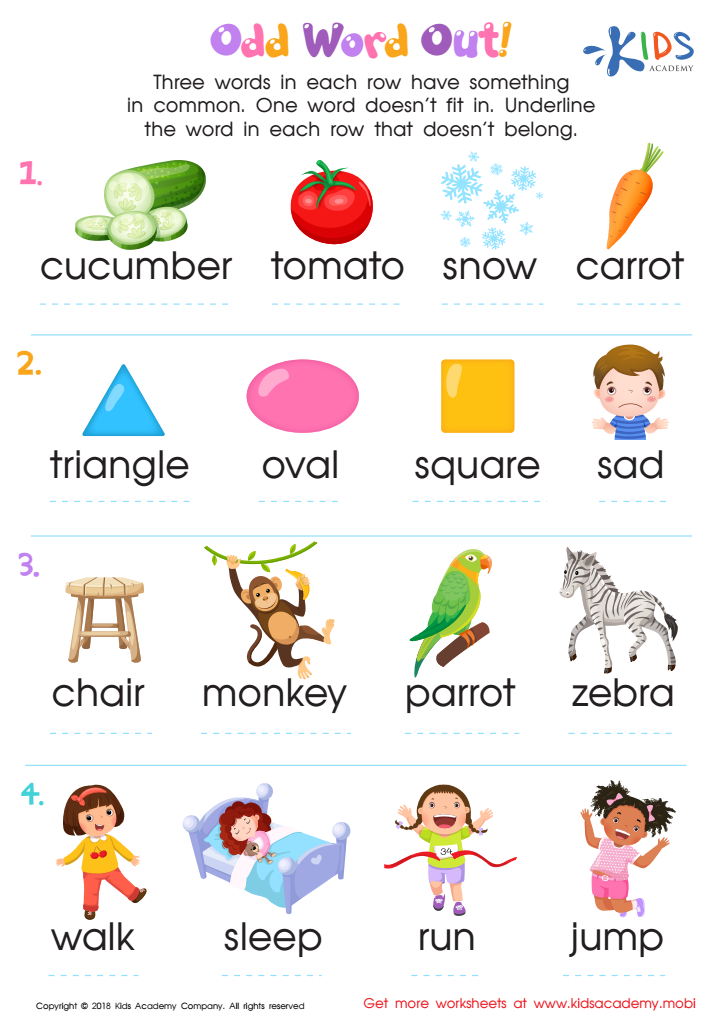
Odd Word Out Worksheet
Ask your child to name all pictures in each row and see if there's something they share. Then, have them identify the odd one out and underline it. Repeat for all words in the rows to help them understand how to identify words.
Odd Word Out Worksheet
Worksheet
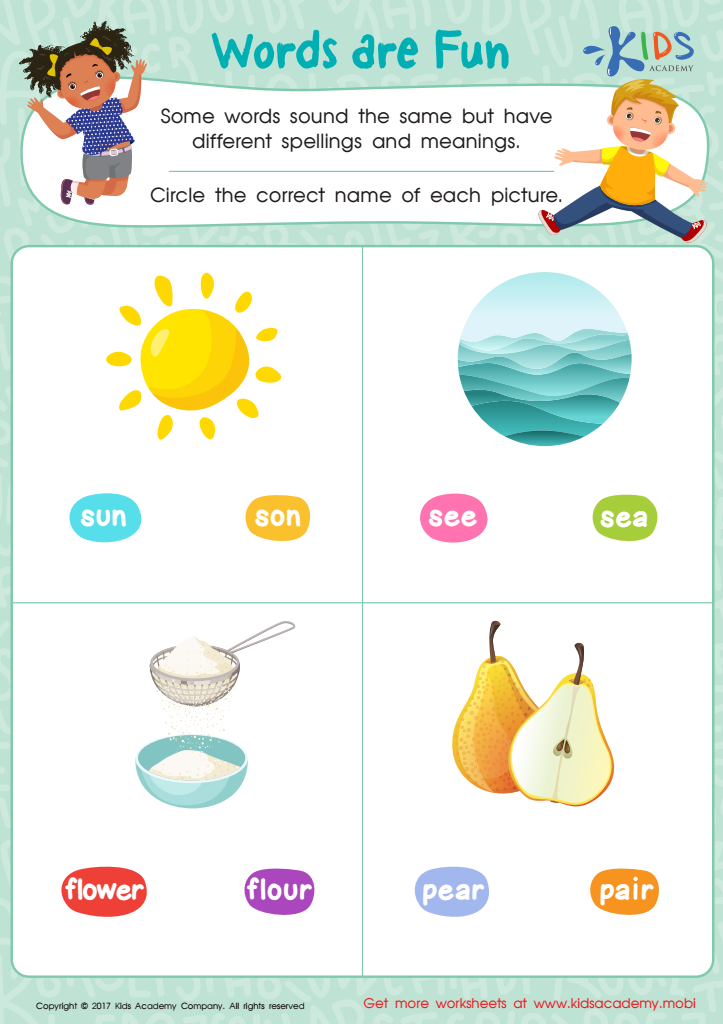
Words Are Fun Worksheet
Homonyms are words that sound the same but have different meaning and spelling. Young authors may get confused. This PDF worksheet helps them practice by matching the homonyms to pictures. They'll also build fine motor skills, important for legible writing.
Words Are Fun Worksheet
Worksheet
Join Kids Academy for Free
Who is primarily going to use this learning content?



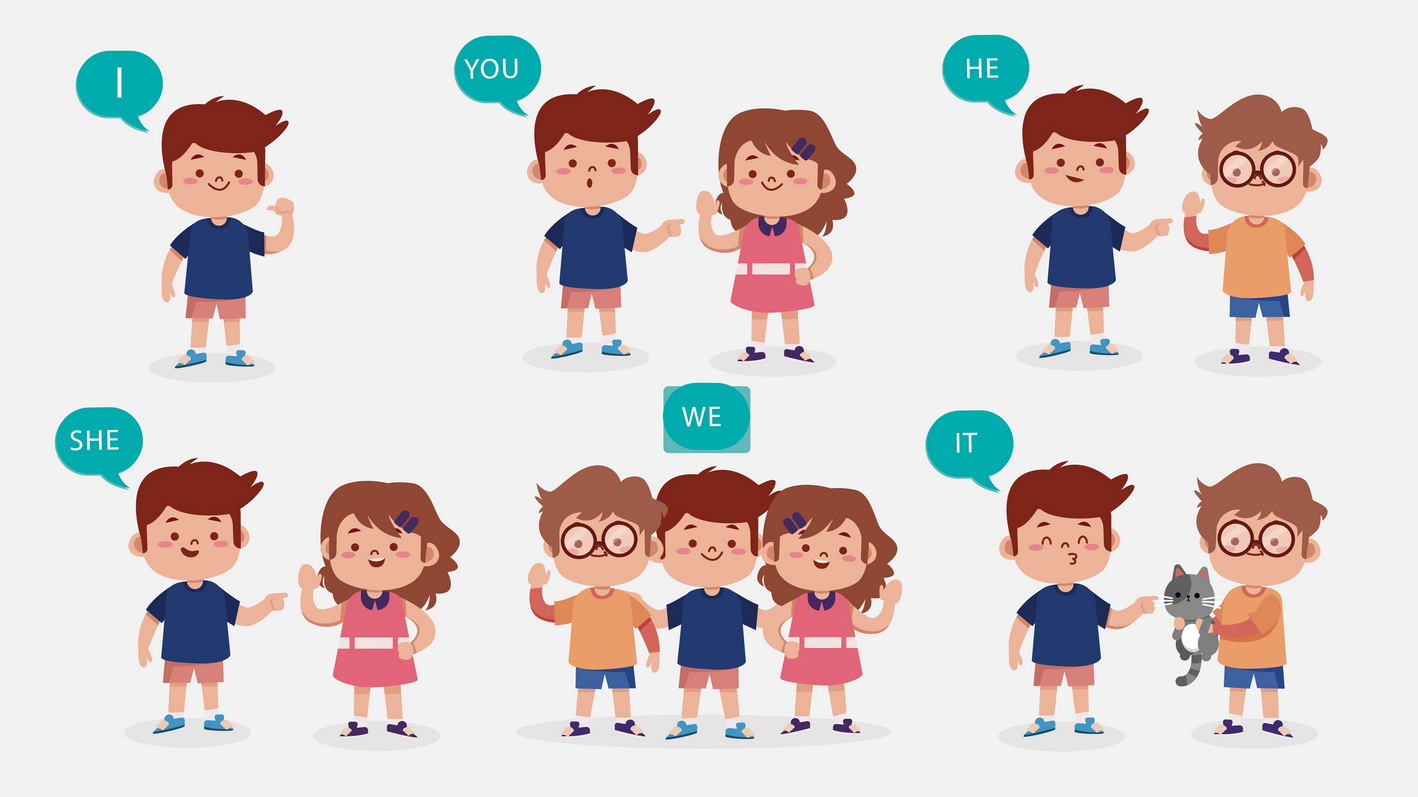



Word association grammar is fundamental for children aged 5-7 because it lays the groundwork for essential language and cognitive skills. At this stage, children's brains are in a critical period for language development. Introducing them early to ways of connecting words facilitates better understanding and usage of language.
First, word association enhances vocabulary. When children learn to link words through associations like categories (e.g., animals, foods) or relationships (e.g., opposites, synonyms), their word pool expands, making communication more effective.
Second, it bolsters reading comprehension. Recognizing how words are related, children can make sense of new texts faster, understanding stories and information more deeply. This is crucial since reading comprehension is a predictor of academic success.
Third, it sharpens critical thinking. Engaging in word association activities requires children to think about relationships, compare and contrast different words, and explore multiple meanings. Such cognitive exercises improve problem-solving skills.
Lastly, it improves writing abilities. When children understand grammar and word associations, they structure their sentences better, making their narratives clearer and more engaging.
In essence, word association grammar for ages 5-7 develops a child’s language proficiency, enhances academic readiness, and supports cognitive growth. Parents and teachers fostering these skills provide children with tools critical for lifelong learning and effective communication.








