Phonics Skills Tracing Words Worksheets for Ages 5-7
3 filtered results
-
From - To
Enhance your child's phonics skills with our engaging tracing words worksheets for ages 5-7! These interactive worksheets are designed to help young learners develop essential literacy skills through fun tracing activities. Each worksheet focuses on reinforcing phonetic awareness, letter recognition, and spelling practice. By tracing vibrant, themed words, children will improve their writing skills while gaining confidence in language learning. Ideal for home or classroom use, our resources are tailored to spark curiosity and foster a love for reading. Support your child's educational journey with our phonics skills tracing worksheets today and watch them thrive in their learning experience!
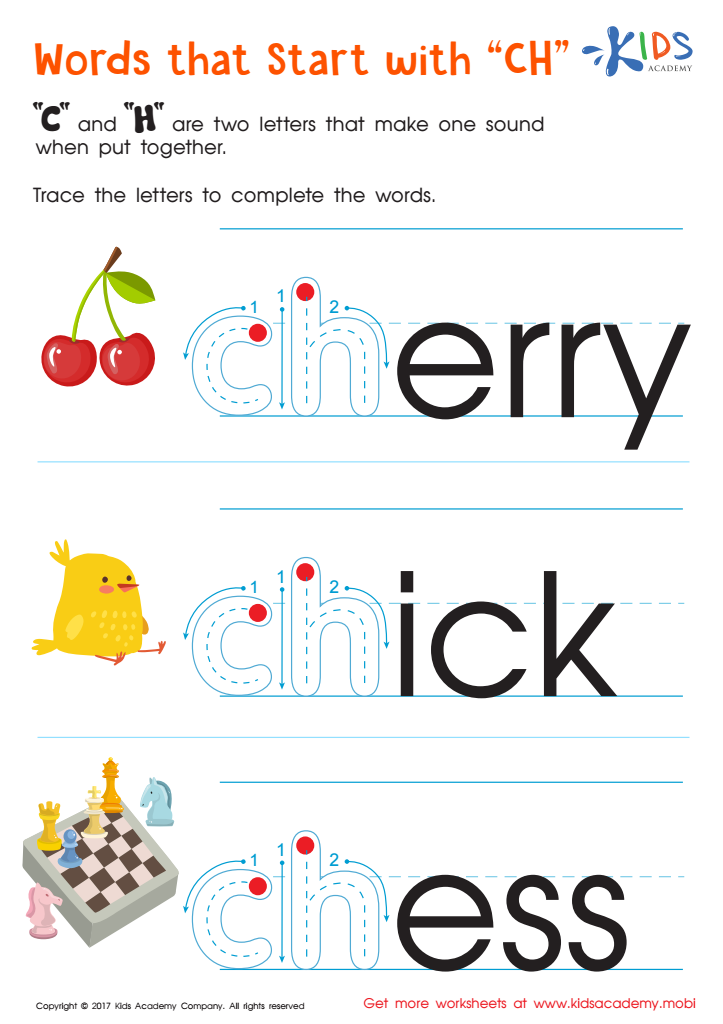
Words That Start with "ch" Spelling Worksheet
 Assign to My Students
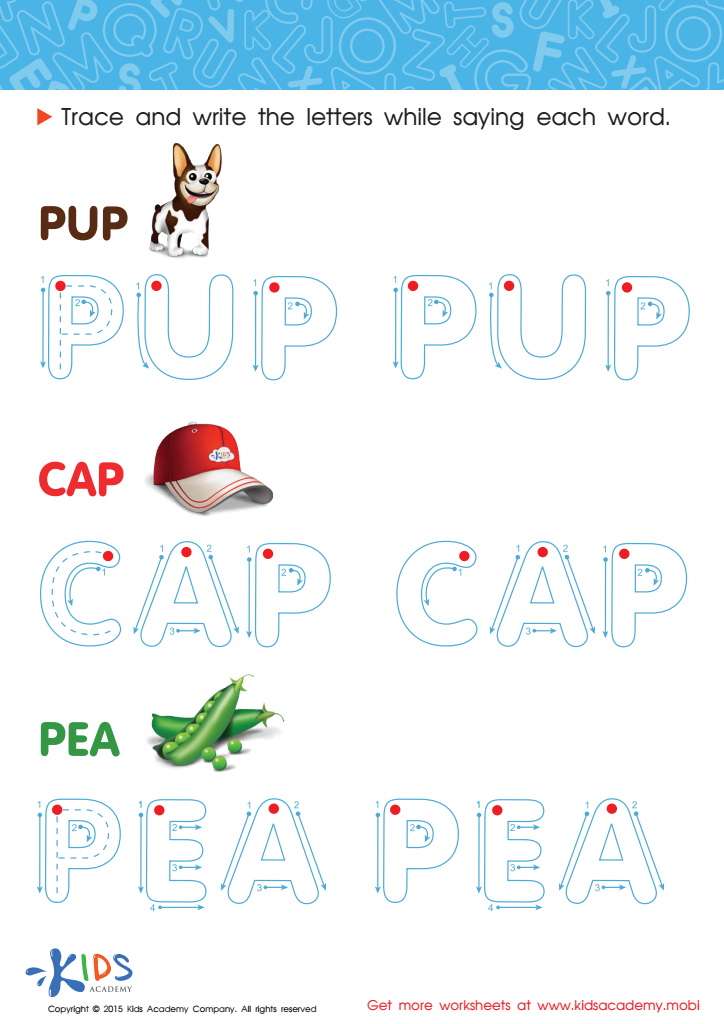
A Pup, a Cap and a Pea Spelling Worksheet
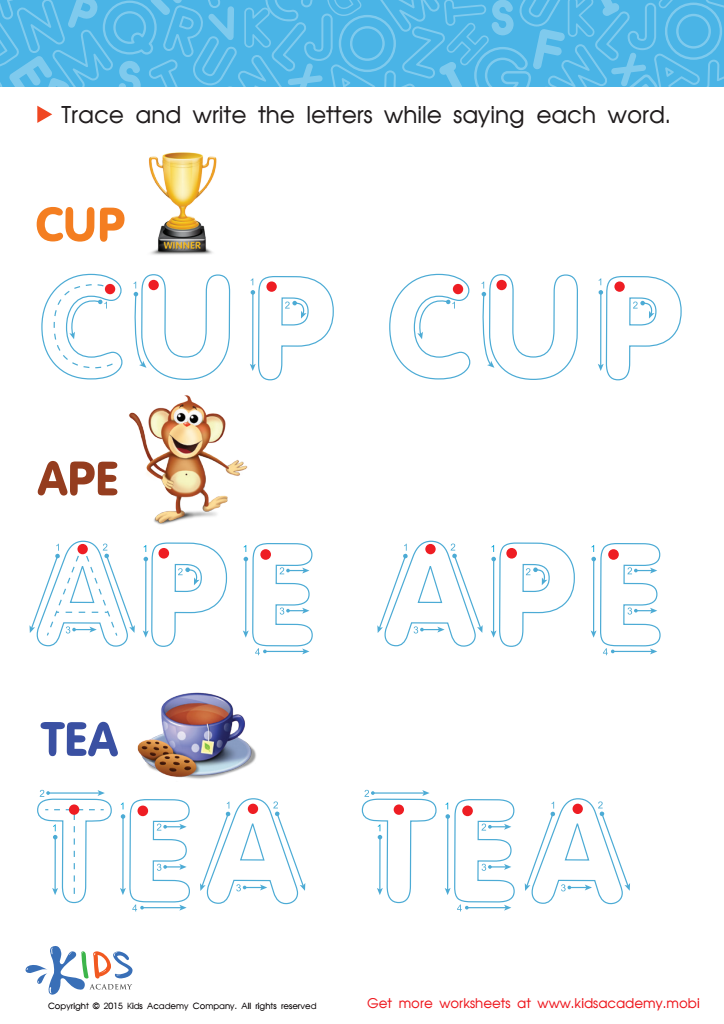
A Cup, an Ape and Tea Spelling Worksheet








Phonics Skills Tracing Words is crucial for children aged 5-7 as it lays the foundation for literacy development. At this early stage, children are in the process of learning how sounds correspond to letters, which is essential for reading and writing. Tracing words helps reinforce phonemic awareness, enabling students to recognize and manipulate sounds in spoken language. This skill is a stepping stone for decoding unfamiliar words and understanding the relationship between sounds and spellings.
Moreover, tracing provides a multi-sensory learning experience that is particularly effective for young learners. It enhances fine motor skills as children practice writing letters and words, further integrating their cognitive and physical abilities. Engaging in phonics activities can also enhance vocabulary acquisition, making reading more enjoyable and meaningful for children. By focusing on tracing words, parents and teachers cultivate a supportive environment for developing strong reading habits.
Ultimately, being proficient in phonics can lead to increased confidence and success in literacy, influencing children's overall academic performance and future opportunities. Supporting phonics skills during these formative years equips children with essential tools for effective communication, comprehension, and lifelong learning. Therefore, it is vital for both parents and teachers to prioritize and encourage phonics activities.








