Fine motor skills improvement ABC Letters Worksheets for Ages 5-8
3 filtered results
-
From - To
Enhance your child's fine motor skills with our engaging ABC Letters Worksheets designed specifically for ages 5-8. These worksheets are perfect for developing hand-eye coordination and dexterity while reinforcing alphabet recognition. Each activity combines fun and education, allowing children to practice tracing, coloring, and connecting letters in creative ways. As they work through these interactive tasks, they'll boost their writing ability and confidence in learning the alphabet. Our carefully crafted worksheets not only support academic growth but also make learning a joyful experience. Explore our selection and set your child on a path to success while refining their essential fine motor skills!
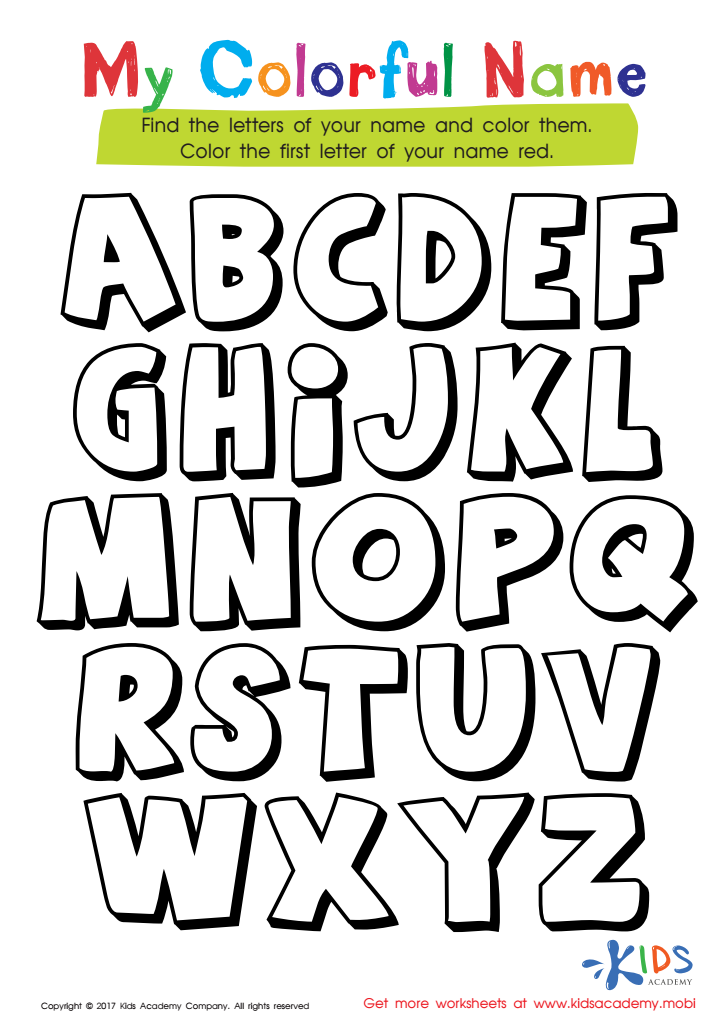
My Colorful Name Worksheet
 Assign to My Students











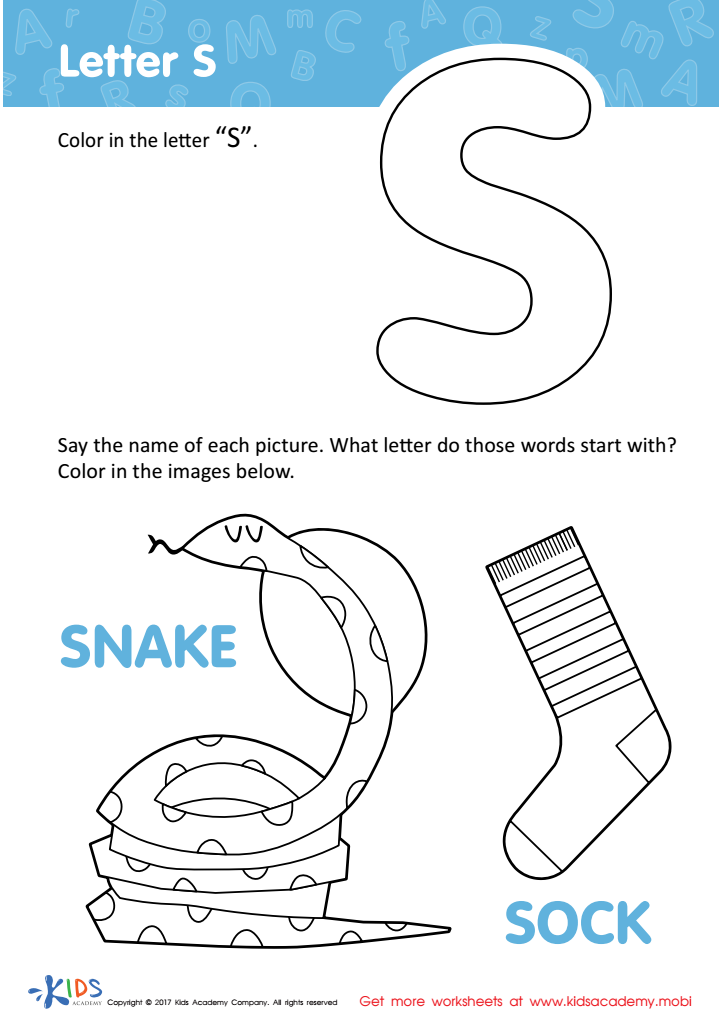
Letter S Coloring Sheet
Assign to My Students
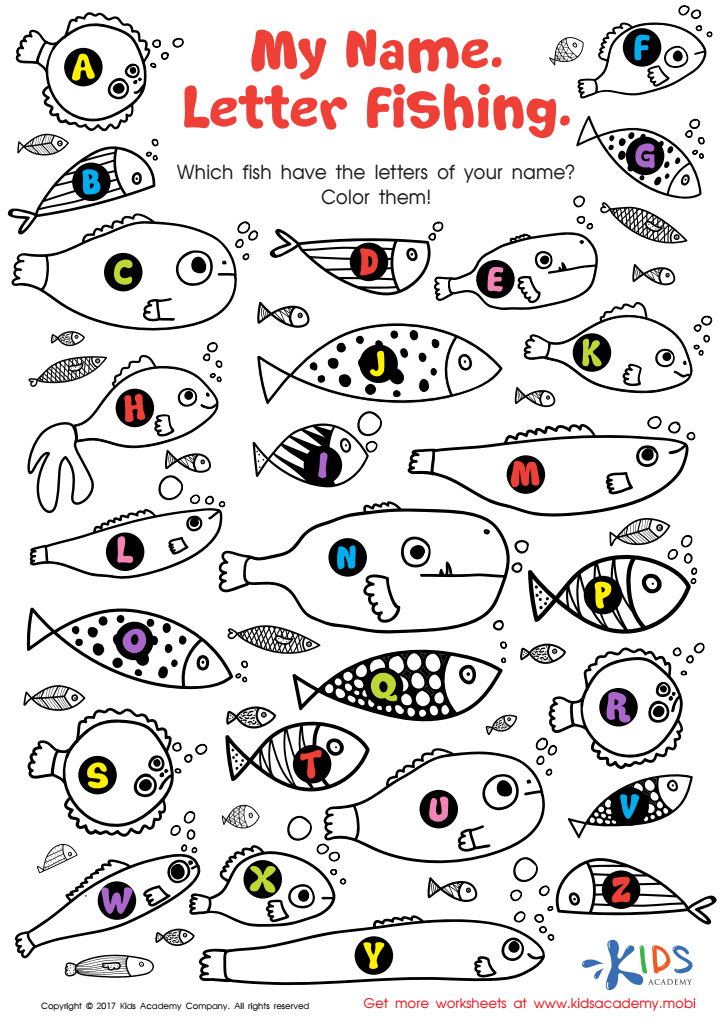
My Name: Letter Fishing Worksheet
Assign to My Students








Fine motor skills are crucial for children's overall development, particularly for those aged 5-8, as they lay the foundation for various academic and daily tasks, including writing, drawing, and self-care activities. During this crucial period, children are learning to recognize letters and their sounds, making fine motor skills integral to their literacy development. Improvement in fine motor skills enables young learners to hold pencils properly, control their movements, and create clearer, more legible letters, which directly influences their reading and writing abilities.
Parents and teachers should prioritize fine motor skill improvement because these skills also promote cognitive development and problem-solving abilities. Engaging children in activities like tracing, cutting, and utilizing manipulatives enhances their concentration, hand-eye coordination, and dexterity—all essential for academic success.
Moreover, strong fine motor skills build children's confidence when they conquer tasks requiring precise movements. This confidence extends into their social interactions, fostering better communication and collaboration with peers. By emphasizing fine motor skill development, parents and teachers equip children with the essential tools they need for lifelong learning, ultimately supporting their growth into capable, independent individuals. Encouraging this improvement fosters not just academic success but a whole generation of confident, skilled learners.







