Motor skills development ABC Letters Worksheets for Ages 5-8
3 filtered results
-
From - To
Enhance your child's motor skills while they learn the ABCs with our "Motor Skills Development ABC Letters Worksheets" designed for ages 5-8. These engaging worksheets provide a fun and interactive way for children to practice tracing, cutting, and forming letters. Each activity targets fine motor skills, which are essential for writing, drawing, and daily tasks. The colorful, age-appropriate designs keep children motivated and eager to learn. With a variety of exercises, your child will build confidence and improve their handwriting while exploring the exciting world of letters. Download now and watch their skills soar as they master the alphabet!
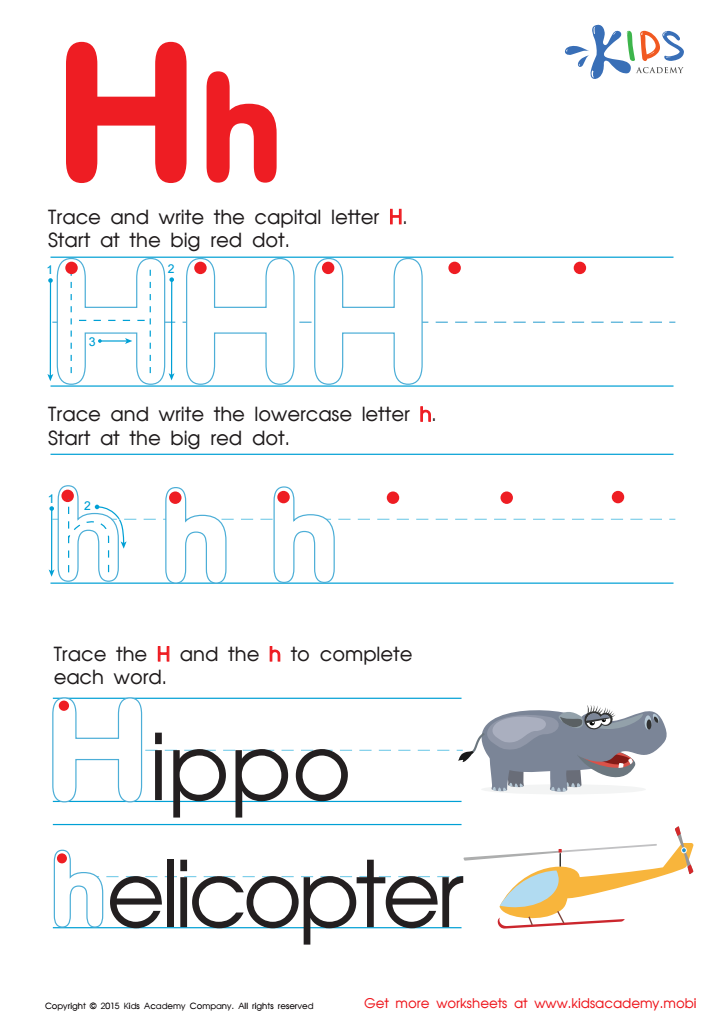
Letter H Tracing Page






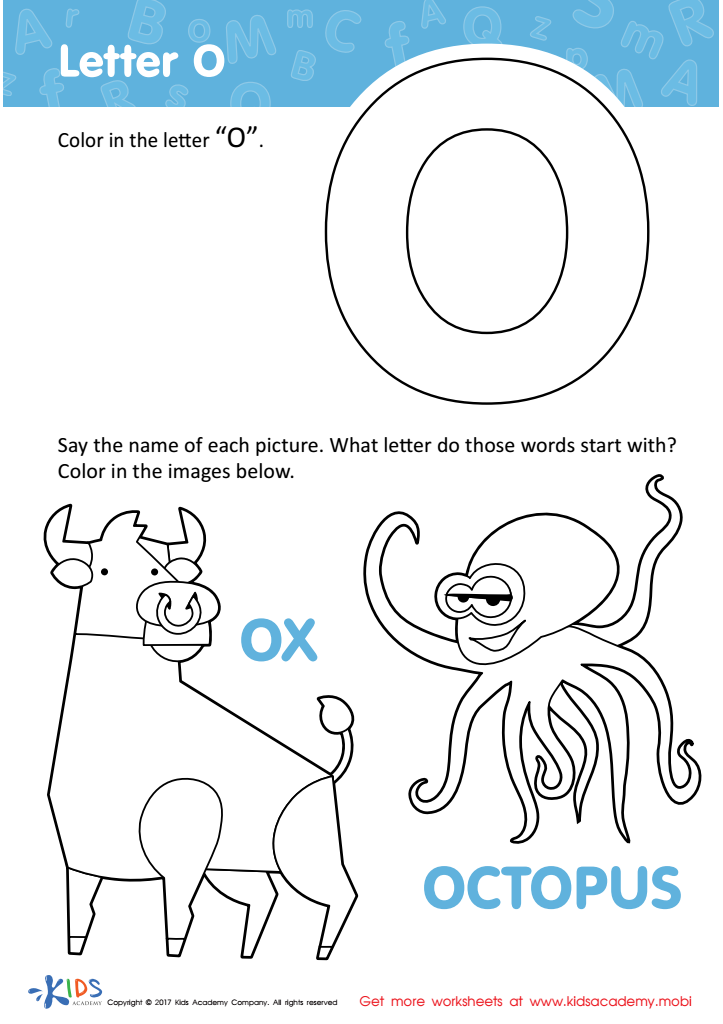
Letter O Coloring Sheet
 Assign to My Students
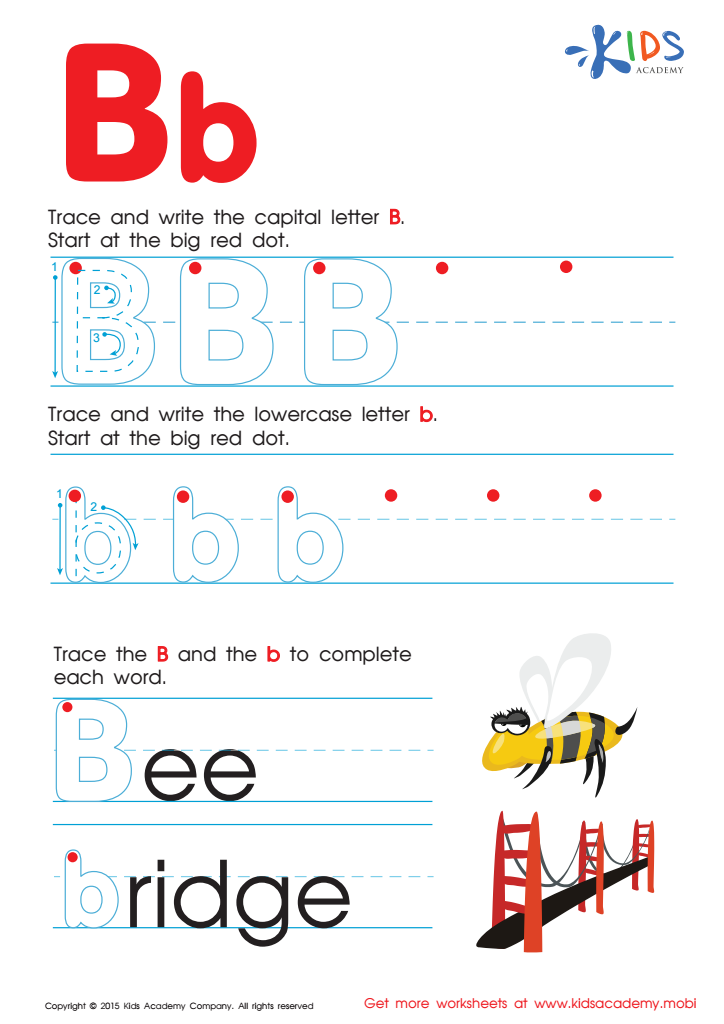
Letter B Tracing Page







Motor skills development, particularly regarding ABC letter formation for ages 5-8, is crucial for several reasons. First, fine motor skills are foundational for a child’s overall development. Mastery in these skills enhances a child’s ability to hold a pencil, use scissors, and perform everyday tasks, which fosters independence and confidence.
Second, learning to write letters correctly impacts literacy skills. When children practice the formation of each letter, they not only improve their handwriting but also strengthen their understanding of phonetics and letter recognition. This connection between physical writing and cognitive processing is vital, as well-executed motor functions enable children to focus on the content of their writing instead of struggling with letter shapes.
Moreover, good motor skills correlate with academic performance. Children with proficient motor skills are often better equipped to engage in classroom activities, leading to increased participation and comprehension. Lastly, these skills promote social interactions as children often collaborate on writing and drawing projects, enhancing communication and teamwork.
Overall, parents and teachers should emphasize motor skills development, as it forms an essential building block for children’s learning trajectories, emotional well-being, and future academic successes.







