
Reading practice Alphabet Worksheets for Ages 5-8
6 filtered results
Difficulty Level
Grade
Age
-
From - To
Subject
Activity
Standards
Boost your child's reading skills with our engaging Alphabet Worksheets designed for ages 5-8. Each worksheet offers fun, educational activities that help kids practice letter recognition, phonics, and early reading skills. These worksheets feature vibrant illustrations and interactive exercises to captivate young minds and make learning a joyous experience. Perfect for at-home practice or classroom use, our Alphabet Worksheets are a valuable resource for building a strong reading foundation. Help your child gain confidence and enhance their literacy skills with our expertly crafted worksheets. Visit our page to explore and start your reading adventure today!
Favorites
With answer key
Interactive
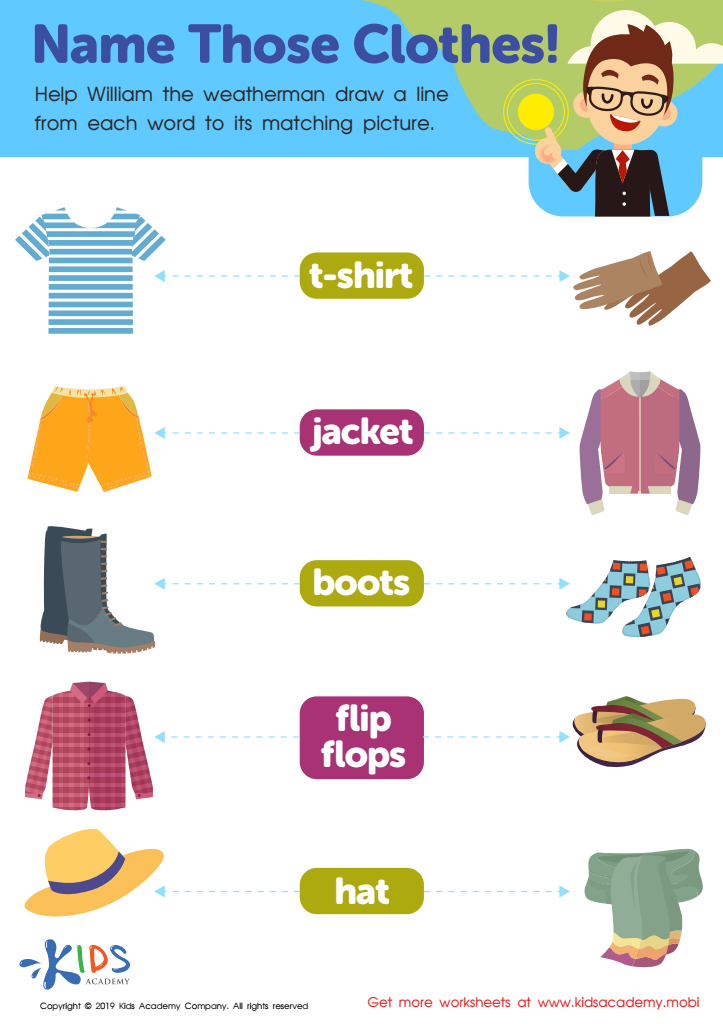
Name Those Clothes Worksheet
This worksheet will help your preschooler build their vocabulary, develop life-skills and work on fine motor skills. They'll analyze which clothing goes with the weatherman and match it to the word. It's a fun and interactive way to recognize high-frequency words.
 Assign to My Students
Name Those Clothes Worksheet
Worksheet
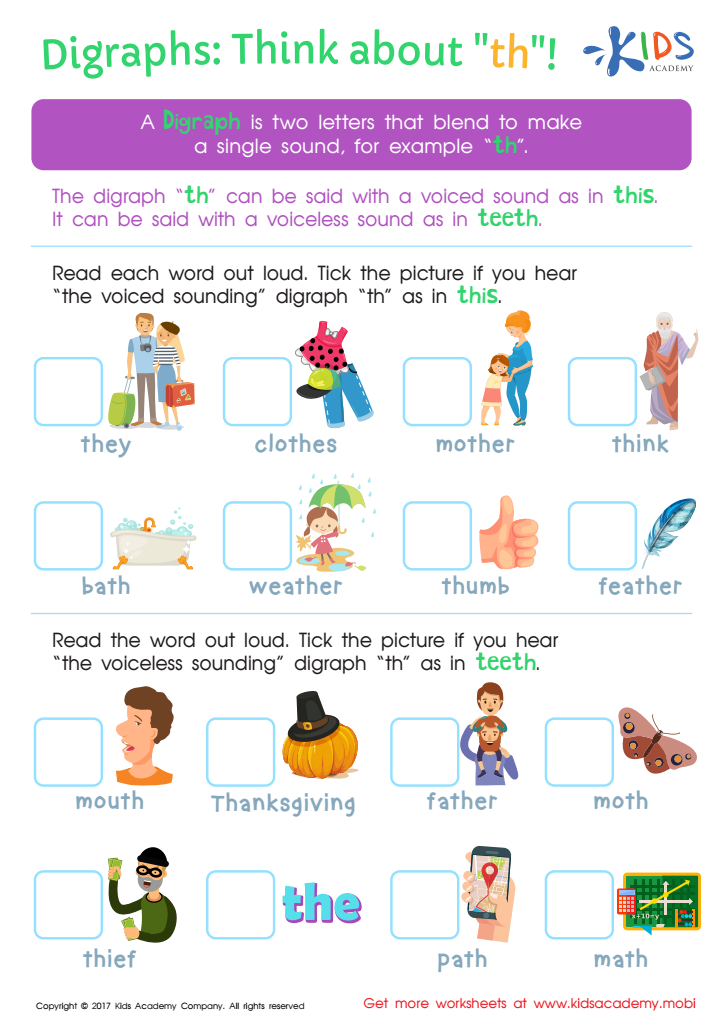
Digraphs: Think About "th" Worksheet
Help your child master phonics with this illustrated digraph Th printable worksheet. It will help recognize "Th" words, differentiate voiced and voiceless sounds and understand key concepts. Use similar words while they work to reap its full benefits!
Digraphs: Think About "th" Worksheet
Worksheet
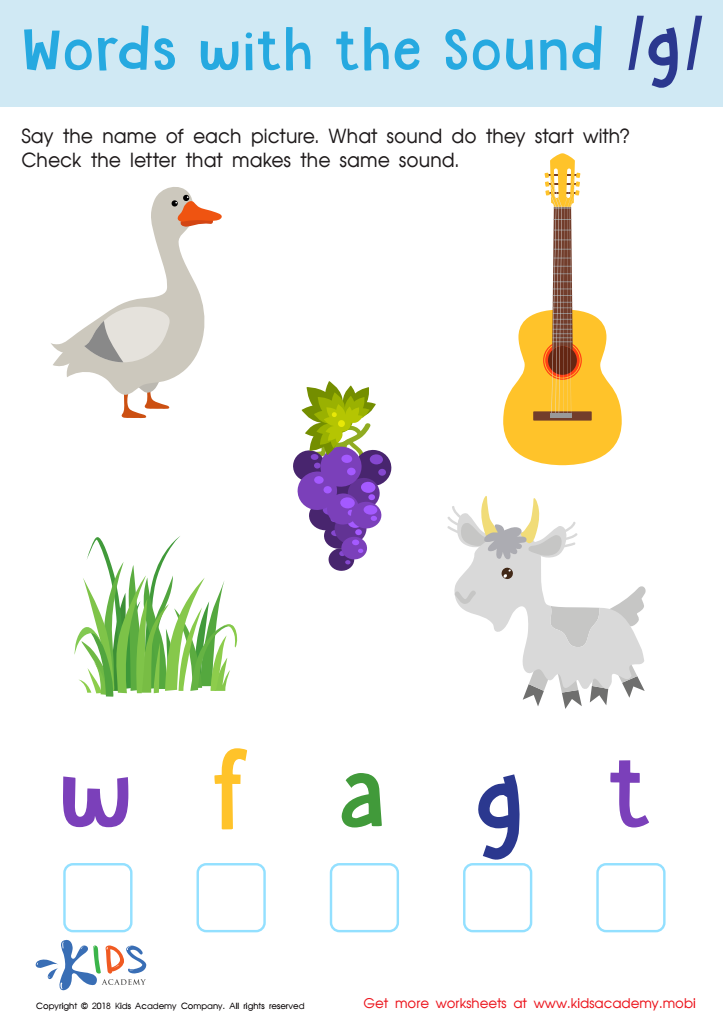
Words with sound g Reading Worksheet
Help your child learn the soft "g" sound with this phonics worksheet. Ask them to name each picture, then identify the letter sound it begins with. If it's "g", they can check the box. Have them repeat each word, listening for the soft "g" sound before moving on to the next page.
Words with sound g Reading Worksheet
Worksheet
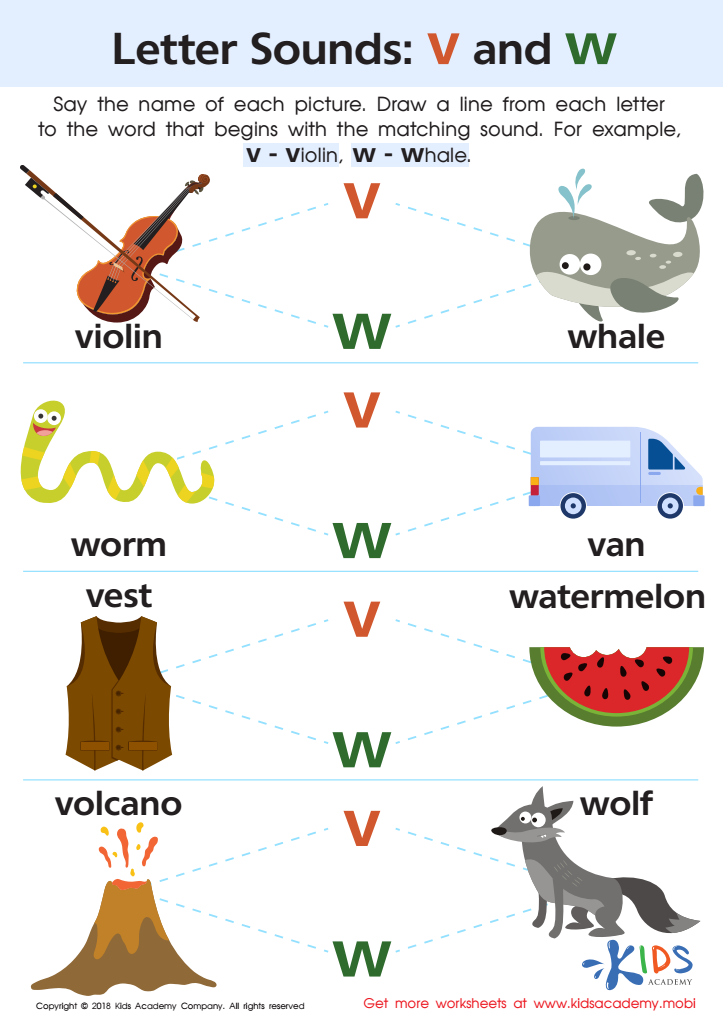
Letter V and W Sounds Worksheet
Help your child master the sounds of W & V while completing this fun phonics worksheet. Have them trace the dotted line from letter to picture while saying words like "worm", "violin" and "van" aloud to notice how each word begins with either W or V. Listen and pay attention to the pronunciation to complete the practice.
Letter V and W Sounds Worksheet
Worksheet
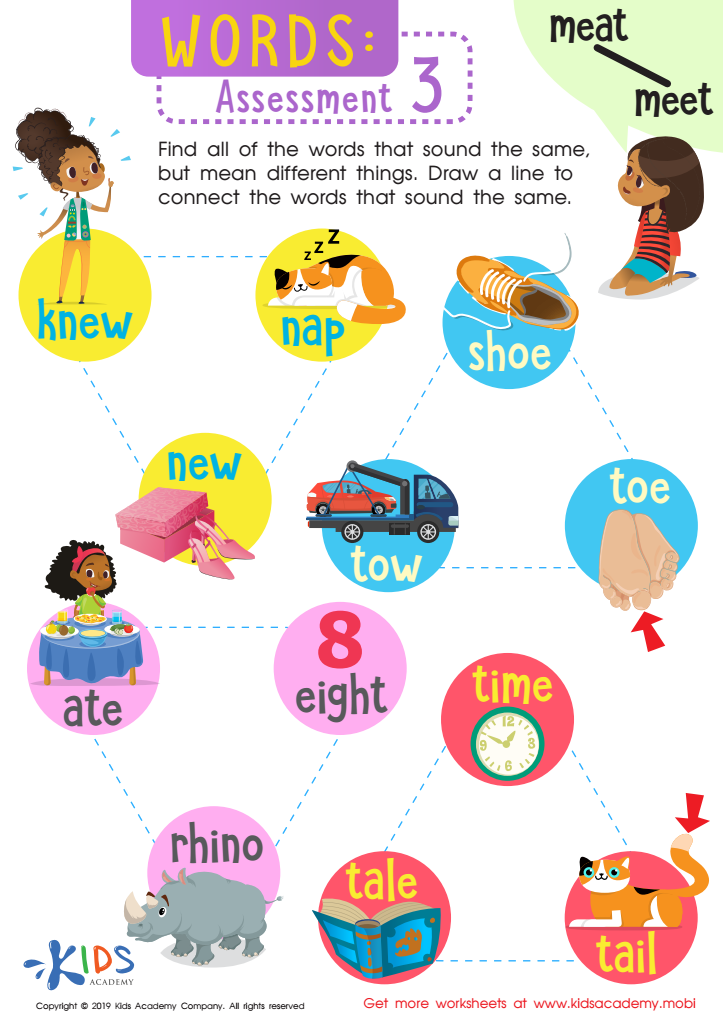
Words: Asessment 3 Worksheet
Assess your child's knowledge of homonyms with words like "toe" and "tow". This fun worksheet helps find words that sound the same but have different meanings and spellings. Use it to introduce homographs--words spelled the same with different meanings!
Words: Asessment 3 Worksheet
Worksheet
Join Kids Academy for Free
Who is primarily going to use this learning content?








Reading practice is crucial for children aged 5-8 because it forms the fundamental building blocks for all future learning. At this stage, the brain undergoes significant development, making it an ideal time to absorb new skills like letter recognition, phonics, and basic reading fluency. Teachers and parents should care about instilling strong reading habits early on for several reasons:
Firstly, mastery of the alphabet is essential for reading competency. Understanding letter shapes and sounds enables children to decode words, fostering independent reading. This skill impacts not just language arts but also broadens their ability to grasp concepts in subjects like math, science, and social studies.
Secondly, early reading practice enhances cognitive development. It improves memory, attention, and critical thinking skills by engaging a child's brain in complex processes. Phonemic awareness and vocabulary growth set the stage for better comprehension skills, enriching a child’s ability to understand and analyze text critically, even at a young age.
Moreover, fostering a love for reading encourages lifelong learning and curiosity. When teachers and parents actively engage children in reading activities, they expose them to new ideas, cultures, and viewpoints, broadening their horizon and making learning enjoyable.
In summary, investing time in alphabet practice and early reading not only boosts academic achievement but also cultivates a thriving, curious, and open-minded young learner.







