Rhyming skills Alphabet Worksheets for Ages 5-8
5 filtered results
-
From - To
Enhance your child’s language development with our engaging Rhyming Skills Alphabet Worksheets designed specifically for ages 5-8! These fun and interactive worksheets will help young learners identify and create rhyming words, boosting their phonemic awareness. Our carefully crafted activities encourage creativity while reinforcing essential alphabet skills, making learning both effective and enjoyable. Kids will love exploring the magical world of rhymes as they connect letters with sounds, fostering a strong foundation in reading and writing. Perfect for both classroom settings and at-home practice, our worksheets are ideal for helping children become confident and enthusiastic learners. Start your rhyming adventure today!
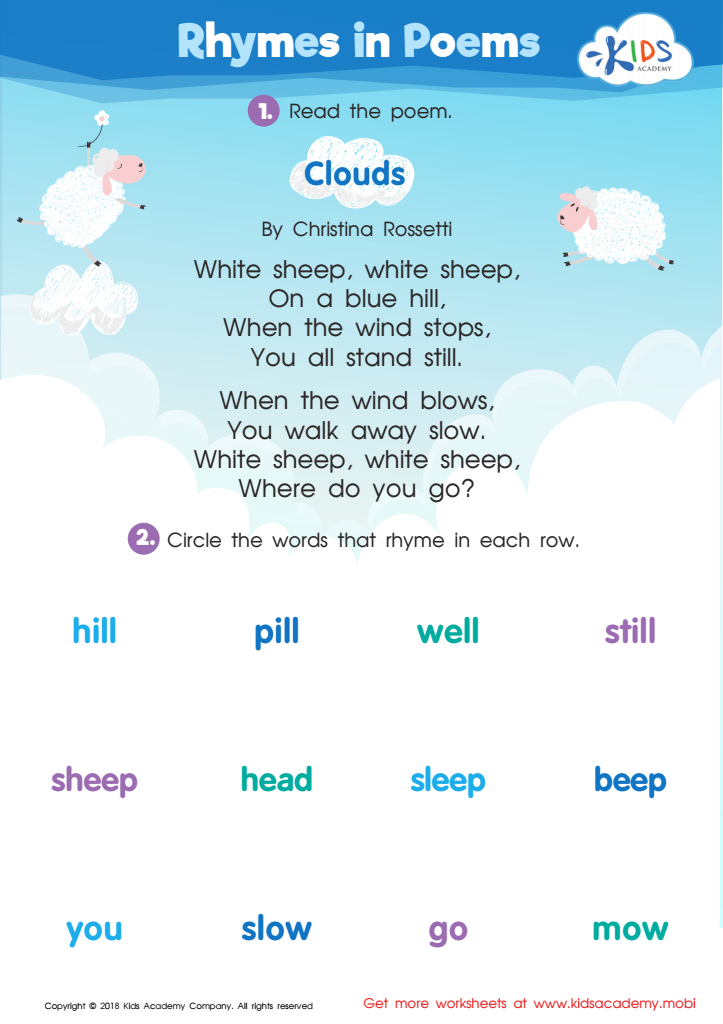
Rhymes in Poems Worksheet
 Assign to My Students
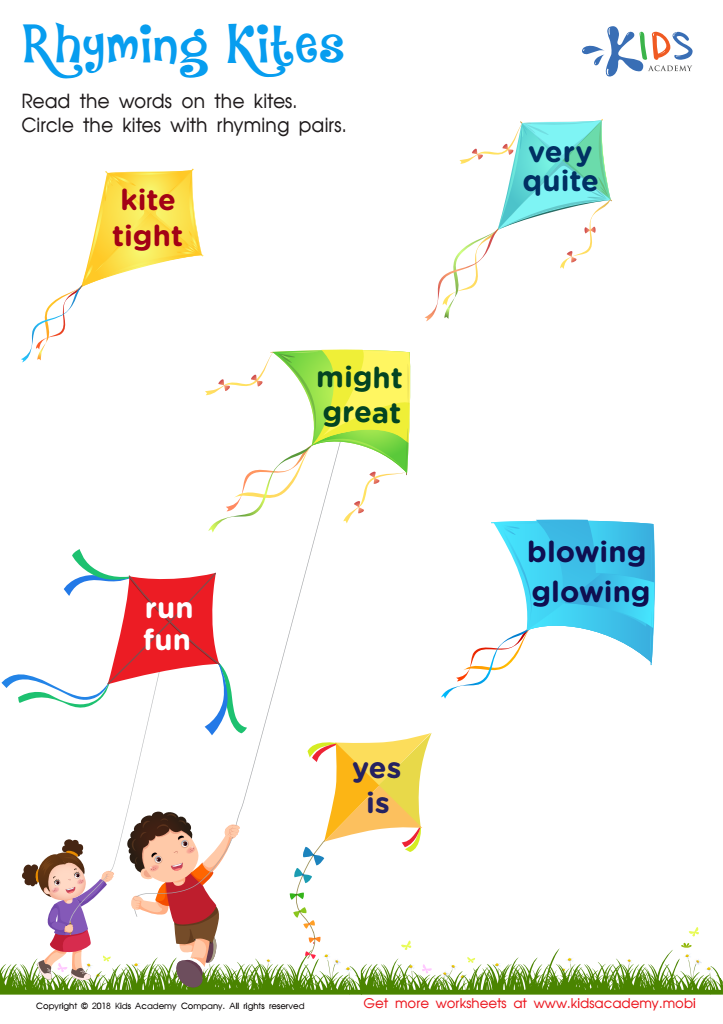
Rhyming Kites Worksheet
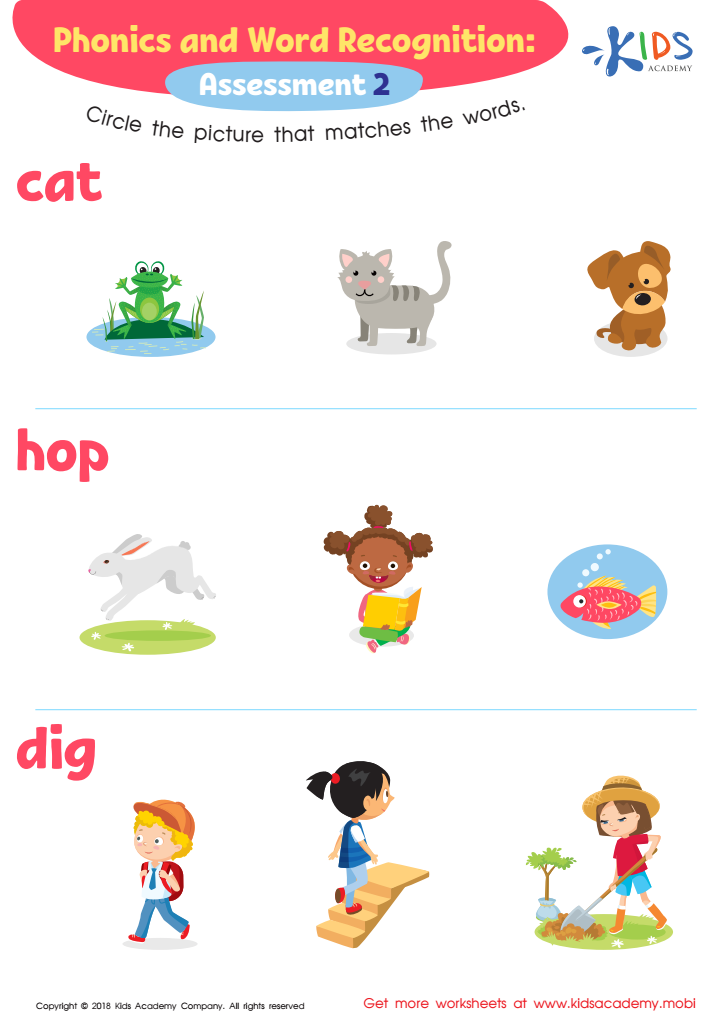
Phonological Awareness: Assessment 2 ELA Worksheet
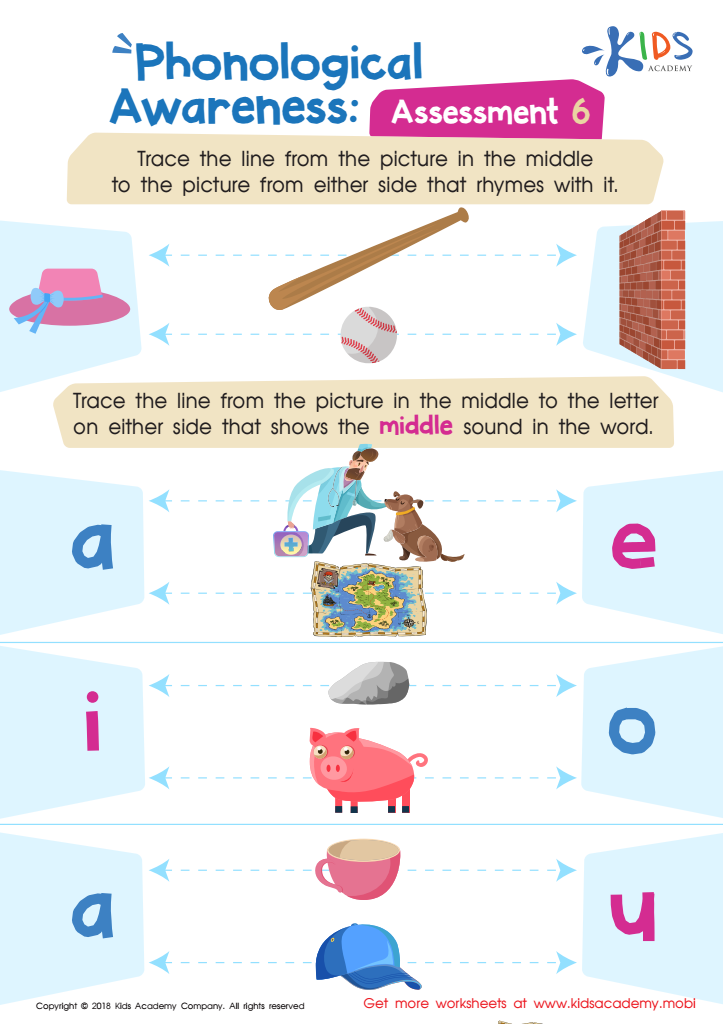
Phonological Awareness: Assessment 6 Worksheet
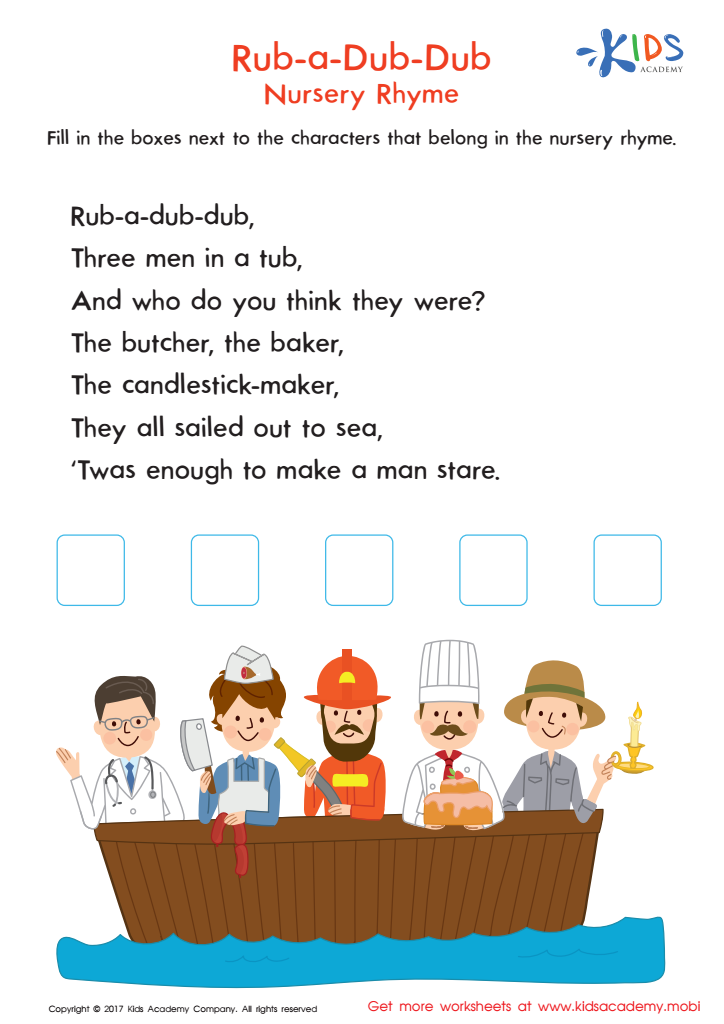
Rub a Dub Dub Printable








Rhyming skills play a crucial role in early literacy development for children ages 5-8, making it important for parents and teachers to prioritize these skills. Firstly, rhyming helps enhance phonemic awareness, which is the ability to hear, identify, and manipulate the individual sounds in words. This skill is foundational for reading as it enables children to decode new words effectively.
Additionally, engaging with rhymes can significantly boost vocabulary and language development. When children hear and produce rhymes, they are exposed to a rich variety of words and sounds, aiding in their overall linguistic growth. This exposure also promotes better comprehension as children learn to make connections between words and their meanings through rhythmic patterns.
Furthermore, rhyming activities can be both fun and interactive, fostering a love for language and reading from an early age. This enjoyment can lead to a more positive attitude towards learning and literacy-related activities.
Ultimately, encouraging rhyming helps children build the essential skills they need for successful reading and writing, thereby laying the groundwork for ongoing academic achievement. Both parents and teachers play an essential role in integrating these engaging phonetic exercises into daily learning routines.







