Letter formation Letter Recognition Worksheets for Ages 5-8
5 filtered results
-
From - To
Enhance your child's literacy skills with our engaging Letter Formation and Letter Recognition Worksheets, designed specifically for ages 5-8. These worksheets help young learners distinguish letters while practicing their writing. Each activity encourages proper formation, ensuring that kids build a solid foundation in handwriting. With colorful illustrations and fun exercises, these worksheets make learning enjoyable and effective. As children trace and identify letters, they strengthen their memory and develop confidence in their reading abilities. Perfect for at-home practice or classroom activities, our resources cater to different learning styles, making letter recognition fun and interactive! Explore our worksheets today and ignite a love for learning!
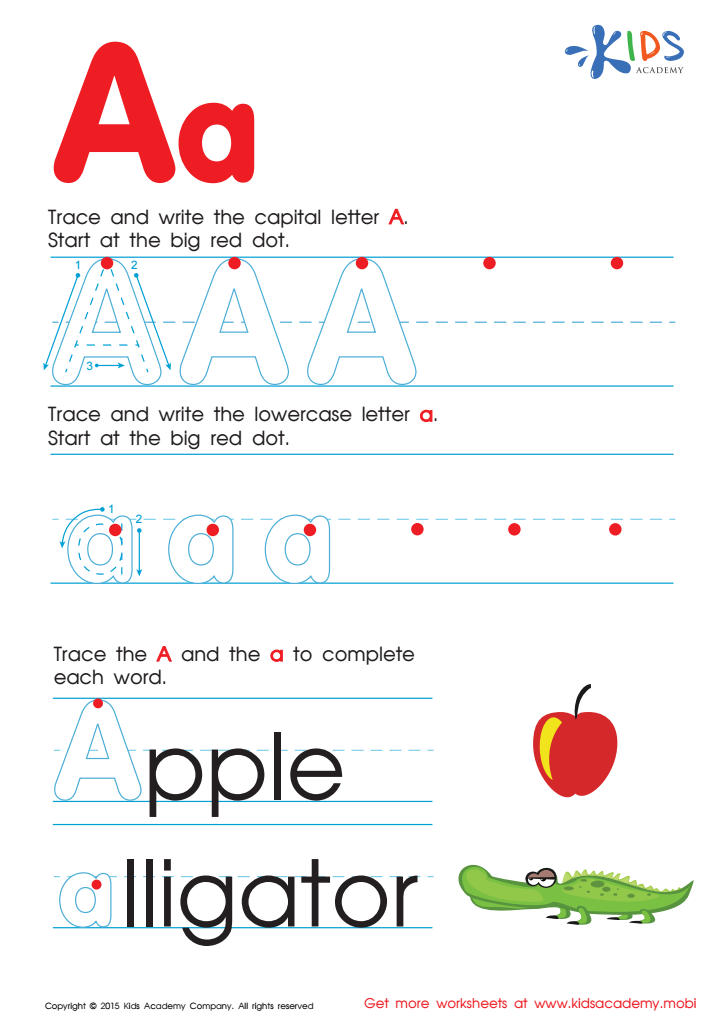
Letter A Tracing Page
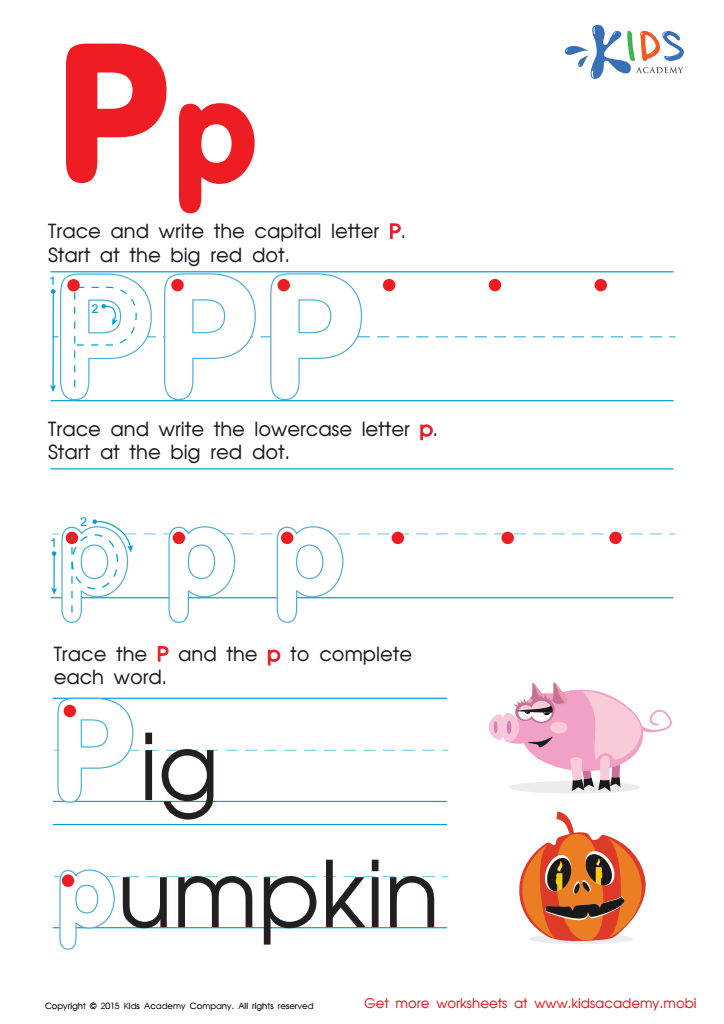
Letter P Tracing Page
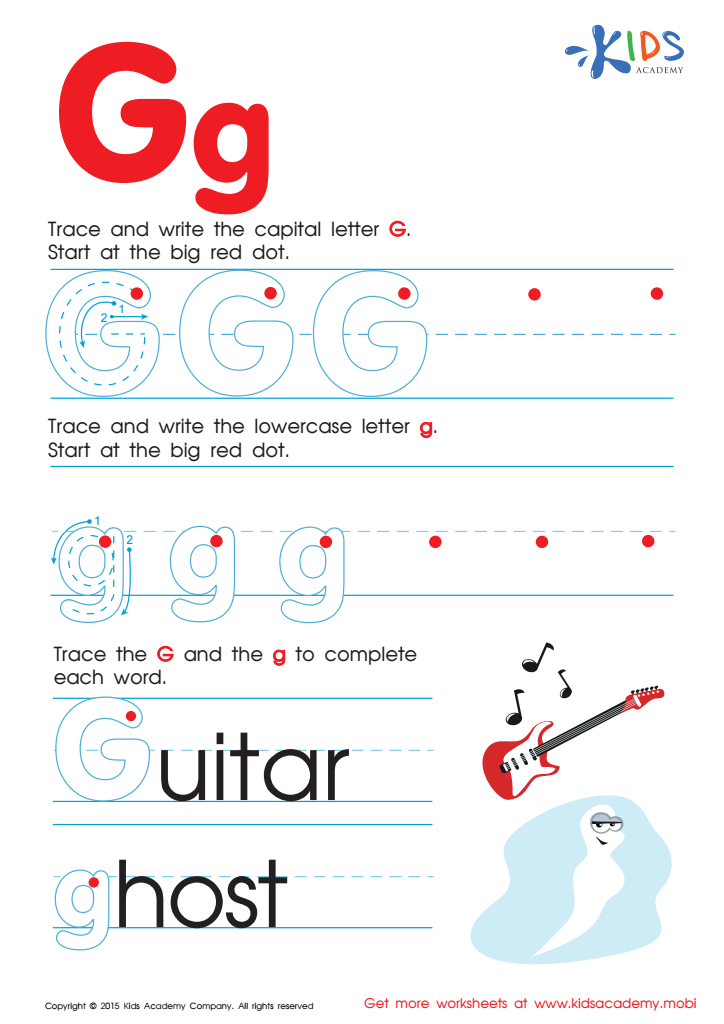
Letter G Tracing Page
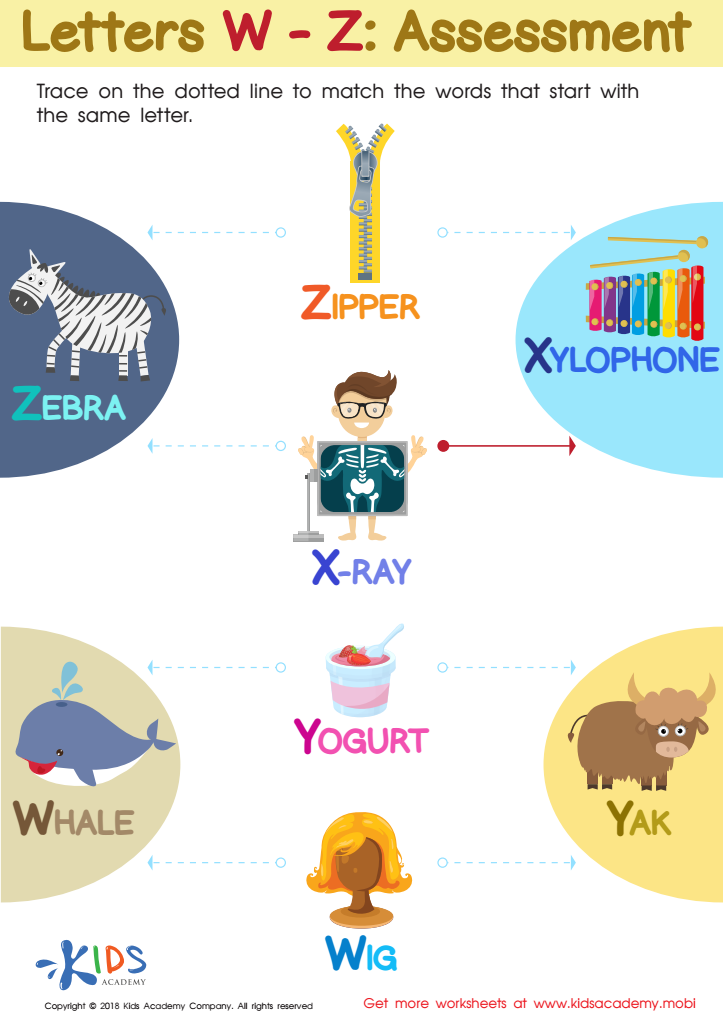
Letters W–Z Tracing Worksheet
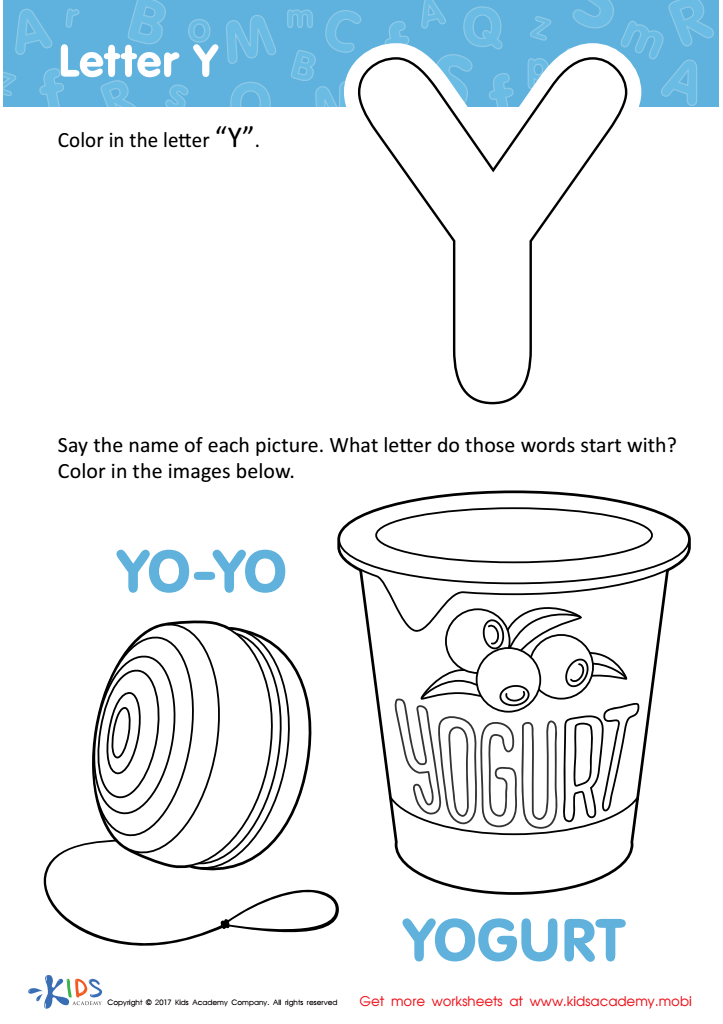
Letter Y Coloring Sheet
 Assign to My Students








Letter formation and letter recognition are critical components of literacy development for children ages 5-8, and both parents and teachers should prioritize their significance. Firstly, letter recognition—the ability to identify and name letters—is foundational for reading. It enables children to decode words and makes the reading process smoother and more enjoyable. A strong grasp of letter recognition helps children develop confidence and fosters a love for reading.
Secondly, letter formation—the correct way to write letters—supports not only literacy but also fine motor skills. Proper letter formation aids children in developing the hand-eye coordination needed for writing. This contributes to clearer handwriting, making it easier for teachers and peers to understand their written work.
Additionally, understanding correct letter formation instills a sense of pride in children's work. As they progress, communicating their thoughts through writing becomes crucial. Promoting good practices in these skills helps build the foundation for academic success in later grades.
Involving both parents and teachers in this process through engaging activities, games, and consistent practices fosters a collaborative environment that reinforces these skills. Ultimately, focusing on letter formation and recognition is essential for creating confident, capable young readers and writers.







