Filters

6 filtered results

Clear all filters
Favorites
With answer key
Interactive

6 filtered results

Difficulty Level

Grade


Enhance your child's reading and language skills with our engaging Vocabulary Development Letter Sounds Worksheets, designed specifically for ages 5-8. These printable worksheets are crafted to support early learners in mastering letter sounds while expanding their vocabulary. Each worksheet focuses on phonemic awareness, helping children connect sounds with letters and words through fun exercises and colorful illustrations. Children will participate in activities such as word matching, fill-in-the-blanks, and sound identification, making learning both enjoyable and effective. Foster a lifelong love for language and boost your child’s confidence in reading with these valuable resources, perfect for home or classroom use!

Check out this FREE Trial Lesson on Letter Sounds for age 5-8!

Review

Favorites
With answer key
Interactive
  • 5-8
  • Vocabulary development
  • Letter Sounds
Letter N and O Sounds Worksheet

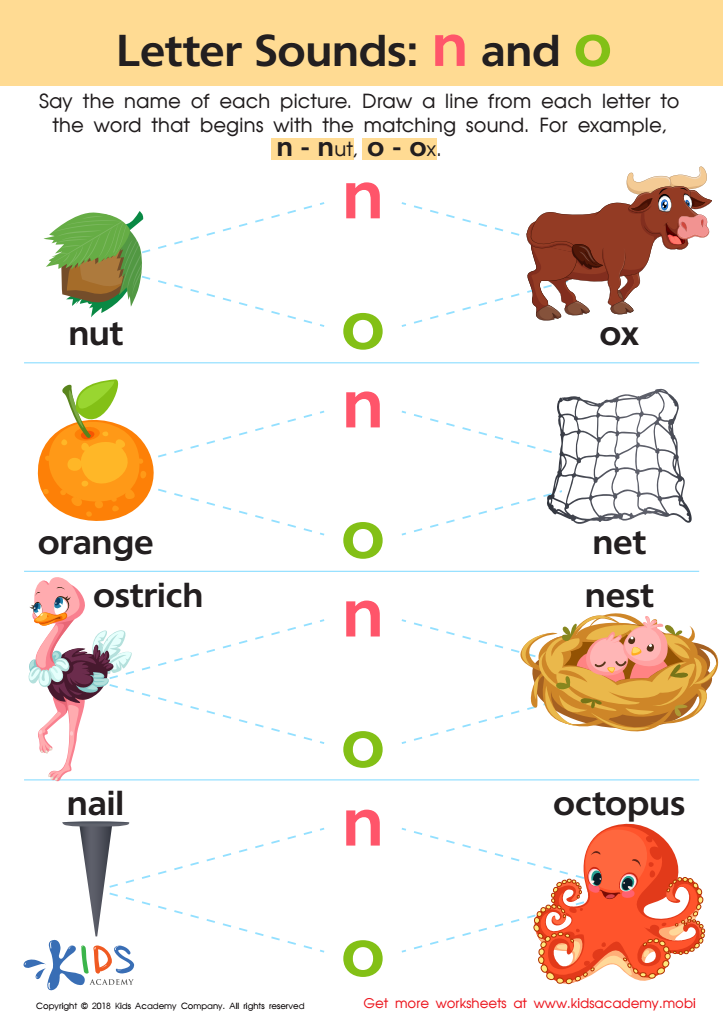
Letter N and O Sounds Worksheet

Help your preschooler learn to recognize the N and O letter sounds with this vibrant worksheet from Kids Academy! Have them say the name of each picture and listen for N or O. Trace the dotted line from letter to its match to complete the phonics review. It's a fun way to help them master the difference between the two sounds!
Letter N and O Sounds Worksheet
Worksheet
Letter f sounds worksheet

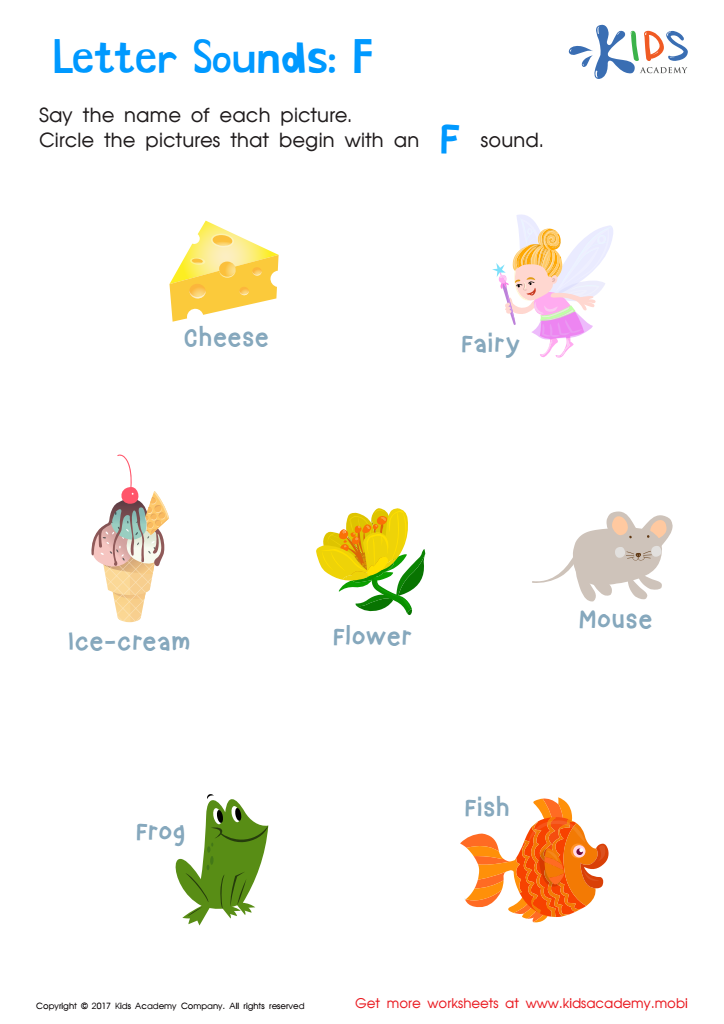
Letter F Sounds Worksheet

Kids will practice identifying 'f' words, tracing, and coloring the letter F for a great way to learn phonics. Help your child discover the wonders of the letter 'F' with this fun worksheet! Kids will practice identifying 'F' words, tracing and coloring the letter, and building early reading skills. Stimulate their learning and let them connect letter sounds to words they know. An enjoyable way to practice phonics!
Letter F Sounds Worksheet
Worksheet
Identify the Written Words Worksheet

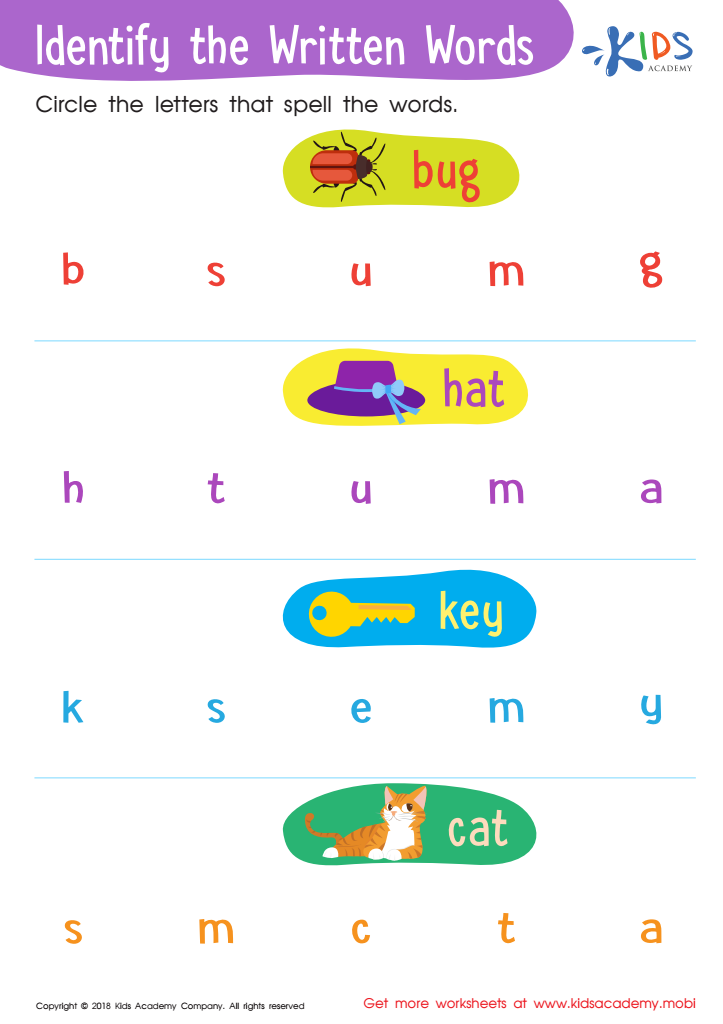
Identify the Written Words Worksheet

Have your students identify the objects on the printout, then spell the words. If they already know how to spell, this exercise should be easy. Help them circle the correct letters from the set to spell out the words. This is a great way to reinforce reading and spelling skills. Max 80 words.
Identify the Written Words Worksheet
Worksheet
Letter R and S Sounds Worksheet

Letter R and S Sounds Worksheet

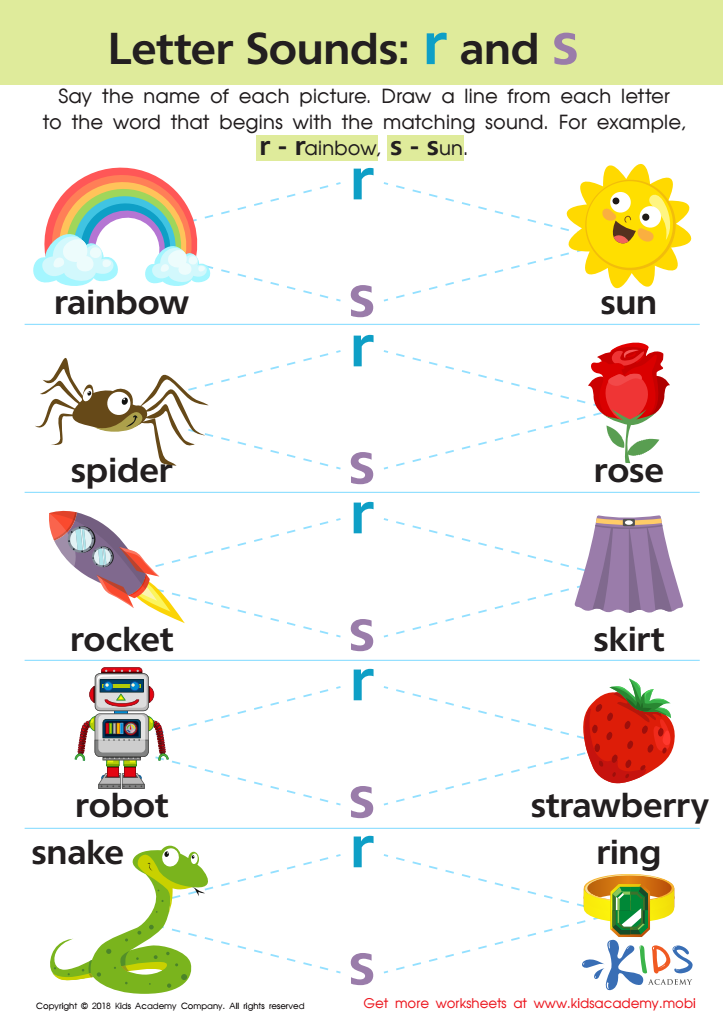
Kids Academy's phonics worksheet is full of fun and color! Help your child name the pictures and read the words under each one. Does it begin with an R or S? Then, use a pencil to trace the dotted line from the letter to its image. It's a great way to practice phonics skills!
Letter R and S Sounds Worksheet
Worksheet
Finding the Sounds Worksheet

Finding the Sounds Worksheet

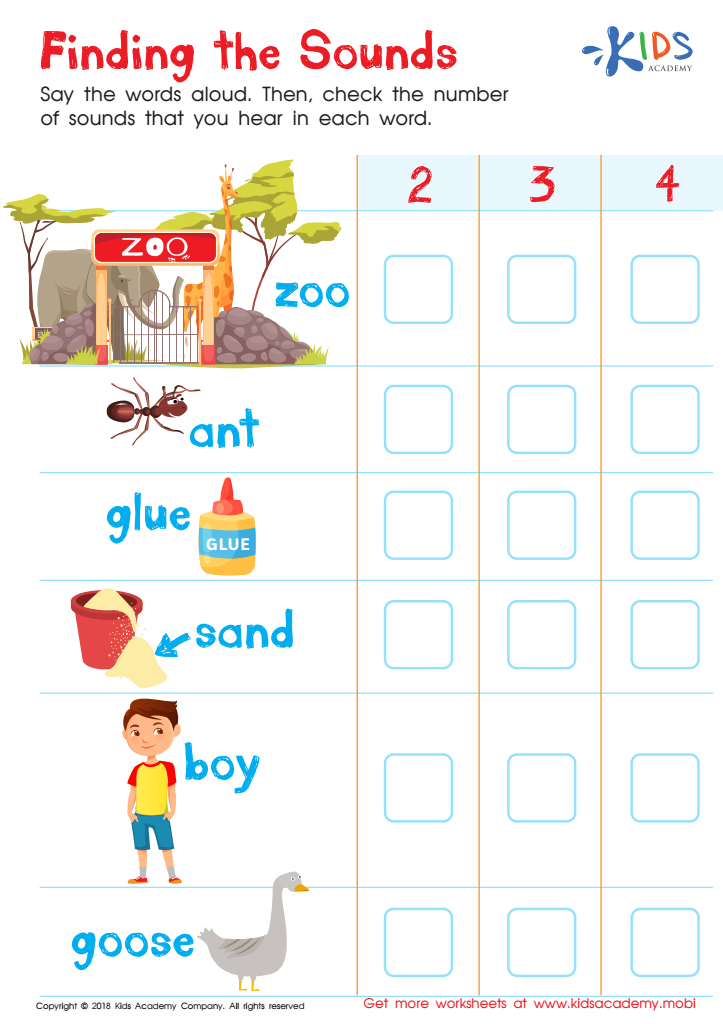
This free colorful worksheet assists children in learning words and breaking them down into sounds. It boosts auditory discrimination, phonological awareness and fine motor skills. Picture clues help them read confidently, and they can check the appropriate boxes to practice their reading skills.
Finding the Sounds Worksheet
Worksheet
Letter D and E Sounds Worksheet


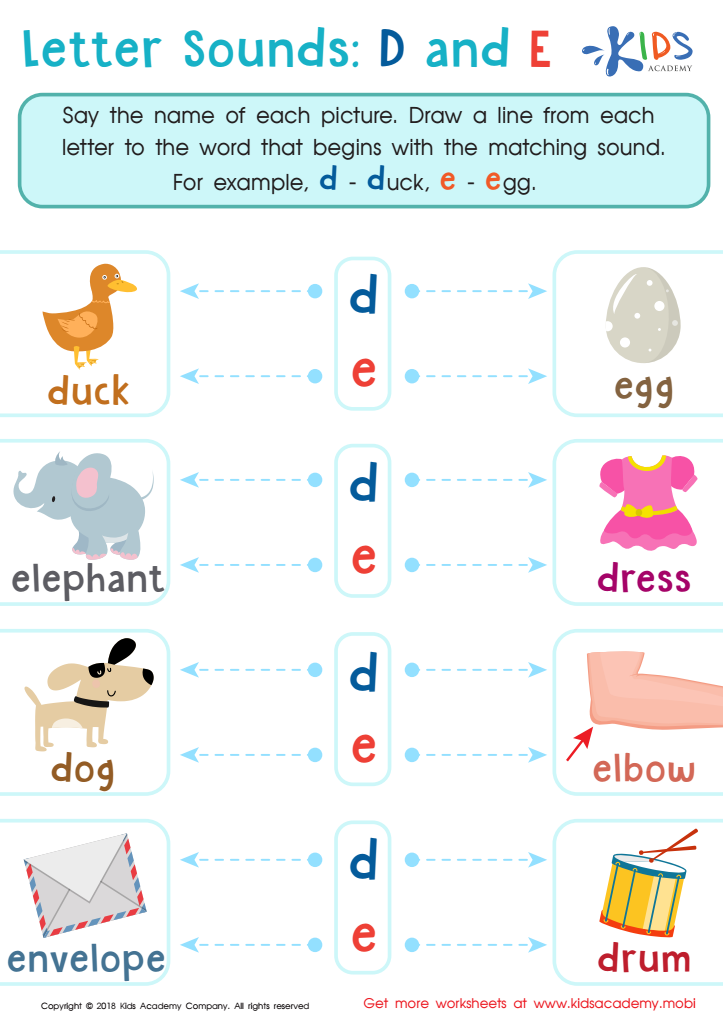
Letter D and E Sounds Worksheet

Kids can use picture clues and visual discrimination to name cheerful pics and isolate the beginning sound. This free PDF worksheet will help them develop phonological awareness, differentiate between "D" and "E", and hone fine-motor skills. It'll also boost their confidence as they become readers.
Letter D and E Sounds Worksheet

Worksheet


Vocabulary development and understanding letter sounds are crucial for children aged 5-8, as these skills form the foundation for successful reading and writing. At this age, children are embarking on their journey of literacy, and building a strong vocabulary allows them to express themselves clearly and understand others better. Enhanced vocabulary promotes comprehension, enabling children to grasp content in books, classroom activities, and daily conversations.

Learning letter sounds, or phonemic awareness, is equally vital. Understanding how letters correspond to sounds helps children decode words, which is critical for reading proficiency. Mastering these sounds enables them to sound out unfamiliar words, boosting their confidence and independent reading abilities.

Teachers and parents should emphasize these components in literacy development because they are interconnected. A child with a rich vocabulary can engage more deeply with texts, while a solid grasp of letter sounds aids in word recognition and spelling.

Investing time and resources into vocabulary and letter sound development paves the way for cognitive growth and academic achievement throughout a child's educational journey. Ultimately, prioritizing these skills nurtures not only proficient readers and writers but also lifelong learners who enjoy exploring new ideas through language.