Vocabulary expansion Long And Short Vowel Worksheets for Ages 5-8
6 filtered results
Difficulty Level
Grade
Age
-
From - To
Subject
Activity
Standards
Enhance your child's vocabulary with our engaging Long and Short Vowel Worksheets designed for ages 5-8. These interactive activities focus on recognizing and using both long and short vowel sounds, vital for early literacy development. Each worksheet encourages critical thinking and language skills through fun exercises, such as matching games, fill-in-the-blanks, and word sorting. Our resources cater to various learning styles, ensuring that children grasp the concepts at their own pace. Ideal for both classroom and home use, these worksheets provide a solid foundation for vocabulary expansion while making learning enjoyable. Unlock your child's potential and watch them thrive!
Favorites
With answer key
Interactive
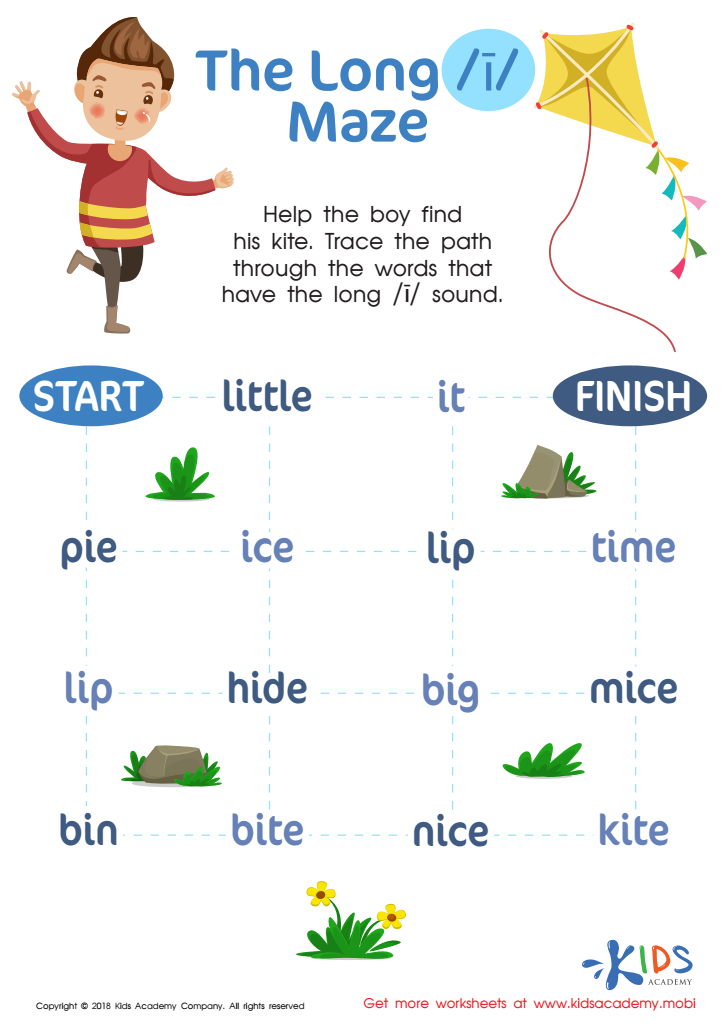
The Long I Maze Reading Worksheet
Help your child learn phonics to help them read. Show them the difference between long and short "i" sounds. Guide them as they use a pencil to trace words with the long "i:" sound in the "Help the Boy in the Picture" worksheet exercise. This will help them find the kite in the picture.
 Assign to My Students
The Long I Maze Reading Worksheet
Worksheet
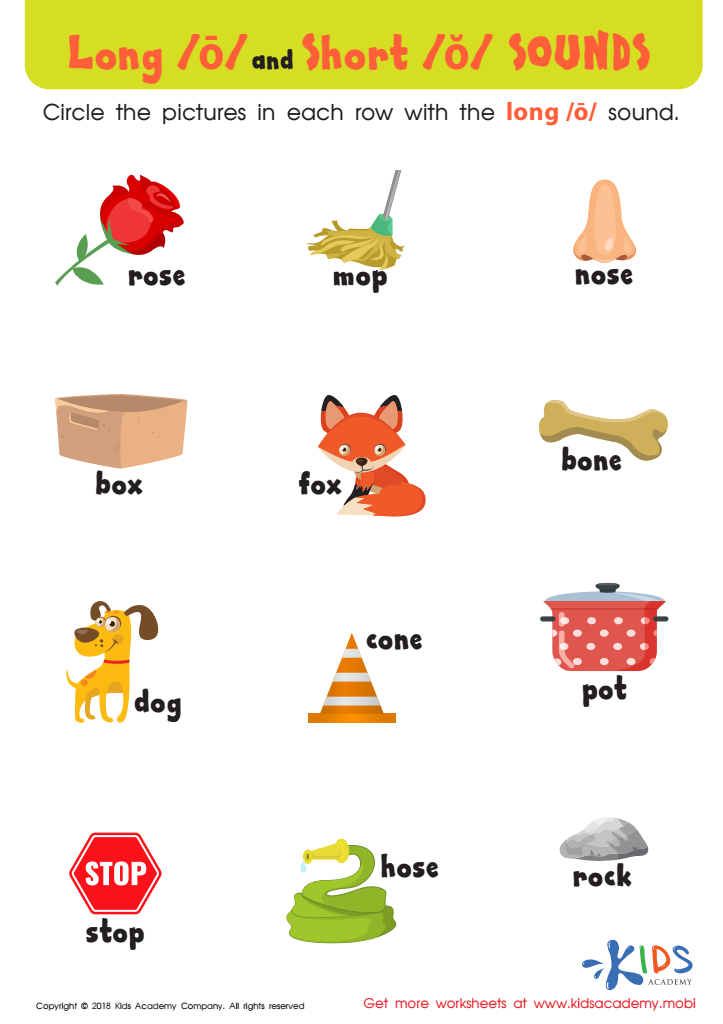
Reading: Long O and Short O Sounds Worksheet
Students practice distinguishing between short and long O sounds with this reading worksheet. They sound out each word, then circle the pictures with the long O sound. Perfect for individual practice or to work with peers! Improves understanding of this skill and helps avoid confusion.
Reading: Long O and Short O Sounds Worksheet
Worksheet
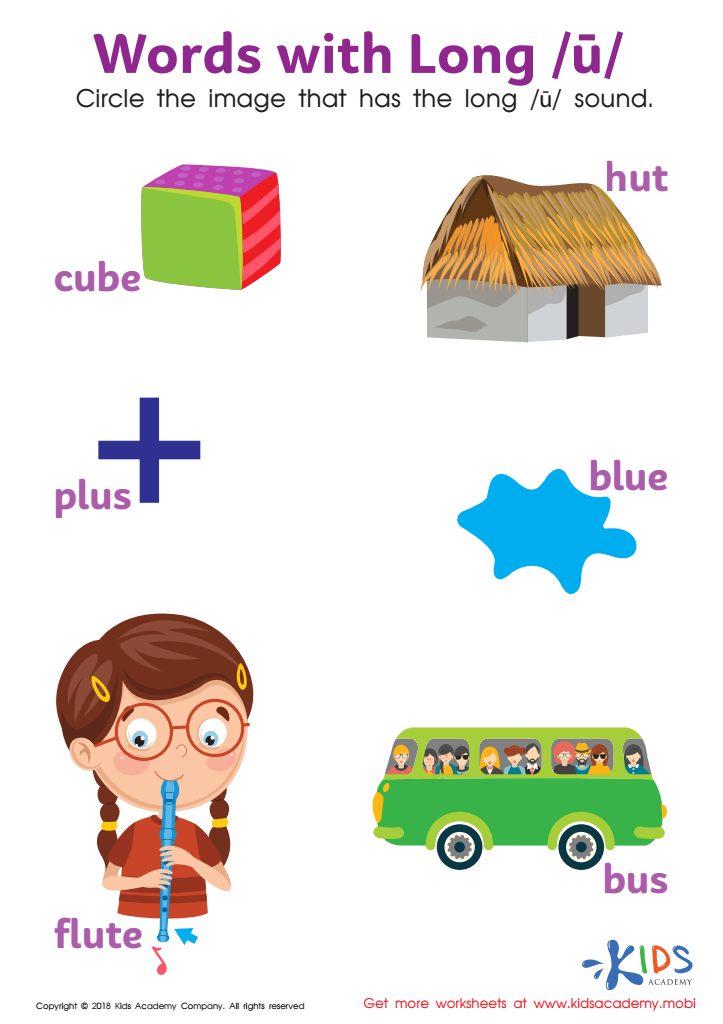
Words with Long U Reading Worksheet
Help your new reader master vowel recognition with this fun worksheet. By using picture clues and practicing fine motor skills, they'll learn to differentiate between words with the long and short «u» sound. Your learner will also get to practice vowel discrimination in high-frequency words. It's a great way to learn the importance of vowels in reading!
Words with Long U Reading Worksheet
Worksheet
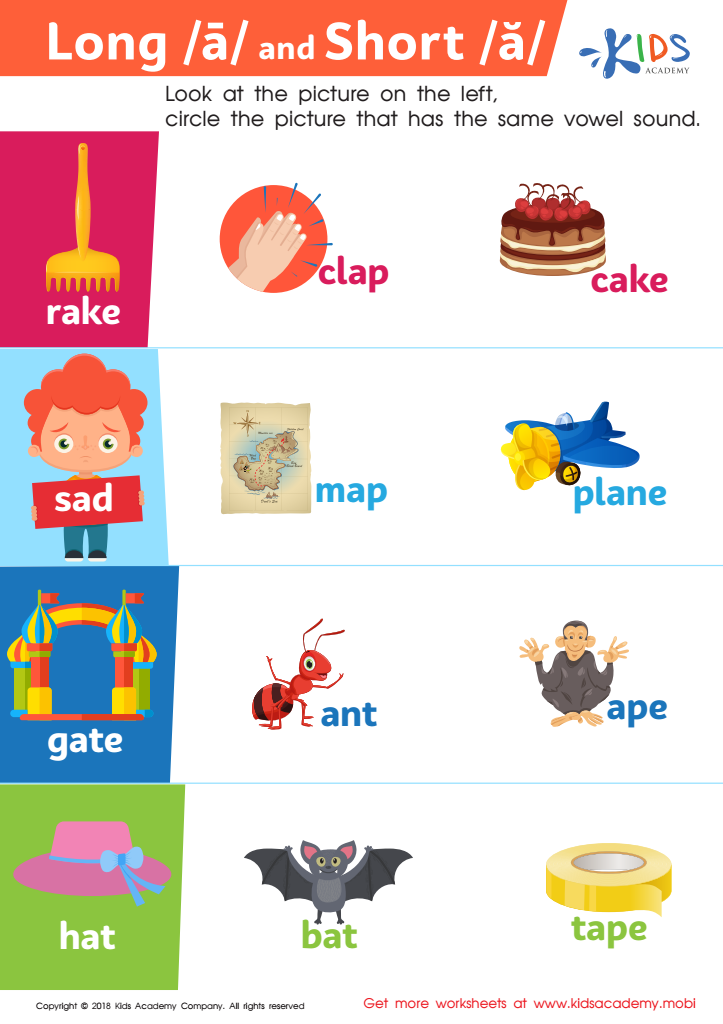
Reading: Long a and Short a Worksheet
This printable helps students practice distinguishing the long and short A sound. Pictures provide clues to read each word and students identify if it has a short or long sound. By completing this worksheet, children gain mastery of the phonics skill.
Reading: Long a and Short a Worksheet
Worksheet
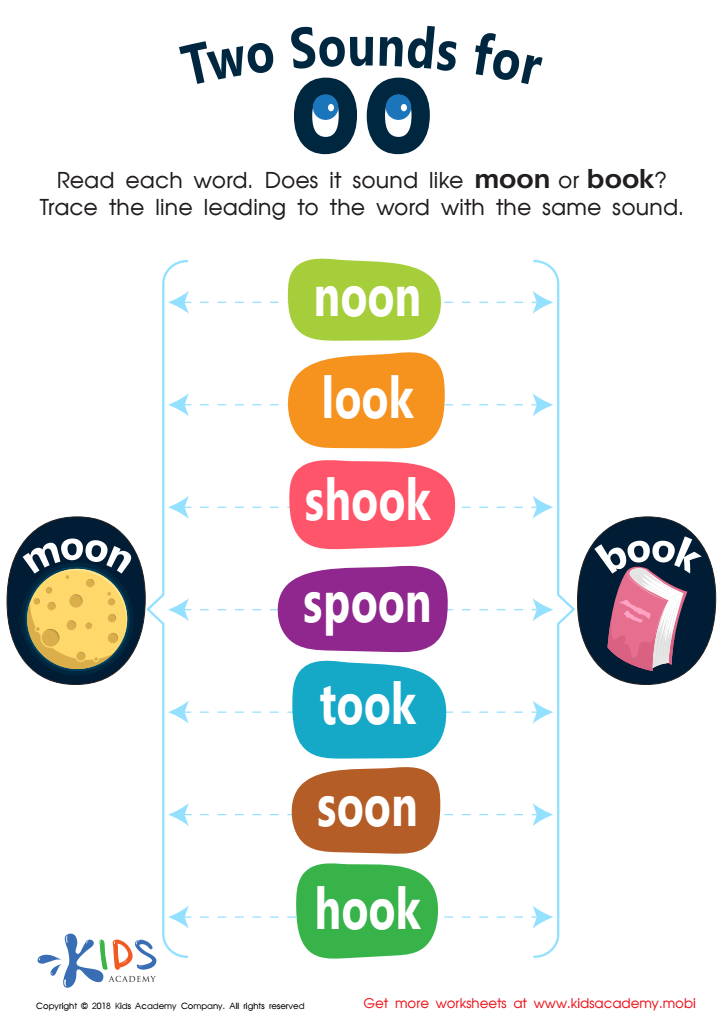
Two Sounds for OO Worksheet
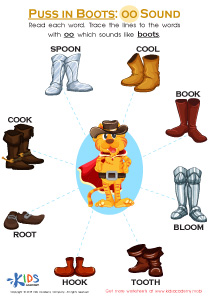
This worksheet helps kids learn the different sounds of the -oo digraph. They match words based on whether they sound like moon or book, plus practice fine motor skills tracing lines. Fun and educational!
Two Sounds for OO Worksheet
Worksheet
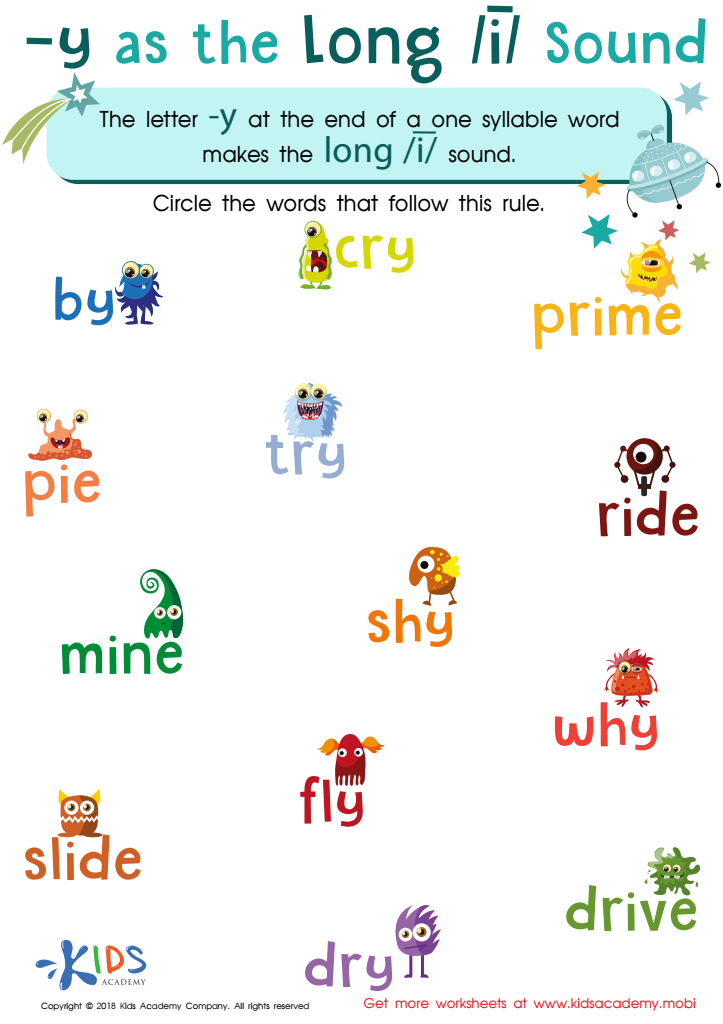
Reading: Y as Long I Worksheet
Students need practice and exposure to letters that make different sounds for decoding and reading success. This printable is a great resource for language arts classes: it explains that words ending with Y and having only one syllable make the long I sound. Students will circle all words with Y that have this sound.
Reading: Y as Long I Worksheet
Worksheet
Join Kids Academy for Free
Who is primarily going to use this learning content?




Vocabulary expansion is critical for children aged 5-8, particularly in understanding long and short vowel sounds, as it builds the foundation for reading and writing skills. words with long and short vowels are intensely tied to phonemic awareness, which is essential for developing fluent reading. Children in this age group are beginning to decode words, and recognizing the difference between long and short vowels can significantly enhance their ability to understand text and spell correctly.
Moreover, a strong vocabulary correlates with better comprehension skills. When children grasp the nuances of vowel sounds, they can engage with a broader range of texts, leading to increased enjoyment in reading. This enjoyment fosters a lifelong love for learning and literacy.
Teachers and parents play a crucial role in guiding children's vocabulary growth. Introducing diverse words through reading activities that emphasize vowel sounds can spark curiosity and excitement. Interactive methods, like rhymes, games, and songs, can make the learning process enjoyable and memorable.
Ultimately, a focus on vocabulary development in the early years helps set a solid academic trajectory, enhances effective communication skills, and supports overall confidence in children as they progress through their educational journey. Each incremental step in vocabulary lays the groundwork for future academic success.