Reading fluency Long Vowels Worksheets for Ages 5-8
3 filtered results
-
From - To
Enhance your child's reading fluency with our Long Vowels Worksheets for Ages 5-8. Designed by educational experts, these engaging activities help young learners master long vowel sounds, boosting their reading confidence and comprehension. Each worksheet includes vibrant visuals and fun exercises tailored to maintain kids' interest while reinforcing key phonetic concepts. Ideal for home or classroom use, our worksheets support sequential learning, making complex vowel patterns easier to understand. Empower your child to read with ease and enthusiasm by integrating these effective, skill-building resources into their daily routine. Unlock your child’s full reading potential today!
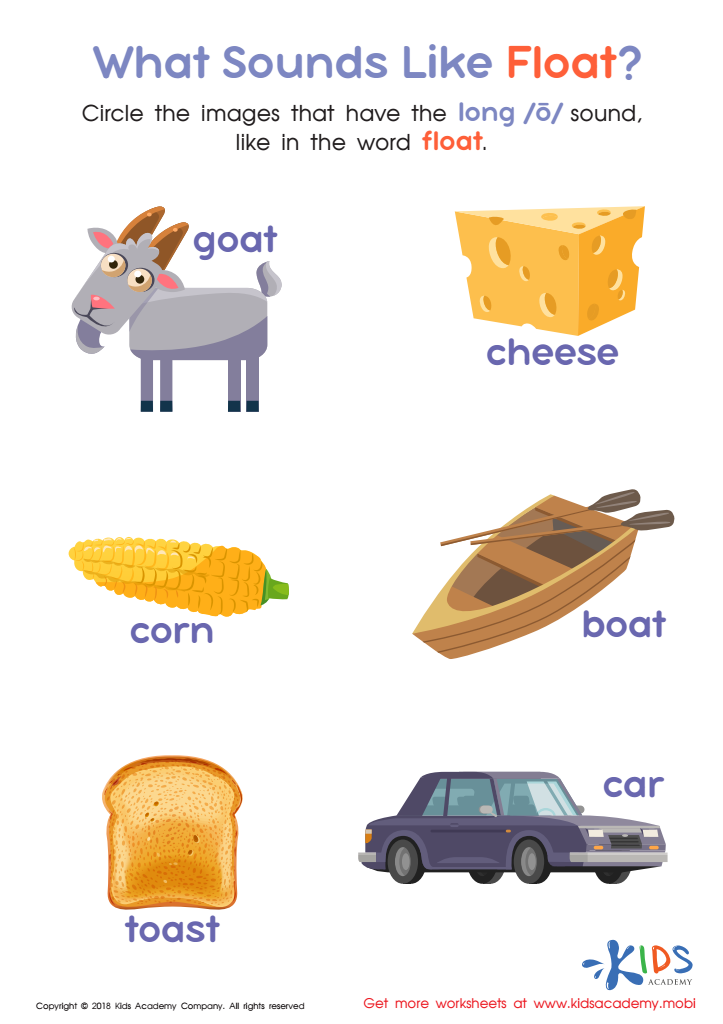
What Sounds Like Float? Worksheet
 Assign to My Students
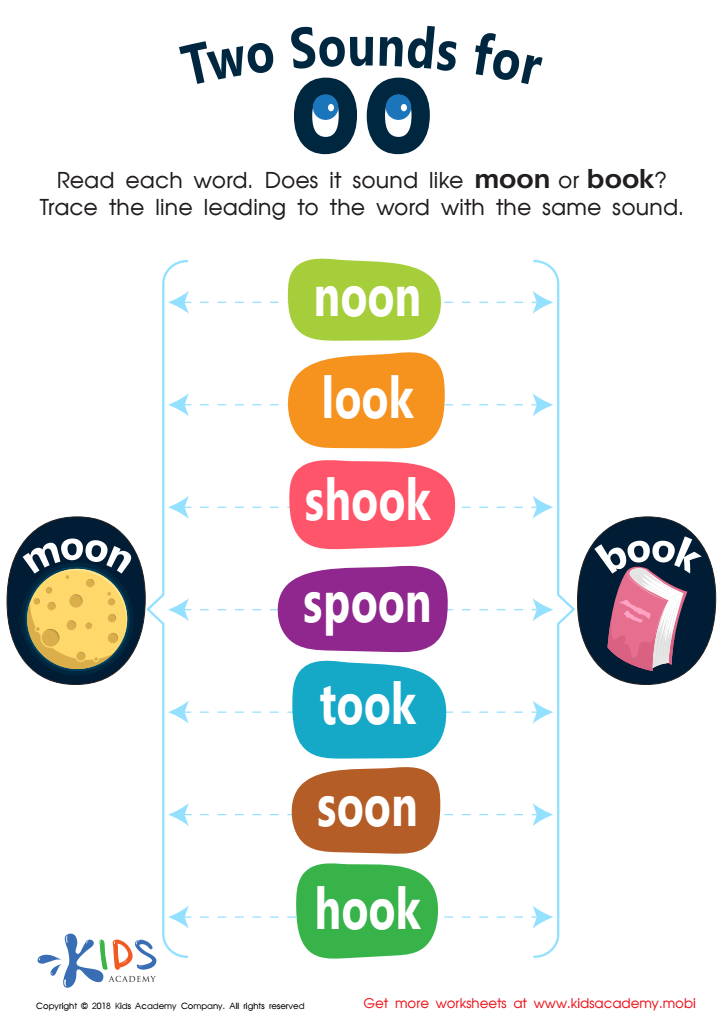
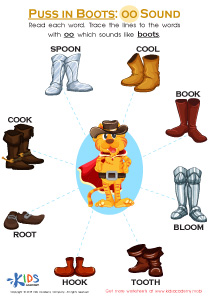
Two Sounds for OO Worksheet
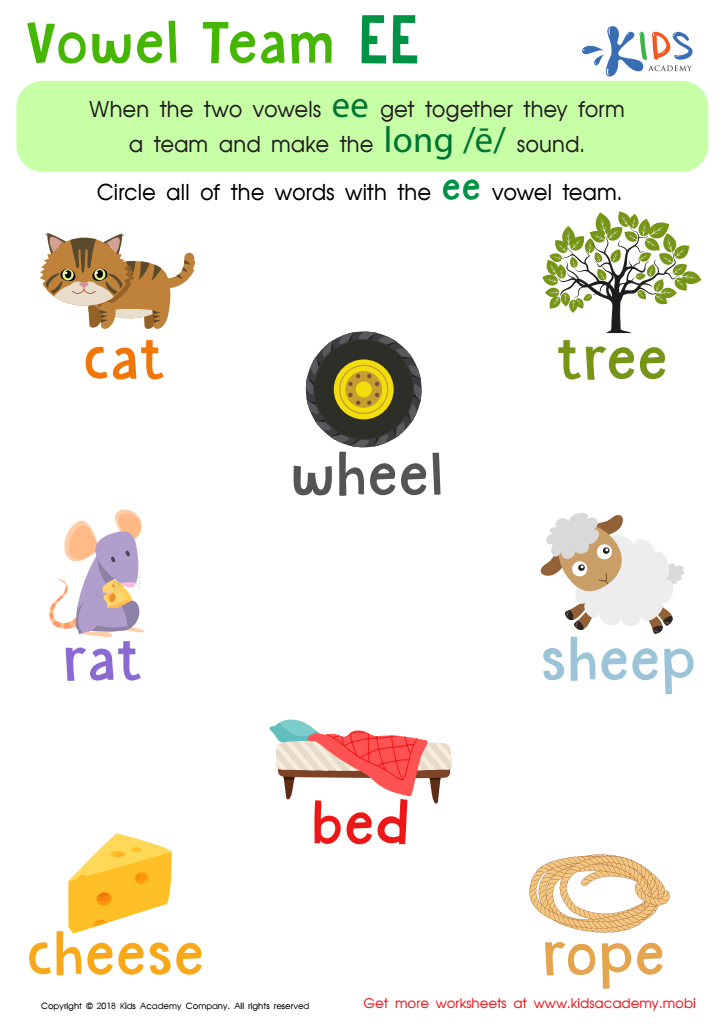
Reading: Vowel Team EE Worksheet



Reading fluency, especially in mastering long vowels, plays a critical role in the early literacy development of children aged 5-8. For starters, fluency encompasses the ability to read text not just accurately, but also quickly and with appropriate expression. This foundational skill facilitates better comprehension because it allows children to focus on the meaning of the text rather than spend cognitive resources on decoding individual words.
Long vowels are particularly important as they often form the cornerstone of many words that children encounter in print. Understanding the different sounds that long vowels make, as in "cake" versus "cat," significantly improves a child's ability to decode and recognize words. This directly influences their reading speed and efficiency.
Moreover, early success in reading builds confidence and encourages a lifelong love for reading. When children can readily identify and pronounce long vowels, they are more likely to find reading enjoyable rather than frustrating. This positive association can also stimulate greater interest across other academic subjects, fostering a wider scope of knowledge and curiosity.
Parents and teachers should prioritize reading fluency with long vowels to lay down a strong reading foundation, ensuring that children thrive academically and develop essential language skills required for future learning.