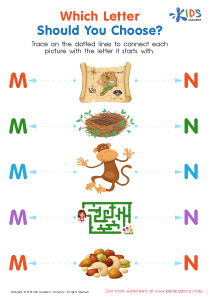
Lowercase identification Lowercase/Small Letters Worksheets for Ages 5-8
5 filtered results
-
From - To
Welcome to our Lowercase Identification Worksheets page! Designed for children aged 5 to 8, these engaging activities help young learners recognize and master lowercase letters. Our comprehensive collection of printable worksheets enhances letter identification skills through fun exercises, including tracing, matching, and coloring. With vivid illustrations and varied formats, kids will gain confidence in recognizing small letters and applying their knowledge in meaningful contexts. Perfect for both classroom and home use, these worksheets support early literacy development and provide an enjoyable way for children to learn. Get started today and watch your child flourish in their alphabet journey!
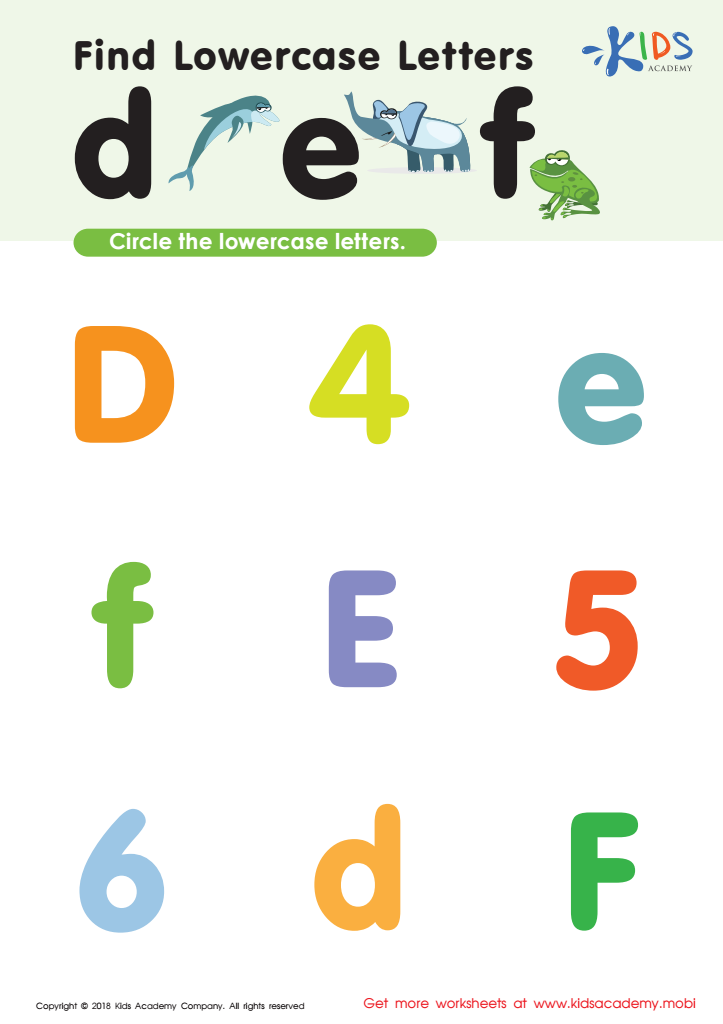
Find Lowercase Letters d e f Worksheet
 Assign to My Students
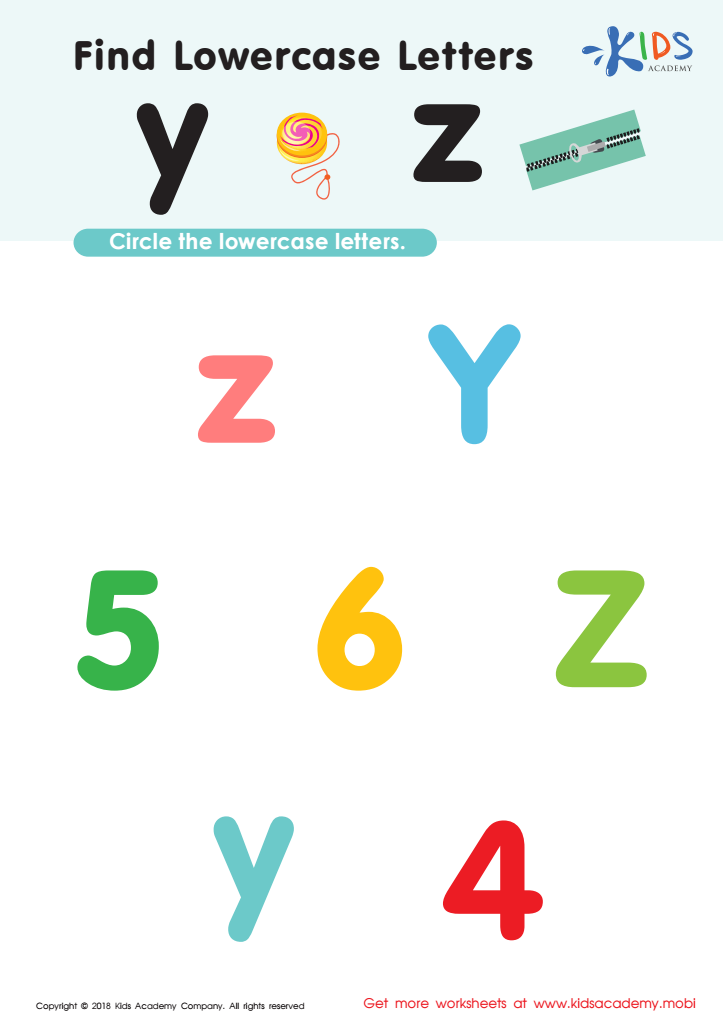
Find Lowercase Letters y z Worksheet
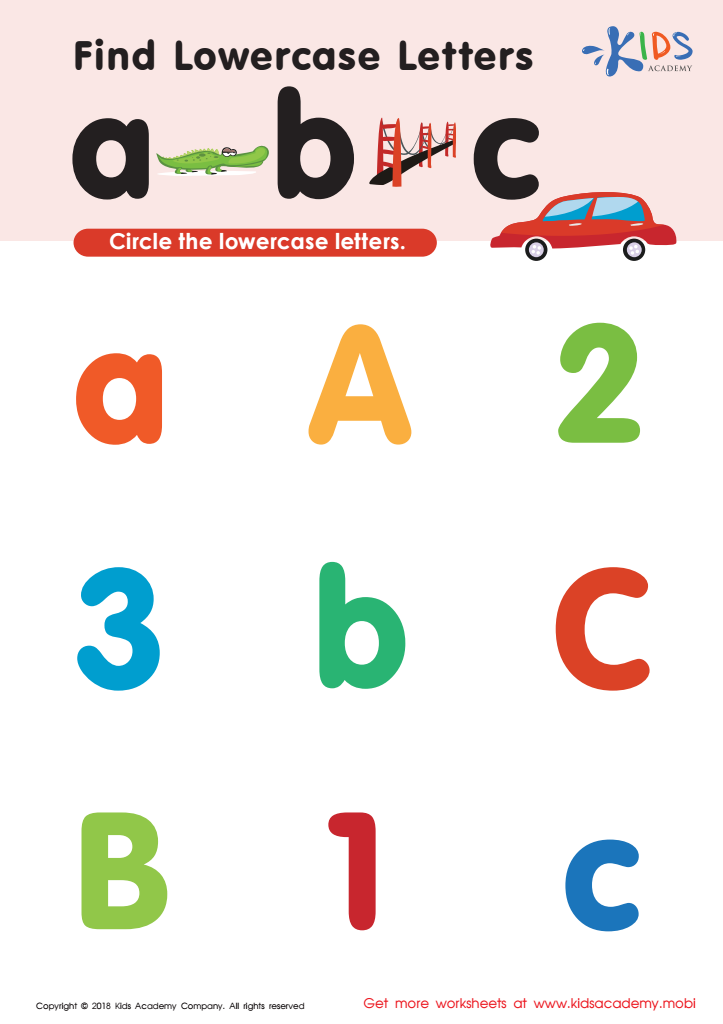
Find lowercase letters a b c Worksheet
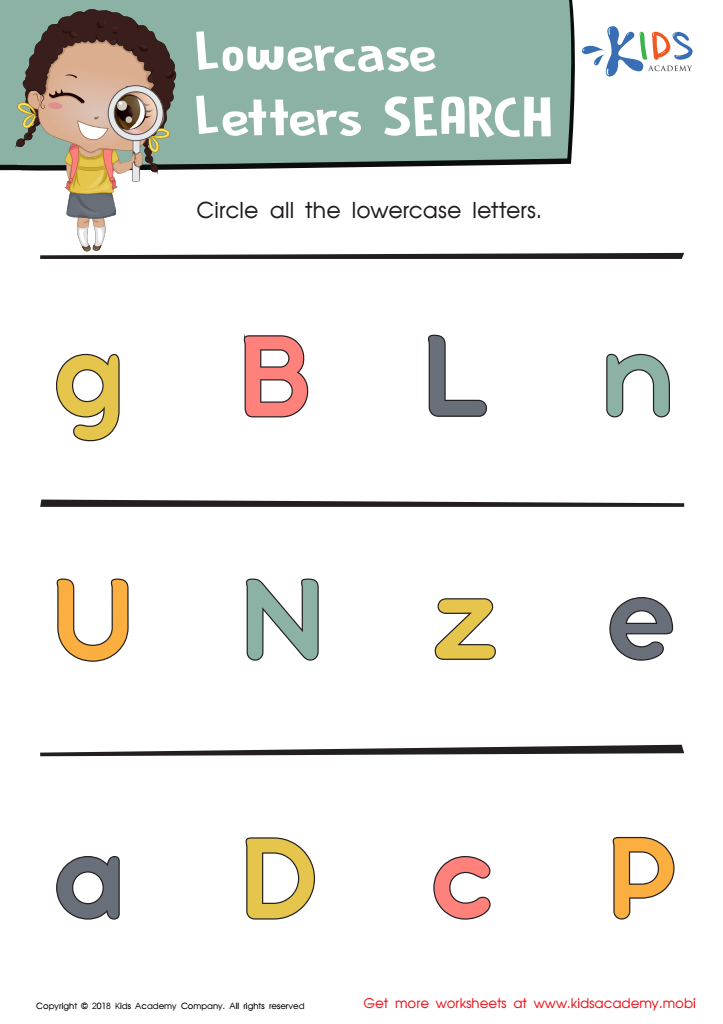
Lowercase Letters Search: Assessment Worksheet
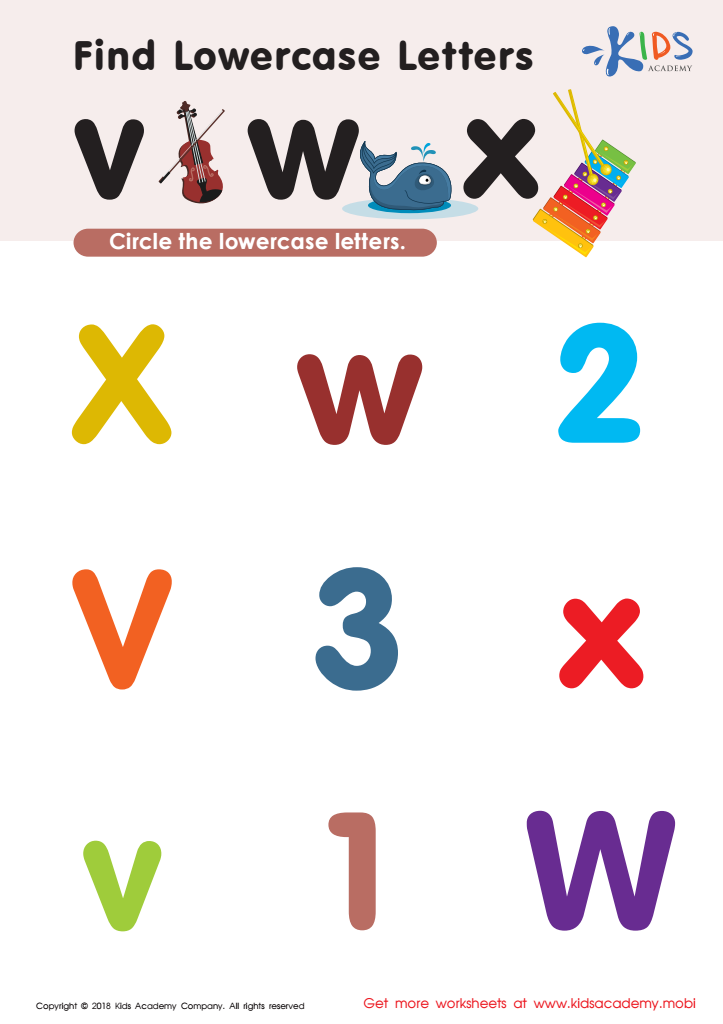
Find Lowercase Letters v w x Worksheet


Lowercase letter identification is a fundamental skill for children aged 5-8, making it crucial for parents and teachers to prioritize its development. Recognizing lowercase letters is essential for reading fluency and comprehension. Unlike uppercase letters, lowercase letters are more commonly found in texts, making their identification vital for kids to progress in their literacy skills.
Moreover, understanding lowercase letters lays the groundwork for writing. Children must distinguish between upper and lowercase forms to express themselves in writing accurately. It also enhances their ability to differentiate words, which is essential for spelling and decoding new words, ultimately fostering greater confidence in their abilities.
In addition, lowercase identification is linked to broader cognitive development. As children learn letters, they also develop fine motor skills, critical thinking, and memory. Engaging in activities that focus on lowercase letters can be a fun way to promote social interaction and communication as children work in groups or with adult guidance.
Overall, supporting lowercase letter identification helps children become more proficient readers and writers, nurturing their love for learning. By emphasizing these foundational skills, parents and teachers set a solid groundwork for future educational achievements.