Handwriting practice Tracing Letters Worksheets for Ages 5-8 - Page 2
28 filtered results
-
From - To
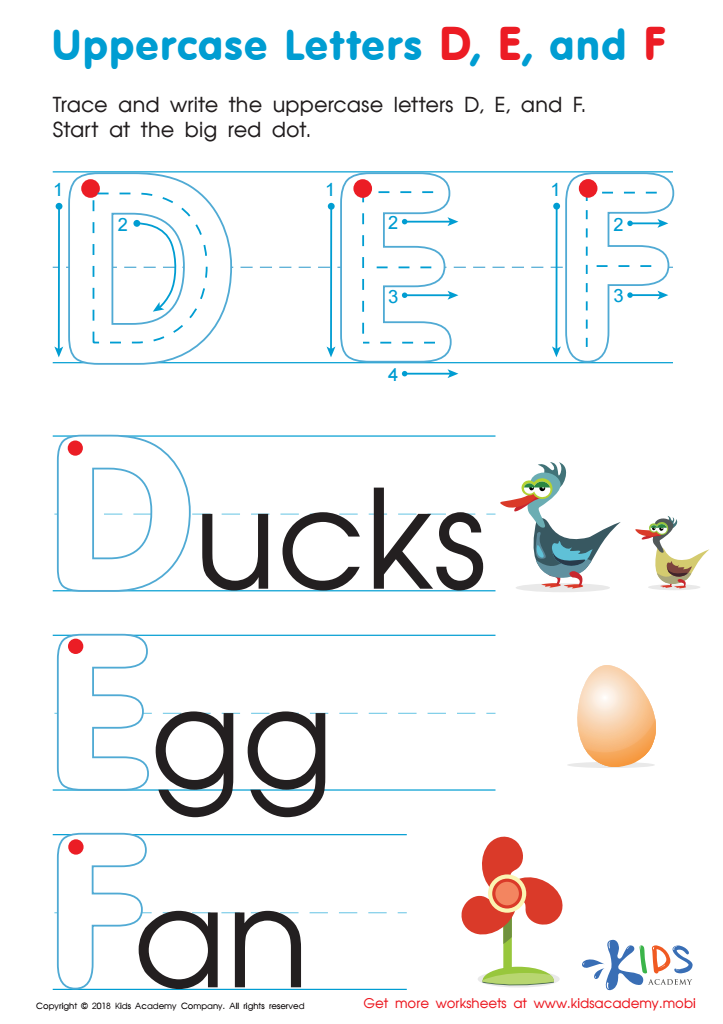
Uppercase Letters D, E, and F Worksheet
 Assign to My Students
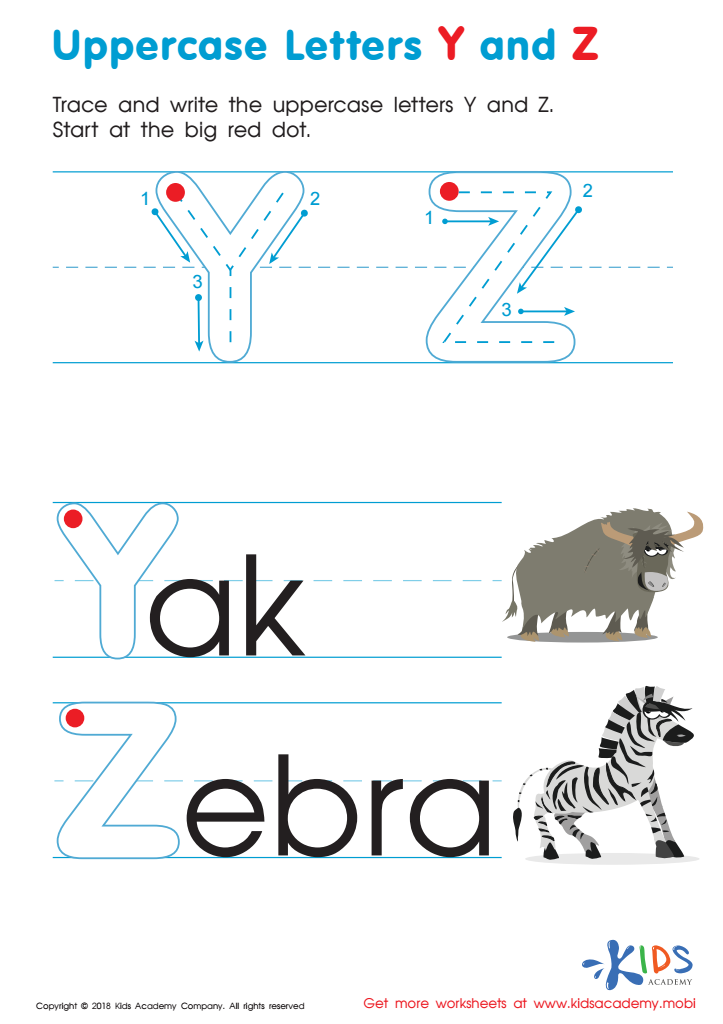
Uppercase Letters Y Z Worksheet
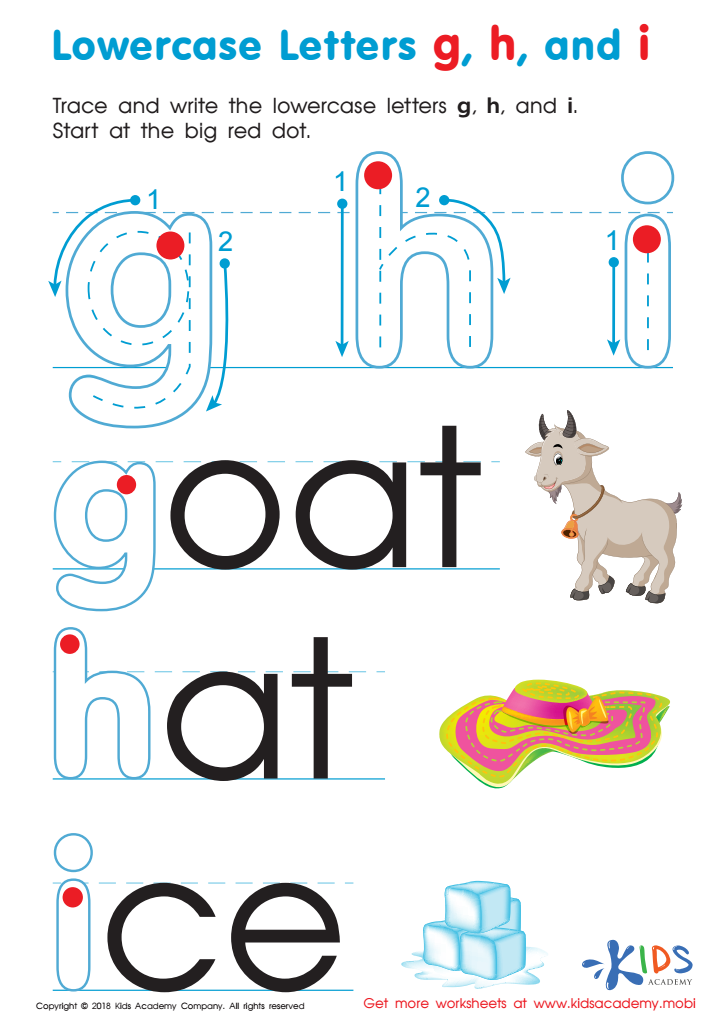
Lowercase Letters g h i Worksheet
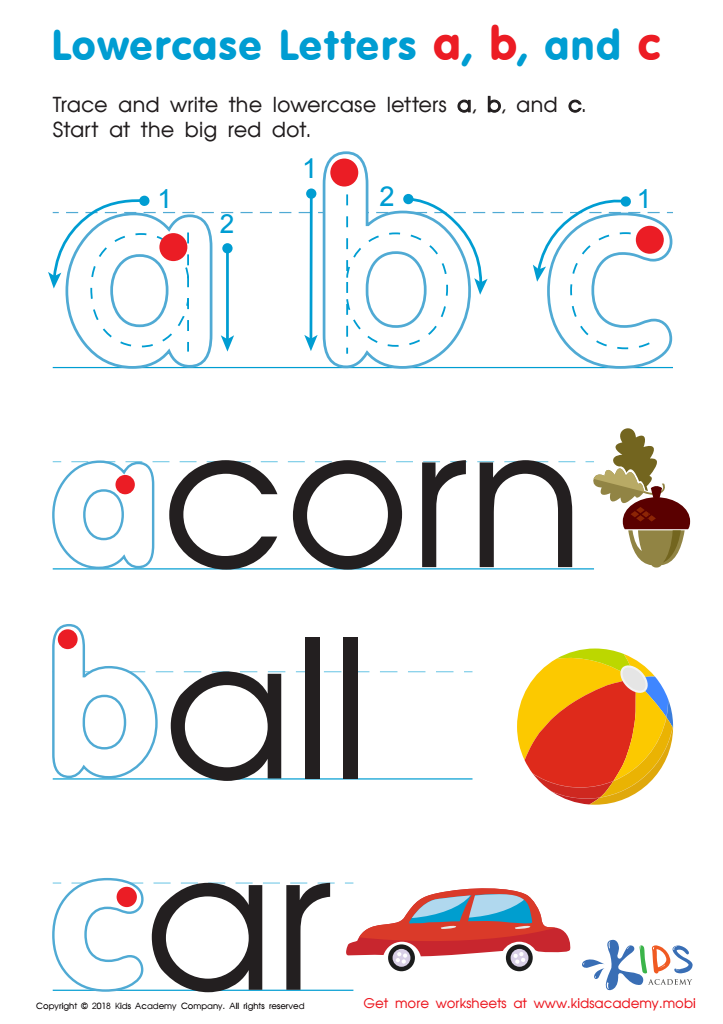
Lowercase Letters a b c Worksheet








Handwriting practice is vital for children aged 5-8 as it forms the foundation for literacy development. Tracing letters helps young learners develop fine motor skills by building strength and coordination in their hands and fingers. This foundational skill is crucial as it not only affects handwriting but also tasks like dressing or using utensils. Moreover, tracing letters improves muscle memory, allowing children to form letters subconsciously and write quicker over time.
Handwriting is closely linked to cognitive development. The process of tracing letters reinforces the alphabet, aiding in letter recognition which is essential for reading and spelling skills. Engaging multiple senses—seeing the letter, hearing its sound, and feeling the motion—enhances learning and retention.
For parents and teachers, tracing exercises offer insightful assessments of a child’s writing fluency and precision, identifying early challenges which can be addressed promptly. They also promote focus, discipline, and accuracy, which are valuable skills beyond the classroom.
Additionally, in today’s digital age, dedicating time to handwriting presents an opportunity for children to experience technology-free, hands-on learning. This holistic approach nurtures a balanced development that benefits not just academic success but also everyday functional skills and self-expression. Therefore, handwriting practice through tracing letters is an indispensable part of early education.








