Alphabet familiarity Upper & Lowercase Letters Worksheets for Ages 5-8
7 filtered results
-
From - To
Help your child master the alphabet with our Alphabet Familiarity Upper & Lowercase Letters Worksheets, designed for ages 5-8. These engaging and educational printables from Kids Academy offer fun activities to distinguish and match uppercase and lowercase letters, fostering early reading and writing skills. Perfect for both classroom and home use, our worksheets are tailored to capture young learners’ attention through a variety of exercises including tracing, letter recognition, and alphabetical order. Set a strong foundation for your child's literacy journey with these accessible and beautifully crafted learning resources today!
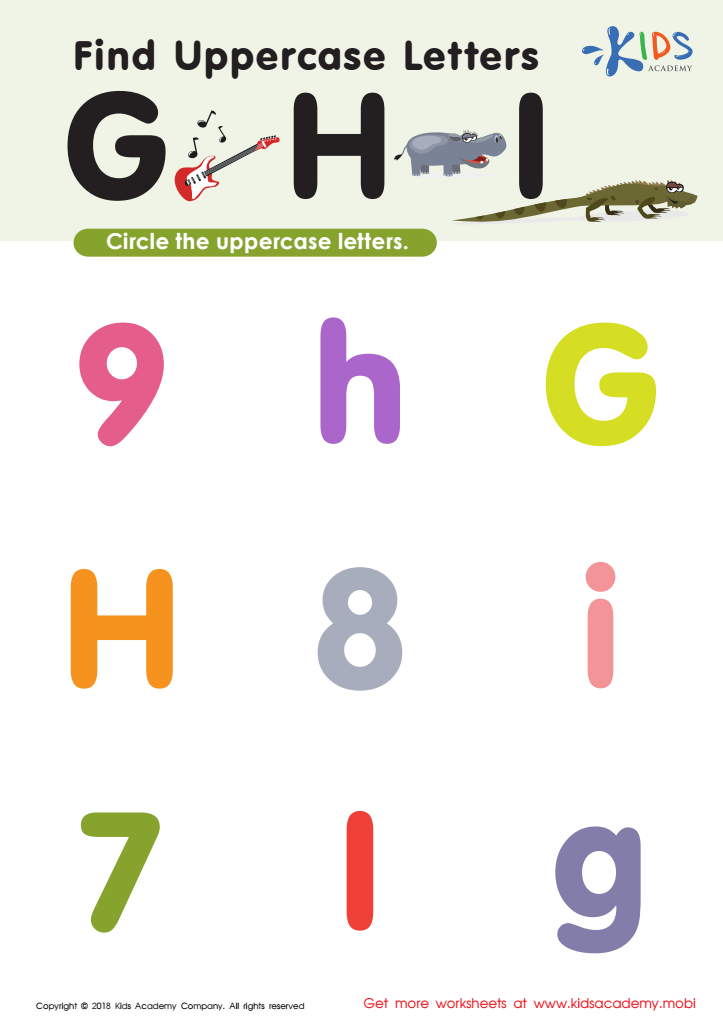
Find Uppercase Letters G, H, and I Worksheet
 Assign to My Students


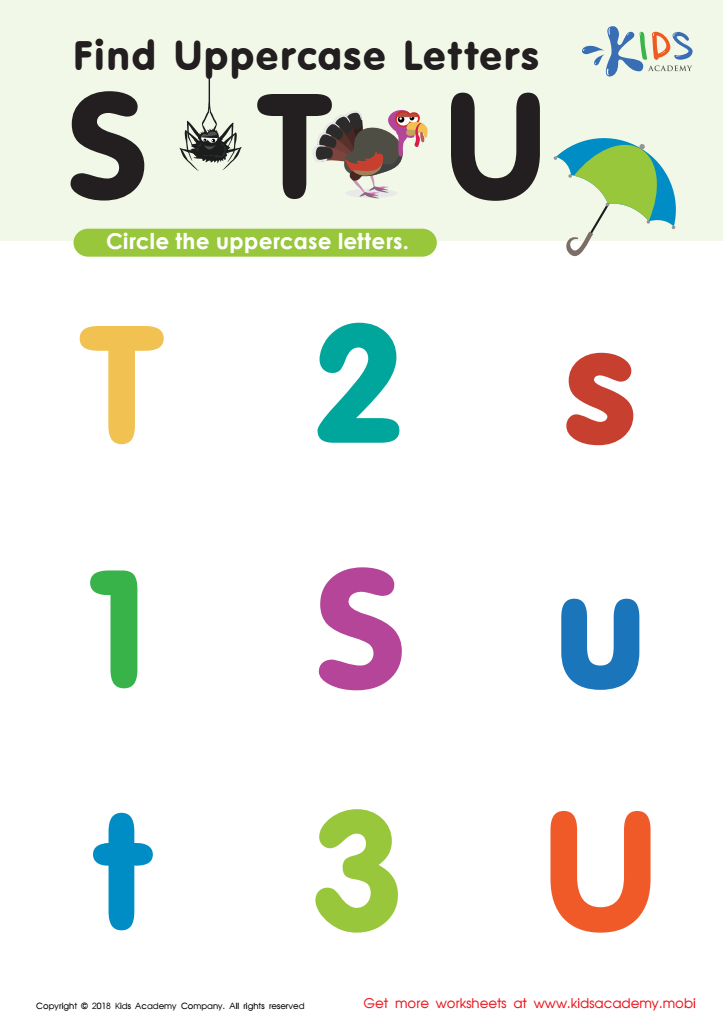
Find Uppercase Letters Worksheet
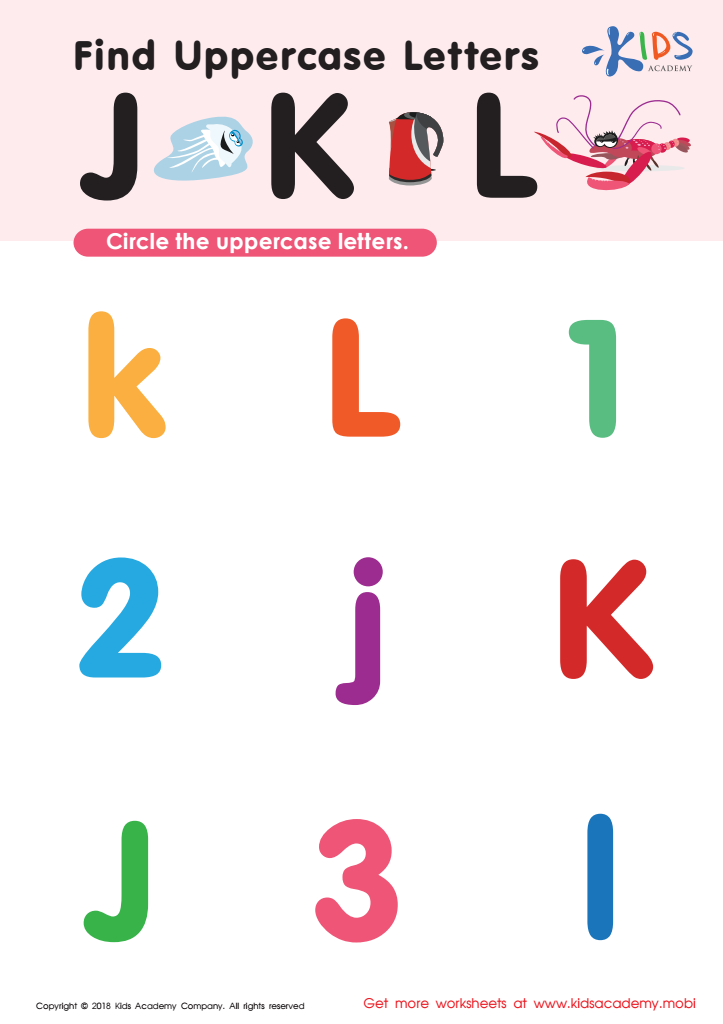
Find Uppercase Letters J, K, and L Worksheet
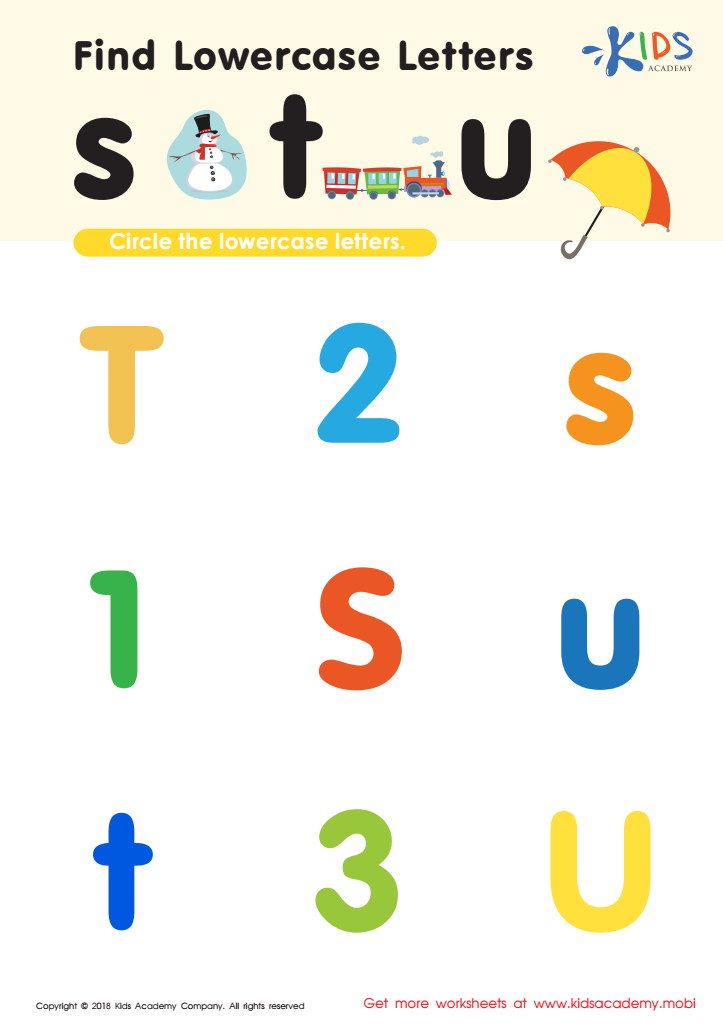
Find lowercase Letters s t u Worksheet
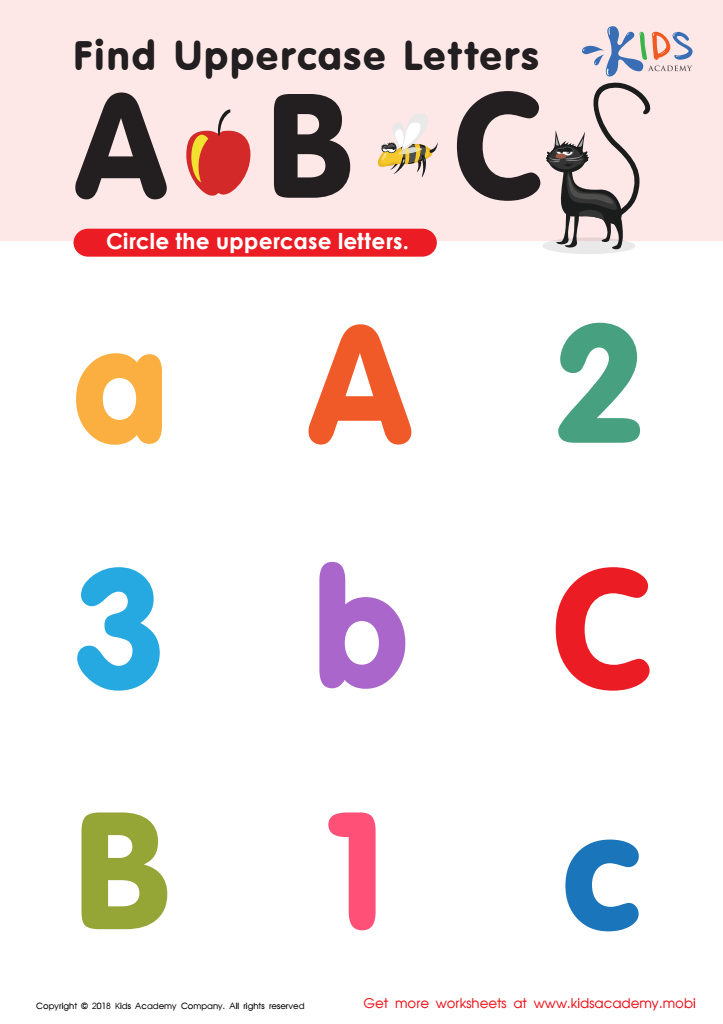
Find Uppercase Letters A, B, and C Worksheet
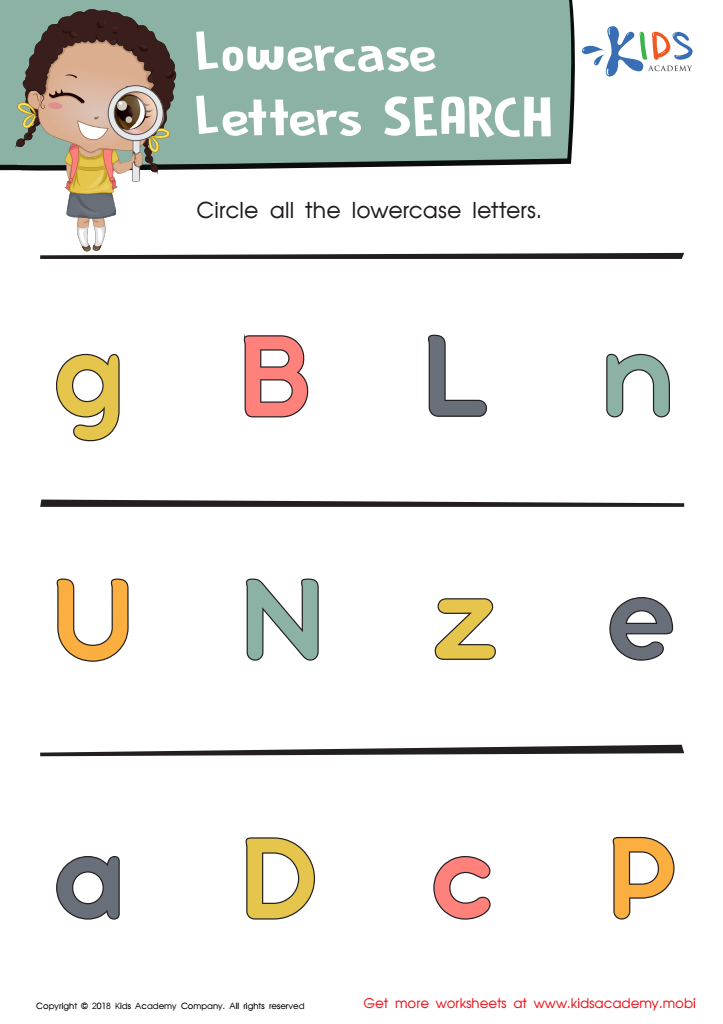
Lowercase Letters Search: Assessment Worksheet
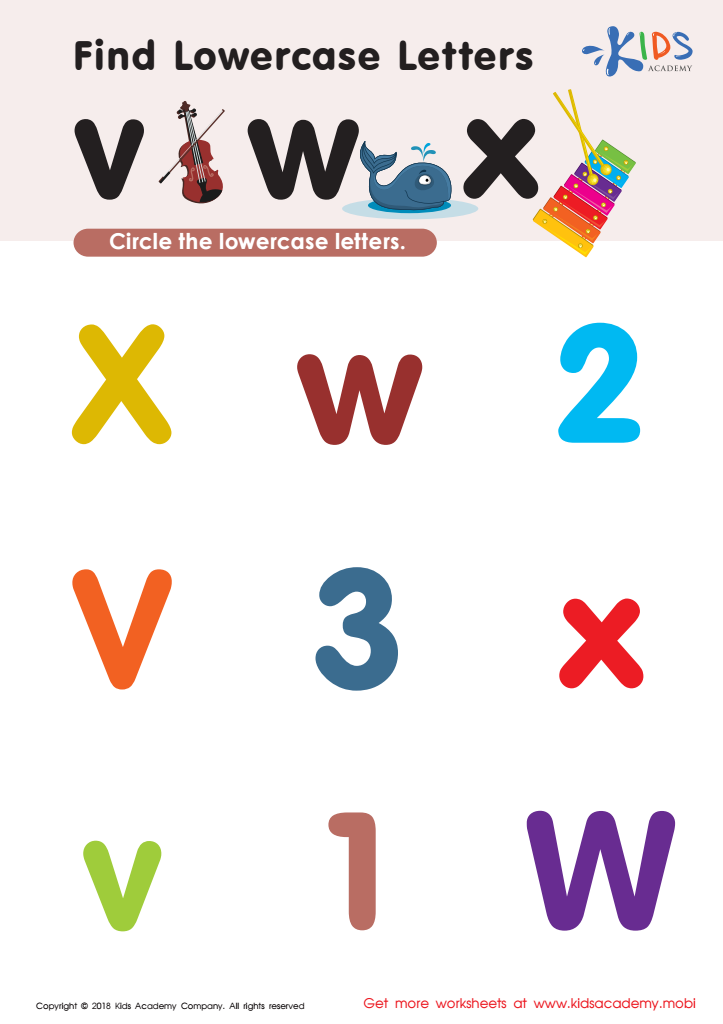
Find Lowercase Letters v w x Worksheet






Alphabet familiarity, particularly both upper and lowercase letters, is a foundational skill for early school children ages 5-8. Establishing proficiency in recognizing and writing these letters primes young learners for success in reading and writing. Awareness of both uppercase and lowercase letters nurtures their capacity to distinguish between different letter forms, reinforcing their understanding that letters can appear in diverse formats yet represent the same sound or concept.
At this developmental stage, children transition from recognizing letters as mere visual symbols to understanding their phonetic roles within words. Proficient letter recognition expedites reading skills, as children can quickly decode text rather than struggling to identify basic characters. This fluency fosters a positive attitude towards reading and can increase their confidence in tackling more complex literacy tasks as they progress through school.
Moreover, comprehension of both cases of letters improves fine motor skills through writing practice. Writing lowercase letters, often more intricate in form, enhances hand-eye coordination and introduces children to essential writing conventions, such as capitalizing sentence beginnings and proper nouns. Ultimately, a solid grasp of the alphabet is a critical milestone that underpins not only academic achievement but also holistic language development, communicative competence, and overall cognitive growth.







