Visual discrimination skills Upper & Lowercase Letters Worksheets for Ages 5-8
4 filtered results
-
From - To
Enhance your child's visual discrimination skills with our engaging Upper & Lowercase Letters Worksheets, designed specifically for ages 5-8! These printable resources make learning fun and interactive, helping young learners differentiate between uppercase and lowercase letters through vibrant activities. Our worksheets encourage critical thinking and concentration while reinforcing essential literacy skills. Perfect for home or classroom use, they provide a variety of exercises tailored to support each child's developmental needs. Help your child build confidence in recognizing letters, boosting their reading and writing abilities. Begin their journey to literacy success today with these essential learning tools!
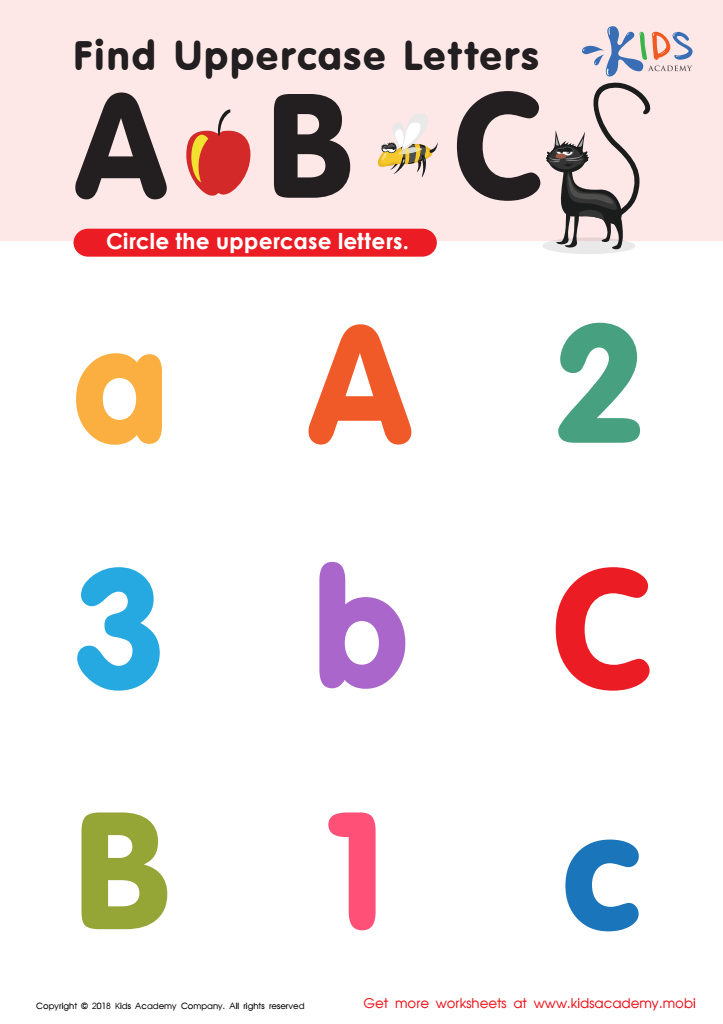
Find Uppercase Letters A, B, and C Worksheet
 Assign to My Students










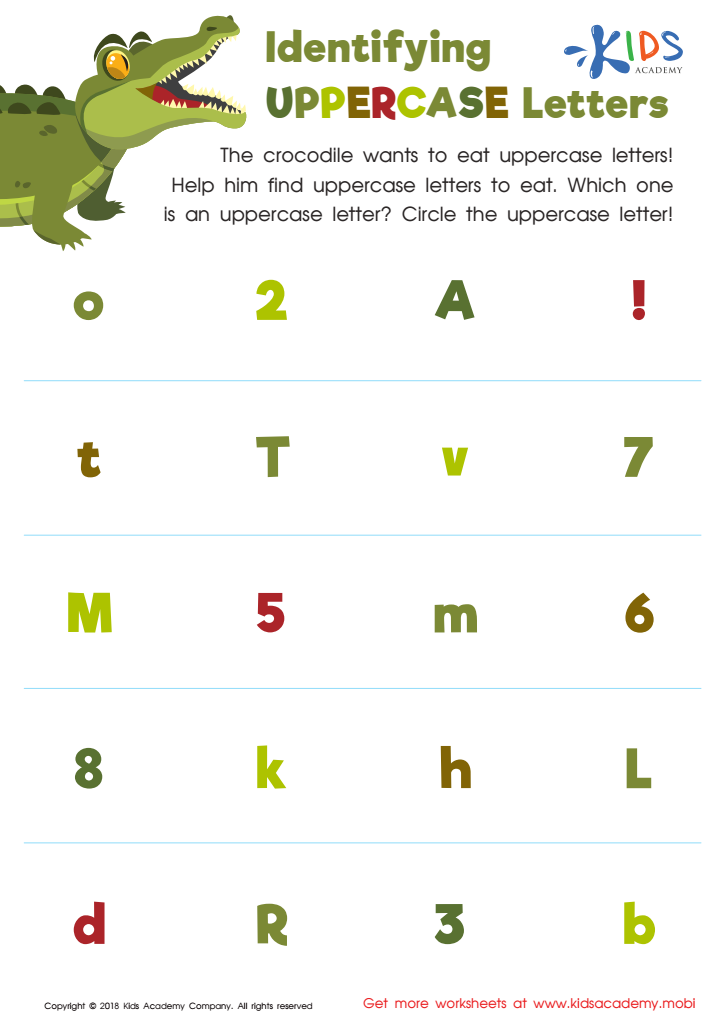
Identifying Uppercase Letters Worksheet
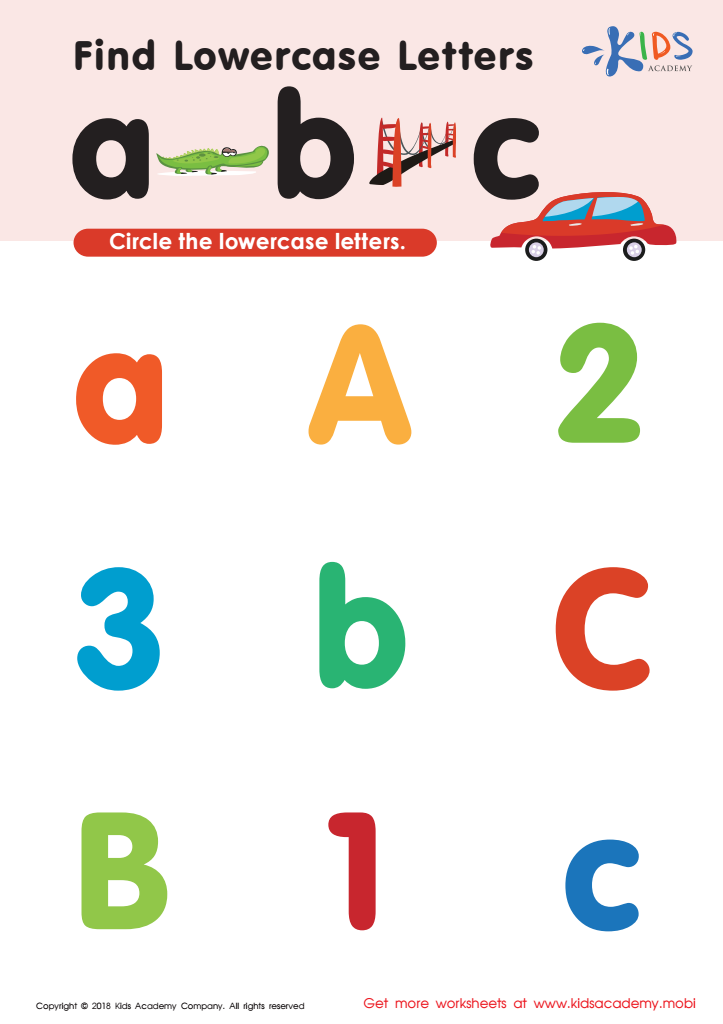
Find lowercase letters a b c Worksheet
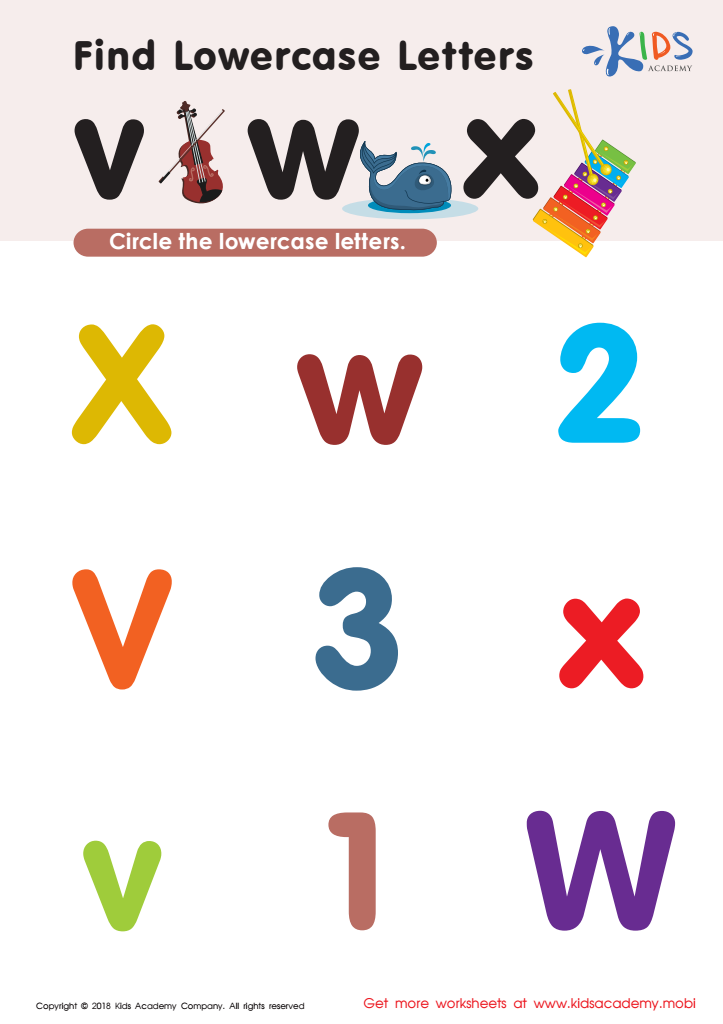
Find Lowercase Letters v w x Worksheet






Visual discrimination skills are essential for young learners, especially when it comes to recognizing and differentiating between uppercase and lowercase letters. For children aged 5-8, these skills play a foundational role in their reading and writing development. Children must be able to notice subtle differences in letter shapes, sizes, and orientations to decode words accurately. Without strong visual discrimination skills, they may confuse letters like “b” and “d” or “p” and “q,” leading to frustration and potential learning delays.
Parents and teachers should prioritize strengthening these skills as children begin their literacy journey. Engaging activities such as letter matching games, flashcards, and interactive books can effectively enhance visual discrimination. This not only builds confidence in reading but also lays the groundwork for more advanced literacy skills. Additionally, with strong visual discrimination abilities, children will find it easier to follow instructions, complete assignments, and participate actively in classroom activities.
Ultimately, fostering visual discrimination skills empowers children to become proficient readers and writers, which is crucial for their academic success. Parents and teachers who prioritize these skills contribute significantly to their children’s educational journey and future learning experiences.







