Vowel Recognition Vowel Diphthongs Worksheets for Ages 5-8
3 filtered results
Difficulty Level
Grade
Age
-
From - To
Subject
Activity
Standards
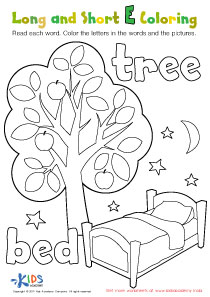
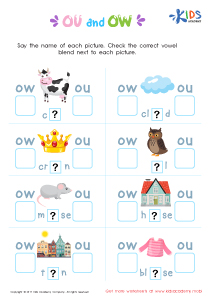
Explore our engaging Vowel Recognition and Vowel Diphthongs Worksheets specifically designed for children ages 5-8. These worksheets help young learners master essential reading skills by recognizing vowels and understanding diphthongs' unique sounds. Colorful, fun, and educational, our activities include matching, tracing, and identifying vowel pairs, ensuring kids develop strong phonemic awareness. Ideal for classroom use or at-home practice, our worksheets blend play with learning, making reading an exciting adventure. Build a solid foundation in literacy by incorporating these interactive worksheets into your child’s daily routine, supporting their journey towards becoming confident readers. Discover more at Kids Academy!
Favorites
With answer key
Interactive
Vowel match Worksheet
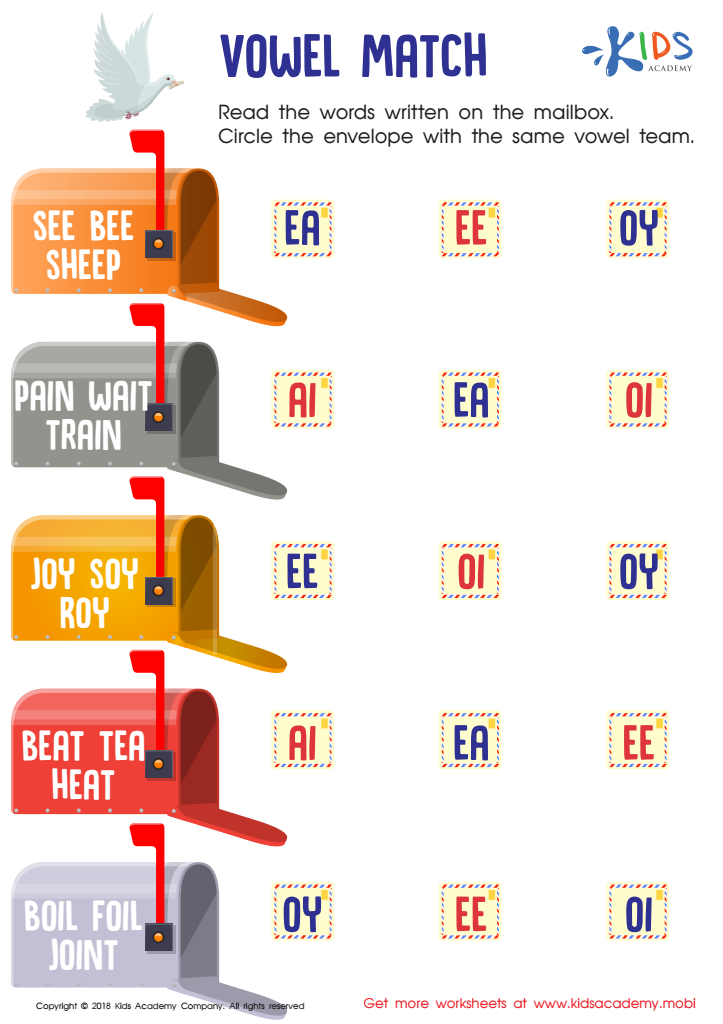
Early readers can find vowel teams (digraphs) tricky. This simple worksheet helps kids match words with the right digraphs and learn to read! They'll practice reading words from different families, and linking the letters to their sounds. It's a fun way to get kids sending letters to the right addresses!
 Assign to My Students
Vowel match Worksheet
Worksheet
Reading: Vowel Team EE Worksheet
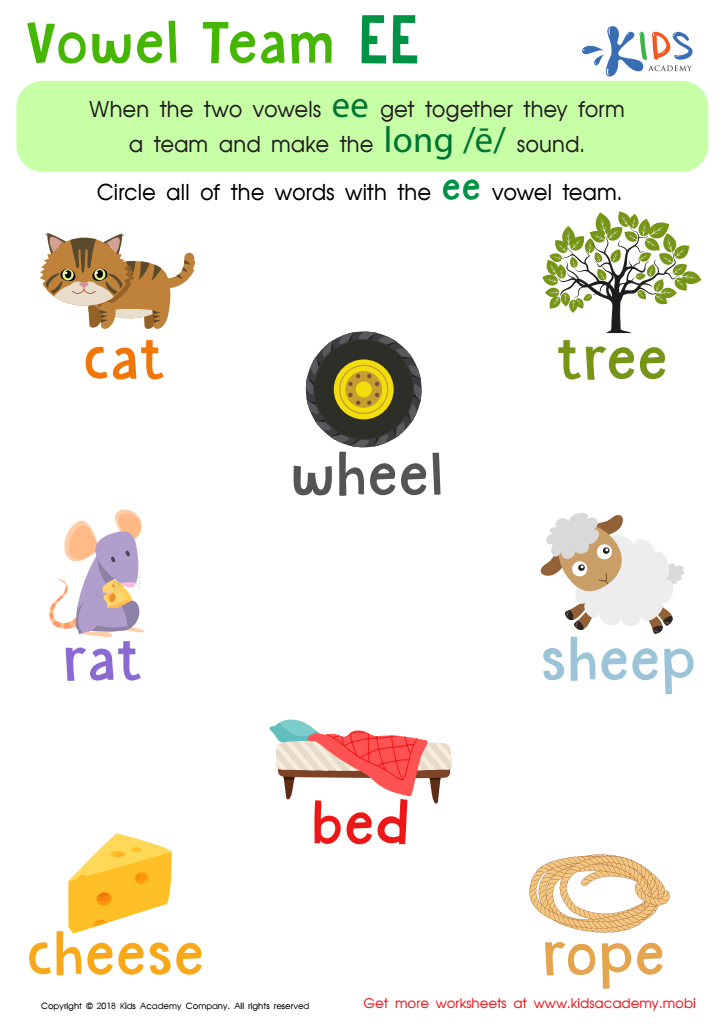
This worksheet is perfect for helping young learners master the /ee/ vowel team. It shows the first vowel with a long sound and the second vowel silent. It also provides pictures for unfamiliar words for readers of all levels. It's an ideal resource for teaching phonics skills.
Reading: Vowel Team EE Worksheet
Worksheet
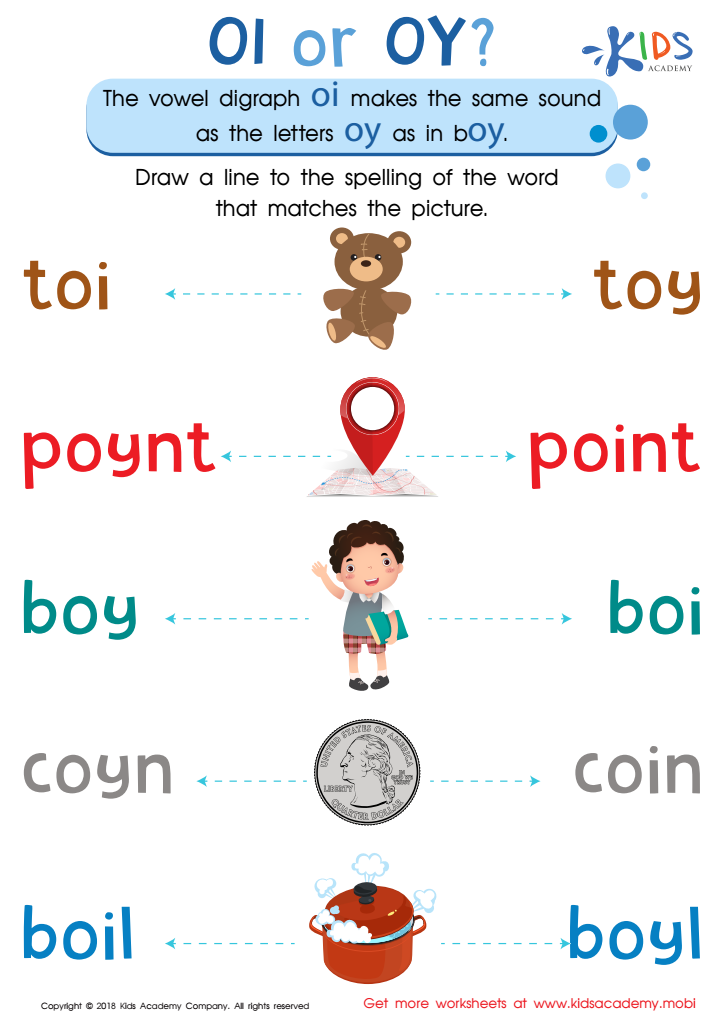
Reading: OI and OY Worksheet
Ask your students if they know the rule for words with /oi/ or /oy/ sound. If not, it's easy to learn! Rule: If /oy/ at end of word, spell with 'oy'; if /oi/ in middle of word, spell with 'oi'. Use this worksheet to help them master these digraphs and improve their ability to decode.
Reading: OI and OY Worksheet
Worksheet
Join Kids Academy for Free
Who is primarily going to use this learning content?


Vowel recognition and vowel diphthongs play a vital role in the early stages of reading and language development for children aged 5-8. During this critical period, children transition from recognizing simple sounds to understanding more complex phonetic combinations. Vowel recognition is foundational because vowels are integral to word construction and pronunciation. Mastering vowels, including short and long sounds, allows children to decode and spell words accurately, boosting both reading fluency and spelling skills.
Vowel diphthongs, which are complex sounds formed by combining two vowels in a single syllable, further expand a child's phonetic repertoire. Understanding diphthongs like "oi" in "boil" or "ou" in "mouse" can significantly enhance a child’s ability to read new and multi-syllabic words. This skill is crucial for comprehension because it allows children to sound out and internalize unfamiliar words, thereby broadening their vocabulary.
Paying attention to vowel recognition and diphthongs fosters phonemic awareness, a key predictor of reading success. It also builds a strong linguistic foundation necessary for advanced literacy skills. Supporting children in this area empowers them with the tools needed to become confident and proficient readers, which is fundamental for their academic growth and lifelong learning. Parents and teachers who focus on these areas provide children with valuable skills that support their overall educational development.