
Phonics Skills Vowels and Consonants Worksheets for Ages 5-8
8 filtered results
Difficulty Level
Grade
Age
-
From - To
Subject
Activity
Standards
Enhance your child's reading capabilities with our Phonics Skills Vowels and Consonants Worksheets for ages 5-8. Designed by educators, these worksheets focus on blending vowels and consonants to build a foundational understanding of phonics. Through engaging activities and exercises, children will develop essential language skills that promote effective reading and pronunciation. Our colorful and interactive sheets are perfect for at-home learning or as supplementary classroom materials. Give your young learner a head start in literacy with tools crafted to support and entertain, fostering a lifelong love of reading. Visit our page to explore these invaluable resources.
Favorites
With answer key
Interactive
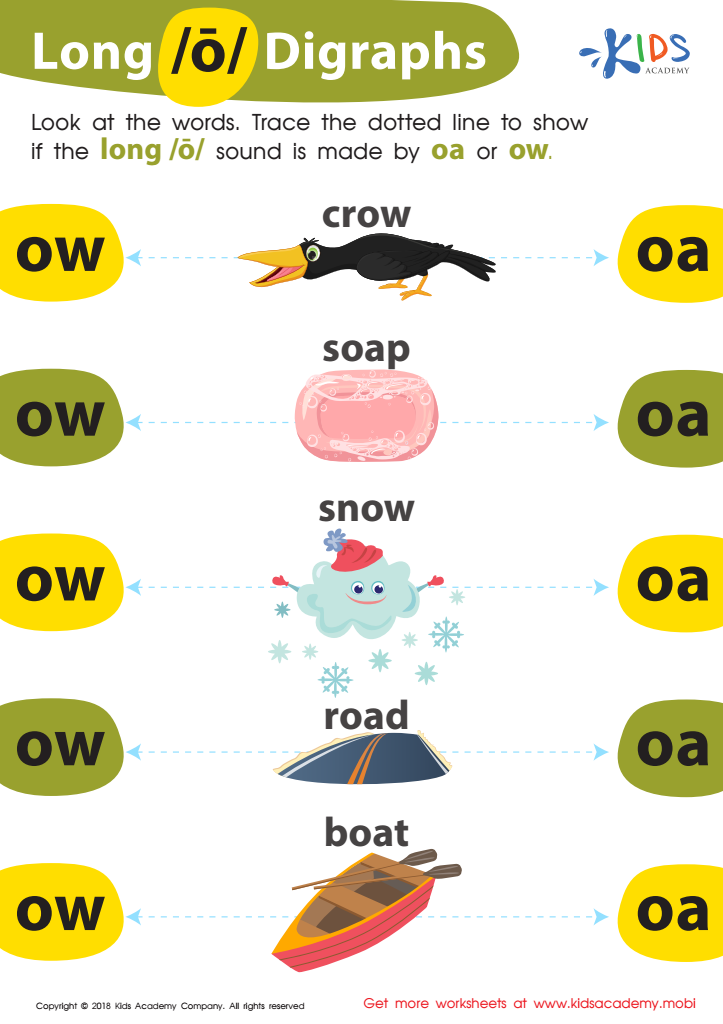
Reading: Long O Digraphs Worksheet
Reading and decoding words can be complex for learners when they start studying digraphs, two letters that make one sound. This worksheet focuses on the long O sound, /oa/ and /ow/. With the understanding of digraphs, students can decode more words and build their reading confidence.
 Assign to My Students
Reading: Long O Digraphs Worksheet
Worksheet
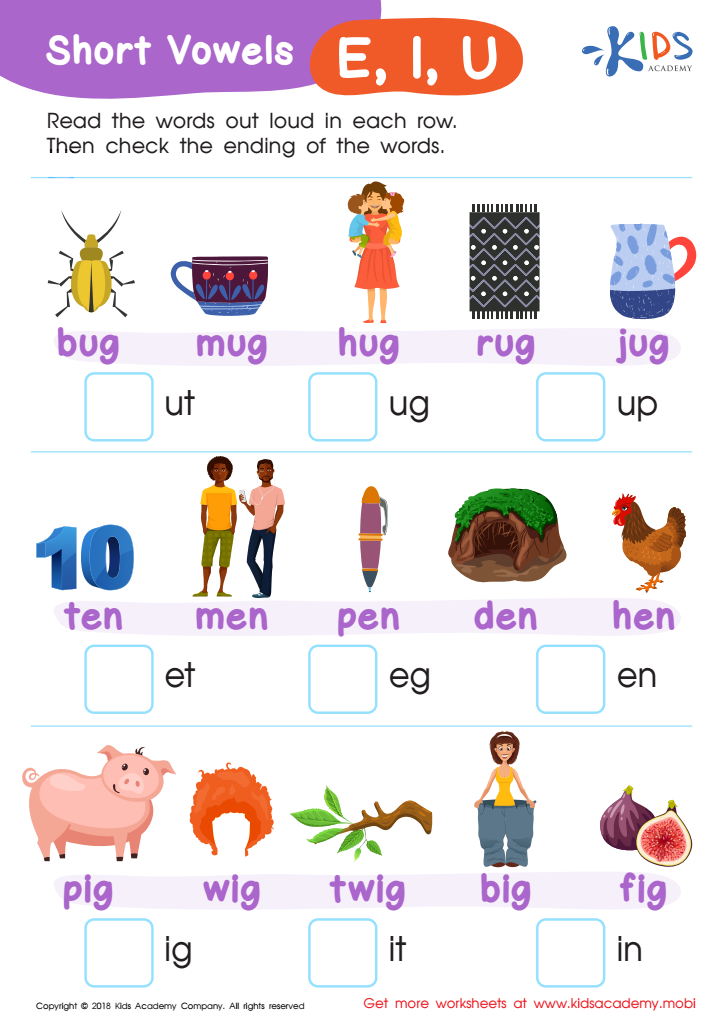
Short Vowels /e/, /i/, and /u/ Worksheet
Your emergent reader can have fun while practicing their short vowel sounds with this free, brightly colored worksheet. They'll identify one-syllable words by their pictures, then match the correct ending for each. They'll gain an understanding of how short vowel sounds vary in closed syllables with different endings, without even realizing it!
Short Vowels /e/, /i/, and /u/ Worksheet
Worksheet
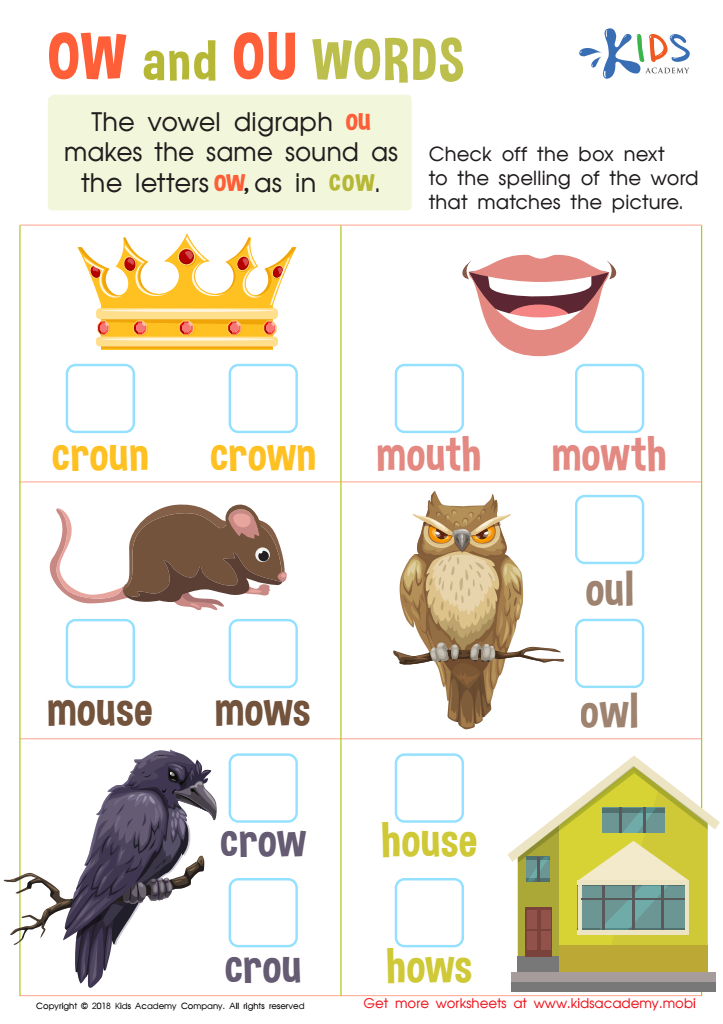
Reading: OW and OU Words Worksheet
Help your kids learn phonetics! Explain the different sounds and long/short variations. Emphasize that some vowel sounds are the same, e.g. ou = ow in cow. For practice, have them read aloud the words in the worksheet and check the box next to the spelling that matches the picture.
Reading: OW and OU Words Worksheet
Worksheet
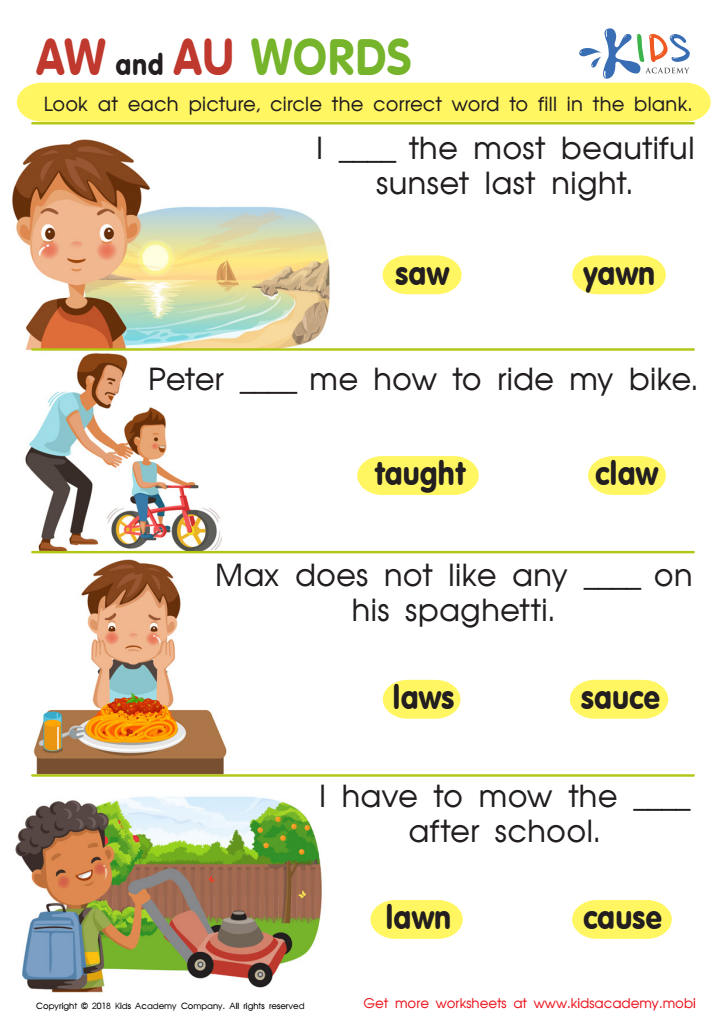
Reading: AW and AU Words Worksheet
This worksheet helps kids recognize that /au/ and /aw/ can make the same sound. Students read sentences and pick the correct word with one of the digraphs. Understanding digraphs improves decoding and reading fluency. Perfect for reading and phonics classes.
Reading: AW and AU Words Worksheet
Worksheet
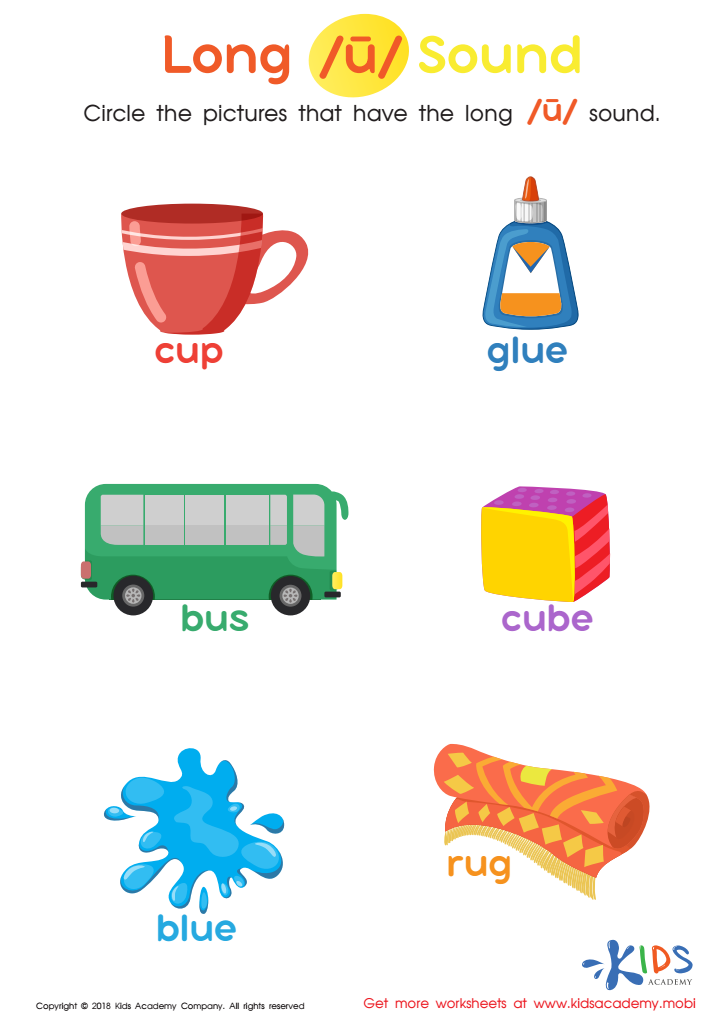
Long «u» Sound Worksheet
This fun and engaging free PDF worksheet teaches kids to differentiate between long and short «u» sounds. Through tracing circles around the correct words, they'll practice their fine motor skills while also recognizing patterns (silent-e for «ū» sound) in closed-syllable words. Bright and cheery pictures make it a great confidence booster for new readers!
Long «u» Sound Worksheet
Worksheet
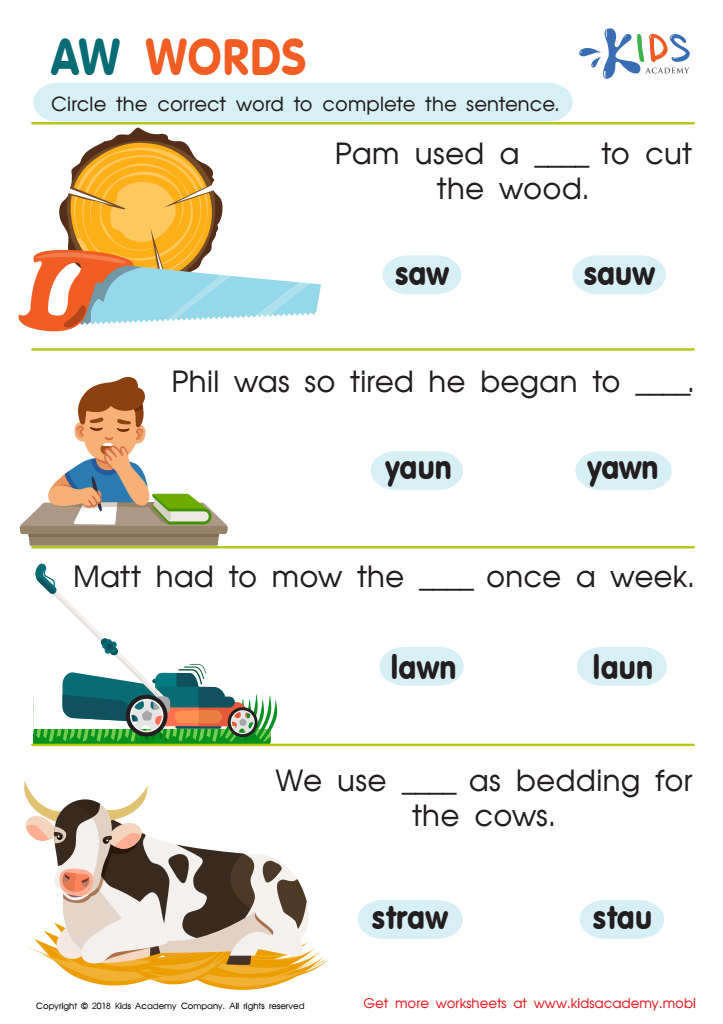
Reading: AW Words Worksheet
Practice decoding the /aw/ digraph with this printable. Students read sentences and select the word with the correct spelling to complete each one. Note, /aw/ is sometimes spelled /au/, so this worksheet helps prevent confusion. Have fun, and practice hard!
Reading: AW Words Worksheet
Worksheet
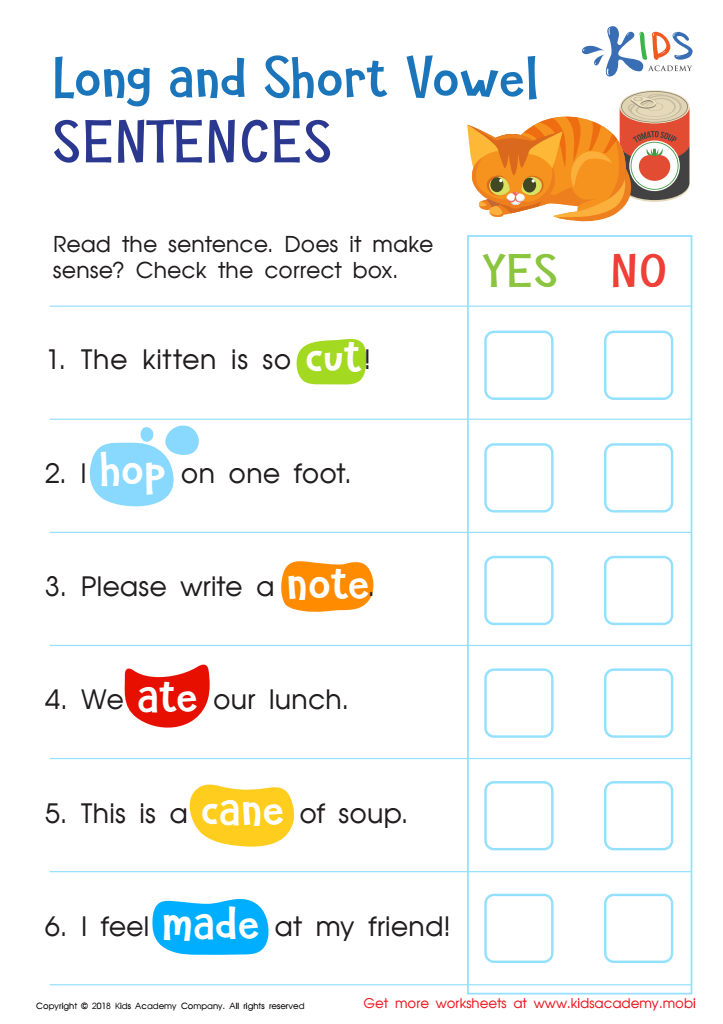
Long and Short Vowel Sentences: Assessment Worksheet
This printable worksheet helps kids practice differentiating between short and long vowel sounds. They'll use context clues to figure out which words make sense in simple sentences. A great way to build reading and writing skills!
Long and Short Vowel Sentences: Assessment Worksheet
Worksheet
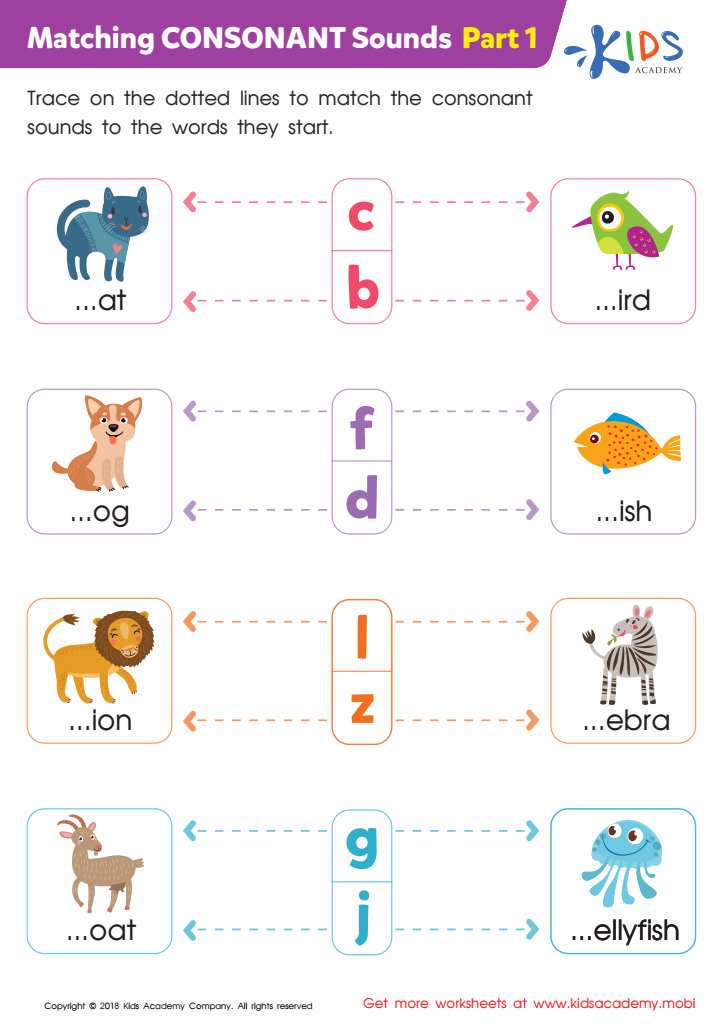
Matching Consonant Sounds: Part 1 Worksheet
Decide which letter matches each word and picture in this fun phonics worksheet. Slide your finger over each word, trying out each letter to check for matches. Once each pair is solved, trace the dotted lines with pencil to complete the printable. Who knew learning could be so enjoyable?
Matching Consonant Sounds: Part 1 Worksheet
Worksheet
Join Kids Academy for Free
Who is primarily going to use this learning content?



Parents and teachers should prioritize phonics skills—specifically vowels and consonants—for children aged 5-8 because these foundational elements are critical for learning to read and write proficiently. Phonics involves understanding the relationships between letters and sounds, which is paramount in decoding words. During these early years, children's brains are highly receptive to acquiring language-based skills, making it the optimal period for developing robust foundational literacy abilities.
Vowels and consonants serve as the building blocks of spoken and written language. Mastery of these phonetic elements enables children to sound out and spell words accurately, thereby enhancing both reading fluency and comprehension. Furthermore, a solid grasp of vowels and consonants supports vocabulary growth and aids in identifying patterns within words, contributing to better spelling skills.
Moreover, strong phonics skills bolster children’s confidence as independent readers. This confidence is crucial for fostering a lifelong love of learning and reading. Phonics instruction reduces the likelihood of future academic struggles by equipping children with efficient decoding strategies.
By focusing on vowels and consonants during this impressionable age range, parents and teachers are investing in a child's educational trajectory, ensuring they possess the essential tools for successful literacy development. This foundational literacy ultimately impacts academic success across all subject areas.







