
Vowel Recognition Vowels and Consonants Worksheets for Ages 5-8
7 filtered results
Difficulty Level
Grade
Age
-
From - To
Subject
Activity
Standards
Boost your child’s reading skills with our expertly crafted "Vowel Recognition Vowels and Consonants Worksheets" designed for ages 5-8. These engaging worksheets seamlessly blend fun and learning, helping young learners easily differentiate between vowels and consonants. Packed with colorful graphics, interactive activities, and age-appropriate exercises, our worksheets make mastering vowel sounds a joyful experience. Ideal for early grade students, these resources enhance phonemic awareness, laying a solid foundation for successful reading and writing development. Encourage confidence and proficiency in your child's literacy journey with our effective and enjoyable worksheets!
Favorites
With answer key
Interactive
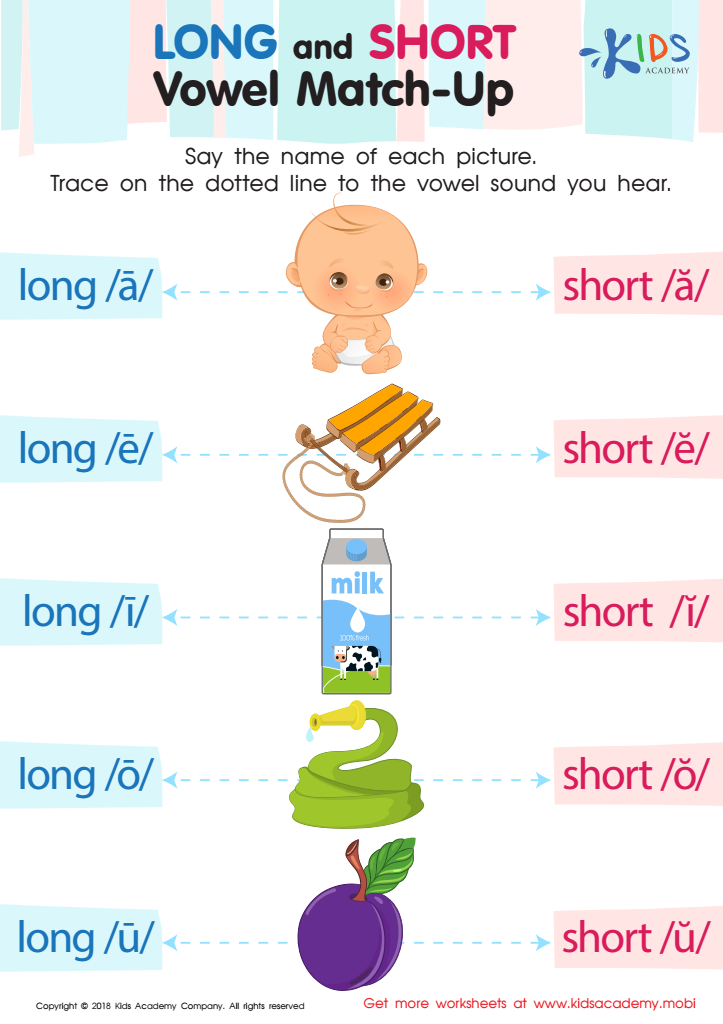
Long and Short Vowel Match up Reading Worksheet
Help your reader build confidence and refine their decoding skills! This worksheet combines long and short vowel recognition with a traceable component to improve fine motor skills. Your learner will name each picture and trace the dotted lines to get to the correct vowel sounds.
 Assign to My Students
Long and Short Vowel Match up Reading Worksheet
Worksheet
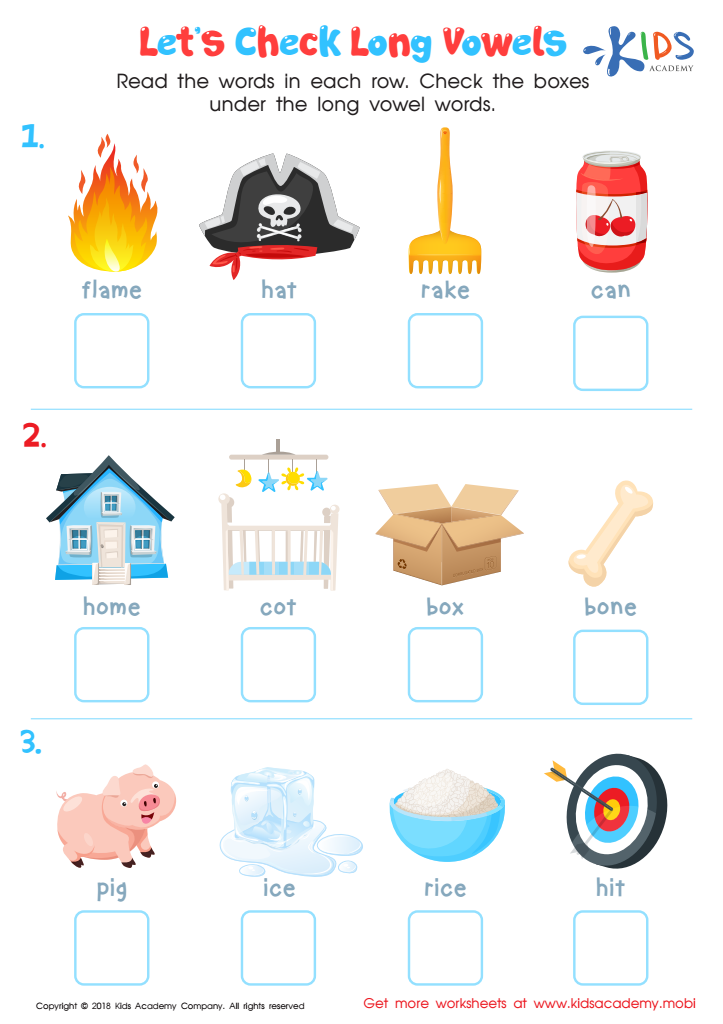
Let's Check Long Vowels: Assessment Worksheet
This worksheet helps your child identify objects and learn long vowel sounds. Ask them to say the names of the four objects in each row. Then, help them check the boxes to confirm they know the long vowel sounds. This will help them develop their reading skills.
Let's Check Long Vowels: Assessment Worksheet
Worksheet
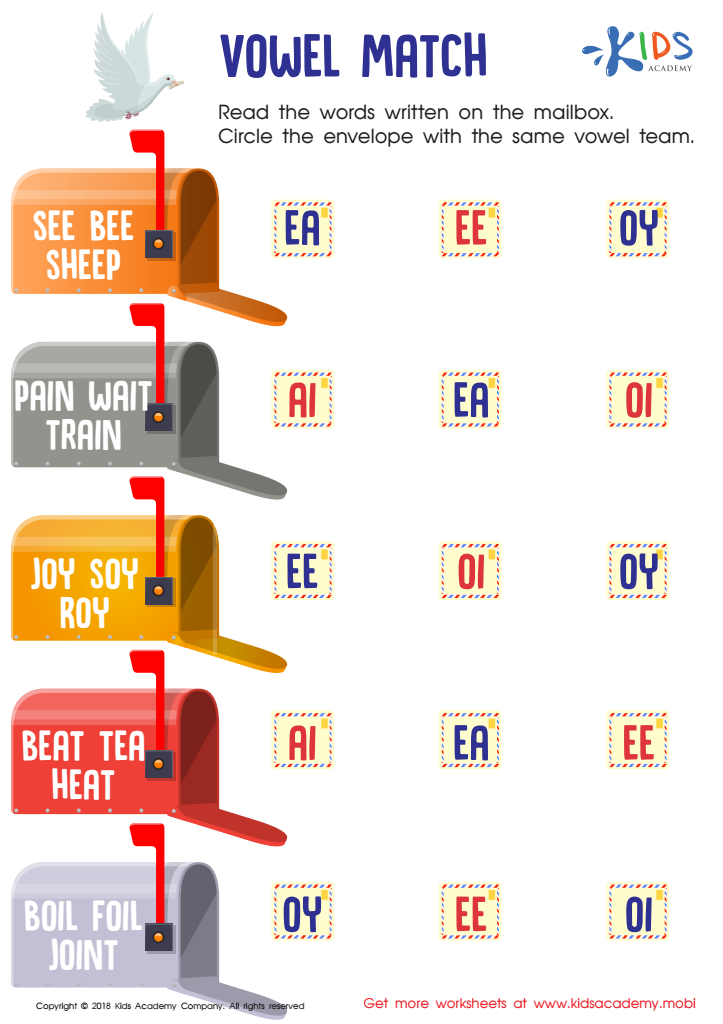
Vowel match Worksheet
Early readers can find vowel teams (digraphs) tricky. This simple worksheet helps kids match words with the right digraphs and learn to read! They'll practice reading words from different families, and linking the letters to their sounds. It's a fun way to get kids sending letters to the right addresses!
Vowel match Worksheet
Worksheet
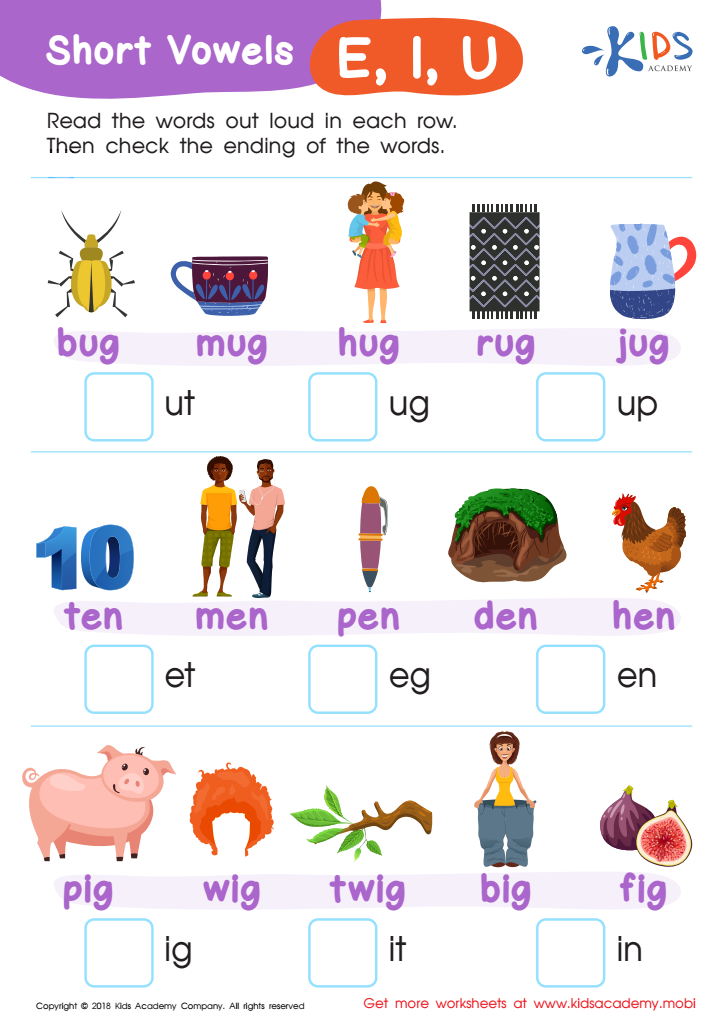
Short Vowels /e/, /i/, and /u/ Worksheet
Your emergent reader can have fun while practicing their short vowel sounds with this free, brightly colored worksheet. They'll identify one-syllable words by their pictures, then match the correct ending for each. They'll gain an understanding of how short vowel sounds vary in closed syllables with different endings, without even realizing it!
Short Vowels /e/, /i/, and /u/ Worksheet
Worksheet
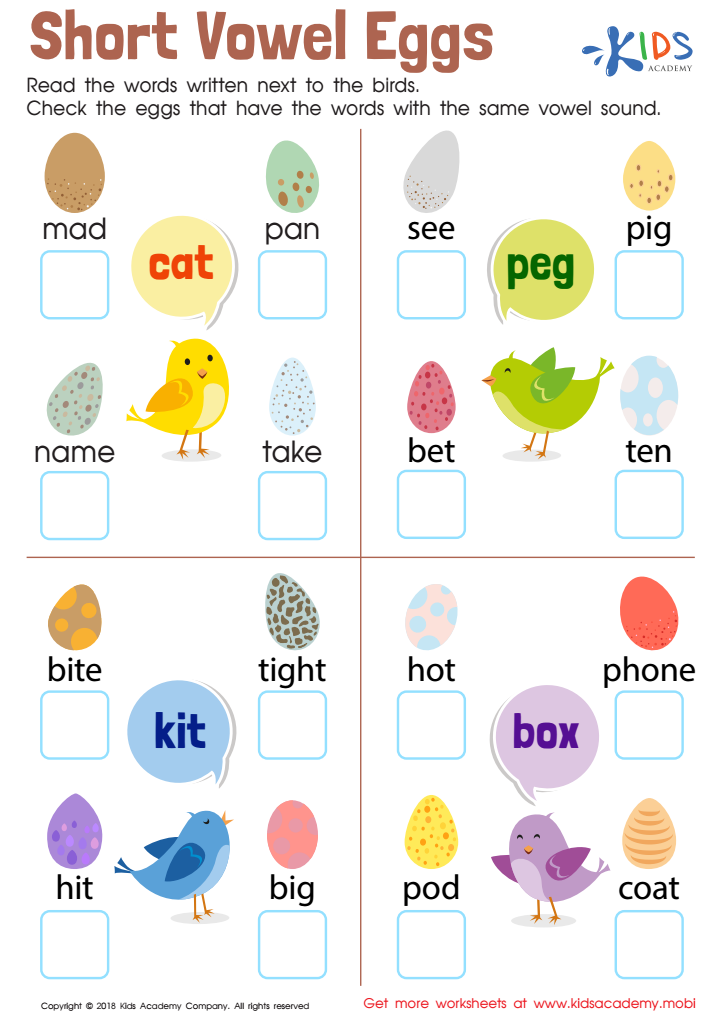
Short Vowel Eggs Worksheet
Your students will love helping these birdies pick the short vowel eggs! Have them read the words in the thought bubbles, then check off the boxes with the same short vowel sounds. The bright colors of this free Worksheet will draw them in and get them practicing their vowels!
Short Vowel Eggs Worksheet
Worksheet
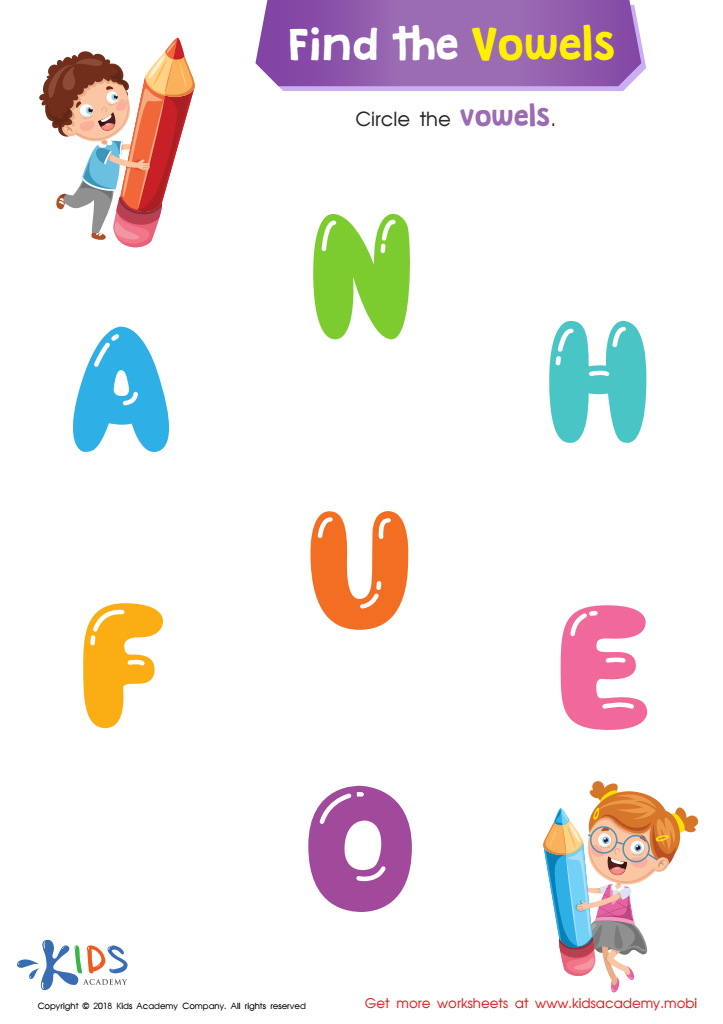
Find the Vowels Reading Worksheet
This worksheet helps kids identify vowels with bright colors and engaging activities to strengthen their visual discrimination and fine motor skills. Young learners will find it easy to succeed and be excited to keep reading!
Find the Vowels Reading Worksheet
Worksheet
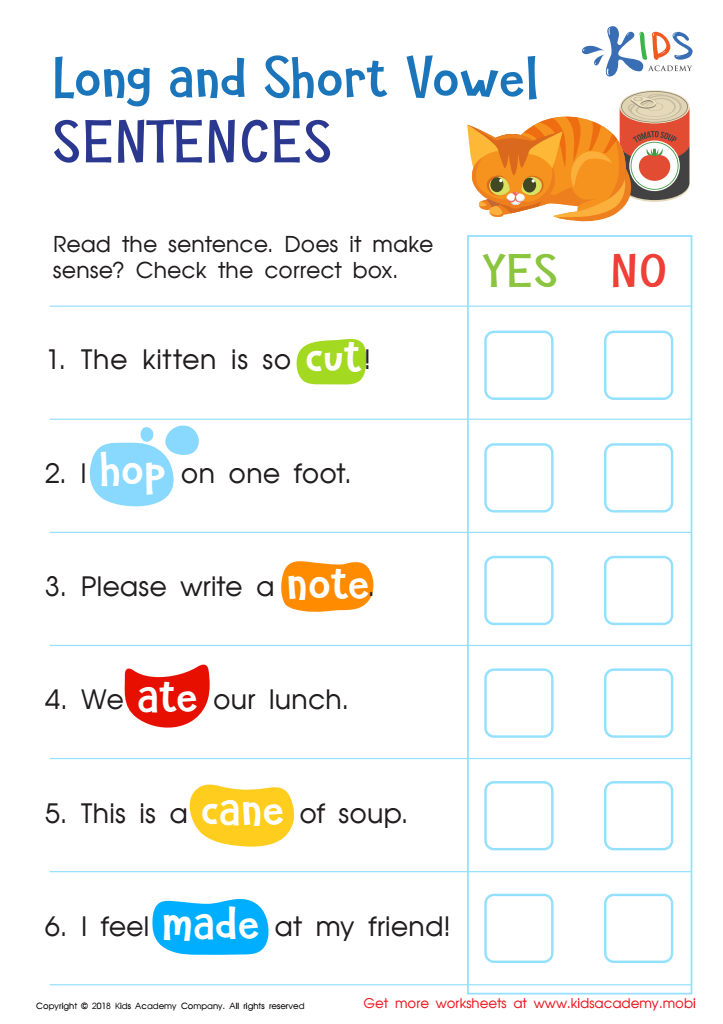
Long and Short Vowel Sentences: Assessment Worksheet
This printable worksheet helps kids practice differentiating between short and long vowel sounds. They'll use context clues to figure out which words make sense in simple sentences. A great way to build reading and writing skills!
Long and Short Vowel Sentences: Assessment Worksheet
Worksheet
Join Kids Academy for Free
Who is primarily going to use this learning content?



Parents and teachers should prioritize vowel and consonant recognition for children ages 5-8 because these foundational skills are crucial for early literacy development. During this developmental window, children are highly receptive to learning the sounds associated with letters, which directly impacts their ability to read and write effectively. Vowels are the building blocks of words and understanding them helps children decode unfamiliar words and improve their reading fluency. Distinguishing between vowels and consonants allows children to grasp word patterns and phonics rules, fostering better comprehension and spelling skills.
At this age, strong phonemic awareness—the ability to hear, identify, and manipulate individual sounds in spoken words—can significantly predict future reading success. Early mastery can prevent reading difficulties later on, making the learning process smoother and more enjoyable. Additionally, recognizing vowel and consonant sounds nurtures children's confidence, making them more eager to participate in classroom activities and literacy tasks. Given the long-term benefits, it is essential for both parents and teachers to engage children in activities and exercises that develop these crucial skills, setting a strong foundation for academic success and fostering a lifelong love for reading.







