Phonics skills improvement Vowels Worksheets for Ages 5-8
5 filtered results
-
From - To
Enhance your child's phonics skills with our engaging Vowel Worksheets, specifically designed for ages 5-8. These interactive resources focus on improving vowel recognition and pronunciation, crucial for early reading development. With a variety of colorful activities, children will enjoy exercises that reinforce vowel sounds through games, identify vowel patterns, and practice spelling simple words. Our worksheets foster a fun learning environment while building essential foundational skills. Perfect for teachers and parents seeking to boost their child’s literacy, these printable materials are easy to use and adaptable for various learning styles. Explore our Phonics Skills Improvement Worksheets and watch confidence soar!
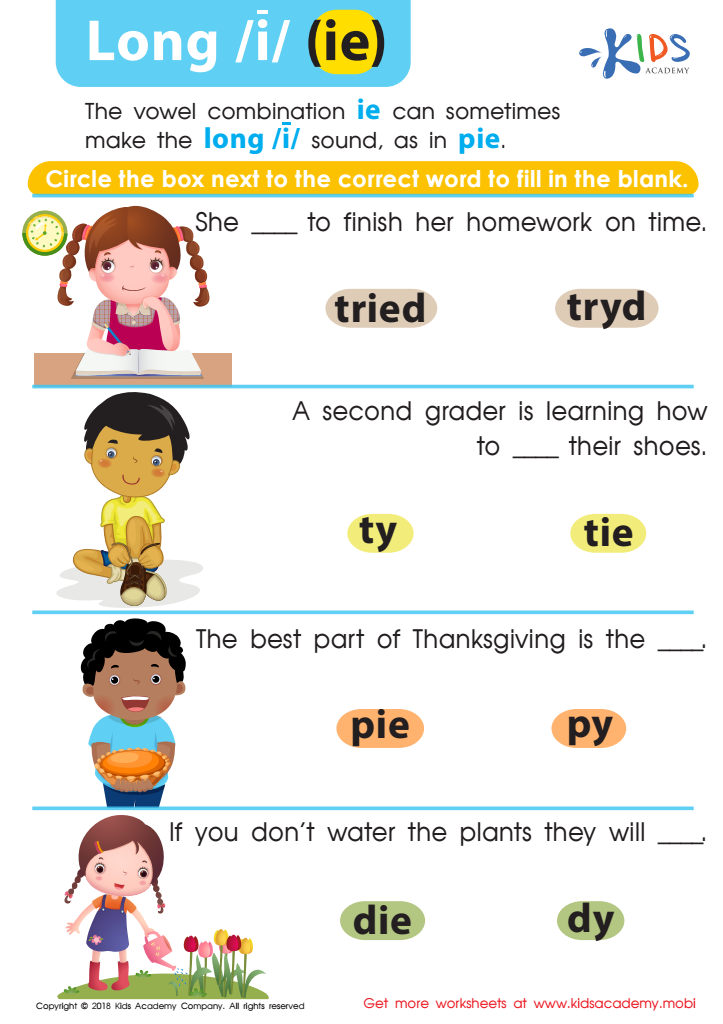
Reading: Long I and IE Worksheet
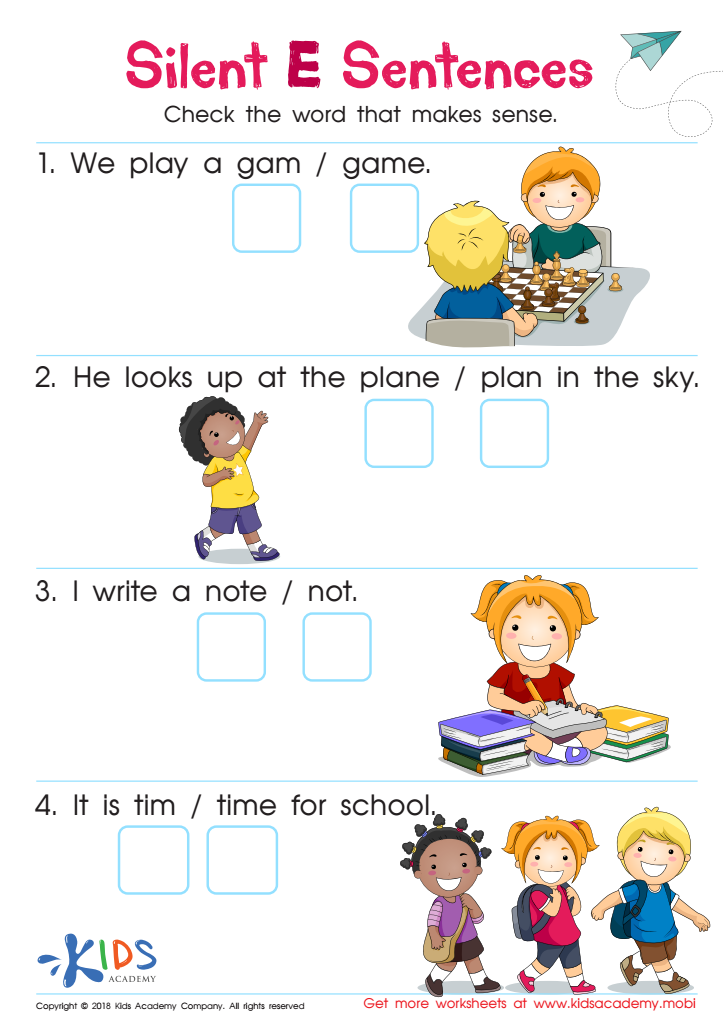
Silent E Sentences Worksheet
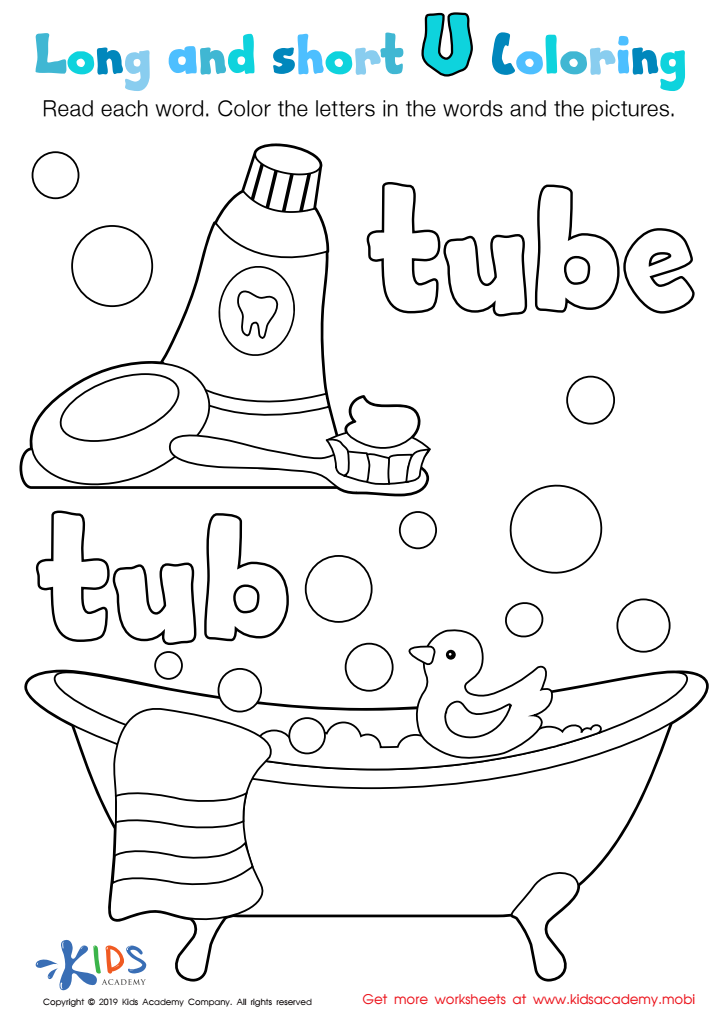
Long and Short U Worksheet
 Assign to My Students
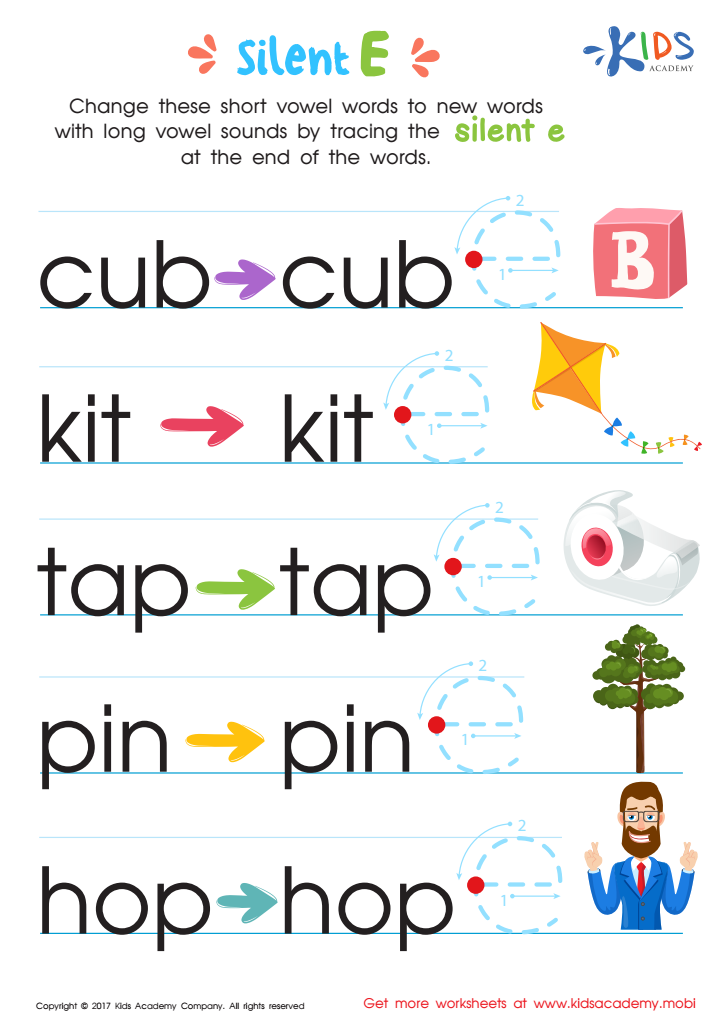
Silent E Words Worksheet
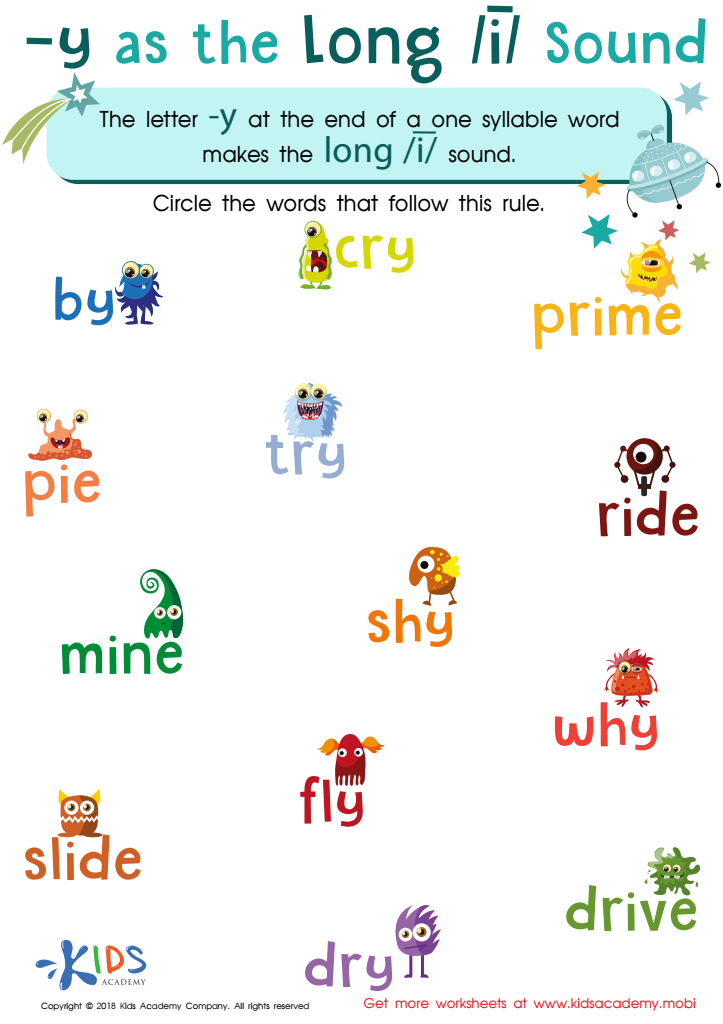
Reading: Y as Long I Worksheet





Phonics skills, particularly the recognition and understanding of vowels, are fundamental in early literacy development for children ages 5-8. Phonics provides the foundation for reading and writing, enabling children to decode words, comprehend text, and communicate effectively. Understanding vowel sounds is crucial, as they often carry the meaning in words and can drastically change a word's pronunciation and meaning when altered.
By concentrating on vowel skills improvement, parents and teachers can help children develop confidence in their reading abilities, facilitating a more profound engagement with texts. This age group is particularly receptive to phonics instruction as they begin to make connections between sounds and letters, laying the groundwork for skilled reading. Research indicates that strong phonics skills contribute to better reading fluency and comprehension, which are pivotal for academic success in later years.
Moreover, focusing on vowels supports language development, vocabulary growth, and spelling accuracy. As children learn to manipulate vowel sounds, they become more adept at figuring out unknown words, fostering independence in their reading journeys. In summary, investing time in improving phonics skills—especially vowels—sets the stage for lifelong literacy and learning, making it a critical concern for both parents and educators.







