Reading enhancement Vowels Worksheets for Ages 5-8
4 filtered results
-
From - To
Our "Reading Enhancement Vowels Worksheets for Ages 5-8" are designed to boost early literacy skills in young learners. Packed with engaging exercises and colorful illustrations, these worksheets help children master vowel sounds, improve pronunciation, and build foundational reading abilities. Ideal for children ages 5-8, each activity enhances phonemic awareness, encouraging confident and fluent reading. Whether in the classroom or at home, these printables support your child’s journey to becoming a skilled reader. Explore our comprehensive collection and give your child a head start in reading through fun, effective practice.
Visit us for more details!
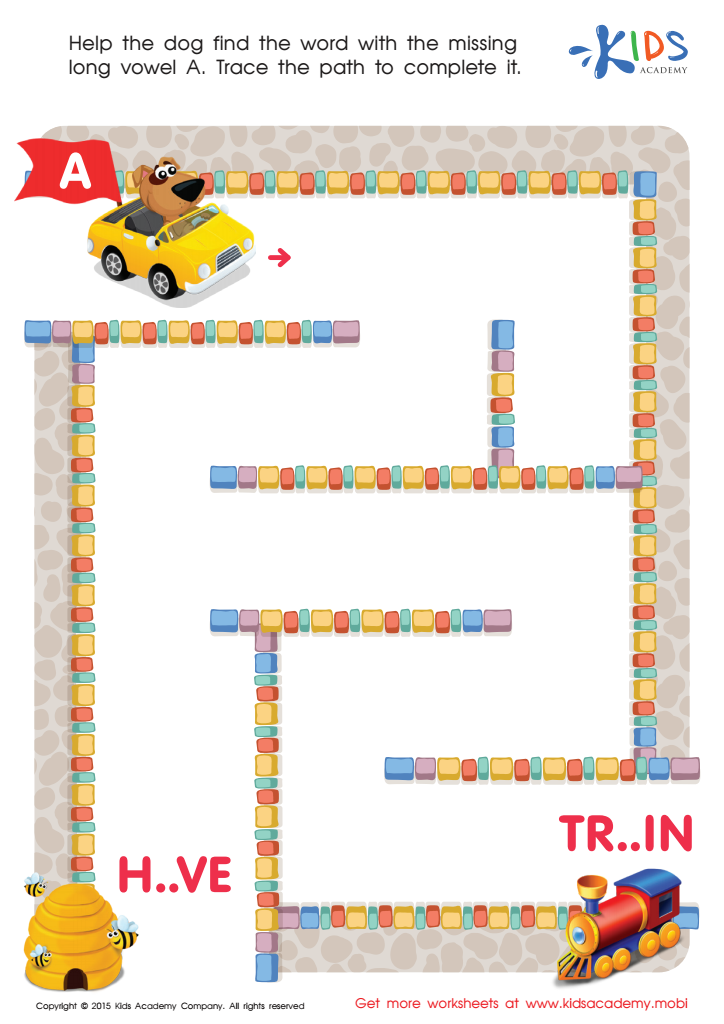
Long Vowel Sound A Worksheet
 Assign to My Students
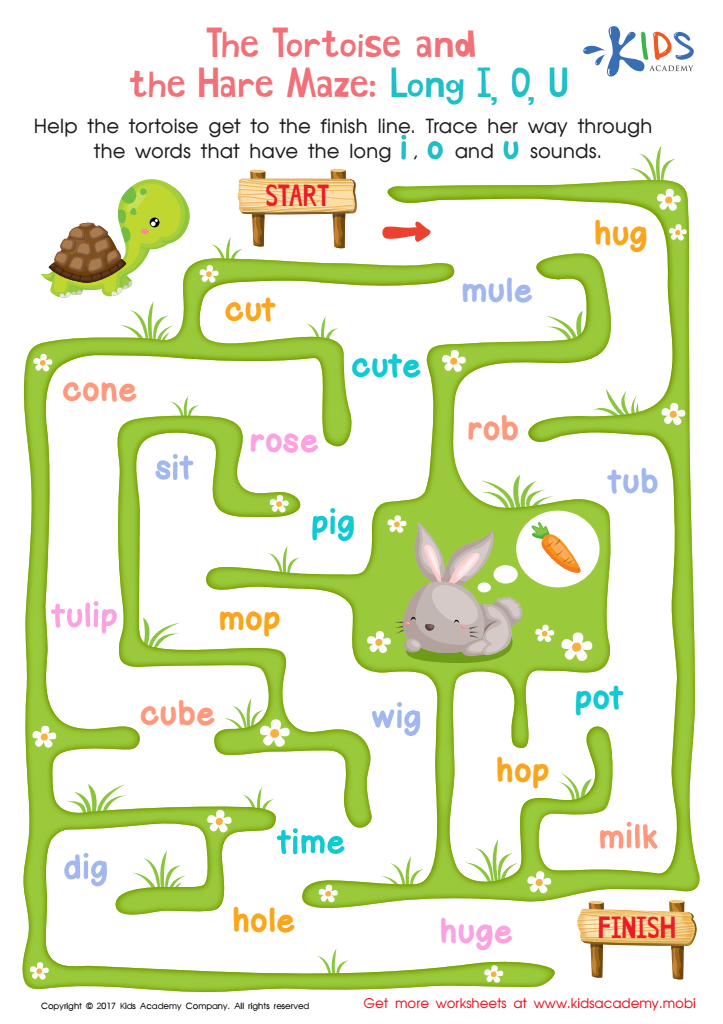
Long I, O, U Words Worksheet
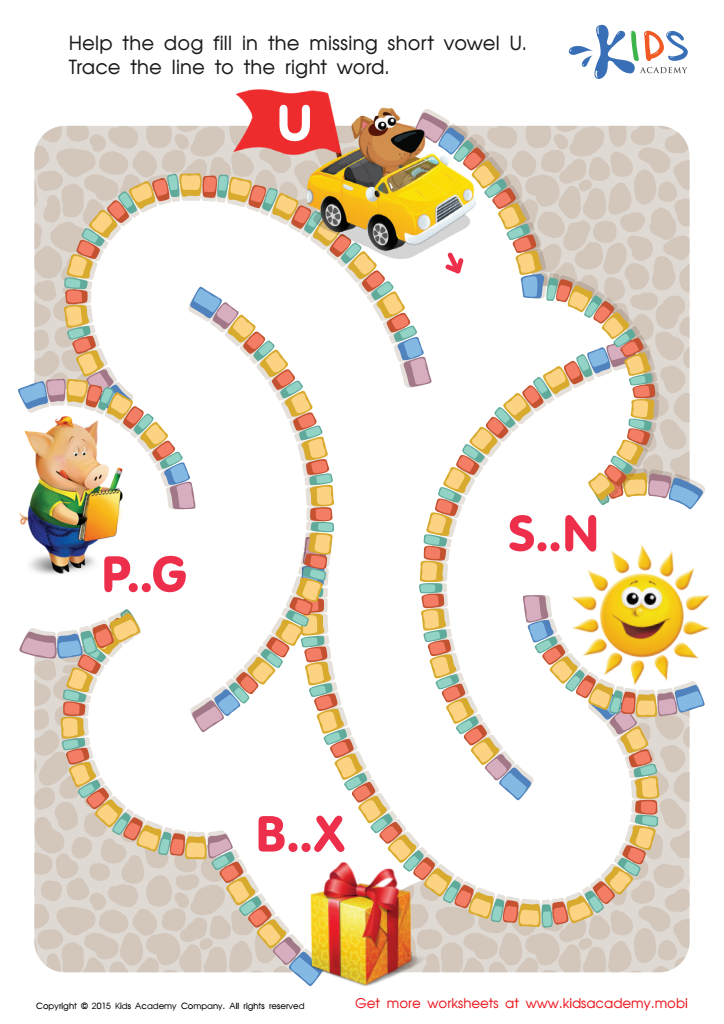
Short Vowel Sound U Worksheet
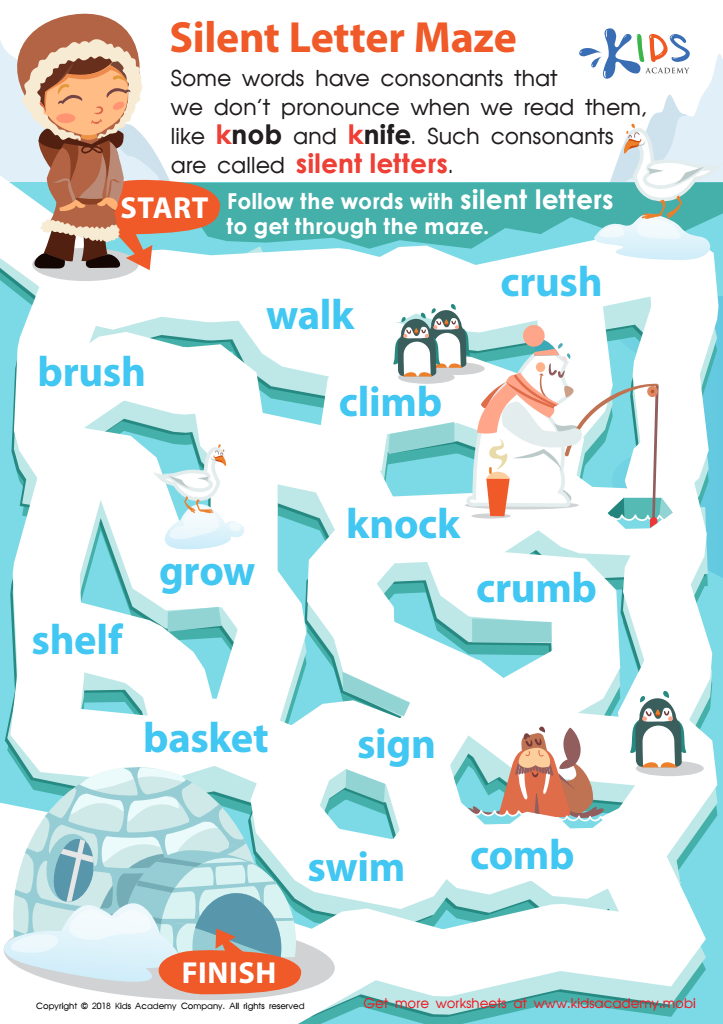
Silent Letter Maze Worksheet





Parents and teachers play a crucial role in laying the foundation for strong reading skills in children ages 5-8, with special attention needed for vowel recognition and pronunciation. Vowels are the building blocks of English language, and mastering them is key for children to develop phonemic awareness—an essential skill in early reading. Vowels appear in nearly every word, acting as the core sounds around which consonants arrange to form syllables and words.
Understanding vowels helps children decode words quickly and accurately, which in turn enhances reading fluency. Fluency is important because it directly impacts a child’s ability to comprehend text—fluency bridges the gap between word recognition and actual understanding of the material being read. Additionally, proficiency with vowels aids in spelling and writing, enabling children to transcribe their ideas more clearly.
Focusing on vowel sounds also fosters improved speaking and listening skills. When children recognize and articulate vowel sounds correctly, they're better equipped to grasp subtle differences in words, improving their vocabulary and conversational abilities.
By investing time in vowel-focused reading activities, parents and teachers can accelerate a child's overall language development, paving the way for academic success and a lifelong love of reading. Therefore, vowel awareness is not just a step, but a cornerstone in early literacy skill-building.







