Sound differentiation Vowels Worksheets for Ages 5-8
3 filtered results
-
From - To
Discover our engaging Sound Differentiation Vowels Worksheets, specially designed for children aged 5-8. These interactive worksheets help young learners recognize and differentiate vowel sounds through fun activities and exercises. Ideal for reinforcing phonemic awareness, our resources guide children in identifying short and long vowel sounds, promoting early reading skills essential for their educational journey. With colorful illustrations and user-friendly layouts, our worksheets captivate young minds while making learning enjoyable. Perfect for classrooms or at-home practice, these vowel worksheets foster confidence in language development, ensuring your child builds a strong foundation for literacy. Start enhancing your child's learning experience today!
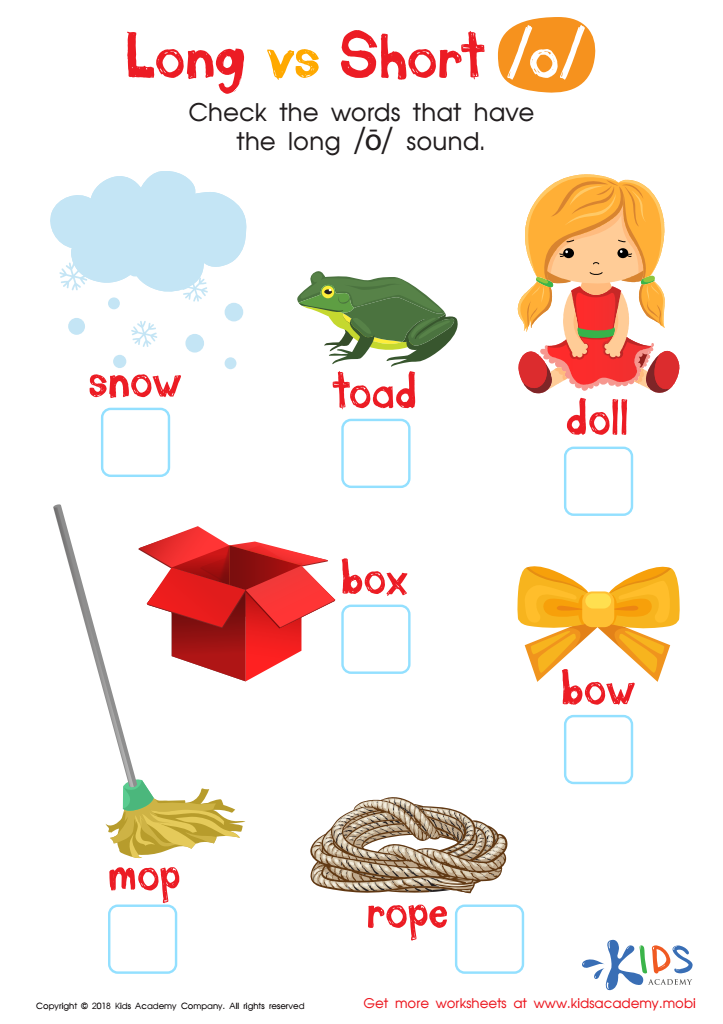
Long vs Short O Reading Worksheet
 Assign to My Students
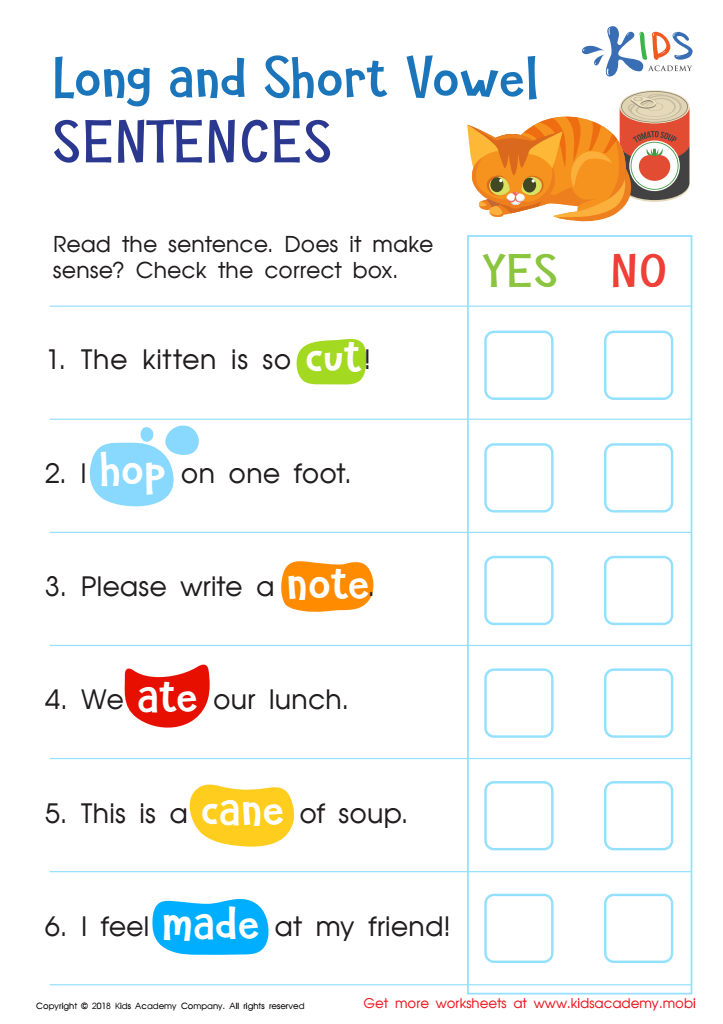
Long and Short Vowel Sentences: Assessment Worksheet
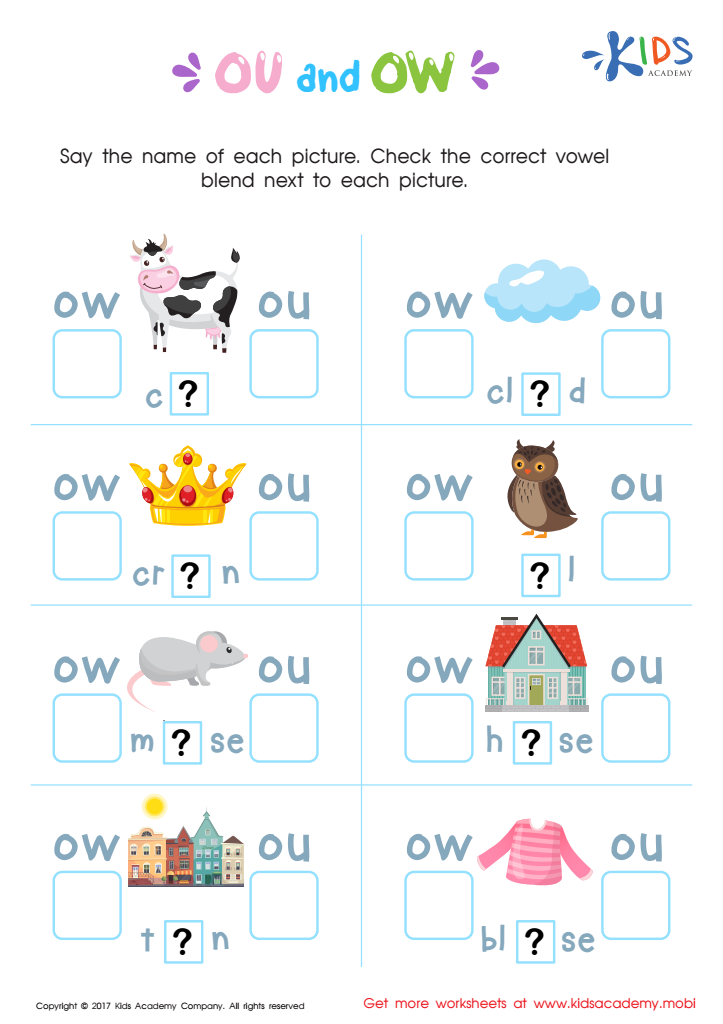
OU and OW Words Worksheet





Sound differentiation of vowels is crucial for children aged 5-8, as this foundational skill significantly impacts their reading and writing abilities. During this developmental stage, children are mastering phonemic awareness, which is the ability to recognize and manipulate sounds in words. Understanding vowel sounds allows them to decode words accurately, a skill that is essential for reading fluency and comprehension.
When parents and teachers focus on vowel sound differentiation, they help nurture a child's ability to sound out unfamiliar words. Recognizing the distinct sounds of short and long vowels, for example, sets the groundwork for phonics instruction, which aids in spelling proficiently.
Additionally, sound differentiation encourages effective communication skills. As children learn proper pronunciation and engage in speaking activities, their confidence in using language increases. Moreover, this skill fosters strong vocabulary development, which is vital for overall language acquisition and academic success.
Neglecting sound differentiation can lead to challenges in literacy, potentially resulting in frustration and decreased motivation. Thus, parents and teachers should prioritize activities that promote vowel sound awareness, ensuring that children build a robust linguistic foundation for their future academic endeavors.







