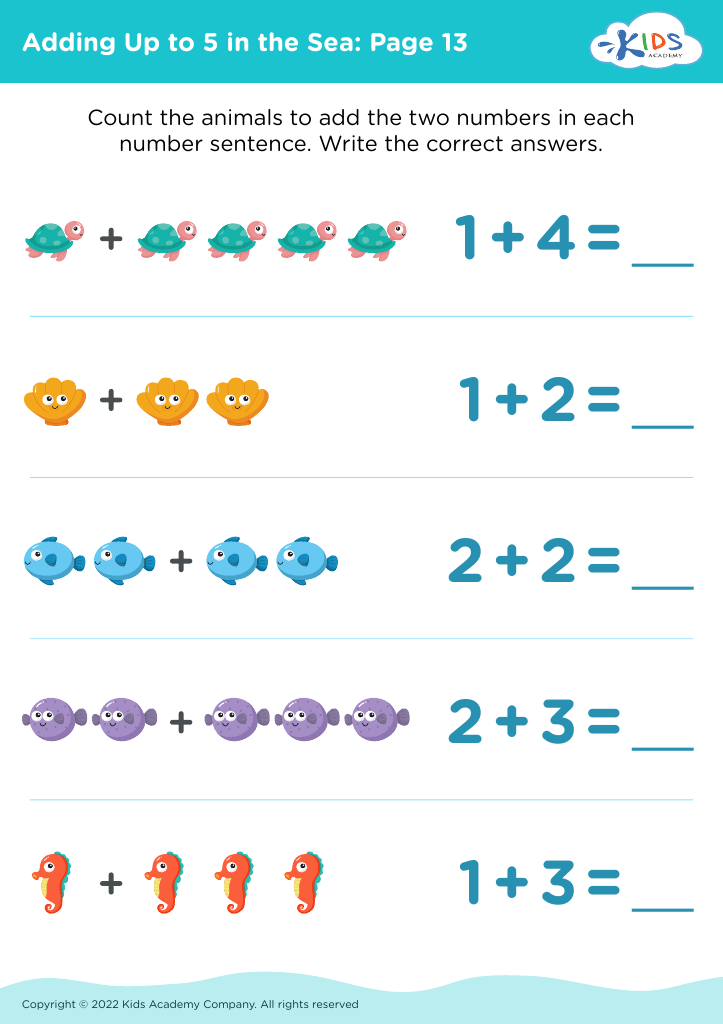
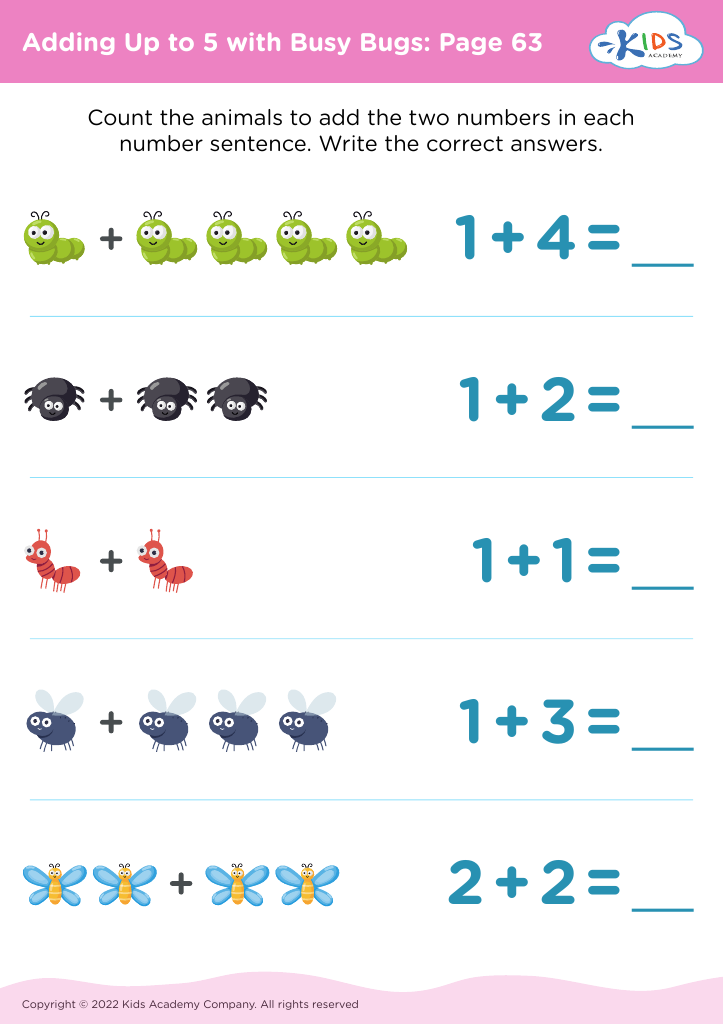
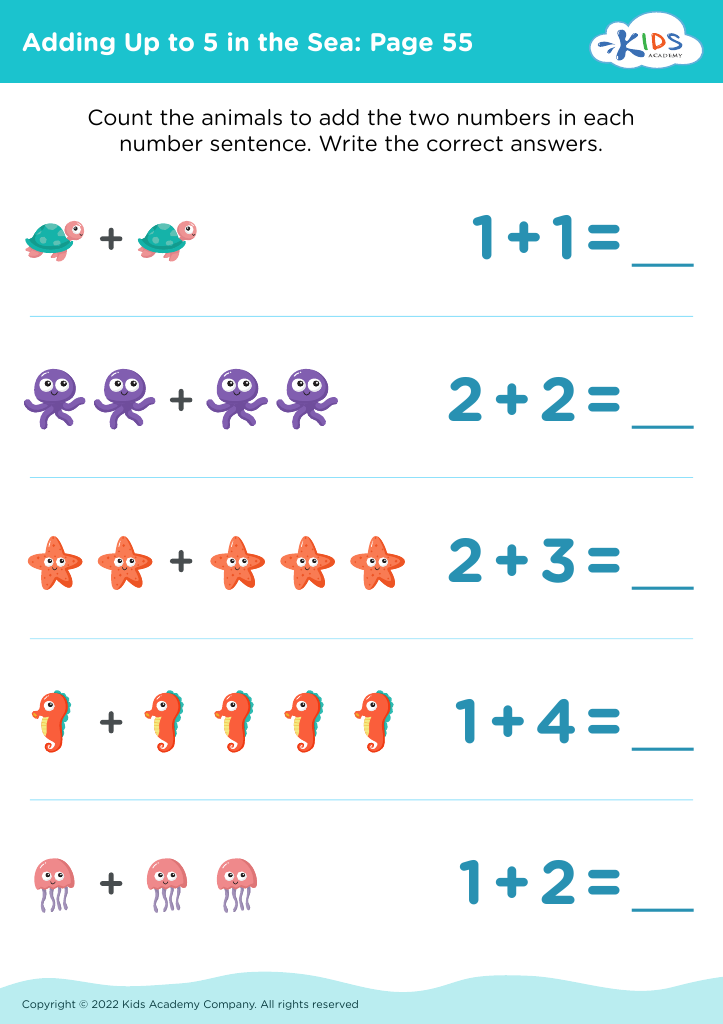
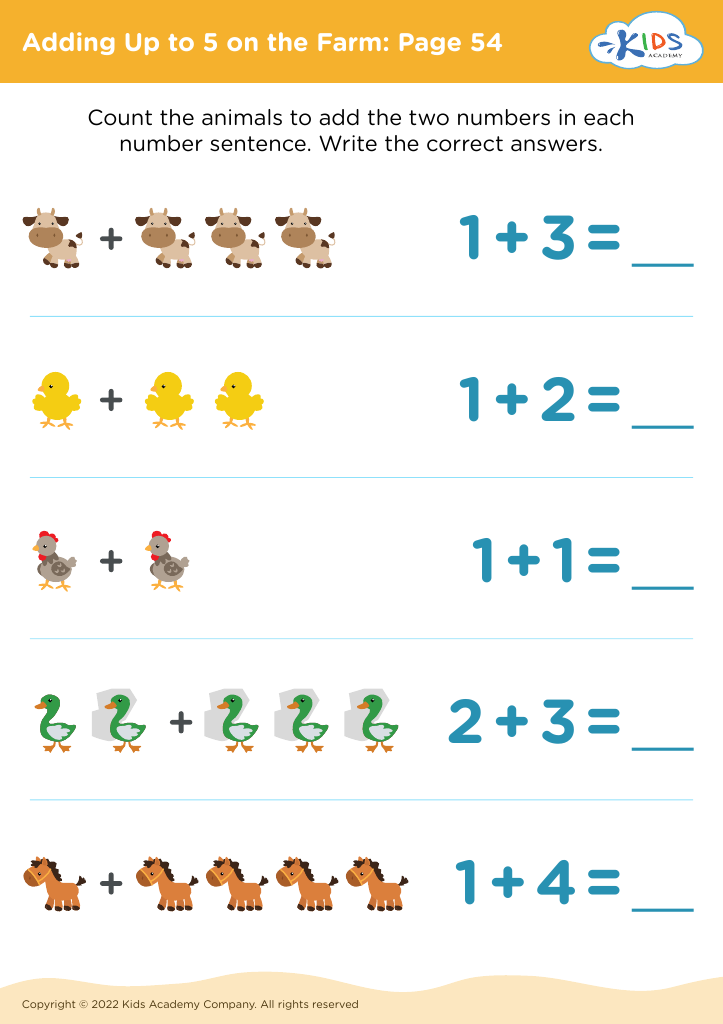
Explore our engaging Basic Addition Skills Worksheets designed specifically for children ages 5-8! These carefully crafted resources help young learners develop foundational math skills through fun and interactive exercises. With a variety of worksheets featuring colorful visuals and age-appropriate problems, children will practice addition in an enjoyable way. Whether at home or in the classroom, these worksheets support early number recognition, counting, and simple addition concepts. Keep your child motivated and confident as they build their arithmetic skills. Download printable worksheets that provide essential practice to ensure academic success in math! Let's make learning addition an exciting adventure for your child!

Check out this FREE "Basic Addition Skills" Trial Lesson for age 5-8!

Unknown Parts (basic algebra) Addition

Favorites
With answer key
Interactive
  • 5-8
  • Basic Addition Skills
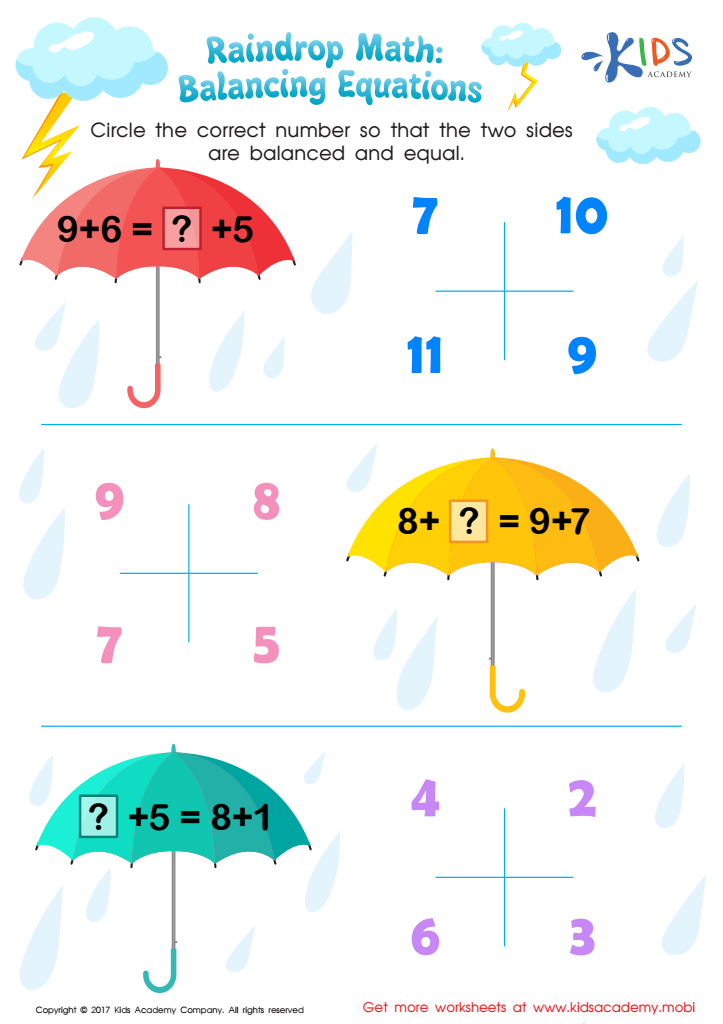
Balancing addition equations worksheet

Raindrop Math Printable

It will help them think deeper about equations, form a foundation for early algebraic thinking, and gain a better sense of numeracy. Plus, they get to practice simple addition skills.
Raindrop Math Printable
Worksheet
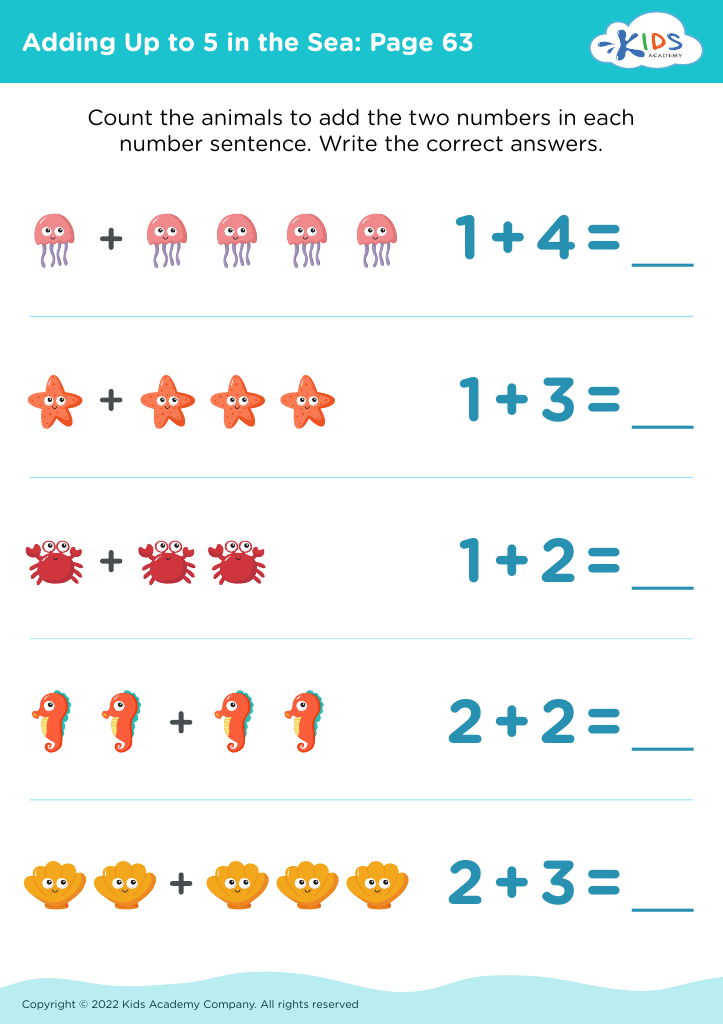
Adding Up to 5 in the Sea: Page 63
Worksheet
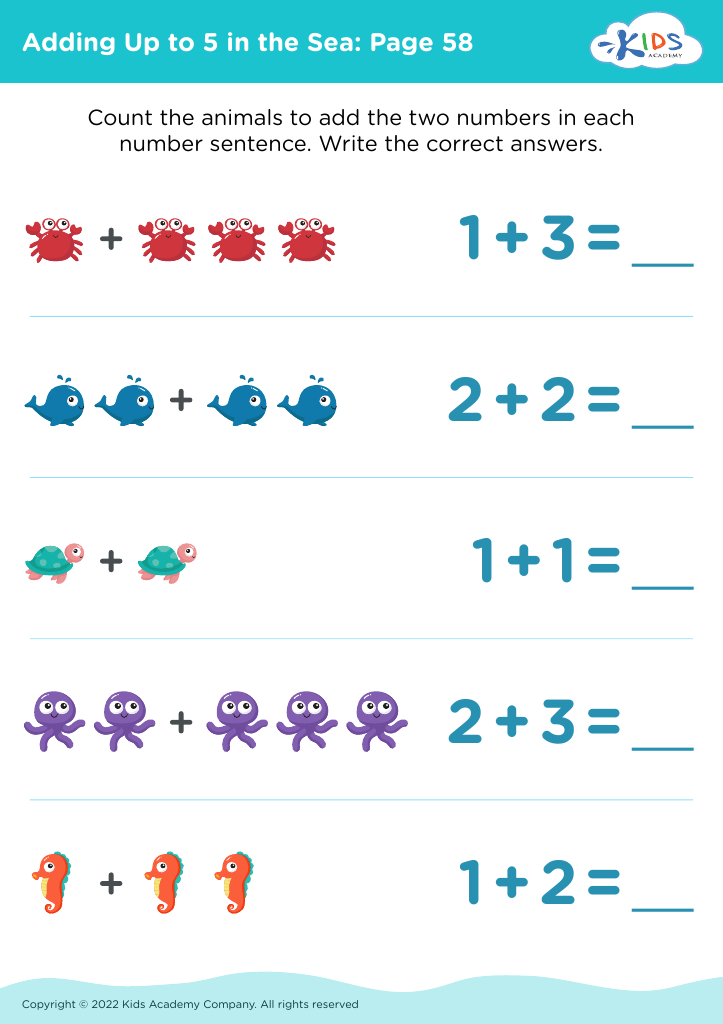
Adding Up to 5 in the Sea: Page 58
Worksheet
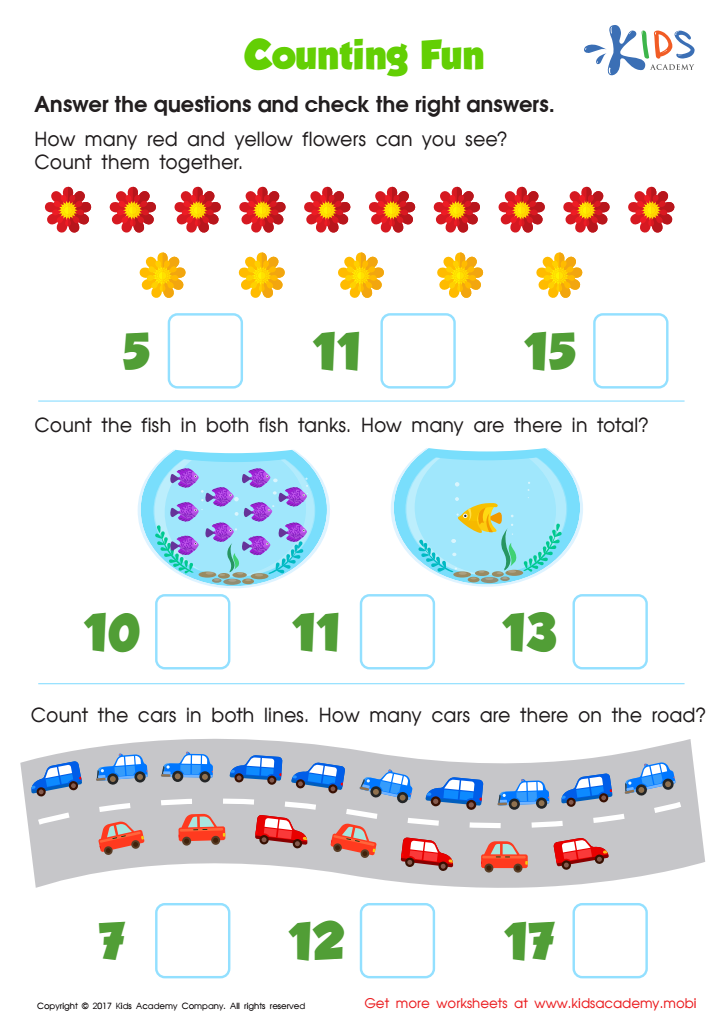
Counting Fun Worksheet

Counting Fun Worksheet

Math and fun can go hand-in-hand with this free PDF worksheet! Bright, colourful illustrations will activate your child's brain, as they count the red and yellow flowers. How many can you see? Count together and write down the total. Make learning and counting fun for your little ones!
Counting Fun Worksheet
Worksheet
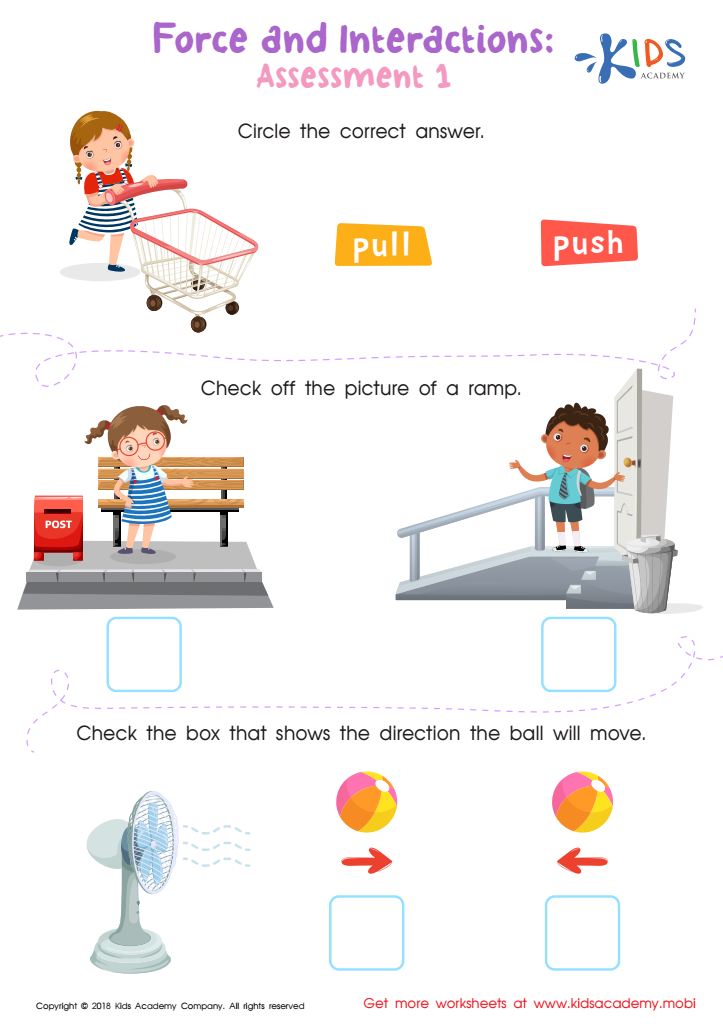
Force and Interactions: Assessment 1 Worksheet
Force and Interactions: Assessment 1 Worksheet
Test your students' knowledge of pushing, pulling, ramps and wind with this worksheet. The first task requires them to identify push or pull pictures. The second asks them to identify a ramp and the third to explain which direction a ball will move when exposed to wind.
Force and Interactions: Assessment 1 Worksheet
Worksheet
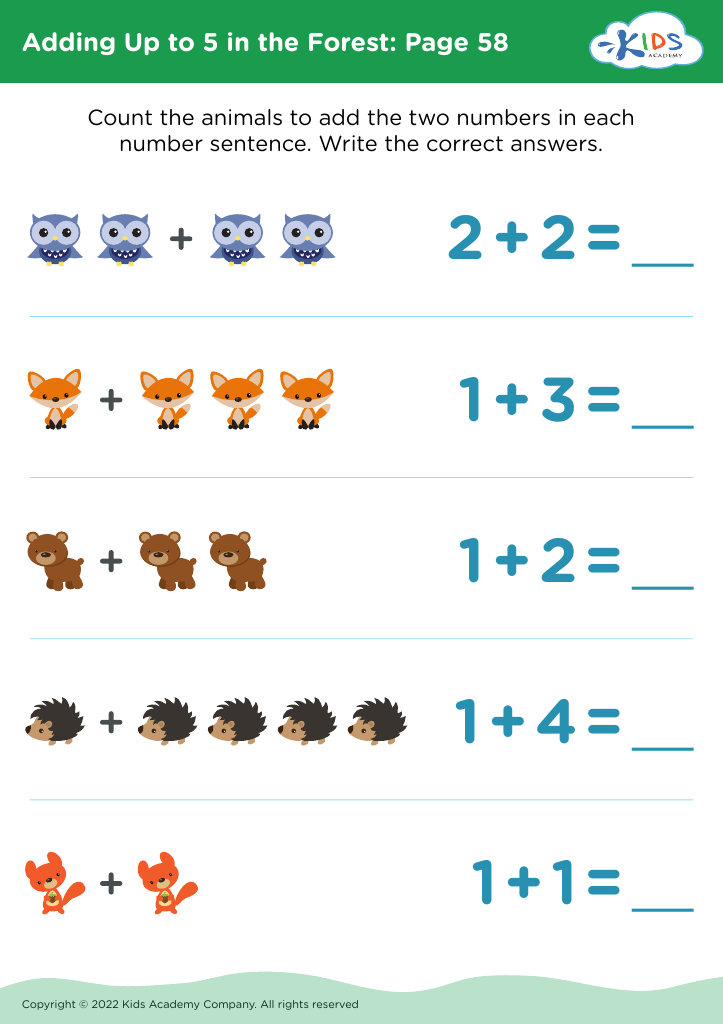
Adding Up to 5 in the Forest: Page 58
Worksheet
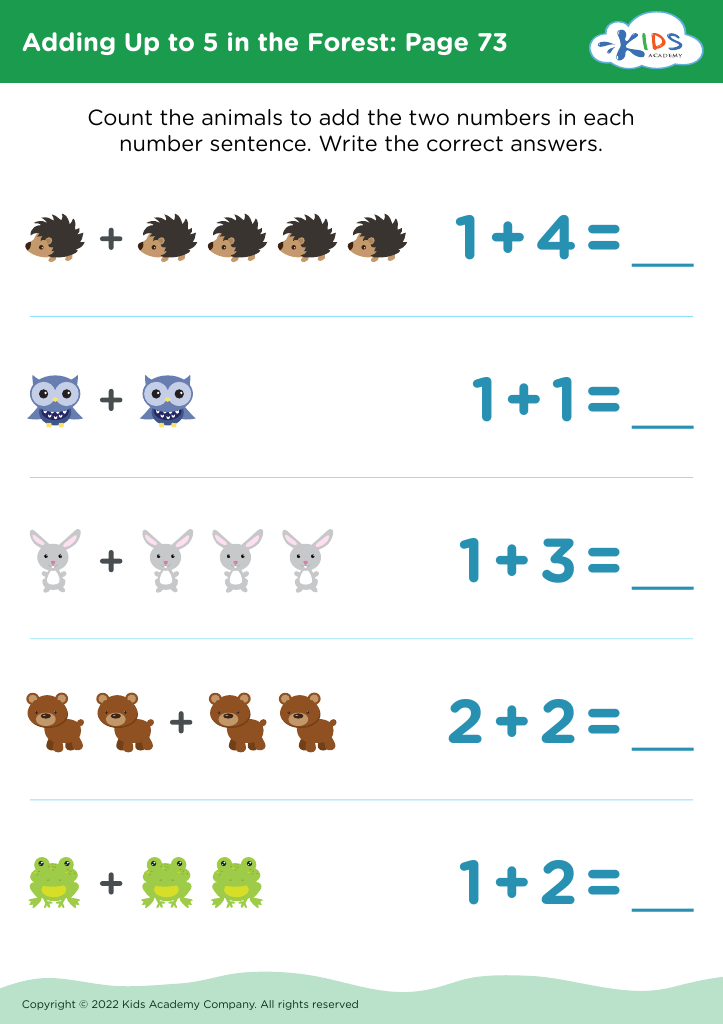
Adding Up to 5 in the Forest: Page 73
Worksheet
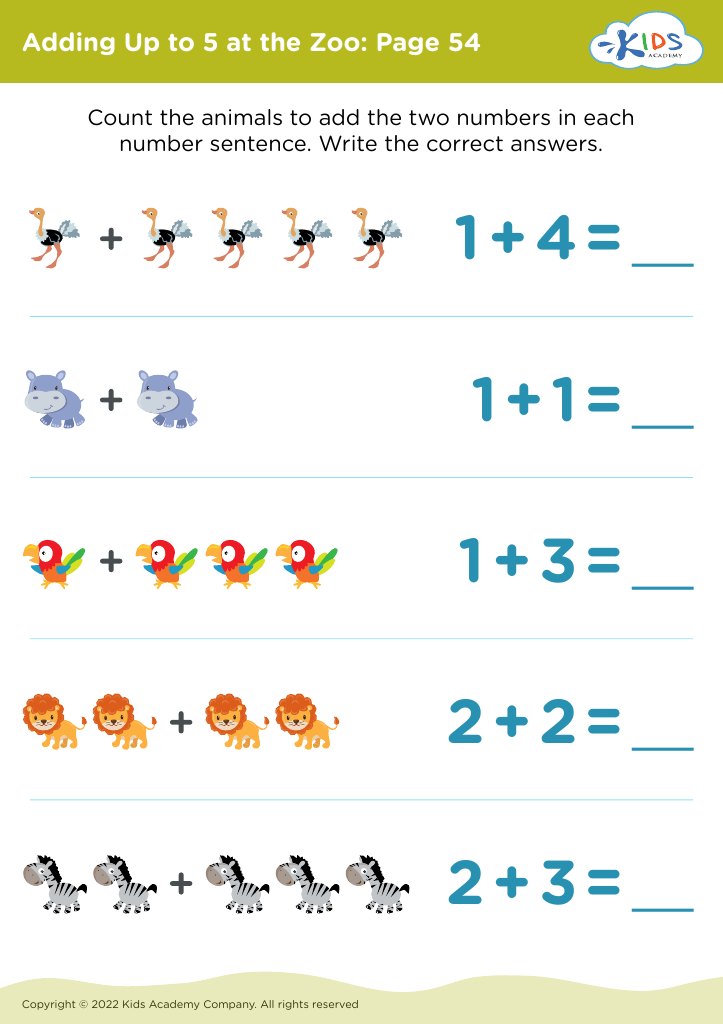
Adding Up to 5 at the Zoo: Page 54
Worksheet
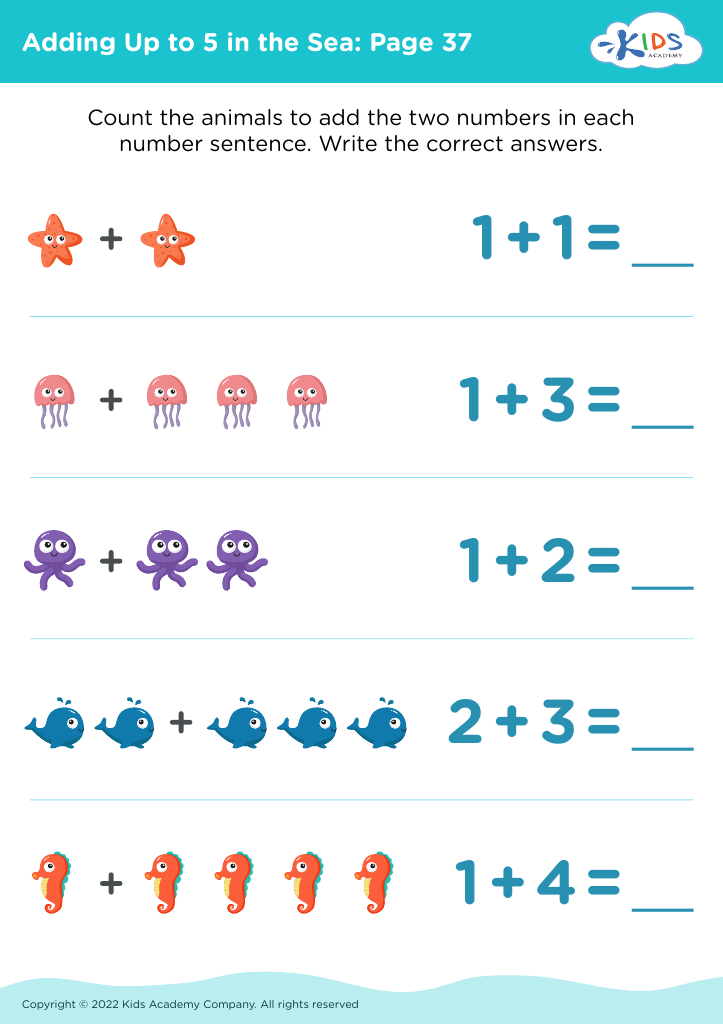
Adding Up to 5 in the Sea: Page 37
Worksheet
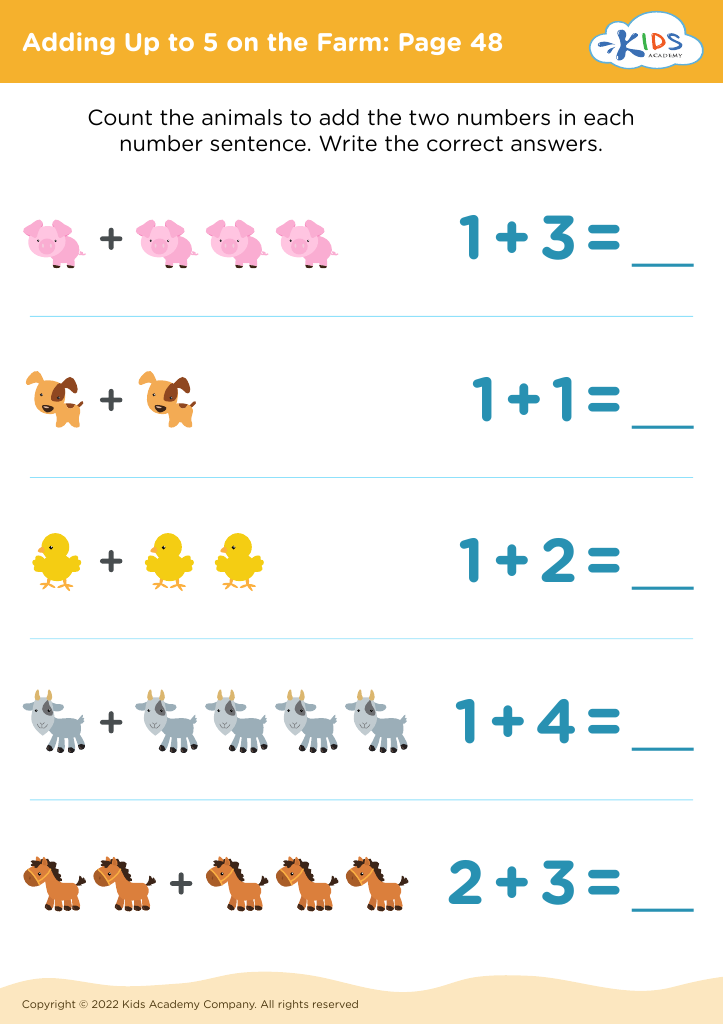
Adding Up to 5 on the Farm: Page 48
Worksheet
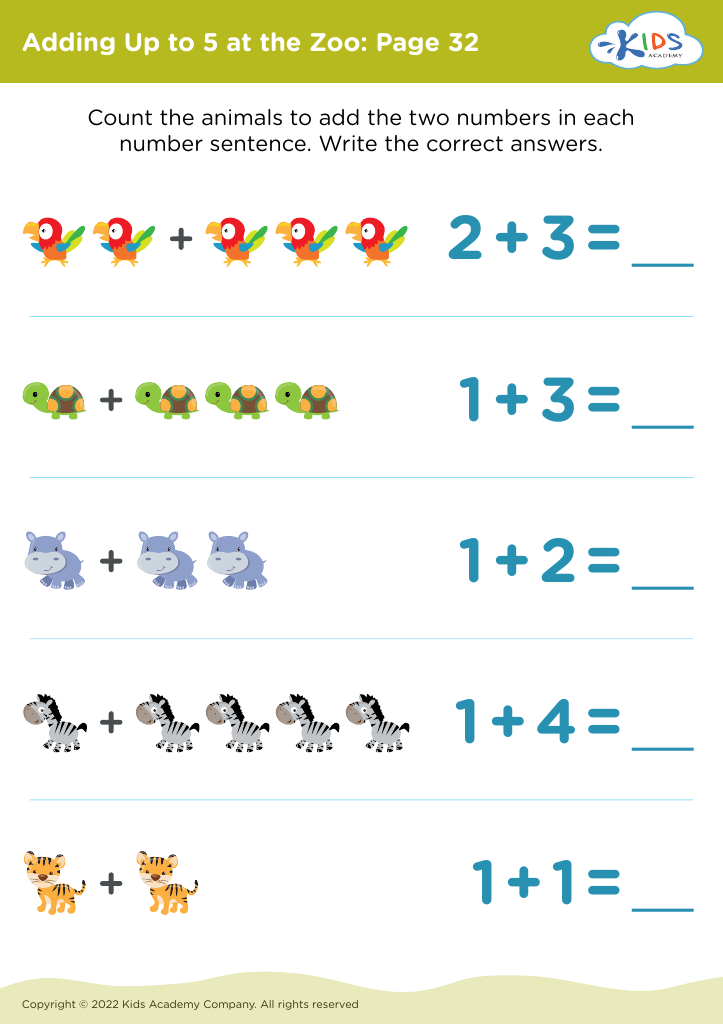
Adding Up to 5 at the Zoo: Page 32
Worksheet
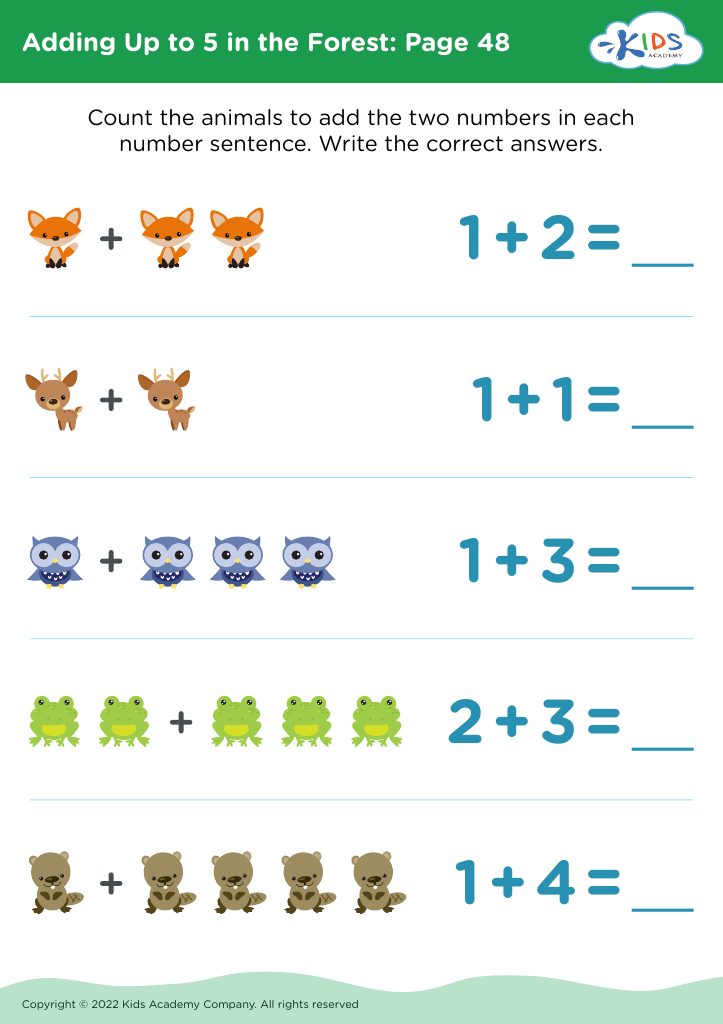
Adding Up to 5 in the Forest: Page 48
Worksheet
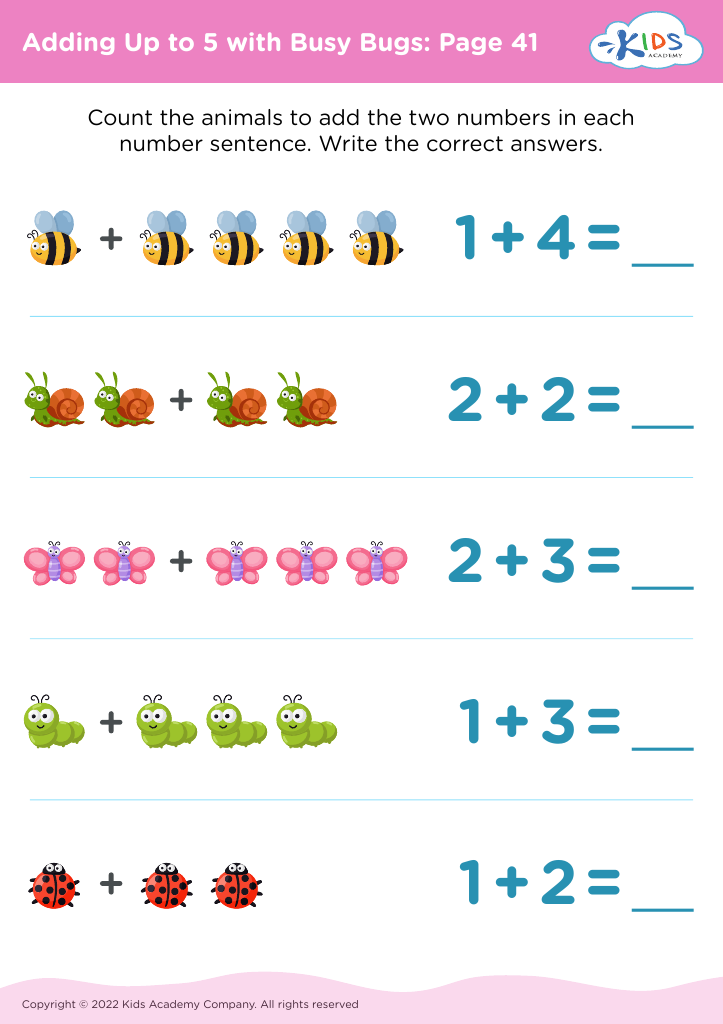
Adding Up to 5 with Busy Bugs: Page 41
Worksheet
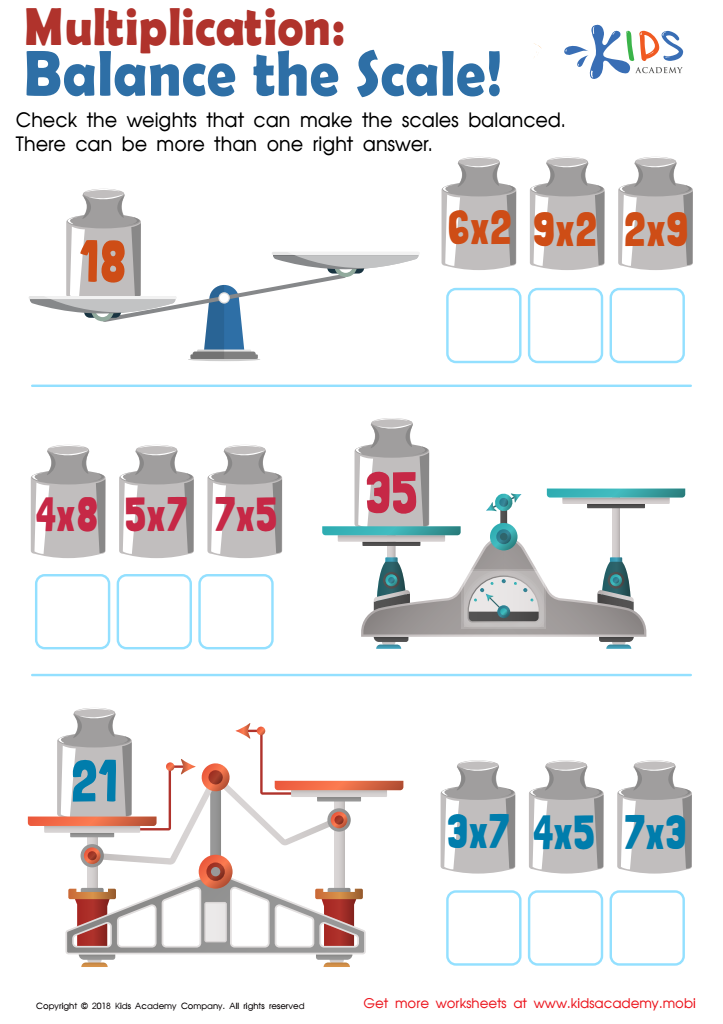
Balance the scales multiplication worksheet

Balance the Scales Multiplication Worksheet
Challenge your child to practice math with our 'Balance the Scales' multiplication worksheet! Get them to solve each multiplication problem and select the weights that make them equal. Hint: it might be more than one!
Balance the Scales Multiplication Worksheet
Worksheet
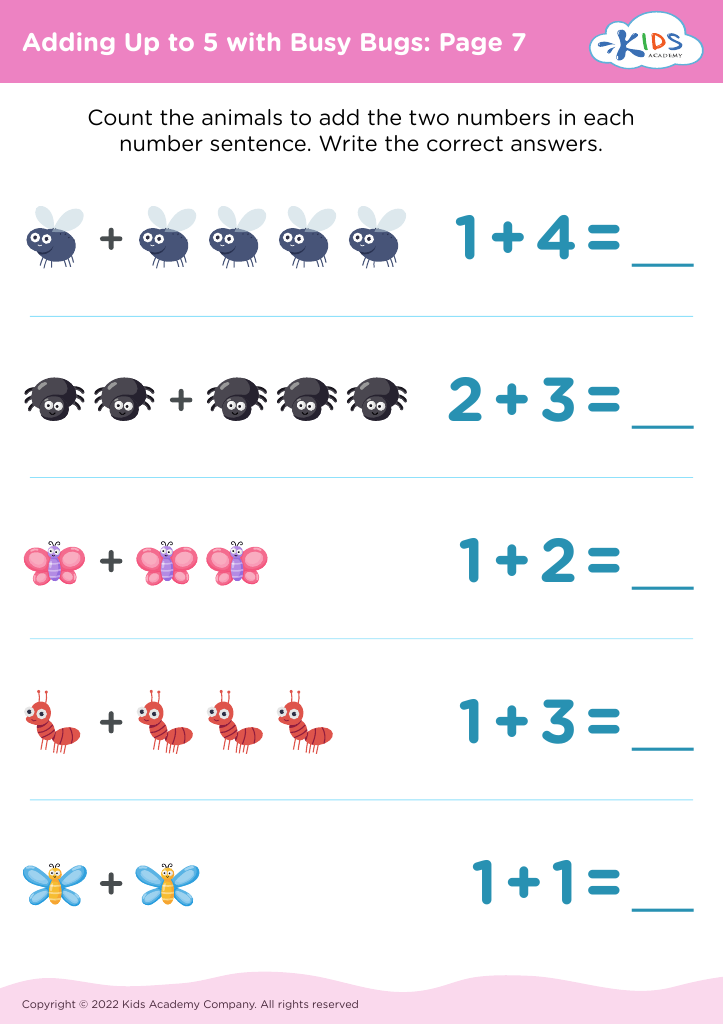
Adding Up to 5 with Busy Bugs: Page 7
Worksheet
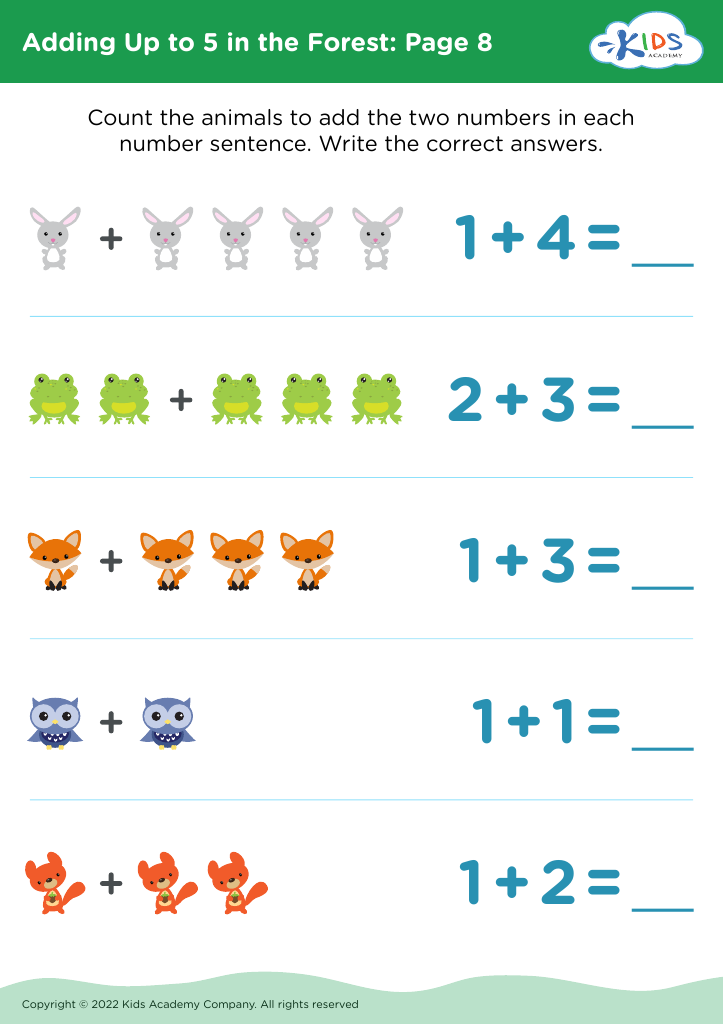
Adding Up to 5 in the Forest: Page 8
Worksheet
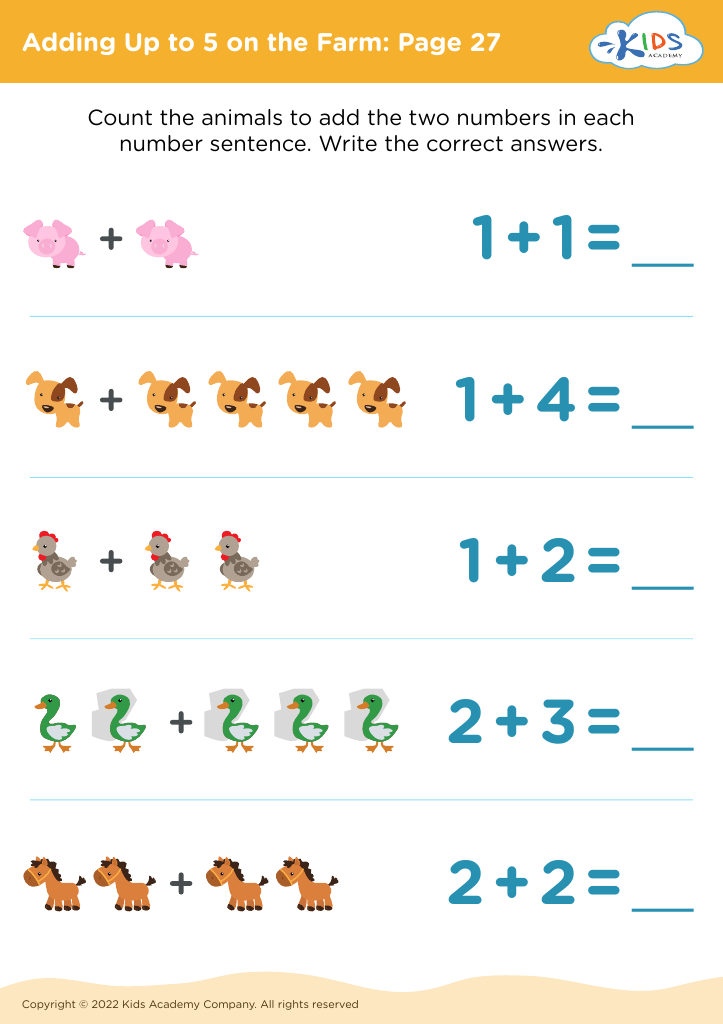
Adding Up to 5 on the Farm: Page 27
Worksheet
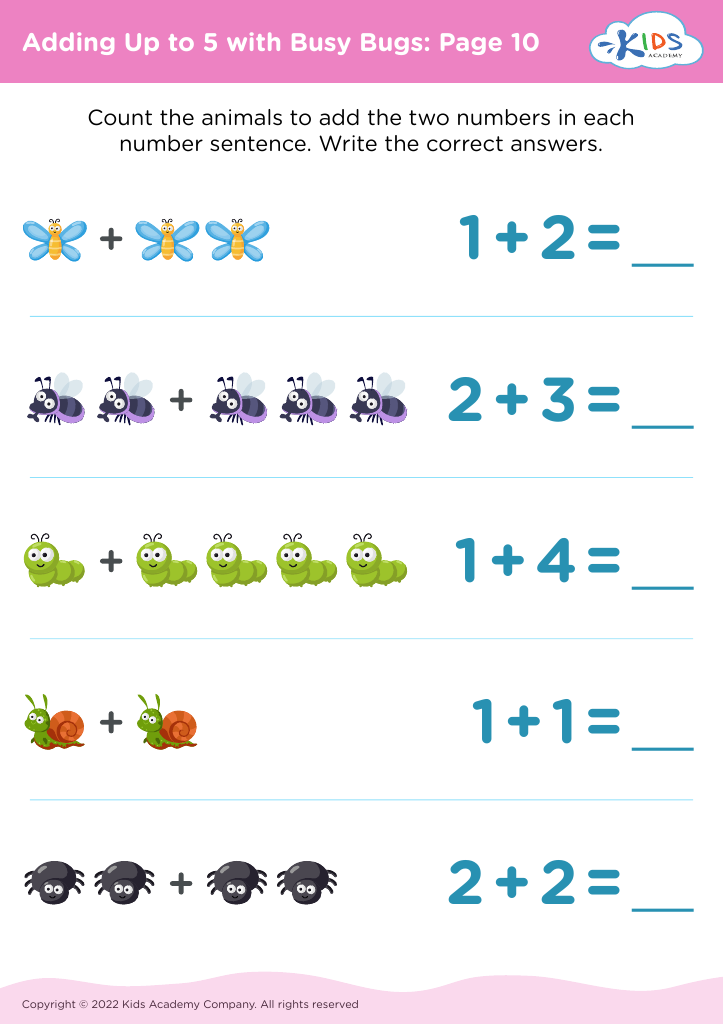
Adding Up to 5 with Busy Bugs: Page 10
Worksheet
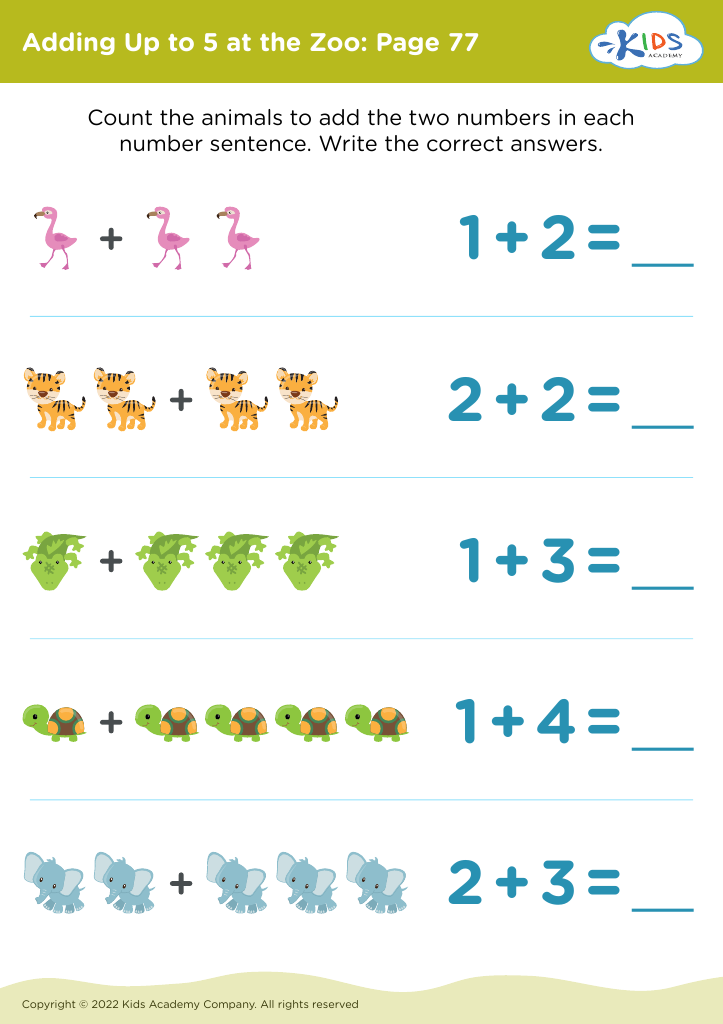
Adding Up to 5 at the Zoo: Page 77
Worksheet
Adding Up to 5 in the Sea: Page 13
Worksheet
Adding Up to 5 with Busy Bugs: Page 63
Worksheet
Adding Up to 5 in the Sea: Page 55
Worksheet
Adding Up to 5 on the Farm: Page 54
Worksheet
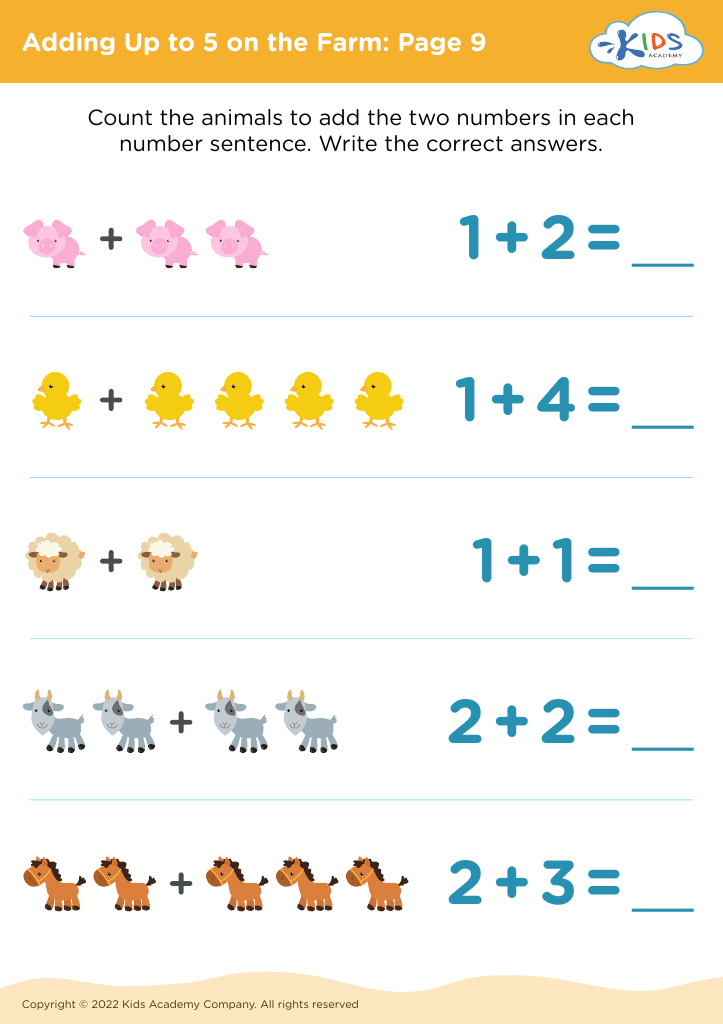
Adding Up to 5 on the Farm: Page 9
Worksheet


Basic addition skills are foundational for children's overall mathematical understanding and cognitive development. For parents and teachers, emphasizing these skills for ages 5-8 is crucial because early math abilities are closely linked to later academic success. Children who master basic addition can approach more complex math concepts with confidence, facilitating a smoother educational journey.

Additionally, proficient addition skills encourage critical thinking, problem-solving, and logical reasoning. These fundamental abilities aid in everyday activities far beyond classroom walls, such as cooking, shopping, or budgeting. They support the development of spatial awareness and situational reasoning, which are valuable in various contexts.

Moreover, nurturing a positive attitude towards math during this critical developmental stage can help combat math anxiety later in life. Engaging children in interactive and enjoyable ways of learning addition can stimulate enthusiasm and curiosity about mathematics as a whole.

Lastly, reinforcing basic addition fosters a sense of accomplishment and builds self-esteem. When children successfully grasp these skills, they develop a belief in their capability to learn and solve problems, laying the groundwork for lifelong learning. Therefore, equipping children with solid addition skills is not just about numbers, but about empowering them for future success.