Basic physics concepts Worksheets for Ages 5-8
3 filtered results
-
From - To
Discover our engaging Basic Physics Concepts Worksheets designed for young learners aged 5-8! These worksheets introduce foundational physics ideas through fun and interactive activities. Children will explore concepts like motion, energy, and simple forces, fostering critical thinking and curiosity about the world around them. Each worksheet is tailored to be age-appropriate, ensuring your little ones grasp essential scientific principles while developing key skills. Perfect for classroom use or at-home learning, our resources aim to make physics accessible and exciting. Encourage your child's love for science with our carefully crafted worksheets that promote exploration and understanding in a playful way!
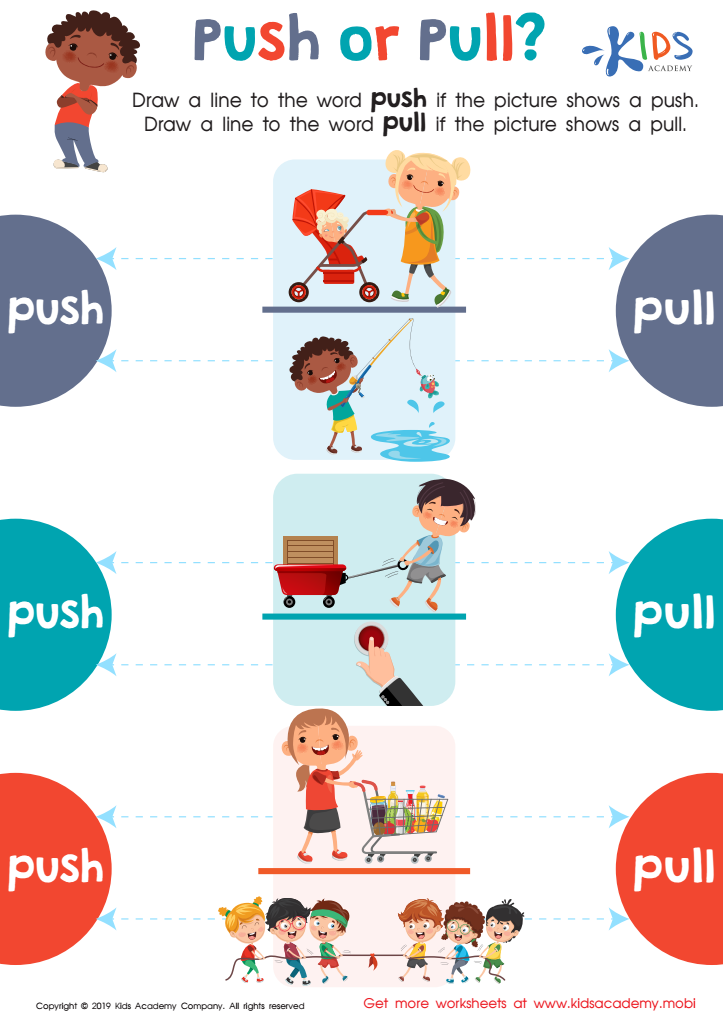
Push or Pull? Worksheet
 Assign to My Students
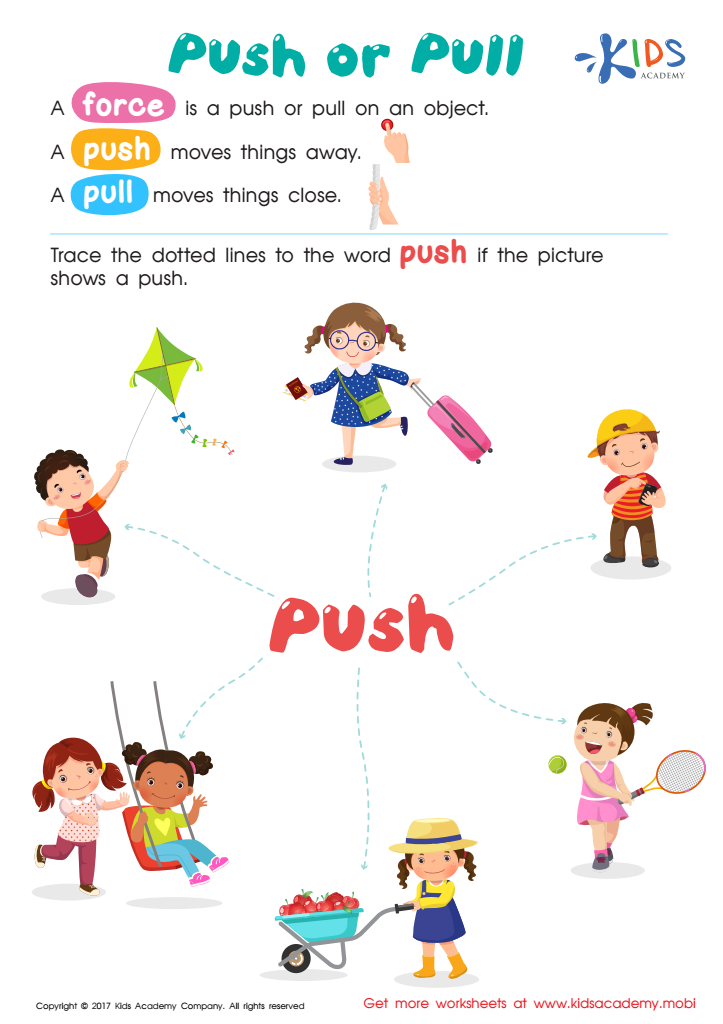
Push or Pull Worksheet
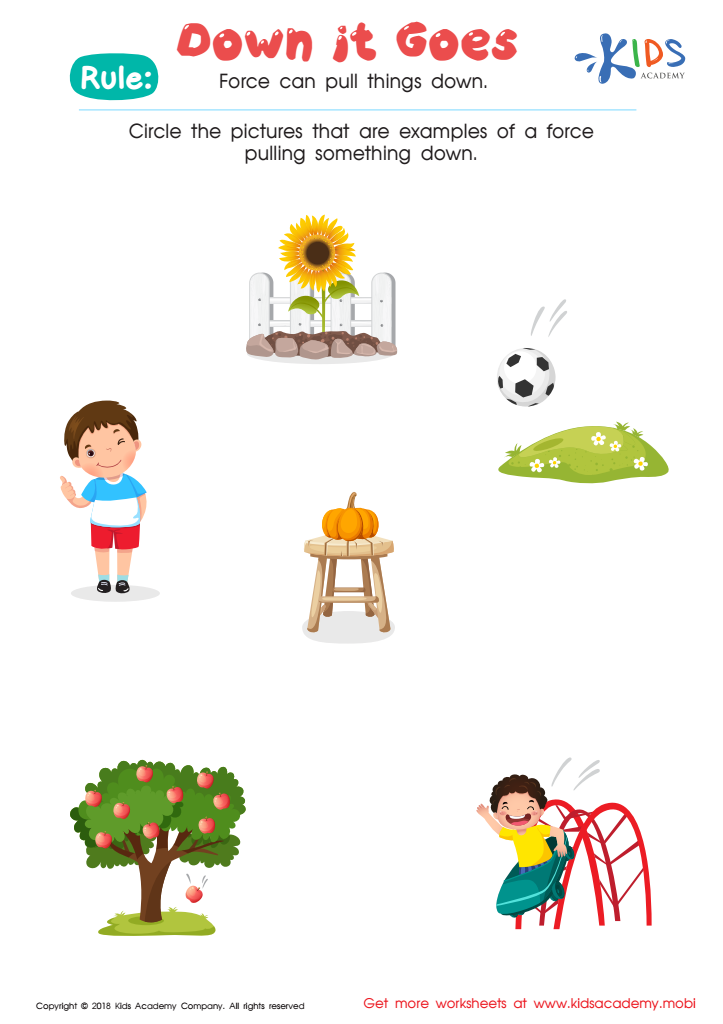
Down it Goes Worksheet






Parents and teachers should care about introducing basic physics concepts to children aged 5-8 because this foundational knowledge fosters curiosity, critical thinking, and problem-solving skills. At this age, children naturally explore their environment, often asking "why" and "how" questions. Engaging them in simple physics concepts, like gravity, motion, and energy, allows them to make sense of their surroundings and encourages a love for science.
By understanding these principles, children enhance their ability to observe and describe physical phenomena, laying the groundwork for more complex scientific inquiry in later years. Experiences with hands-on activities, like building structures or experimenting with moving objects, simultaneously promote fine motor skills and teamwork.
Moreover, teaching physics concepts that relate to everyday life helps children see the relevance of science in the world around them, making learning more meaningful and enjoyable. Encouraging a science-friendly mindset at a young age empowers future innovators, thinkers, or scientists. In today’s rapidly advancing technological world, an early grasp of physics can inspire a generation of problem solvers, ready to tackle challenges in various fields. Overall, combining fun and learning may ignite a lifelong interest in science.








