
Community awareness Worksheets for Ages 5-8
5 filtered results
Difficulty Level
Grade
Age
-
From - To
Subject
Activity
Standards
Discover our engaging Community Awareness Worksheets designed specifically for ages 5-8. These interactive worksheets help young learners understand the importance of community roles and services. Kids will explore topics such as local helpers, safety rules, and environmental care through fun activities that enhance critical thinking and social skills. Whether at home or in the classroom, these resources support children's understanding of their community and how they can contribute positively. Perfect for parents and educators aiming to foster a sense of responsibility and civic pride in young minds. Visit us to start your child's journey into community awareness today!
Favorites
With answer key
Interactive
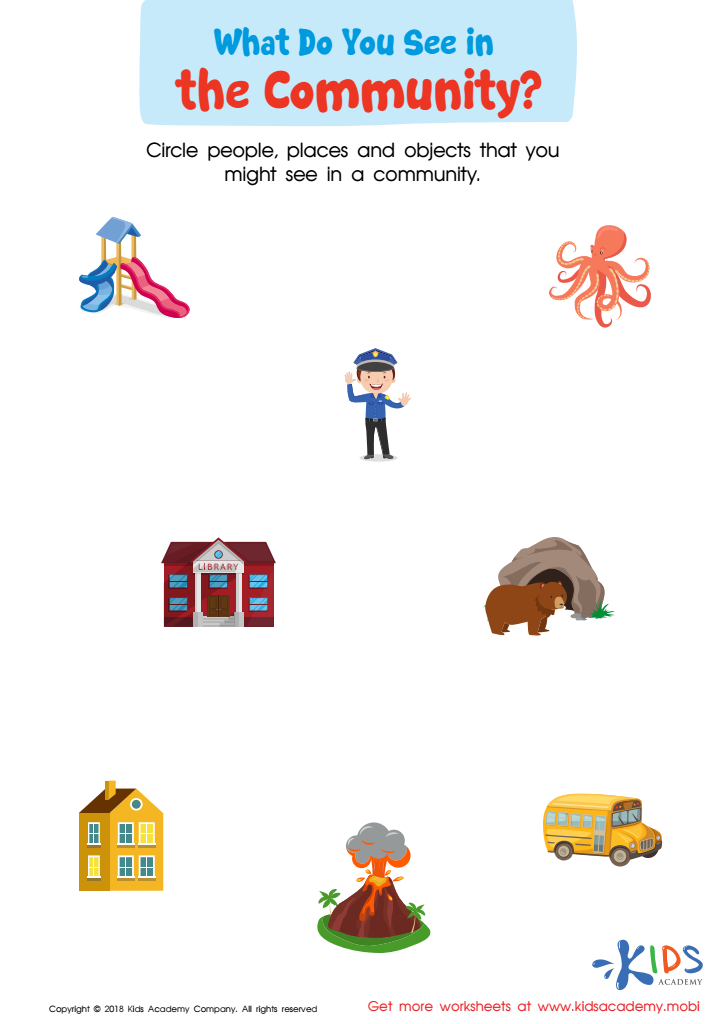
What Do You See in the Community Worksheet
This free social studies PDF can help your children learn about their local community. They'll identify its members, places and objects using engaging and recognizable pictures. As they trace circles around them, they'll also practice fine motor skills. It's a great way to introduce social science concepts and help them understand the importance of community.
 Assign to My Students
What Do You See in the Community Worksheet
Worksheet
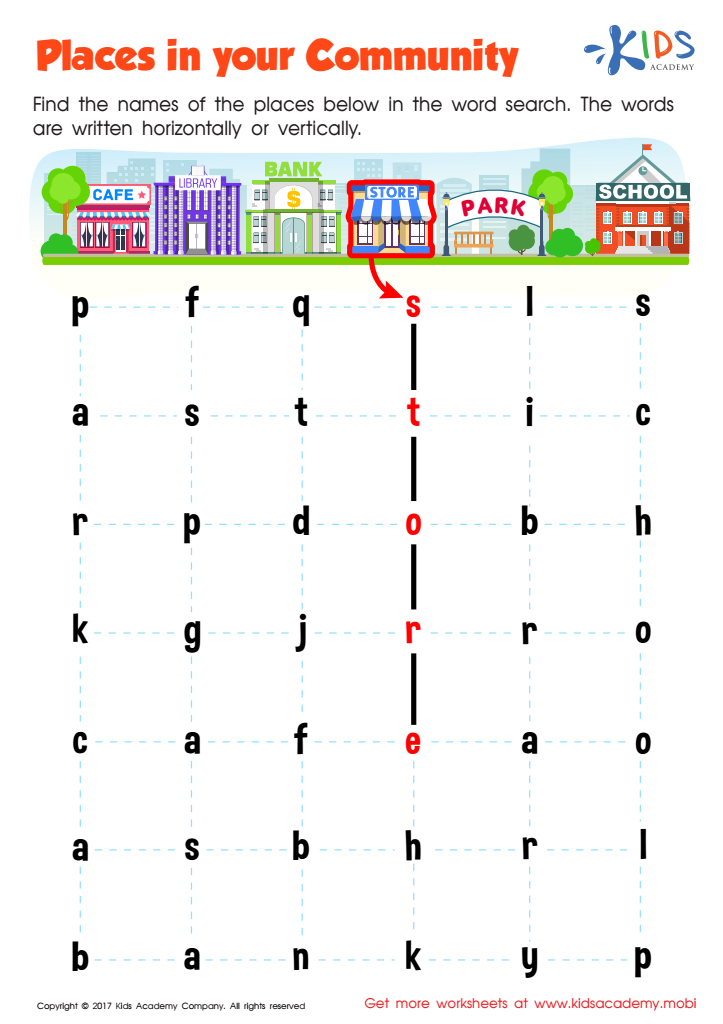
Places in Your Community Worksheet
Find and circle words related to common places in your community, like library, fire station, and more. Practicing vocabulary and spelling, your child will gain a better understanding of their community.
Places in Your Community Worksheet
Worksheet
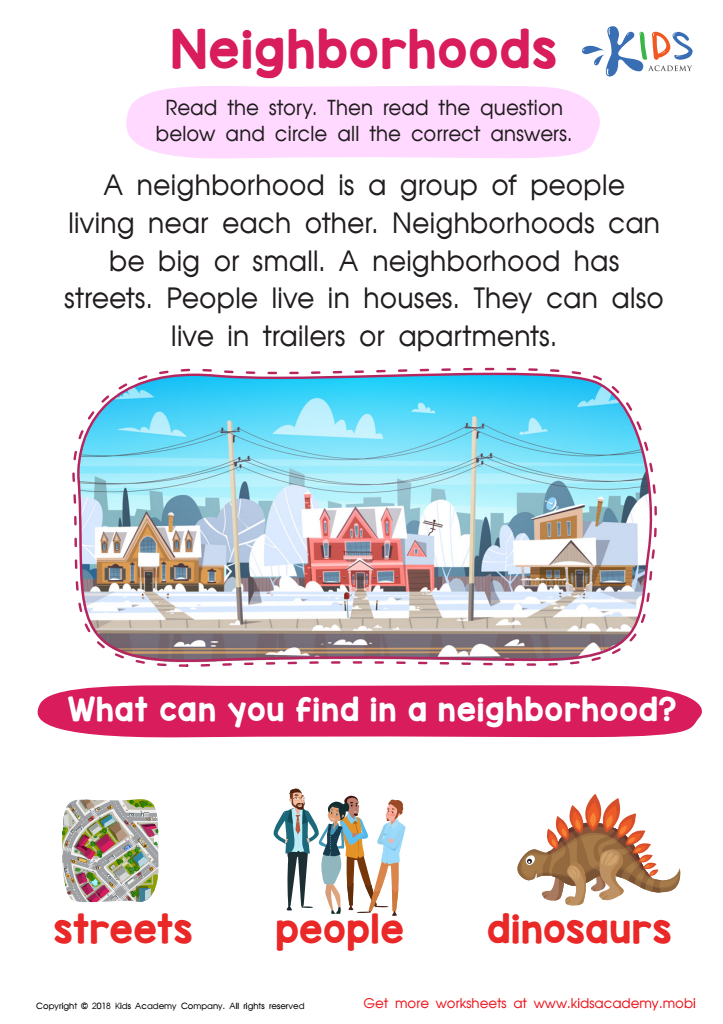
Neighborhoods Worksheet
Readin' is excitin'! This free worksheet helps your child practice by reading basic info about neighborhoods, plus a pic of what one looks like. With this, they can answer "What can you find in a neighborhood?" It's a great way to practice reading comprehension and social studies for better citizenship.
Neighborhoods Worksheet
Worksheet
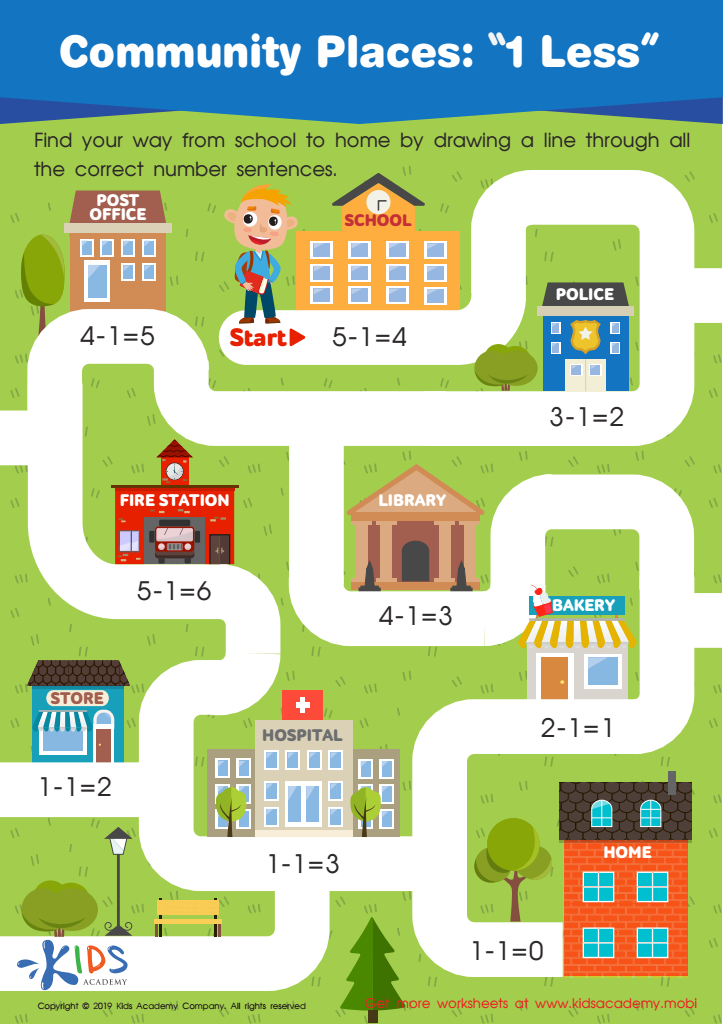
Community Places: 1 Less Worksheet
Have your kindergarteners draw a line through the correct number sentences as they find their way home from school. Ask them to identify the people, places, and buildings in their community and the jobs they do.
Community Places: 1 Less Worksheet
Worksheet
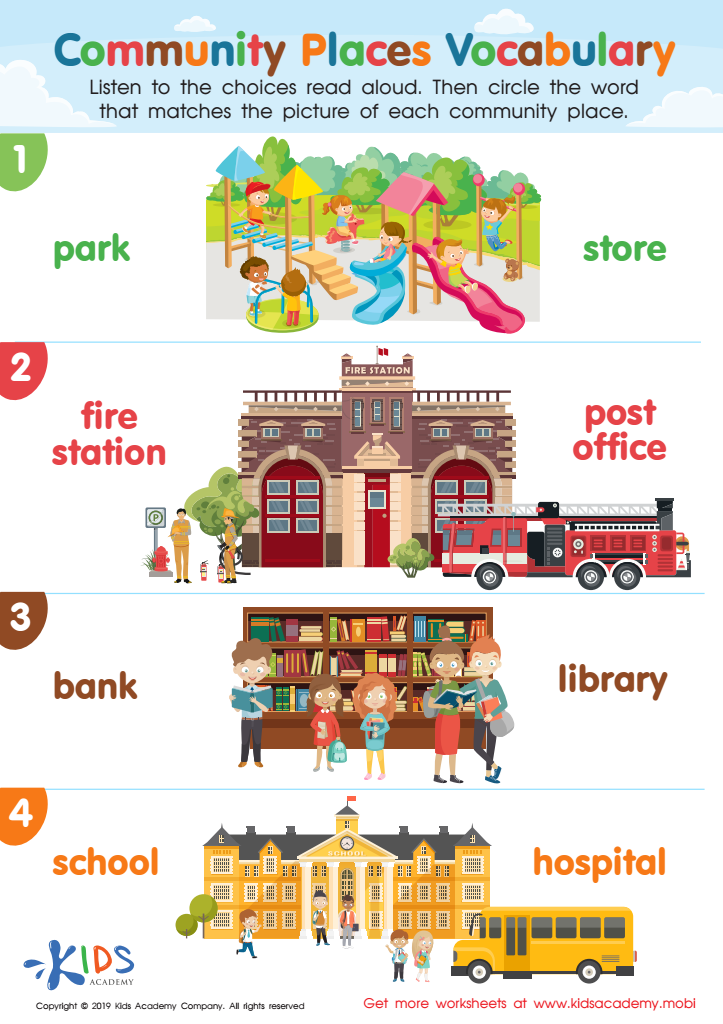
Community Places Vocabulary Worksheet
Help your kids identify community places with this fun worksheet. Ask them to listen to the choices read aloud and circle the word that matches the picture. This activity encourages dialogue about different people, places, and things in their community and the places they love to visit.
Community Places Vocabulary Worksheet
Worksheet
Join Kids Academy for Free
Who is primarily going to use this learning content?








Community awareness is crucial for children ages 5-8 as it lays the groundwork for responsible and empathetic future citizens. During these formative years, children begin to form their understanding of the world beyond their immediate family and learn social norms. By fostering community awareness, parents and teachers help kids recognize their role in the world around them.
Understanding community not only builds social skills but also instills values such as kindness, cooperation, and responsibility. When children see how their actions can impact others, they develop empathy and learn to respect diverse perspectives. For example, participating in community clean-up days or local charity events can help children feel connected and valued, empowering them with the sense that they can make a positive difference.
Educationally, community awareness encourages experiential learning. Activities like visiting local landmarks, interacting with community helpers like firefighters or postal workers, and discussing community needs can broaden a child's knowledge and appreciation for various roles within society.
Moreover, early community engagement fosters a sense of belonging and security. Knowing the faces in their neighborhood or school community helps children feel safe and supported. Building these bonds early encourages trust and collaboration, which are foundational for a harmonious and progressive society.
In summary, nurturing community awareness in young children strengthens their social, emotional, and intellectual growth, enabling them to become considerate, active participants in their communities.








