Detail identification Worksheets for Ages 5-8
4 filtered results
-
From - To
Introducing our Detail Identification Worksheets for ages 5-8, designed to boost your child's observational skills and attention to detail. Each worksheet encourages young learners to distinguish and describe specific features within colorful illustrations and engaging activities. Fun and educational, these printables help develop critical thinking, enhance visual perception, and prepare children for more complex learning tasks. Perfect for classroom or at-home use, our worksheets support foundational skills in reading, writing, and comprehension. Give your child the tools they need to succeed while making learning an enjoyable adventure! Visit Kids Academy now to start exploring.
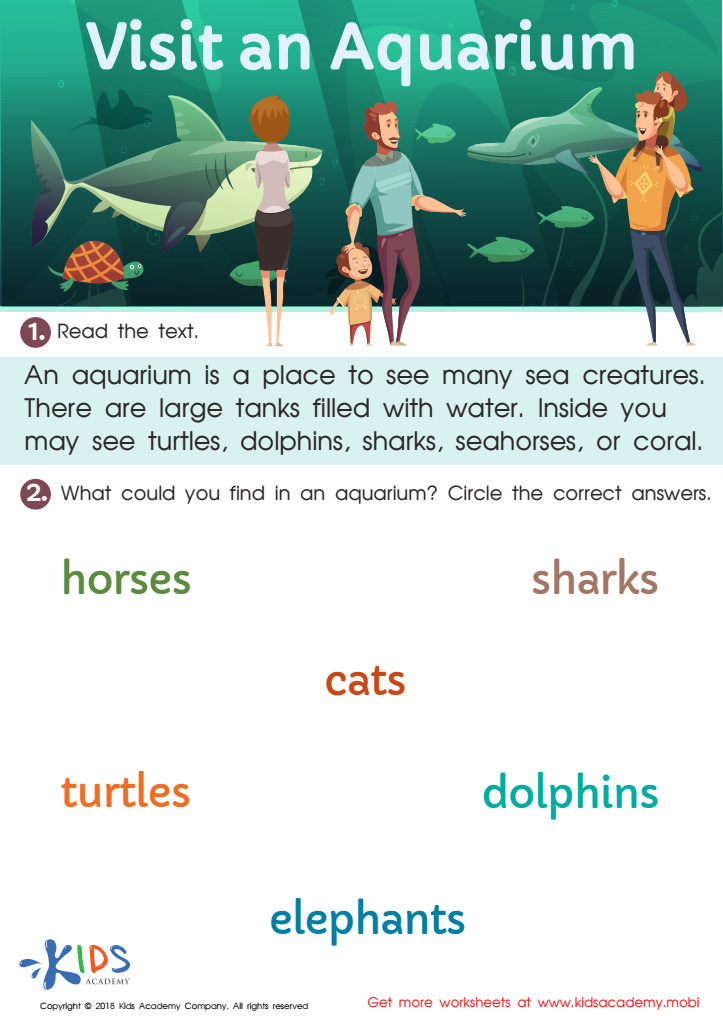
Visit an Aquarium Worksheet
 Assign to My Students
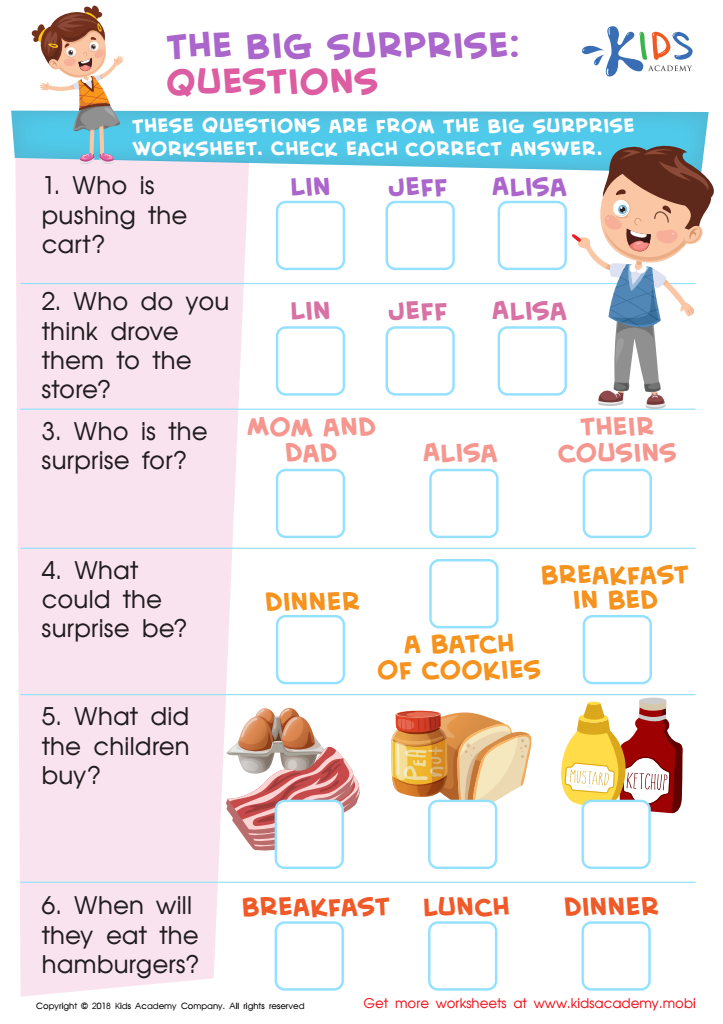
The Big Surprise: Questions Worksheet
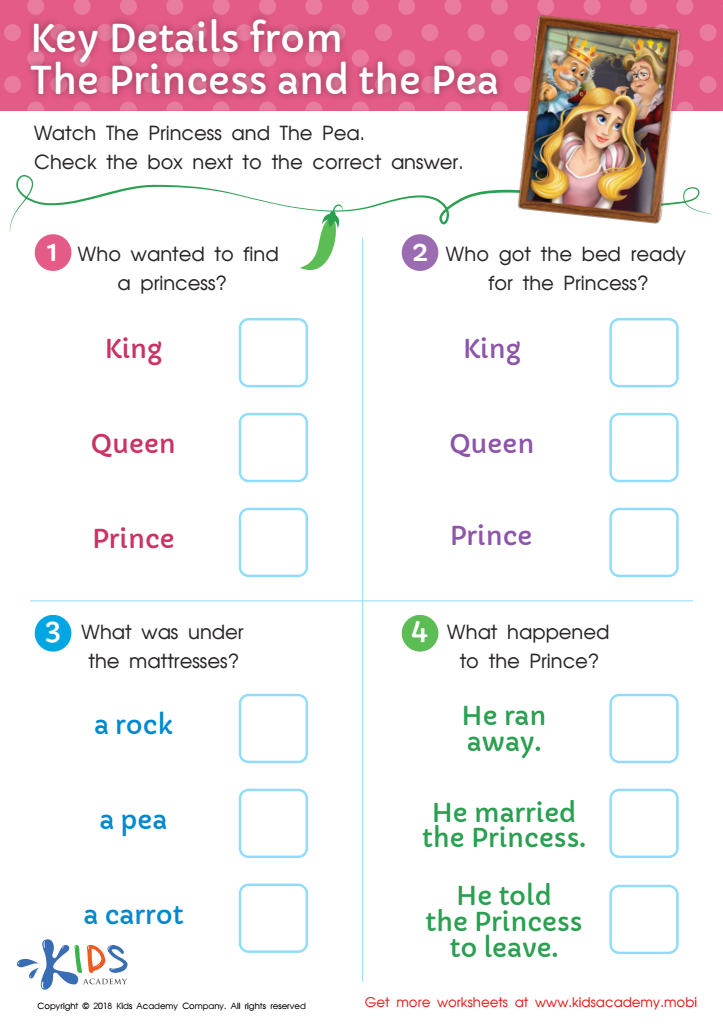
Key Details from the Princess and the Pea Worksheet
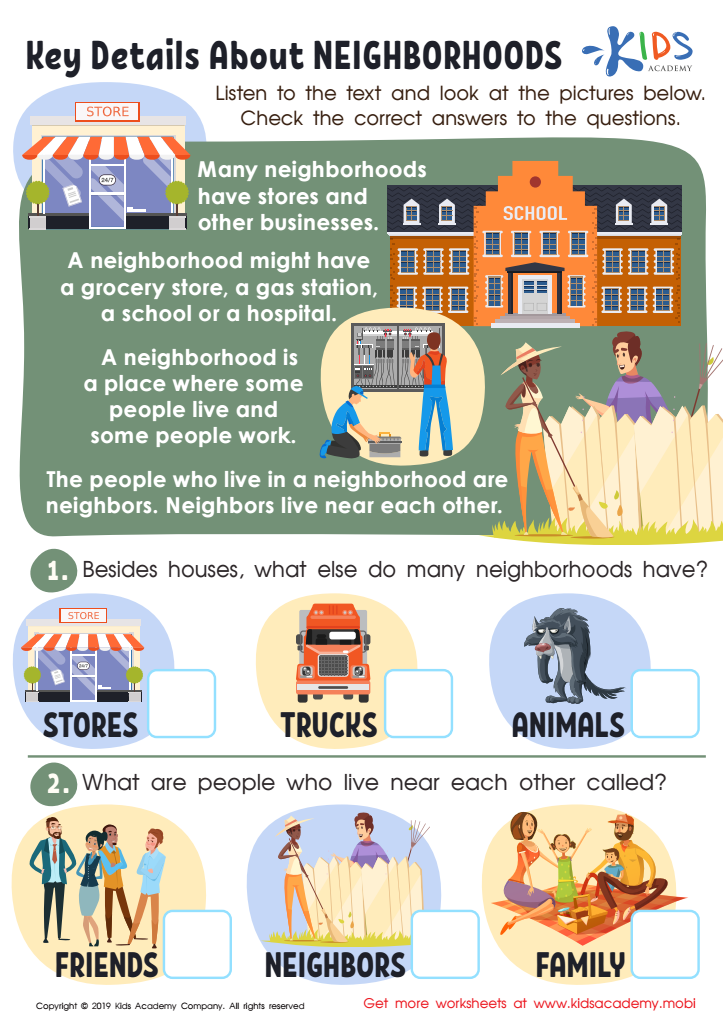
Key Details Neighborhoods Worksheet





.jpg)

.jpg)
Detail identification, the ability to recognize specific pieces of information within a larger context, is crucial for children aged 5-8. At this developmental stage, kids transition from learning to read to reading to learn. Hence, refining their skill in identifying details forms the foundation of comprehension and critical thinking.
For parents, aiding their children in honing this skill means fostering an environment where curiosity and examination are encouraged. This cultivates an intrinsic motivation to seek out and understand the world. By focusing on the details in stories, children naturally enhance their attention to detail in all aspects, whether it's following instructions or engaging with peers. Parental support in this area bolsters their child’s confidence and independence in learning, laying significant groundwork for future academic success.
For teachers, emphasizing detail identification in the classroom is equally essential. Educators can tailor their teaching methods to ensure students don't just skim over texts, but actually engage with them on a deeper level. This skill helps students in grasping the main ideas and key facts, leading to better performance in subjects ranging from reading and social studies to science and math. By instilling strong detail identification skills, teachers prepare students for more complex cognitive tasks they will encounter in higher grades, fostering critical thinkers and effective learners.
Together, parents and teachers play a vital role in guiding children to become attentive, thoughtful, and proficient readers and learners, which is foundational for their overall academic and personal growth.








