Develop counting skills Worksheets for Ages 5-8
8 filtered results
-
From - To
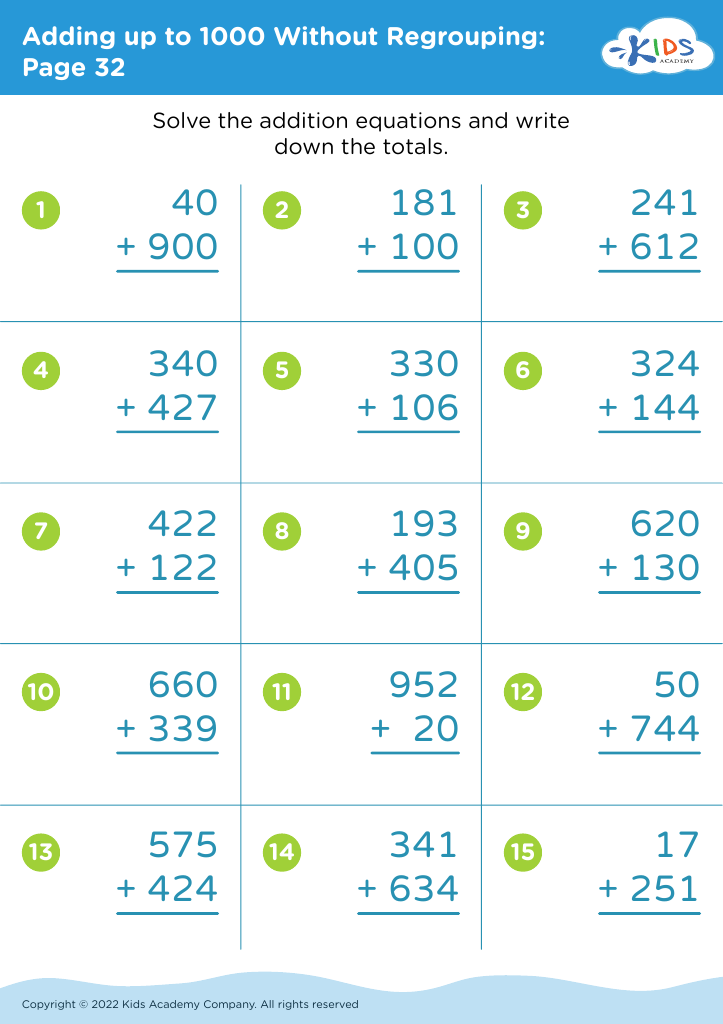
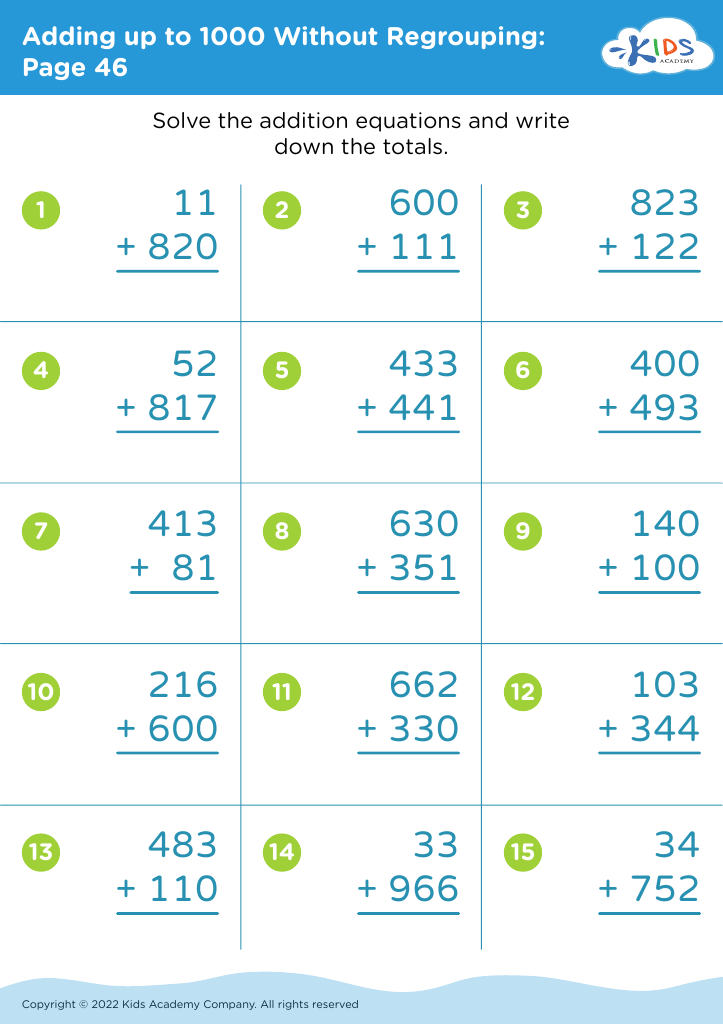
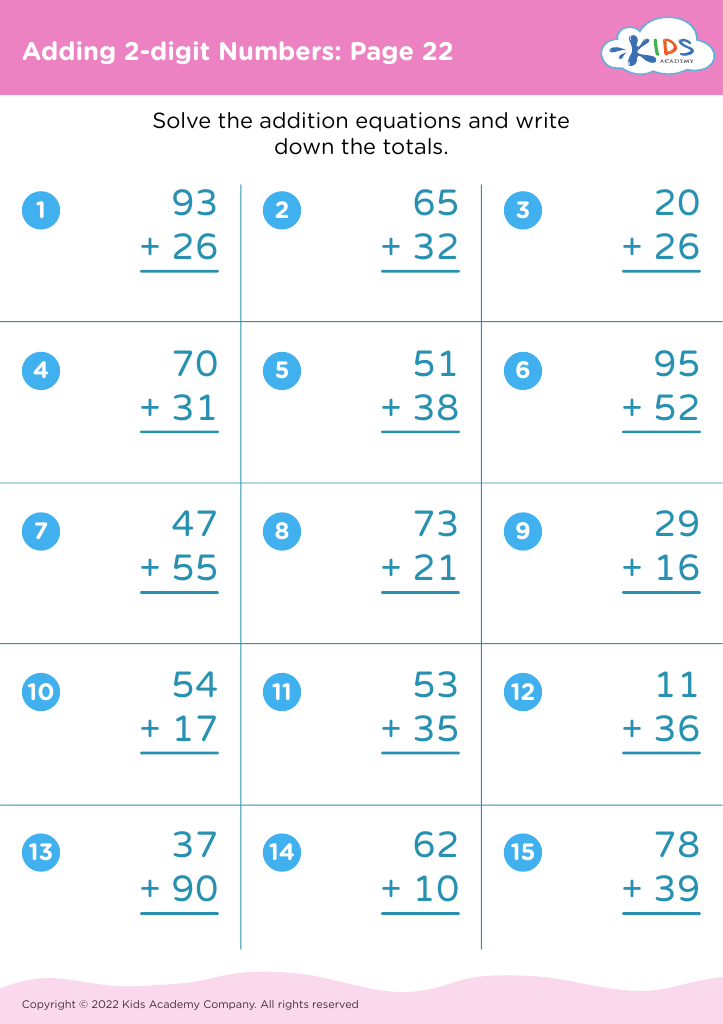
Our "Develop Counting Skills Worksheets for Ages 5-8" are designed to make learning numbers fun and engaging for young children. Tailored to boost foundational math skills, these printable worksheets help kids practice counting, number recognition, and basic arithmetic through vibrant and interactive activities. Perfect for classroom use or home practice, our worksheets offer a variety of exercises that cater to different learning styles. Encourage your child to explore numbers with confidence and build a strong mathematical base with our expertly crafted content. Unlock the joy of counting with our age-appropriate and skill-focused resources!
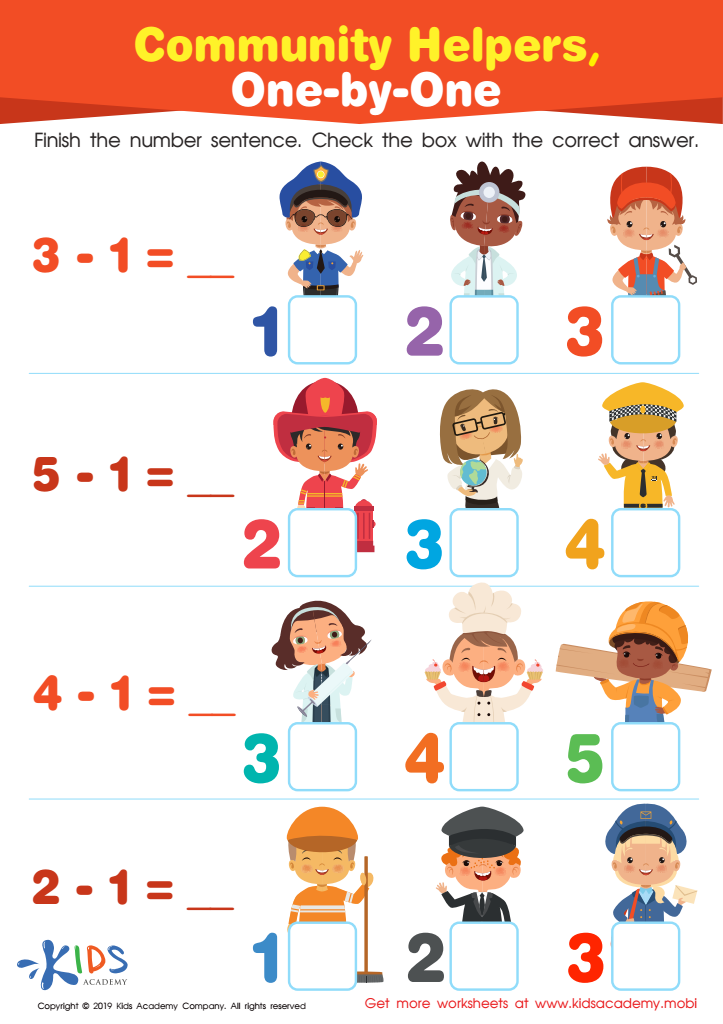
Community Helpers, One-by-One Worksheet
 Assign to My Students
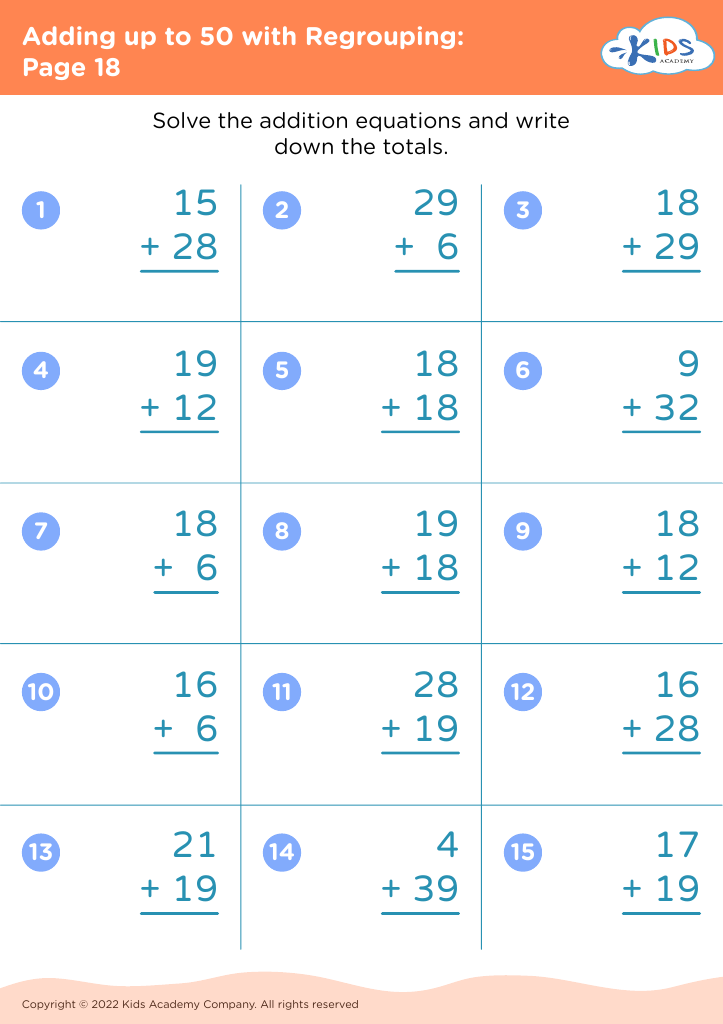
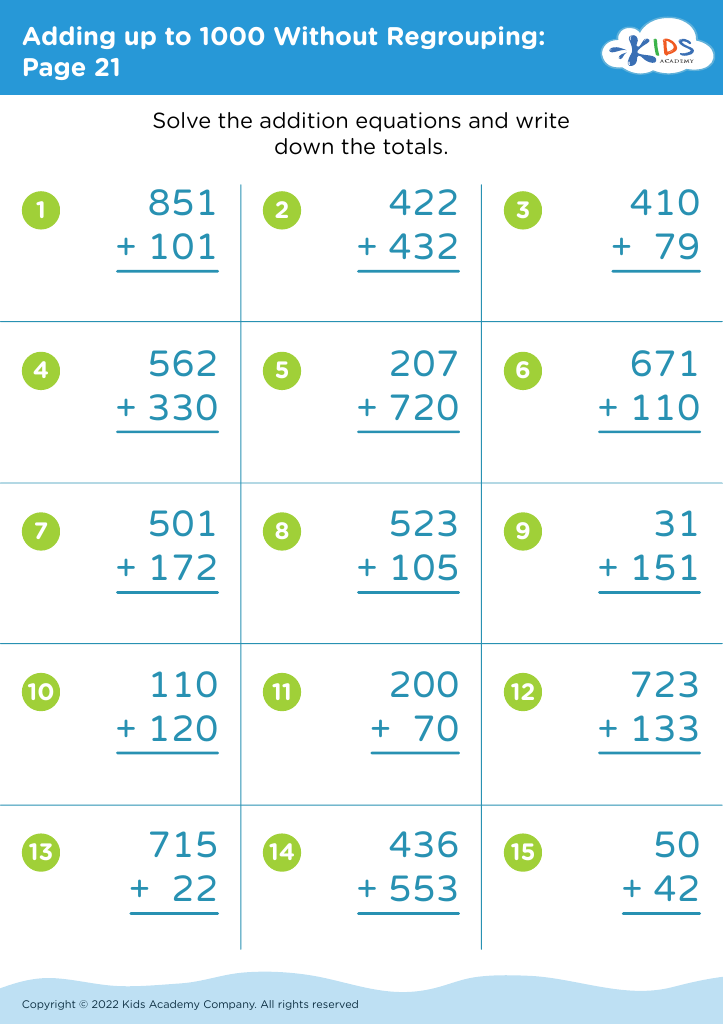







Developing counting skills in children aged 5-8 is crucial for laying a strong mathematical foundation. At this formative stage, children are highly receptive to learning fundamental concepts that will support more complex problem-solving abilities in later years. Counting skills are more than just reciting numbers; they are essential for understanding the principles of quantity, order, and relationships between numbers.
Firstly, counting is the basis for all arithmetic operations. It introduces children to addition, subtraction, and number comparison, underpinning future math topics like multiplication and division. Secondly, proficiency in counting enhances logical thinking and pattern recognition, which are critical cognitive skills.
At this age, children also begin to apply counting in practical contexts, such as sharing toys or understanding time, which are vital life skills. Teachers and parents can make counting fun and relatable by incorporating it into everyday activities, thus fostering a positive attitude towards math.
Additionally, early competency in counting boosts a child's confidence in tackling mathematical problems, promoting a growth mindset. Children who struggle with counting are more likely to experience mathematics anxiety, which can affect their academic trajectory.
Therefore, prioritizing counting skills equips children with crucial tools for academic success and everyday decision-making, making it essential for parents and teachers to invest in this foundational aspect of early education.








