Develop fine motor skills Worksheets for Ages 5-8
13 filtered results
-
From - To
Discover our engaging worksheets designed to develop fine motor skills for children ages 5-8! These printable resources feature a variety of activities that promote hand-eye coordination, dexterity, and precision. From tracing and cutting exercises to connect-the-dots and coloring pages, our worksheets cater to different learning styles and abilities. Encouraging creativity and focus, these fun tasks will enhance children's control over their movements, laying a strong foundation for future learning. Perfect for at-home or classroom use, our fine motor skills worksheets help young learners build confidence while mastering essential skills. Explore our collection and support your child’s development today!
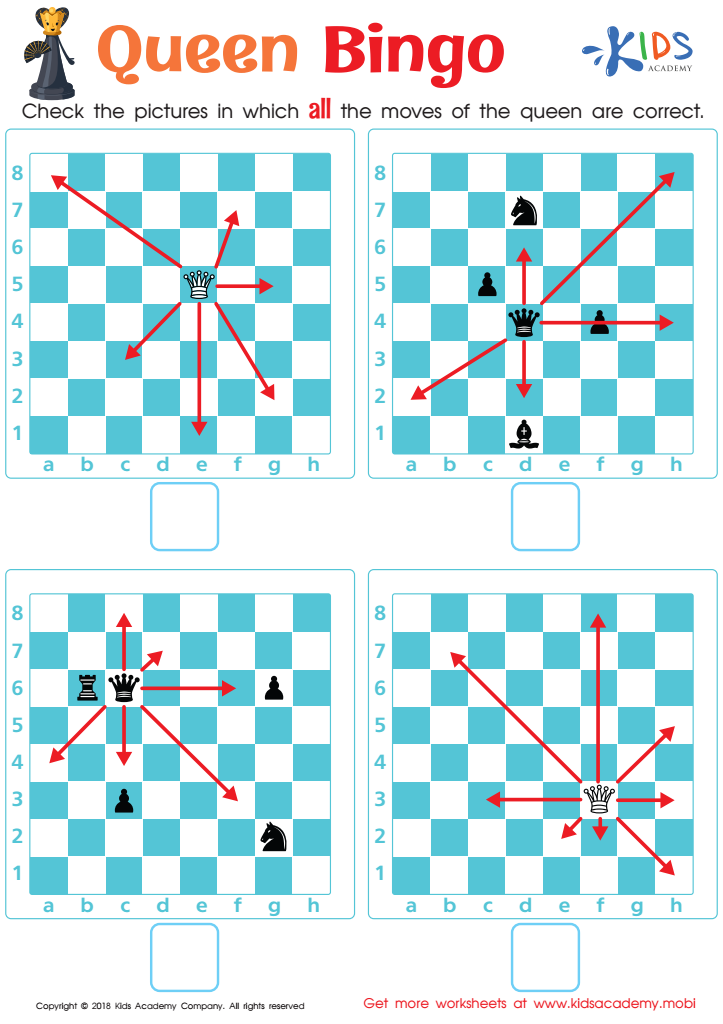
Queen Bingo Worksheet
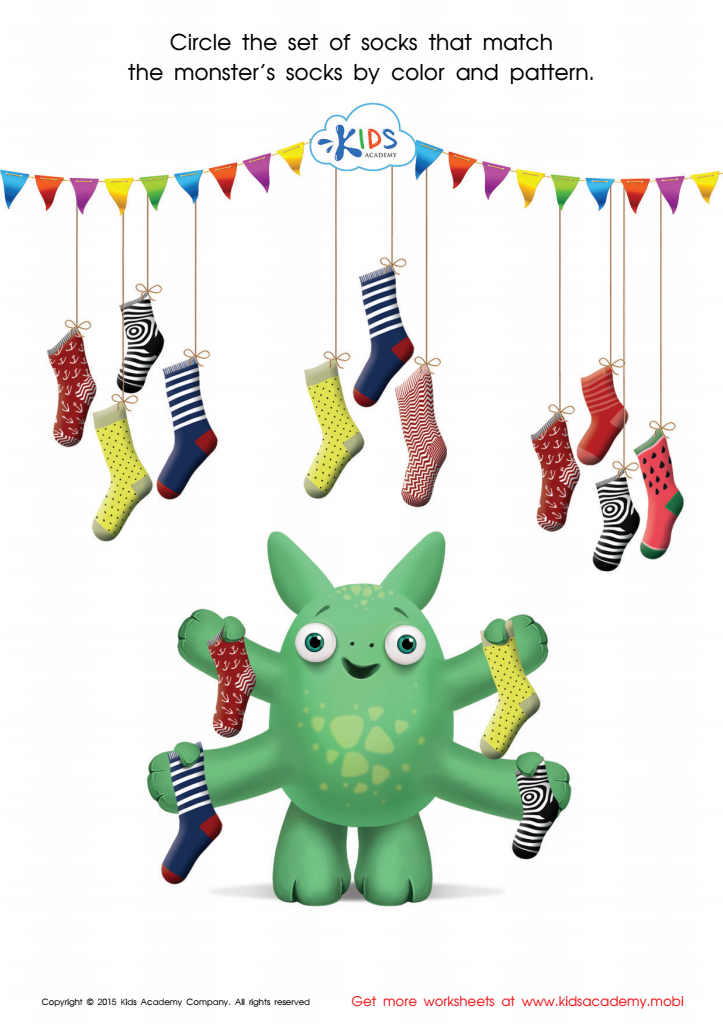
Connecting the Monster's Socks Printable
 Assign to My Students
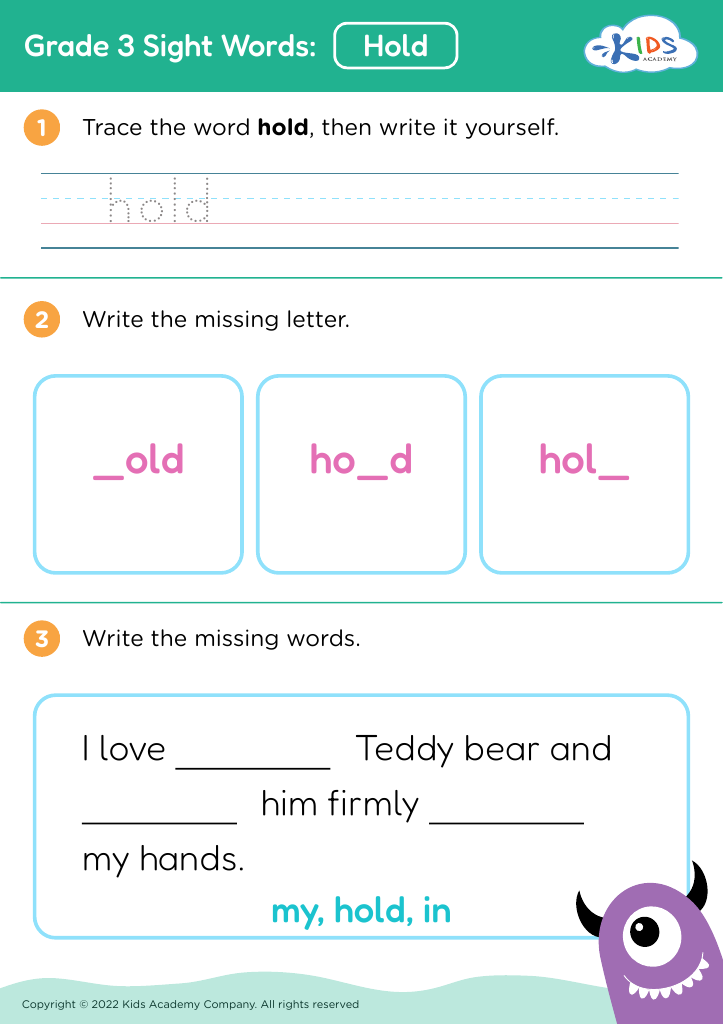








Developing fine motor skills is crucial for children aged 5-8, as these skills lay the foundation for numerous essential tasks. Fine motor skills involve the coordination of small muscles, particularly in the hands and fingers, enabling children to execute precise movements. At this stage, children are increasingly engaged in activities like writing, drawing, cutting, and manipulating small objects, all of which require these skills.
Parents and teachers should emphasize fine motor development as it directly influences academic performance and everyday functioning. Proficient fine motor skills enhance a child's ability to write legibly, which is vital as they begin to express their ideas on paper. Furthermore, strong fine motor abilities contribute to building self-esteem, as children gain independence in tasks such as tying shoelaces, buttoning shirts, and performing arts and crafts.
Additionally, early fine motor development is linked to cognitive growth as it often occurs alongside the development of spatial awareness and problem-solving skills. Engaging in activities that promote fine motor skills, like threading beads, playing with clay, or using scissors, can ensure children are well-prepared for more complex tasks later in life. Therefore, investing attention in this area fosters a well-rounded developmental experience for young learners.








