Developing observational skills Worksheets for Ages 5-8
4 filtered results
-
From - To
Unlock the wonders of the world around us with our "Developing Observational Skills Worksheets" designed specifically for children aged 5-8. These engaging worksheets encourage young learners to enhance their observation skills through fun activities and challenges. From identifying patterns and textures to recognizing differences and similarities, our resources promote critical thinking and attention to detail. Perfect for home or classroom use, these worksheets support cognitive development, memory, and creativity, making learning exciting. Empower your child to explore and appreciate their surroundings while building essential observational skills that will benefit them throughout their education. Begin the journey of discovery today!
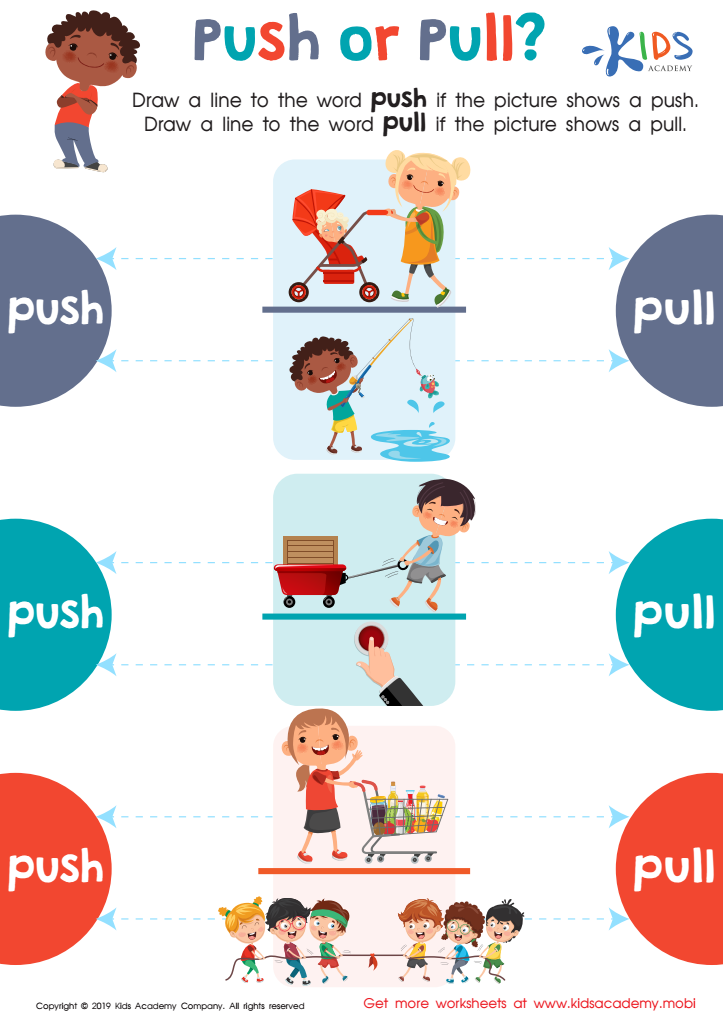
Push or Pull? Worksheet
 Assign to My Students
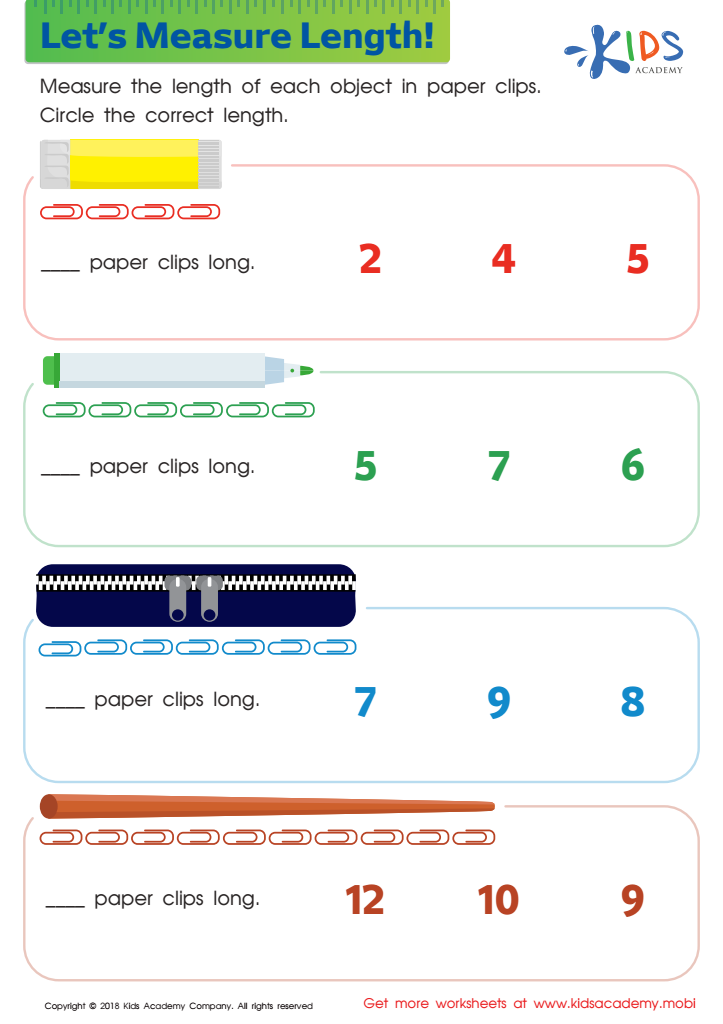
Lets Measure Length Worksheet
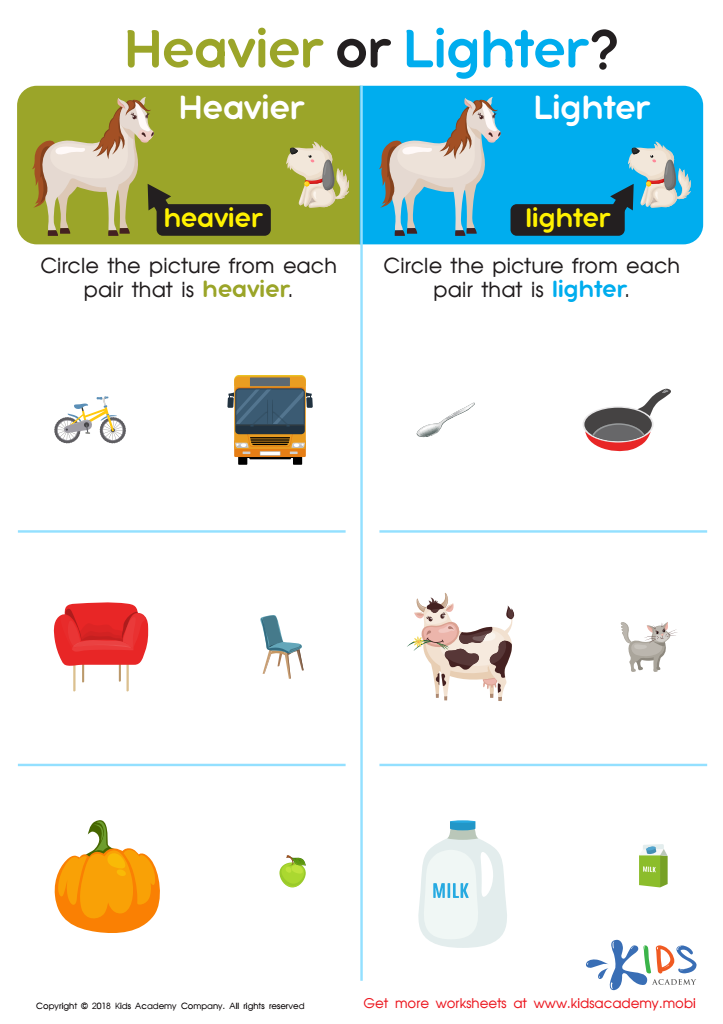
Heavier or Lighter? Worksheet





Developing observational skills in children aged 5-8 is crucial for several reasons. Firstly, these skills lay the foundation for critical thinking and problem-solving. By learning how to observe and analyze their environment, children can better understand the world around them. This promotes curiosity and encourages them to ask questions, leading to deeper learning.
Secondly, sharp observational skills enhance literacy and math development. As children learn to recognize patterns, shapes, and details in their surroundings, they improve their ability to read and comprehend stories, as well as grasp mathematical concepts such as counting and sorting.
Furthermore, enhancing observation encourages social-emotional development. Children become more attuned to the feelings and expressions of others, fostering empathy and effective communication skills.
For parents and teachers, fostering these observational skills can lead to a more engaging learning atmosphere. Incorporating activities such as nature walks, storytelling, or even simple games that focus on details can make learning exciting and relevant. When children practice observation, they're not just learning— they're actively participating in their development, becoming confident and capable learners. Supporting this critical skill in early childhood ultimately benefits children's overall growth and readiness for future educational challenges.








