Fractions understanding Worksheets for Ages 5-8
3 filtered results
-
From - To
Explore our engaging "Fractions Understanding Worksheets" specifically designed for children aged 5-8. These interactive resources make learning about fractions fun and accessible, helping young learners grasp essential concepts such as halves, quarters, and equivalents effortlessly. With a mix of colorful visuals and hands-on activities, our worksheets encourage critical thinking and foster a deep understanding of fractions in real-life contexts. Perfect for home or classroom use, these worksheets support early math skills and boost confidence in young mathematicians. Download your free fractions worksheets today and watch your child's math skills flourish as they embark on their exciting learning journey!
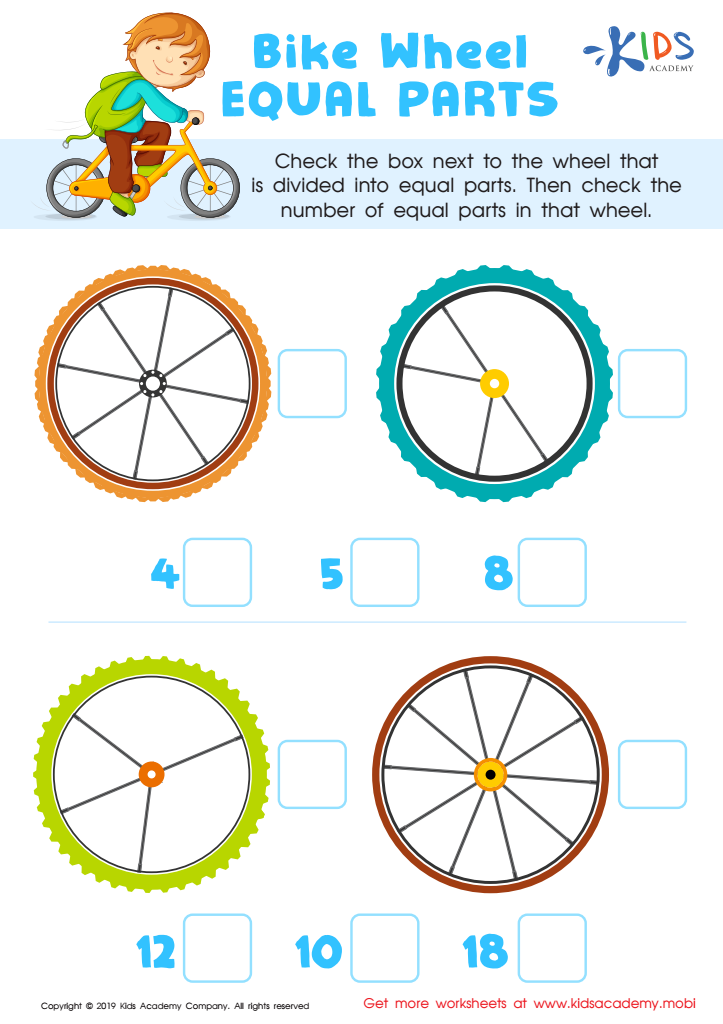
Bike Wheel Equal Parts Worksheet
 Assign to My Students
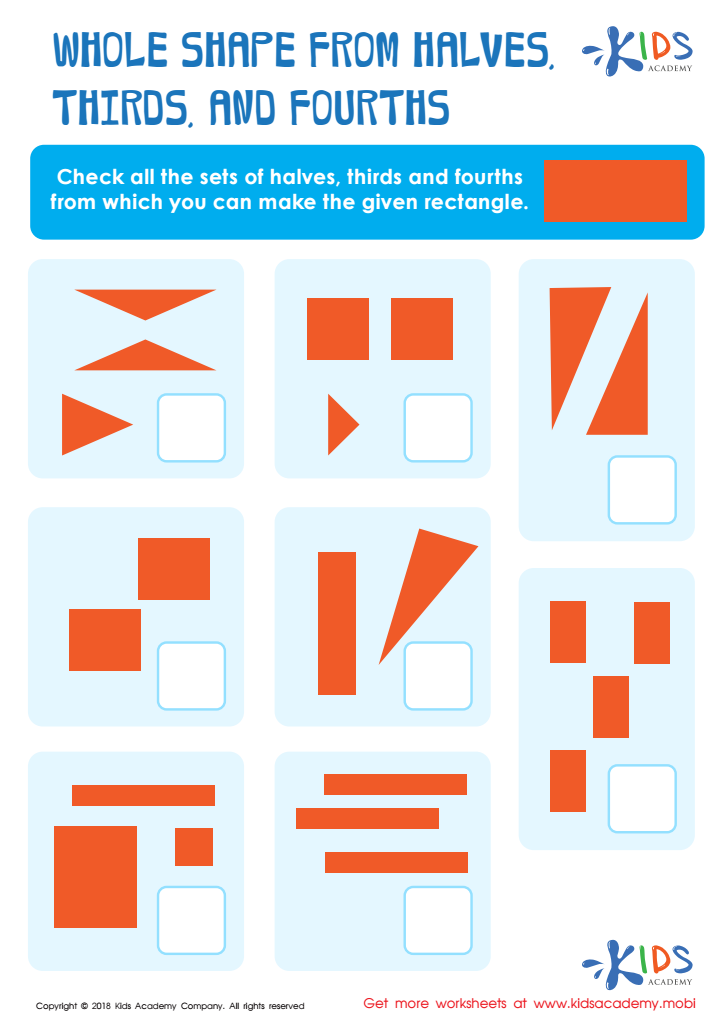
Whole Shape from Halves, Thirds and Fourths Worksheet






Understanding fractions is a critical component of early mathematics education for children ages 5-8, laying the foundation for future mathematical success. At this age, children begin to comprehend basic numerical concepts, and introducing fractions helps them understand parts and wholes. When parents and teachers cultivate this understanding, they facilitate the development of essential cognitive skills.
Early fraction knowledge enhances children's ability to compare quantities, perform measurements, and solve problems related to division. It also promotes mathematical reasoning and critical thinking, essential skills that go beyond math itself. When children grasp concepts like halves, thirds, or fourths, they visualize and relate mathematical concepts to everyday experiences, such as sharing food or dividing objects.
Moreover, a solid grounding in fractions boosts confidence and interest in mathematics, setting a positive tone for learning in general. When parents or teachers are committed to fostering this understanding, they encourage a growth mindset that welcomes challenges and promotes resilience.
Investing time and effort in teaching fractions can transform how children perceive and engage with math, enabling them to build a robust mathematical framework they can utilize throughout their educational journey and beyond.








