
Geographic Understanding Worksheets for Ages 5-8
3 filtered results
Difficulty Level
Grade
Age
-
From - To
Subject
Activity
Standards
Explore our engaging Geographic Understanding Worksheets designed specifically for children ages 5 to 8! These interactive resources help young learners develop spatial awareness, map skills, and an appreciation for the world around them. Through fun activities, kids will learn about continents, countries, landmarks, and basic geography concepts, making learning enjoyable and effective. Our worksheets encourage critical thinking and foster a sense of curiosity about diverse cultures and environments. Ideal for both classroom and home use, these printable materials make geography accessible and exciting for early learners. Start your child's journey into the world of geography today with our creative worksheets!
Favorites
With answer key
Interactive
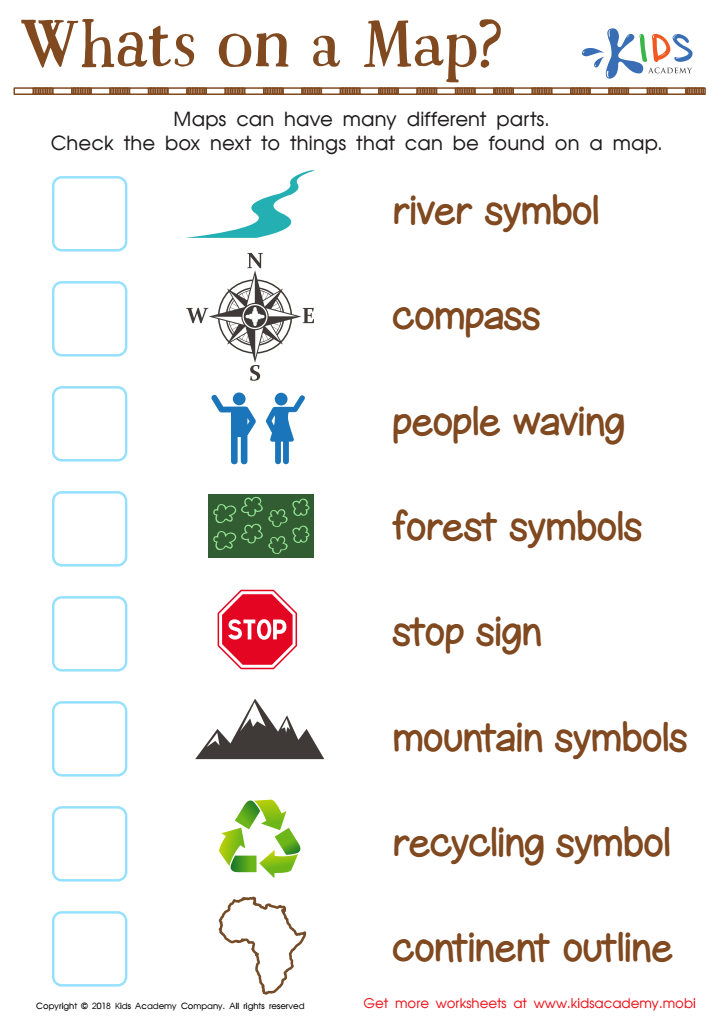
Whats on a Map? Worksheet
Kids often lack map-reading experience due to our digital age, but these skills are essential. This free worksheet reinforces what they'll find on a map and the symbols used to represent them, helping them build reasoning, thinking and problem-solving skills.
 Assign to My Students
Whats on a Map? Worksheet
Worksheet
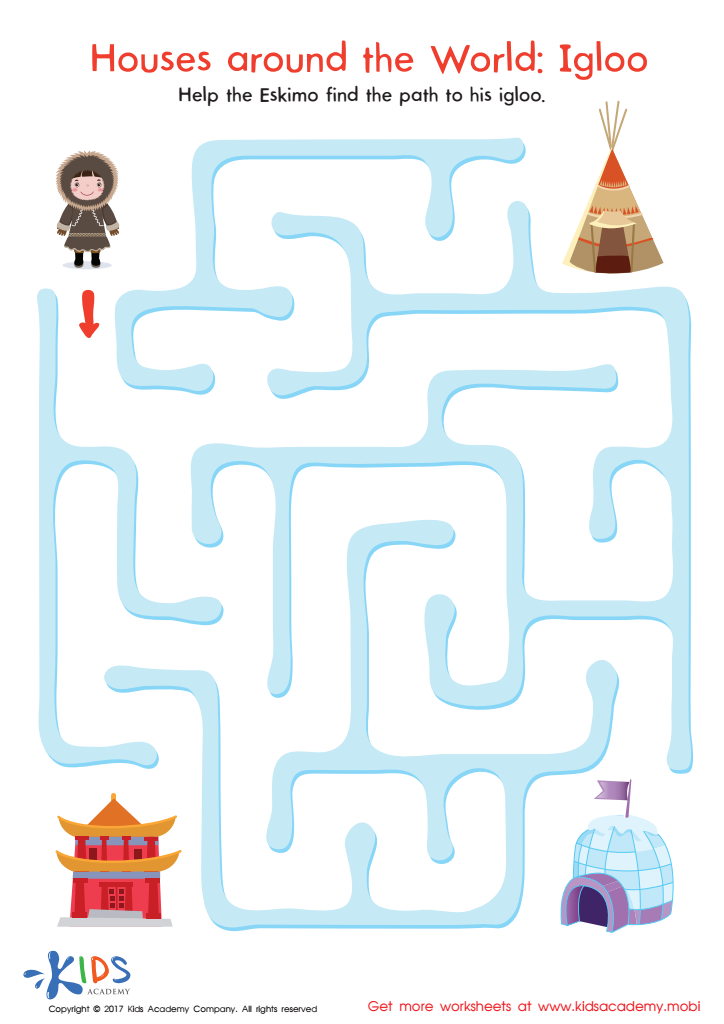
Houses Around the World: Igloo Printable
Print out the igloo maze worksheet and help the Eskimo find his way home. Along the way, you’ll discuss different types of houses. A perfect way to practice thinking skills!
Houses Around the World: Igloo Printable
Worksheet
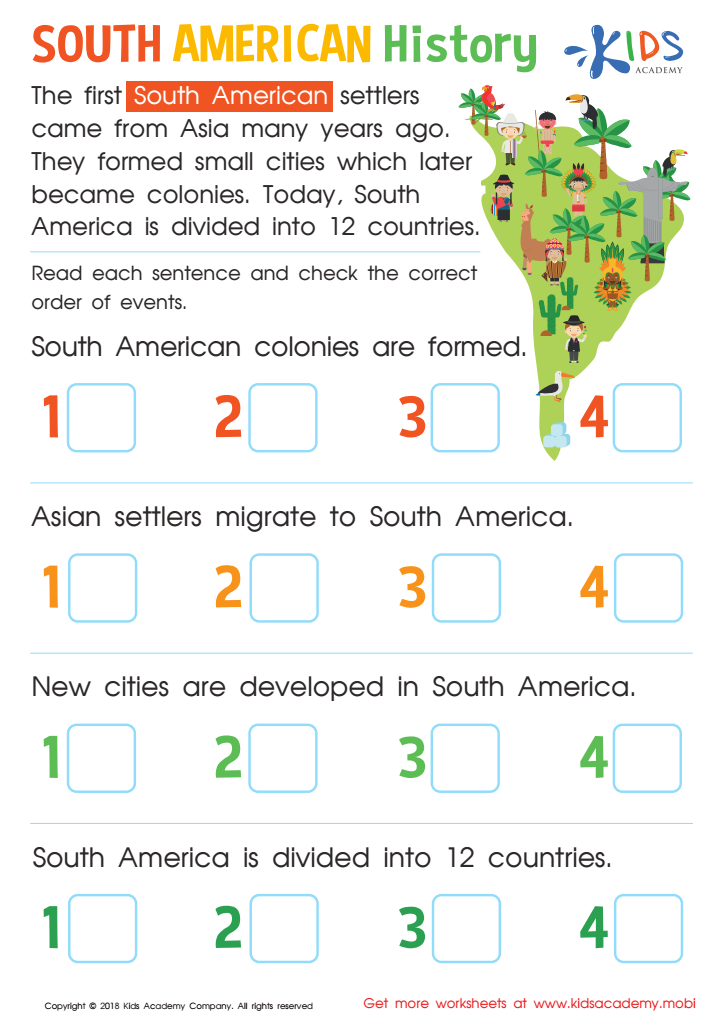
South American History Worksheet
Kids can brush up on South American history with this free worksheet! They'll discover how the first inhabitants arrived from Asia and how this led to the growth of cities and colonies. Comprehension questions will help them sequence and understand the events of South American history.
South American History Worksheet
Worksheet
Join Kids Academy for Free
Who is primarily going to use this learning content?







Geographic understanding is crucial for children aged 5-8 as it lays the foundation for their awareness of the world around them. During these formative years, children are naturally curious about their environments, and fostering geographic literacy helps shape their perspectives. It enables them to connect with their local communities and recognize their place within a larger context, promoting a sense of belonging and responsibility.
Learning about maps, landmarks, and cultural diversity enhances critical thinking and problem-solving skills. It encourages children to ask questions about different places, peoples, and histories, fostering empathy and cultural awareness. This understanding helps combat stereotypes and instills a broader global citizenship perspective.
Integrating geography into early education supports other subjects such as science, math, and literacy, making learning more cohesive and engaging. Activities like exploring maps or local geography can enhance collaboration and communication skills.
Ultimately, when parents and teachers prioritize geographic understanding, they are equipping children with essential tools to navigate an increasingly interconnected world, inspiring them to appreciate diversity, think globally, and engage actively in their communities. This foundation can lead to lifelong learning and curiosity about the world, an invaluable trait in today’s society.








