Identify numbers Worksheets for Ages 5-8
3 filtered results
-
From - To
Discover our engaging "Identify Numbers Worksheets" designed specifically for children aged 5-8. These fun and interactive worksheets help young learners develop essential counting and number recognition skills. Featuring colorful illustrations and age-appropriate activities, our resources encourage children to identify, compare, and write numbers confidently. Each worksheet is designed to support early math skills while making learning enjoyable. Perfect for home or classroom use, these worksheets provide a solid foundation in numeracy that will benefit children as they progress in their academic journey. Explore our collection today and watch your child excel in their understanding of numbers!
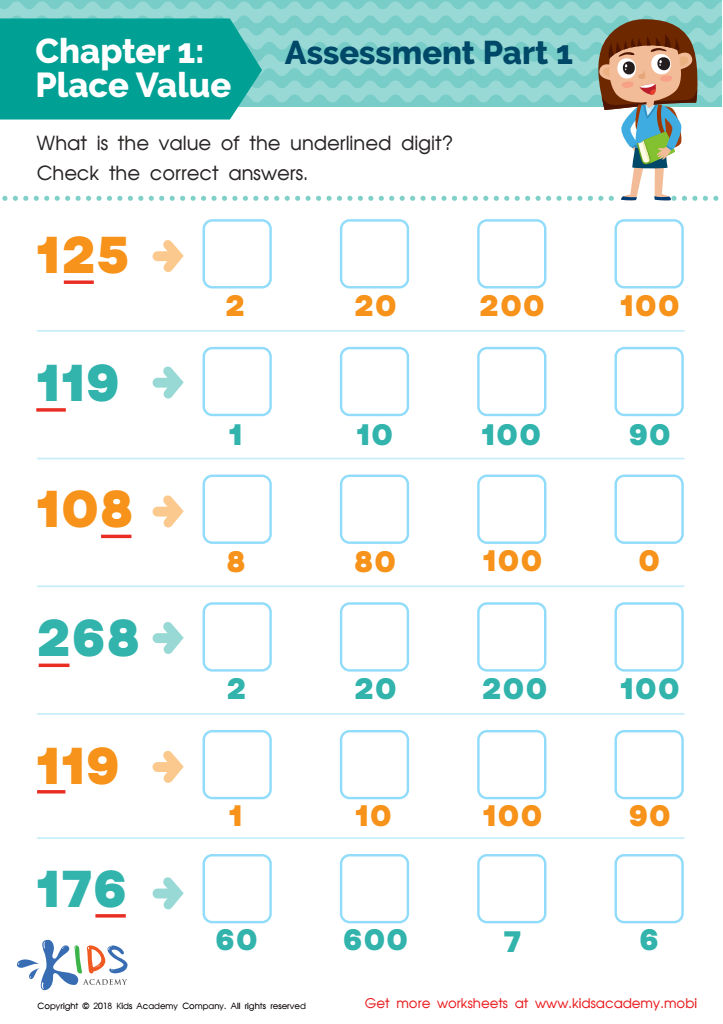
Place Value: Chapter 1 Worksheet
 Assign to My Students
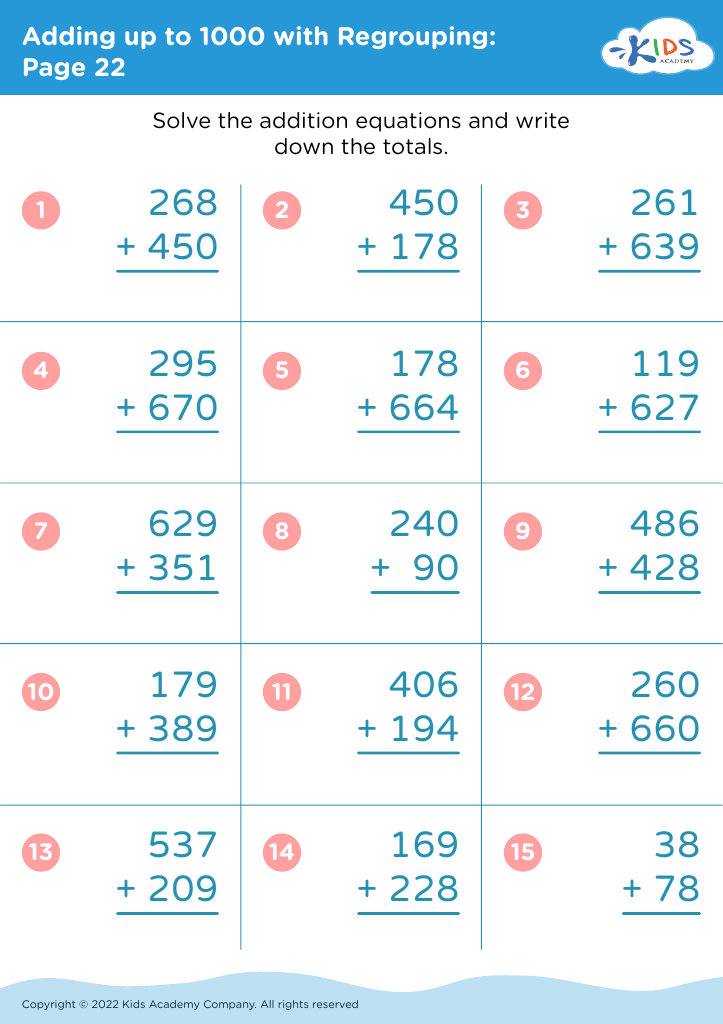
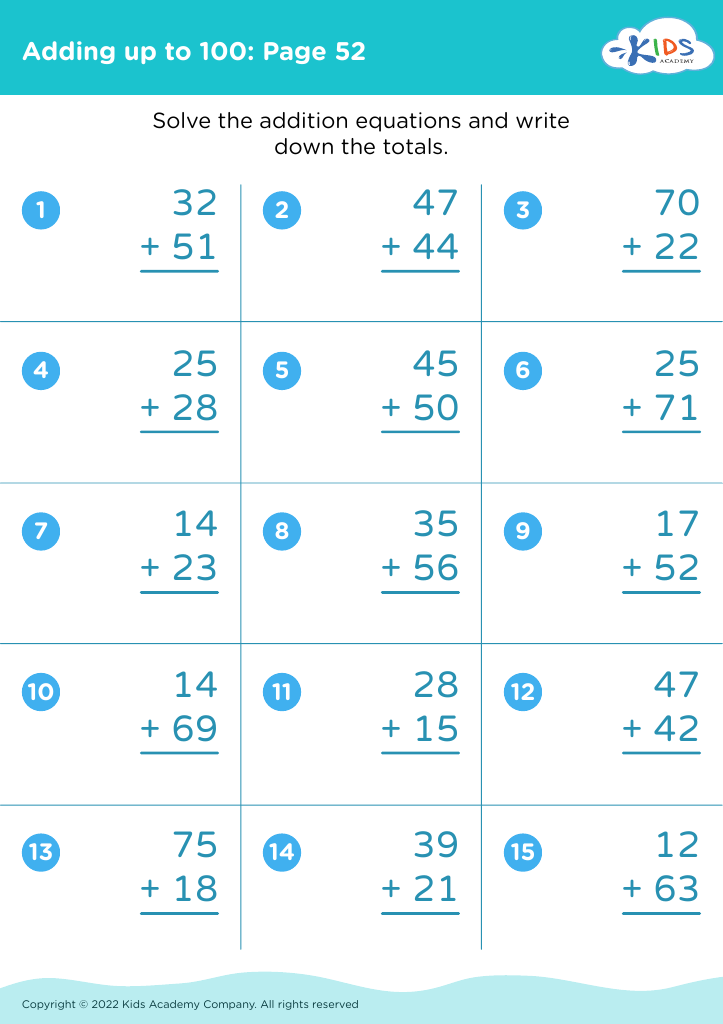






Identifying numbers is a fundamental skill for children aged 5 to 8, serving as the foundation for their understanding of mathematics and problem-solving. During these critical years, children develop cognitive abilities and a strong number sense, which plays a vital role in their academic success. When parents and teachers emphasize number identification, they are equipping children with essential tools to navigate the world of numbers, leading to greater confidence in their mathematical abilities.
Furthermore, recognizing numbers helps children understand the concepts of counting, quantity, and basic operations such as addition and subtraction. It enhances their ability to solve everyday problems and engages them in discussions about money, time, and measurement, all integral aspects of daily life. Parents can reinforce these skills through everyday activities, such as counting objects or reading numbers in recipes or on signs. Meanwhile, teachers can incorporate engaging games and activities in their curriculum to make learning fun and effective.
By prioritizing number identification, parents and teachers create a strong mathematical foundation, empowering children to develop critical thinking skills and a love for learning. This early understanding of numbers not only supports academic success but also nurtures a sense of accomplishment and curiosity that extends beyond the classroom.








