Boost your child’s language skills with our engaging vocabulary worksheets designed for ages 5-8. Our collection of interactive printables features fun activities, including matching words with images, fill-in-the-blank exercises, and word searches, helping learners expand their vocabulary in a playful way. Each worksheet is crafted to cater to varying skill levels, ensuring that every child can thrive. Perfect for use in classrooms or at home, these resources promote literacy development and encourage a love for words. Explore our variety of themes to entertain and educate your young learners, building their confidence as they enhance their communication skills. Download and start today!

Check out this FREE "Improve vocabulary" Trial Lesson for age 5-8!

Decode Two Syllable Words

Favorites
With answer key
Interactive
  • 5-8
  • Improve vocabulary
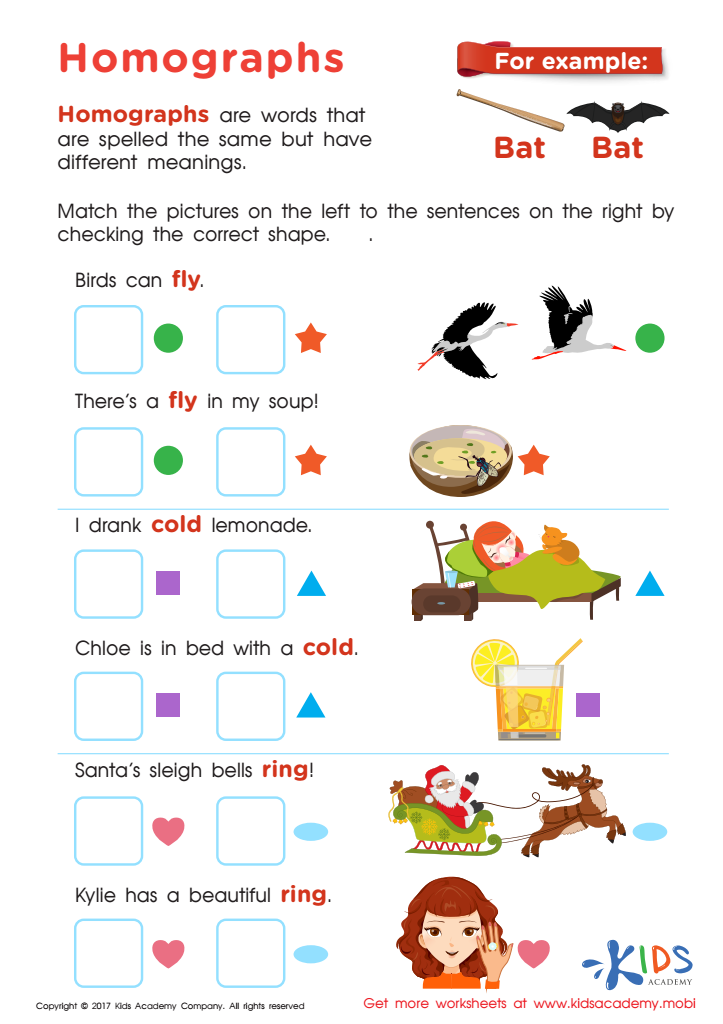
Homographs free printable worksheet

Homographs Free Printable Worksheet

Homographs can be tricky for kids. Help them gain valuable practice with this free printable worksheet. It has a selection of funny words with double meanings, and can be a great learning experience!
Homographs Free Printable Worksheet
Worksheet
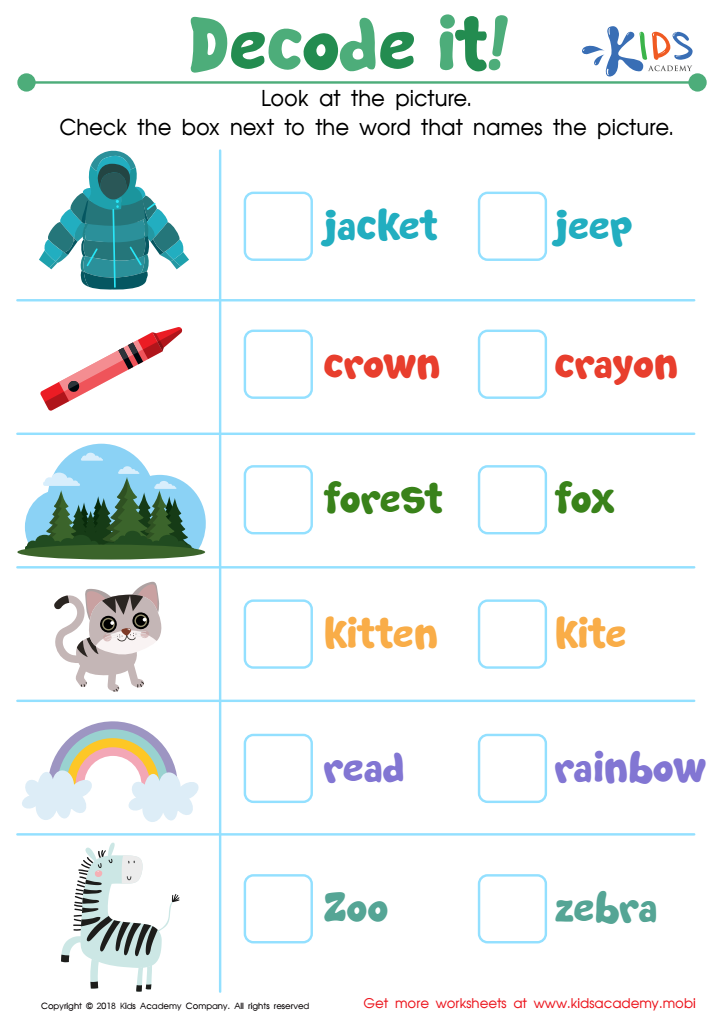
Reading: Decode It Worksheet

Reading: Decode It Worksheet

Look at the picture and circle the word that names it. This exercise helps kids practice picture cues and decoding words, with the same beginning sound. It builds their fluency and comprehension, giving them the skills to read unfamiliar words.
Reading: Decode It Worksheet
Worksheet
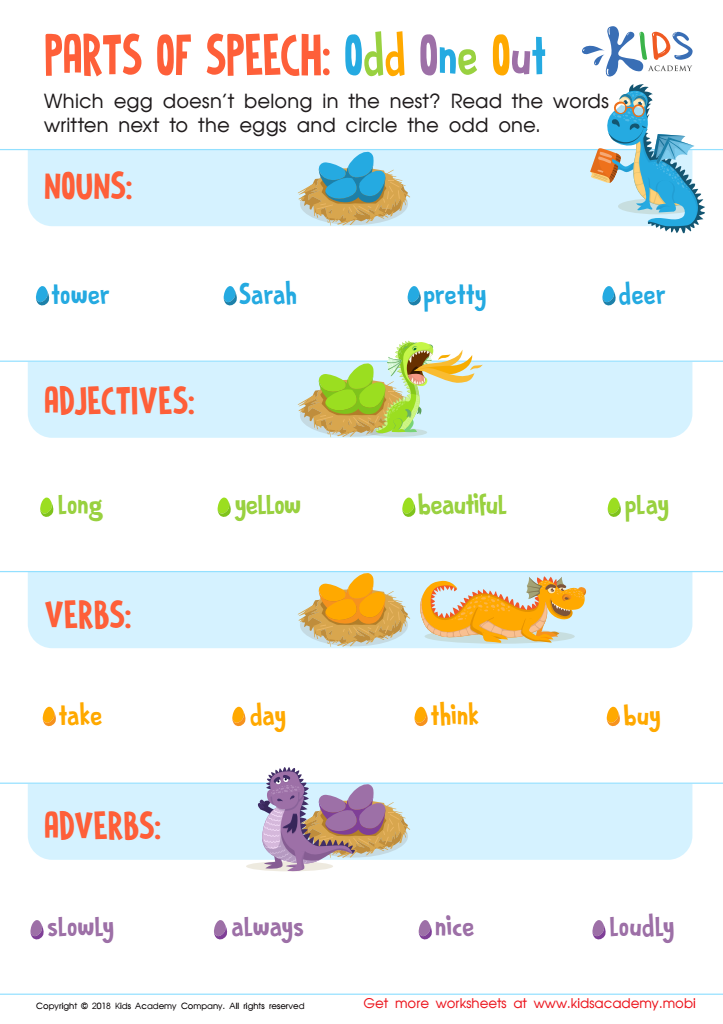
Parts of speech: odd one out

Parts of Speech: Odd One Out Worksheet
Test your child's grammar knowledge with Parts of Speech: Odd One Out! This dragon-themed worksheet will get their creative juices flowing as they read each word, identify its part of speech, and identify the odd one out!
Parts of Speech: Odd One Out Worksheet
Worksheet
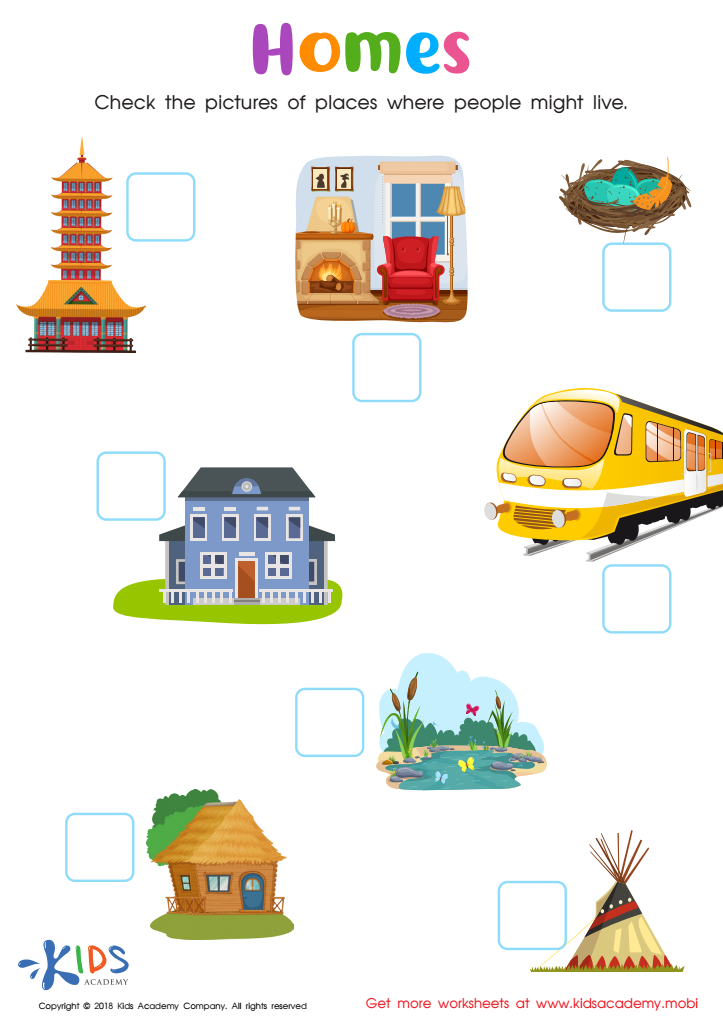
Homes Worksheet
Homes Worksheet

Homes Worksheet

Explain to your child that a home is where people live. Ask if they have noticed homes of different shapes, sizes, and materials in the community. Then, look at the pictures in this worksheet and ask your child to check the ones that show places where people live.
Homes Worksheet
Worksheet
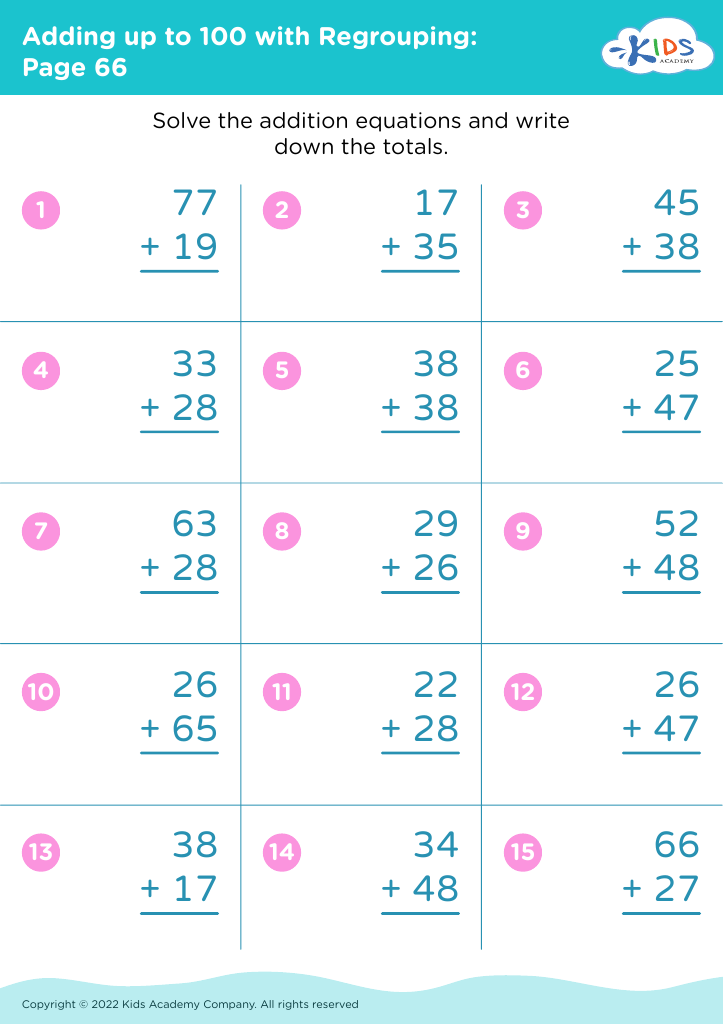
Adding up to 100 with Regrouping: Page 66
Worksheet
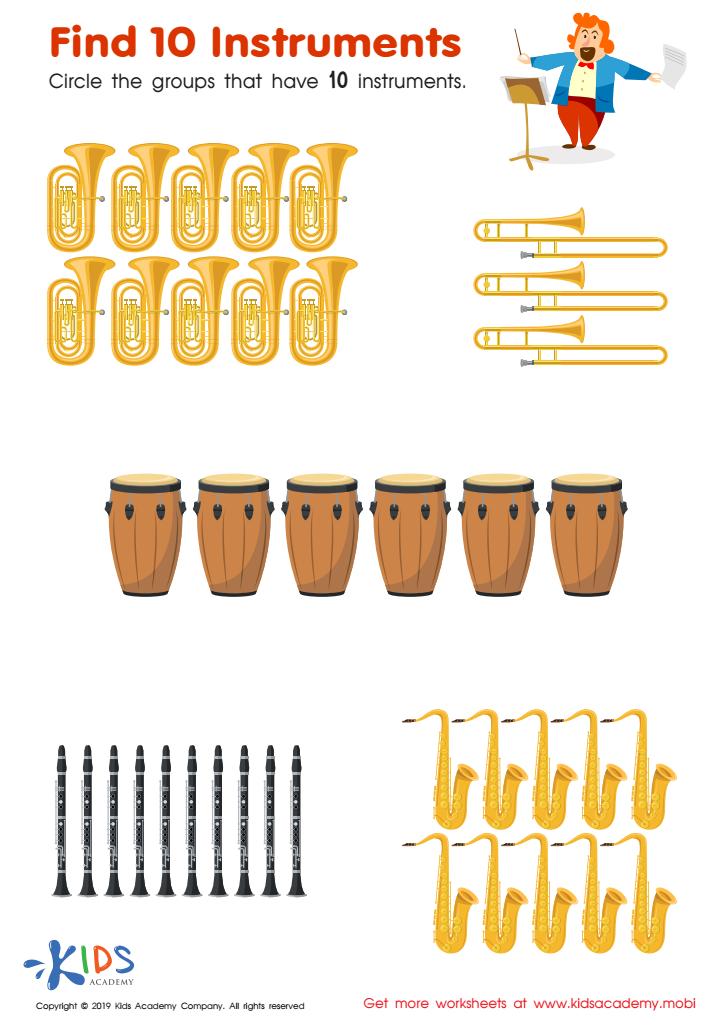
Find 10 Instruments Worksheet
Find 10 Instruments Worksheet
Teach your kids to count with educational DVDs, video games and this worksheet. Show them the picture and help them count the instruments, then circle the groups of 10. It's a great way to practice counting numbers, one of the first things they'll learn.
Find 10 Instruments Worksheet
Worksheet
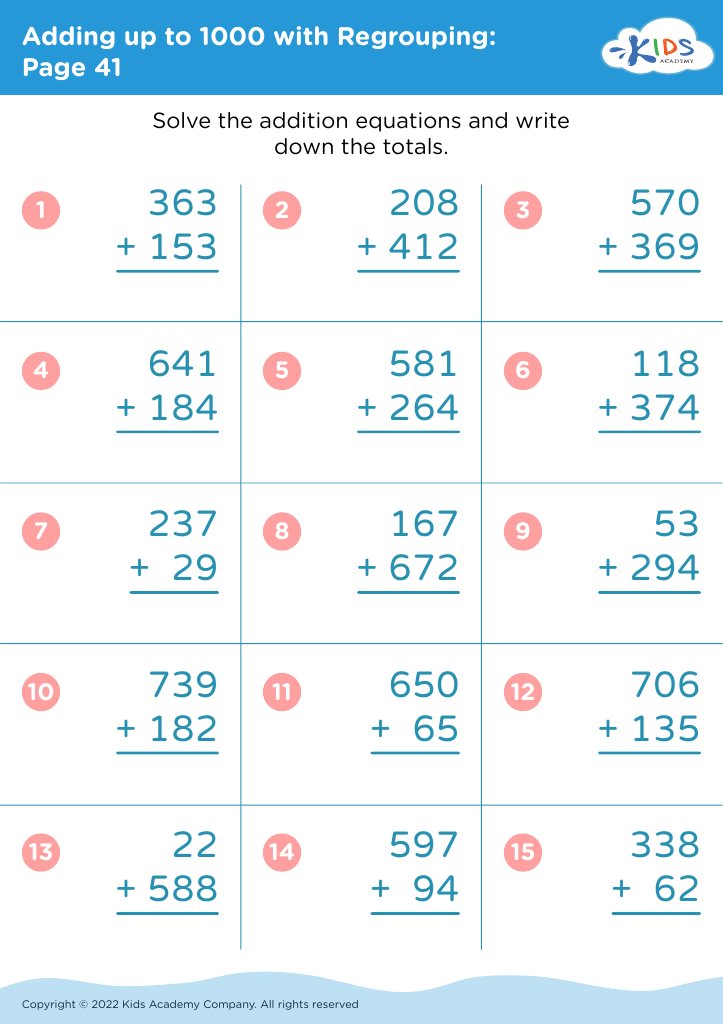
Adding up to 1000 with Regrouping: Page 41
Worksheet
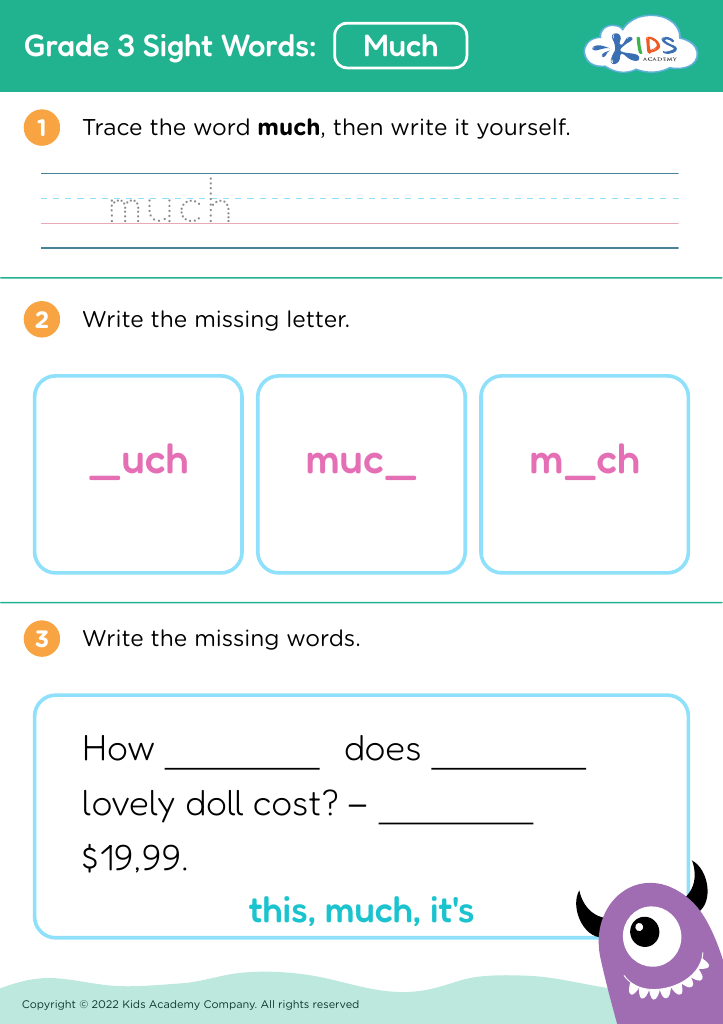
Grade 3 Sight Words: Much

Grade 3 Sight Words: Much

Grade 3 Sight Words: Much
Worksheet
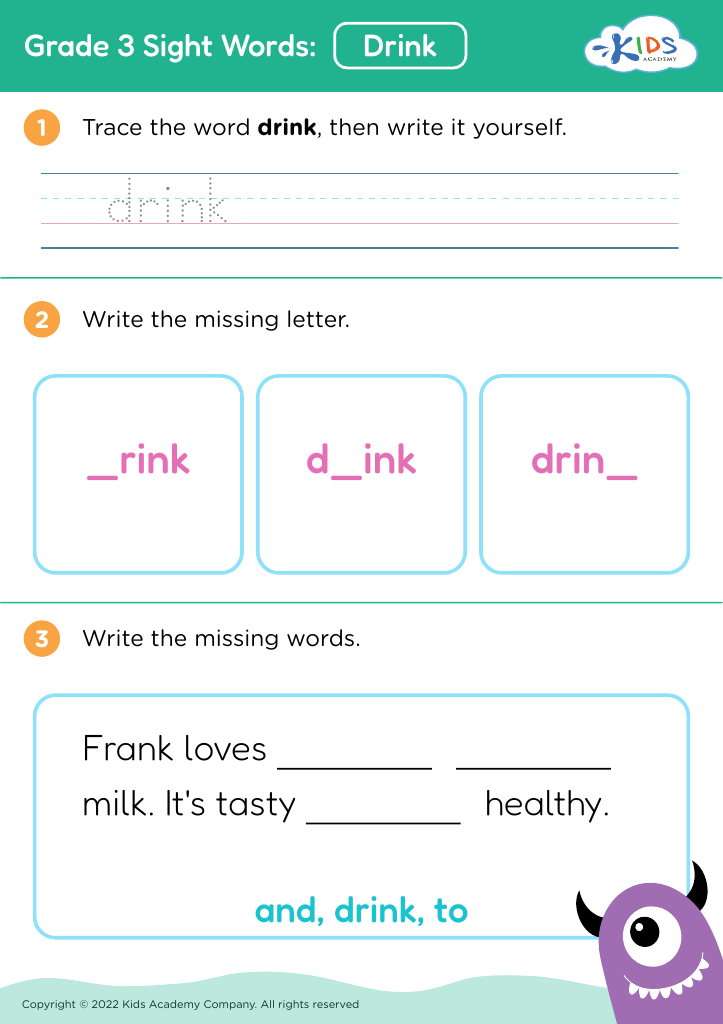
Grade 3 Sight Words: Drink

Grade 3 Sight Words: Drink

Grade 3 Sight Words: Drink
Worksheet
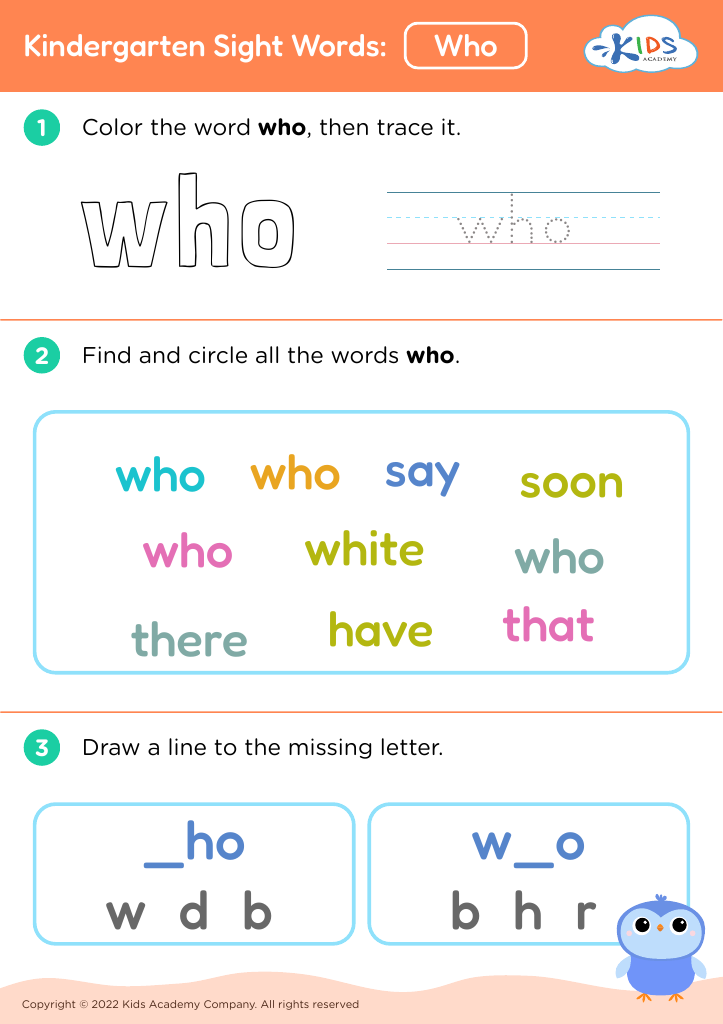
Kindergarten Sight Words: Who

Kindergarten Sight Words: Who

Kindergarten Sight Words: Who
Worksheet
Independence Day: Eagle
Independence Day: Eagle Coloring Page for Kids
Worksheet


Improving vocabulary in children aged 5-8 is crucial for their overall development and future success. During these formative years, children are rapidly acquiring language skills, which serve as the foundation for reading, writing, and effective communication. A strong vocabulary enhances comprehension and facilitates learning across subjects, enabling children to express their thoughts and ideas clearly.

Parents and teachers play significant roles in nurturing vocabulary growth. Engaging children in rich language experiences—such as reading diverse books, participating in conversations, and exploring new words—can enhance their verbal skills. A robust vocabulary not only boosts academic performance but also builds confidence, empowering children to participate actively in discussions and articulate their feelings and opinions.

Additionally, improved vocabulary is linked to emotional intelligence, as it allows children to understand and communicate their emotions better. For teachers, focusing on vocabulary enriches classroom discussions and collaboration, fostering a more inclusive and engaging learning environment. For parents, providing a language-rich home setting can reinforce learning and support their child’s linguistic journey. Overall, investing in vocabulary development at this age lays the groundwork for lifelong communication skills, academic achievement, and social interaction.