Enhance your child's critical thinking with our "Improving Analytical Skills Worksheets for Ages 5-8." Designed to stimulate curiosity, these worksheets are perfect for developing problem-solving abilities, attention to detail, and logical thinking. Each activity encourages young minds to explore patterns, categorize objects, and understand sequences through engaging exercises. Our printable resources are tailored to be both fun and educational, making learning an enjoyable experience. Help your child sharpen their analytical skills to give them a strong foundation in math, science, and reading comprehension—setting them up for academic success and confident decision-making. Explore now for smarter learning!

Check out this FREE "Improving analytical skills" Trial Lesson for age 5-8!

Special Moves: En Passant

Favorites
With answer key
Interactive
  • 5-8
  • Improving analytical skills
Comparing with a Third Object Worksheet

Comparing with a Third Object Worksheet

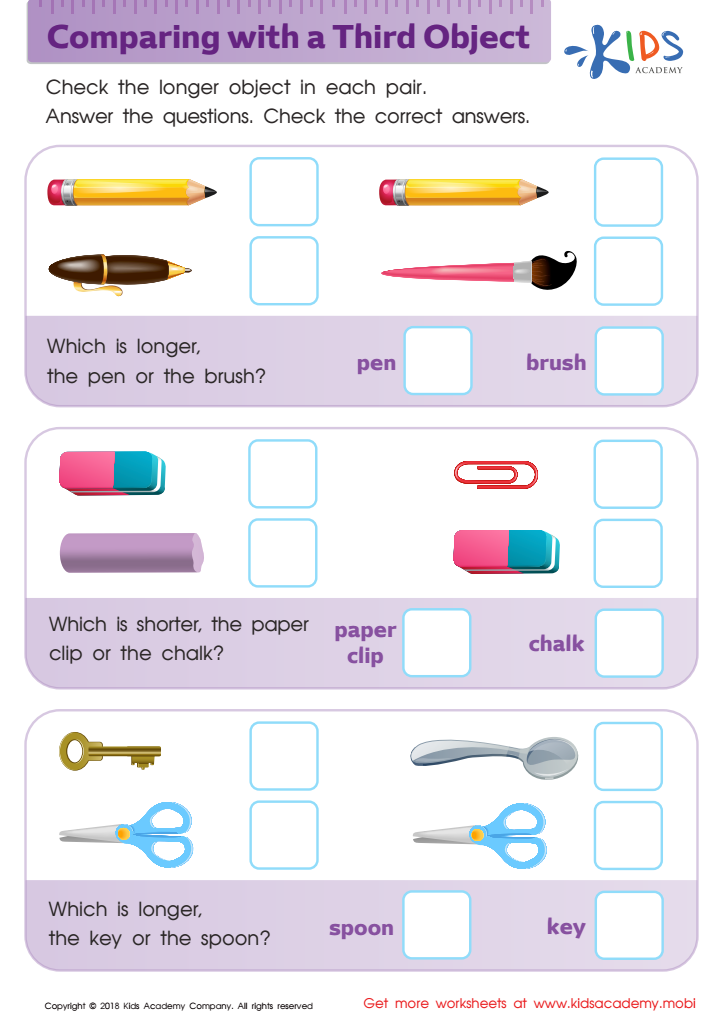
Help your child master measurement skills with this free downloadable math worksheet! Ask them to compare each pair of objects, checking the box for the longer one. Then, read the question and compare the objects across the pairs before ticking the box and continuing to the next group of pictures.
Comparing with a Third Object Worksheet
Worksheet
Lady Liberty Worksheet

Lady Liberty Worksheet

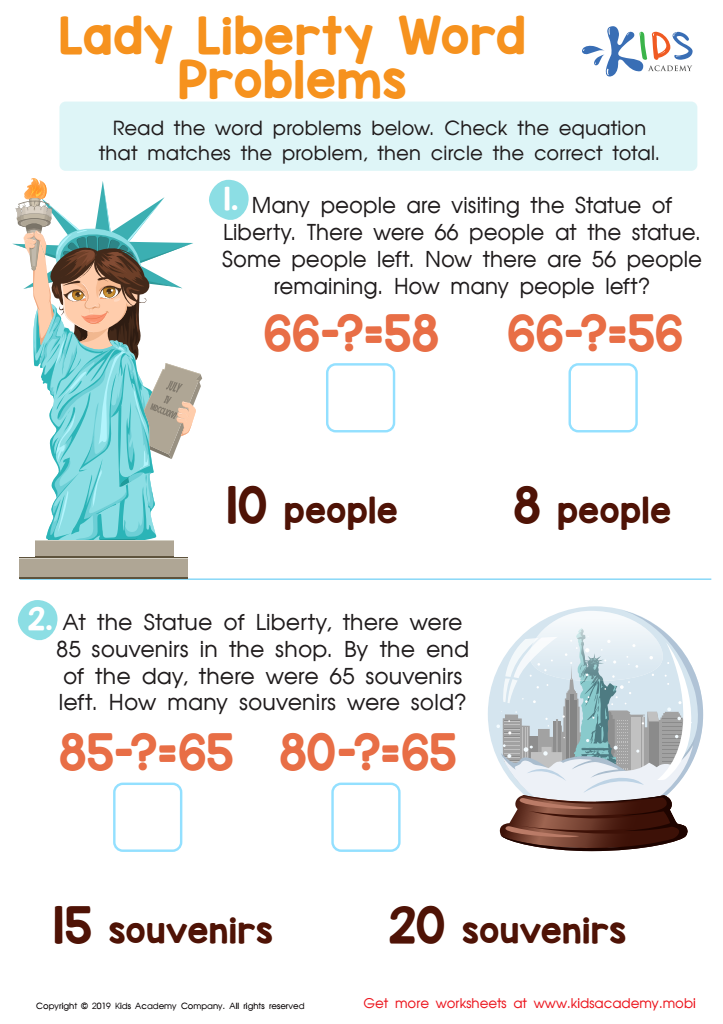
Have your students ever been to the Statue of Liberty? Ask them to tell you where it is and what it looks like. Every day, the statue draws a crowd admiring its beauty, taking pics and learning more about it. Pose a word problem and help them check the answer. Circle the correct total. (80 words)
Lady Liberty Worksheet
Worksheet
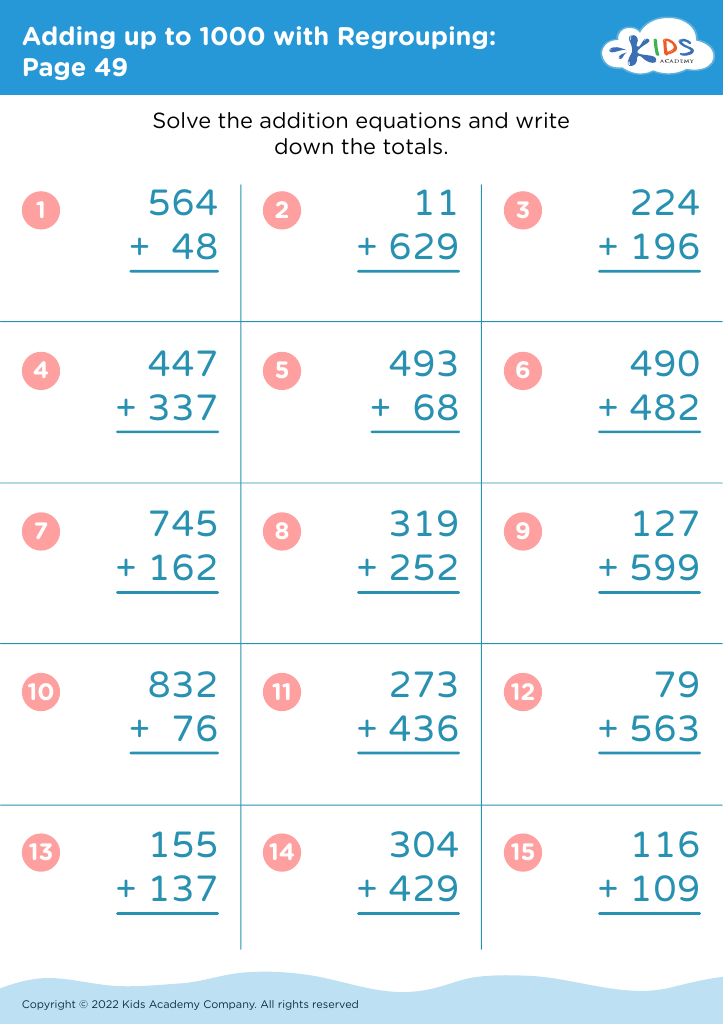
Adding up to 1000 with Regrouping: Page 49
Worksheet
En Passant: Tricky Pawn Capture Worksheet

En Passant: Tricky Pawn Capture Worksheet

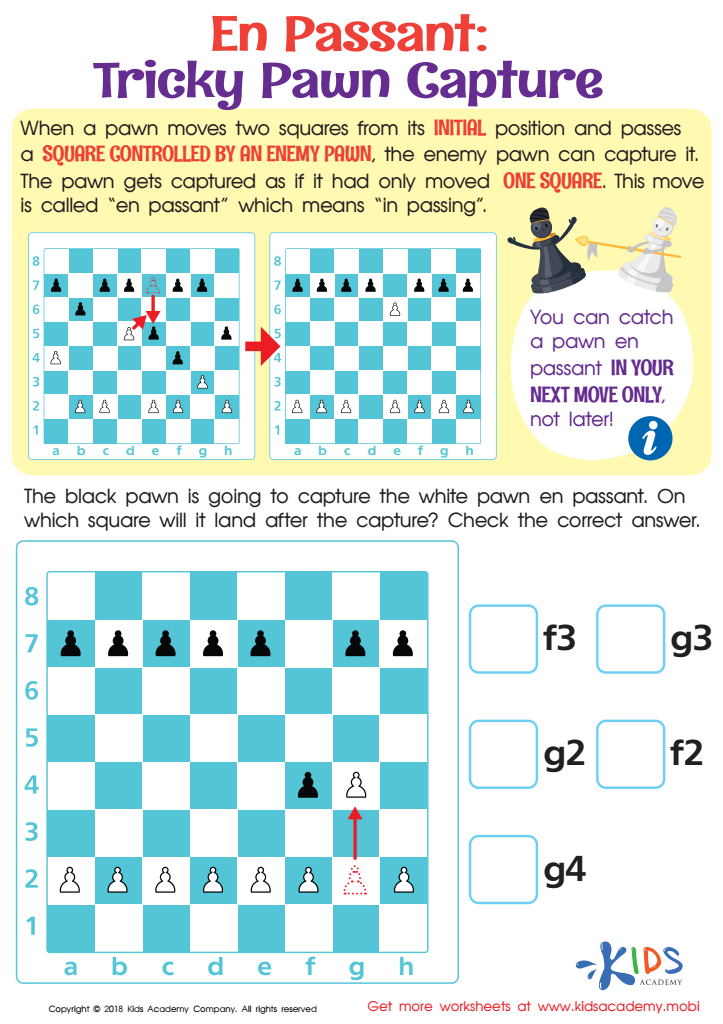
When a pawn moves two squares from its initial position and enters a square controlled by an enemy, the enemy can capture it as if it had moved one square. This move is called "en passant" (in passing). Ask your child which square the black pawn will land on after capturing the white pawn en passant using the provided chessboard.
En Passant: Tricky Pawn Capture Worksheet
Worksheet
Horse Race Worksheet

Horse Race Worksheet

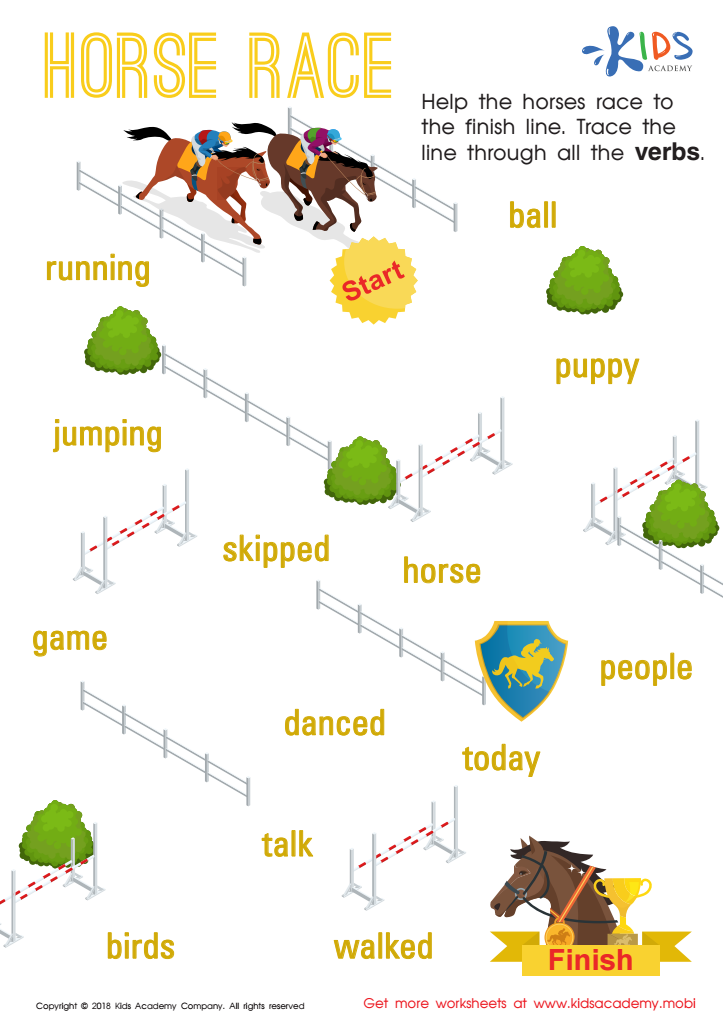
This tracing sheet is perfect for horse-loving kids! Start by confirming they know what a verb is - it's a word that shows an action (e.g. jump, talk, walk, play, read). Then ask them to give you some more examples. Finally, help them trace the line through all the verbs. They'll be delighted!
Horse Race Worksheet
Worksheet
Matching and Sorting  for Preschool: Assessment 3 Worksheet

Matching and Sorting for Preschool: Assessment 3 Worksheet

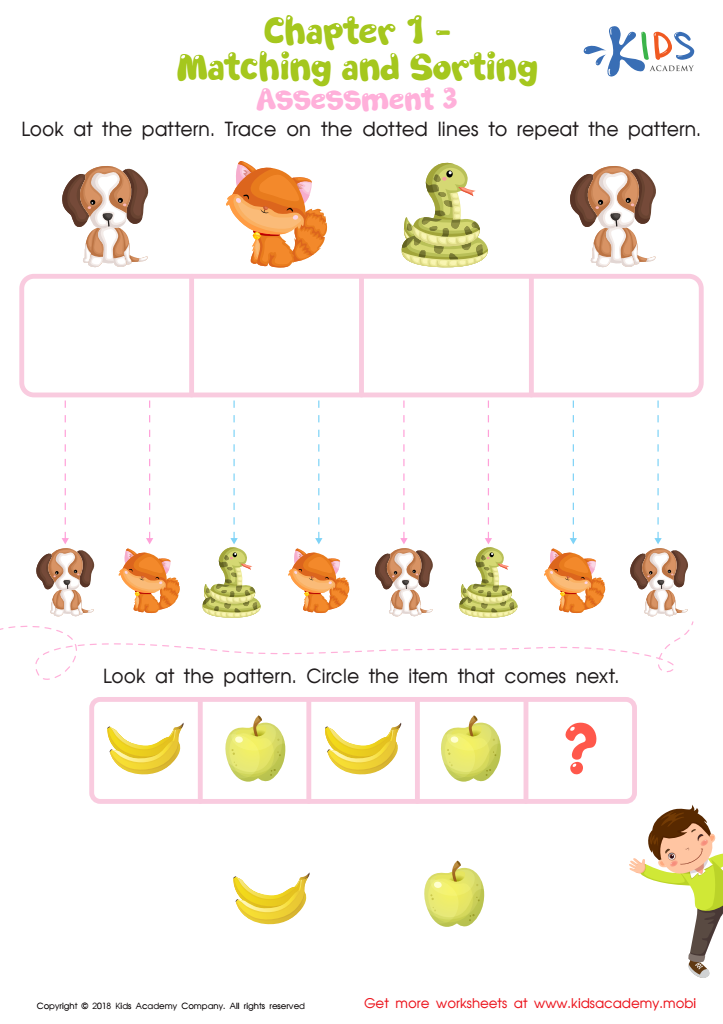
This worksheet helps kids practice and improve pattern recognition and matching skills. Task one: Ask your child to trace the pattern on the dotted lines. Task two: Look at the arrangement of fruits and ask your child to circle the corresponding item in the pattern. With this exercise, your child will gain a better understanding of pattern recognition and matching.
Matching and Sorting for Preschool: Assessment 3 Worksheet
Worksheet
Nonfiction Features Worksheet


Nonfiction Features Worksheet

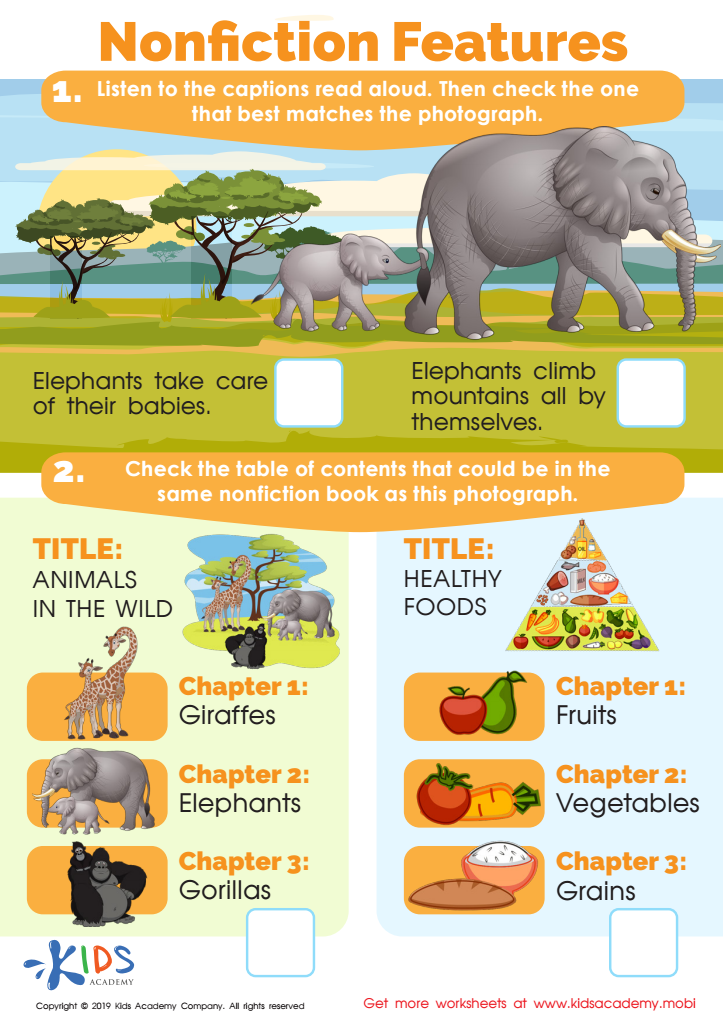
Fiction writing is made up of characters and events created by the author. Ask your students to match the captions to the picture. Help your preschoolers explore the contents of a non-fiction book that may have the same photo.
Nonfiction Features Worksheet
Worksheet


Improving analytical skills in children aged 5-8 is crucial as it forms the foundation for critical thinking and problem-solving abilities. During these formative years, children are exceptionally receptive to new information, and cultivating analytical skills helps them make sense of the world around them. This not only aids in academic success but also in everyday decision-making and emotional intelligence.

When children learn to analyze, they practice breaking down complex problems into manageable parts and observe patterns. These skills are vital for subjects like math and science but also enhance comprehension and creativity in storytelling. Early exposure to analytical thinking encourages curiosity and nurtures an innate love of learning.

For parents and teachers, fostering these skills means guiding children through activities that involve sorting, classification, pattern recognition, and simple reasoning puzzles. It helps children to verbalize their thought processes, increasing their ability to express ideas clearly. Caring about the development of analytical skills prepares children to approach challenges independently and confidently, and equips them with tools for lifelong learning.

In sum, improving analytical skills in young children not only supports academic proficiency but also cultivates adaptable, thoughtful individuals. This sets the stage for future successes and enriches their capacity to navigate an increasingly complex world.