Improving mental arithmetic Worksheets for Ages 5-8
3 filtered results
-
From - To
Discover our engaging "Improving Mental Arithmetic Worksheets" designed specifically for children ages 5-8. These colorful and interactive worksheets help young learners enhance their mental math skills through fun exercises that promote critical thinking and problem-solving abilities. From basic addition and subtraction to more advanced concepts, our worksheets cater to various skill levels, ensuring every child can build their confidence in mathematics. Parents and educators will find these resources invaluable for fostering a love of numbers and developing a strong foundation in arithmetic. Access our printable worksheets today and watch your child thrive in their mathematical journey!
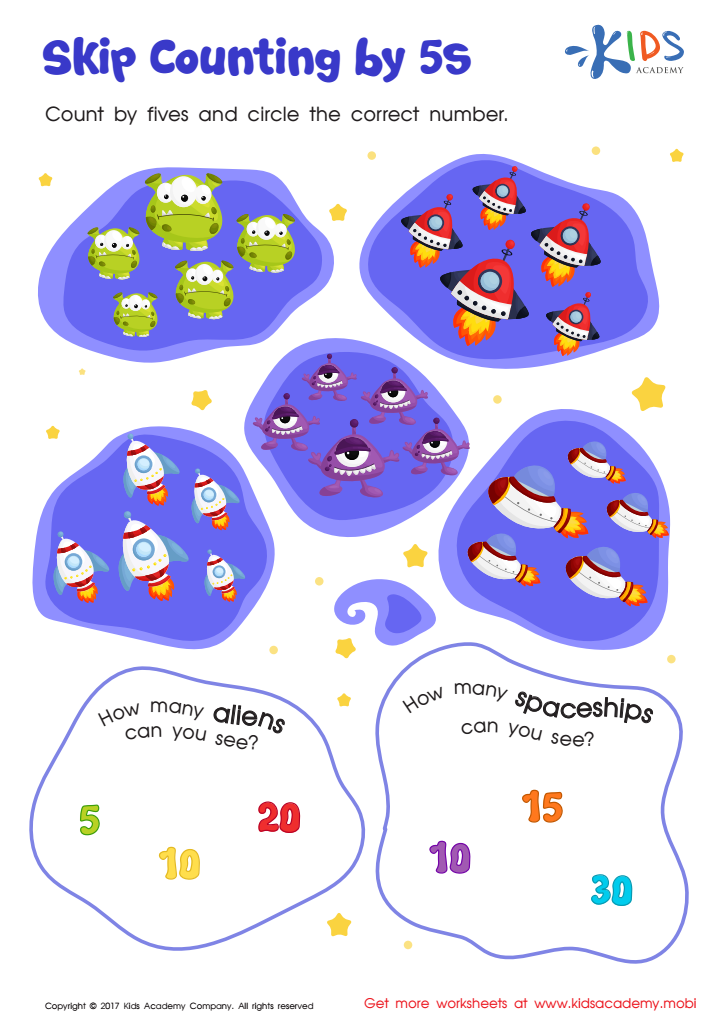
Skip Counting by 5s: Aliens and Spaceships Printable
 Assign to My Students
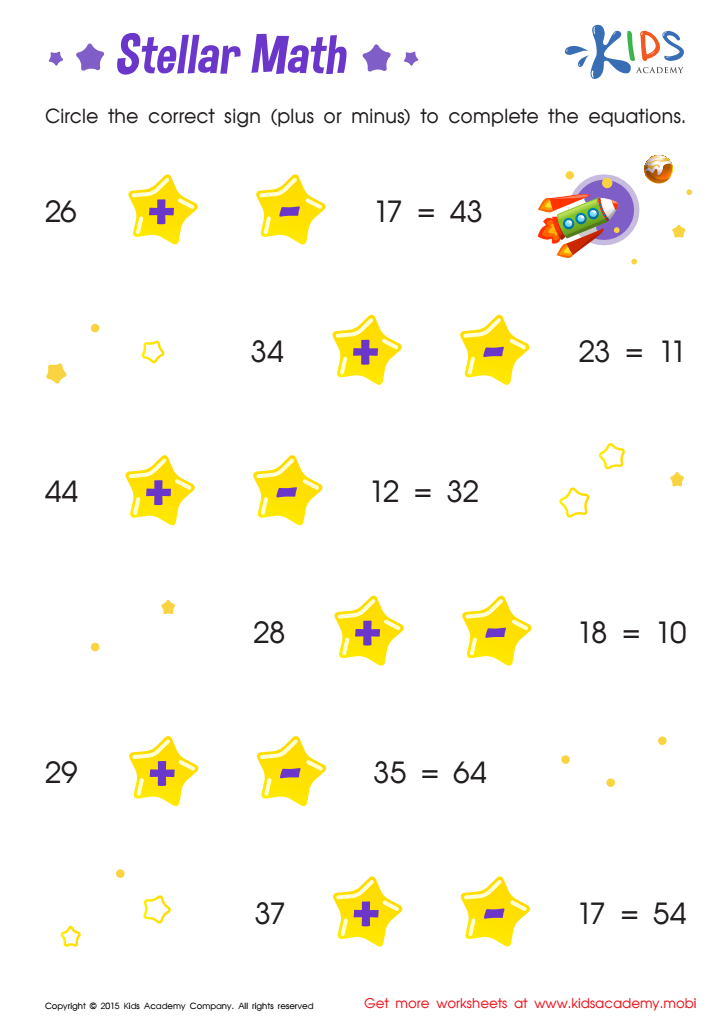
Stellar Math Substraction Worksheet
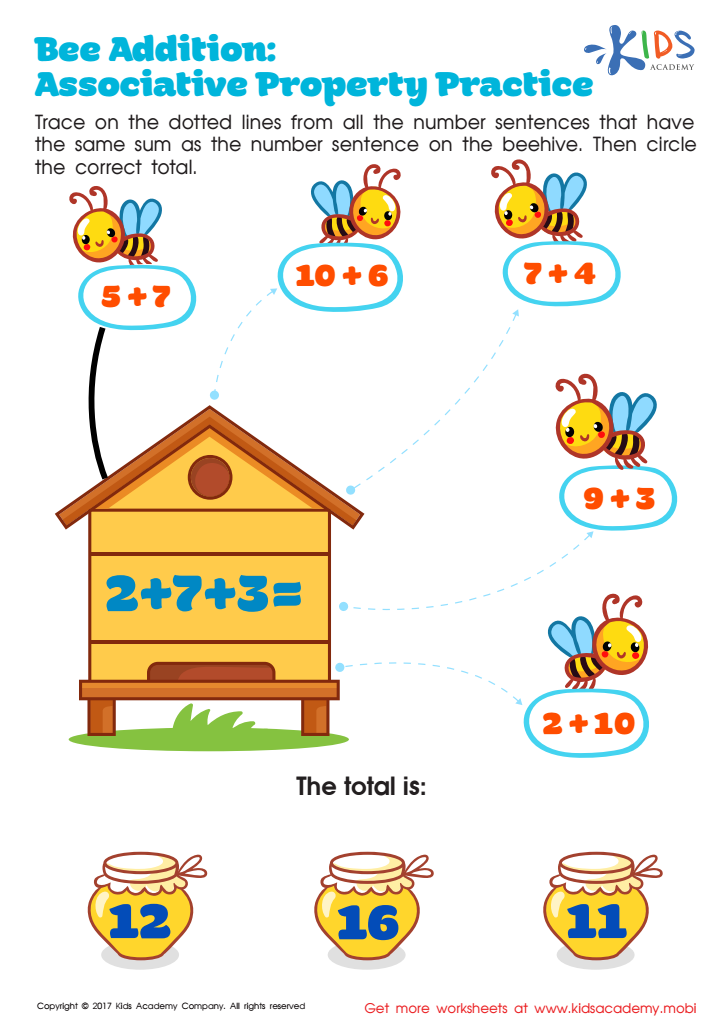
Bee Addition: Associative Property Practice Worksheet







Improving mental arithmetic skills in children aged 5-8 is crucial for several reasons. Firstly, this foundational skill fosters confidence in young learners. Children who develop strong mental math abilities are likelier to approach math with a positive attitude, laying the groundwork for a lifelong appreciation of the subject. Secondly, proficiency in mental arithmetic enhances overall cognitive development. It promotes critical thinking, problem-solving abilities, and logical reasoning, which are essential across various academic disciplines and real-life situations.
Additionally, mental arithmetic strengthens a child's ability to perform calculations quickly and accurately, leading to better performance in structured assessments. This proficiency also helps reduce anxiety related to math, a common concern among students. When children master basic arithmetic operations such as addition, subtraction, multiplication, and division in their heads, they are more equipped for advanced math concepts as they progress in their education.
Moreover, encouraging mental arithmetic can be a shared family or classroom activity, fostering collaboration and communication among teachers, parents, and children. By prioritizing mental math, educators and families invest in a child’s intellectual toolkit, creating opportunities for success not only in mathematics but also in life. Empathy towards their journey in learning and developing these skills promotes a supportive environment for growth.








