
Mathematical understanding Worksheets for Ages 5-8
3 filtered results
Difficulty Level
Grade
Age
-
From - To
Subject
Activity
Standards
Discover our engaging Mathematical Understanding Worksheets designed for children ages 5-8! These thoughtfully crafted printable resources aim to enhance core math skills in a fun and interactive way. Your child will enjoy activities that cover essential concepts such as counting, addition, subtraction, shapes, and measurements. Each worksheet is aligned with educational standards, ensuring a comprehensive learning experience tailored to young learners. Our vibrant designs and engaging exercises promote not only skill mastery but also a love for learning mathematics. Dive into our collection today and empower your child to build a solid foundation in math through enjoyable practice!
Favorites
With answer key
Interactive
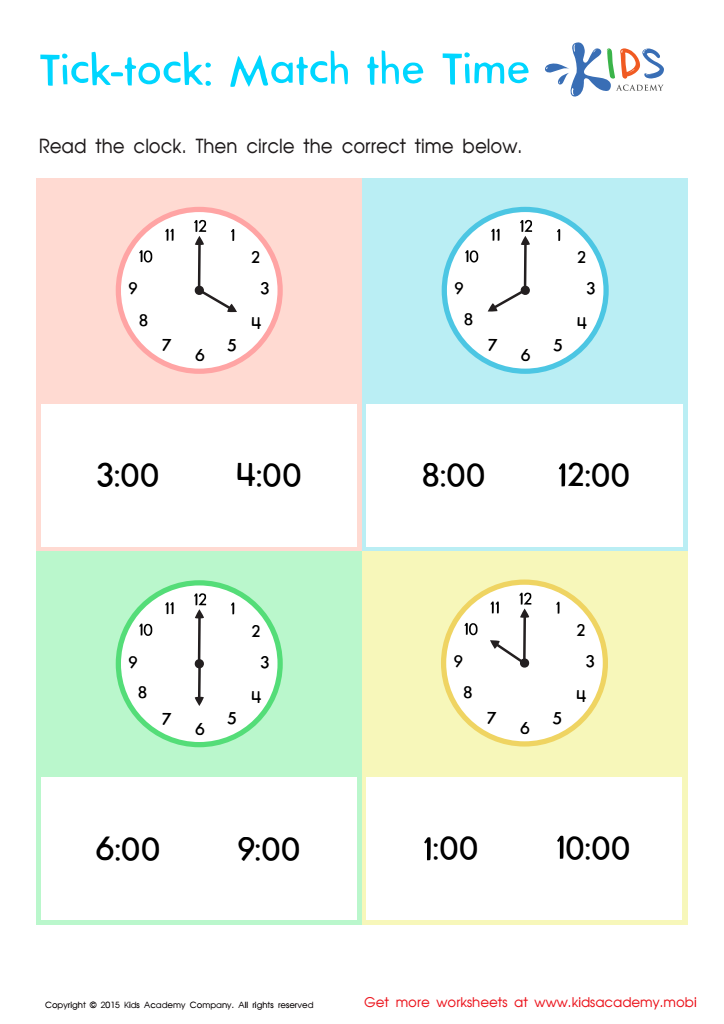
Telling The Time Worksheet: Part 4
Test your skills in telling the time! Circle the right time on 4 analog clock faces.
 Assign to My Students
Telling The Time Worksheet: Part 4
Worksheet
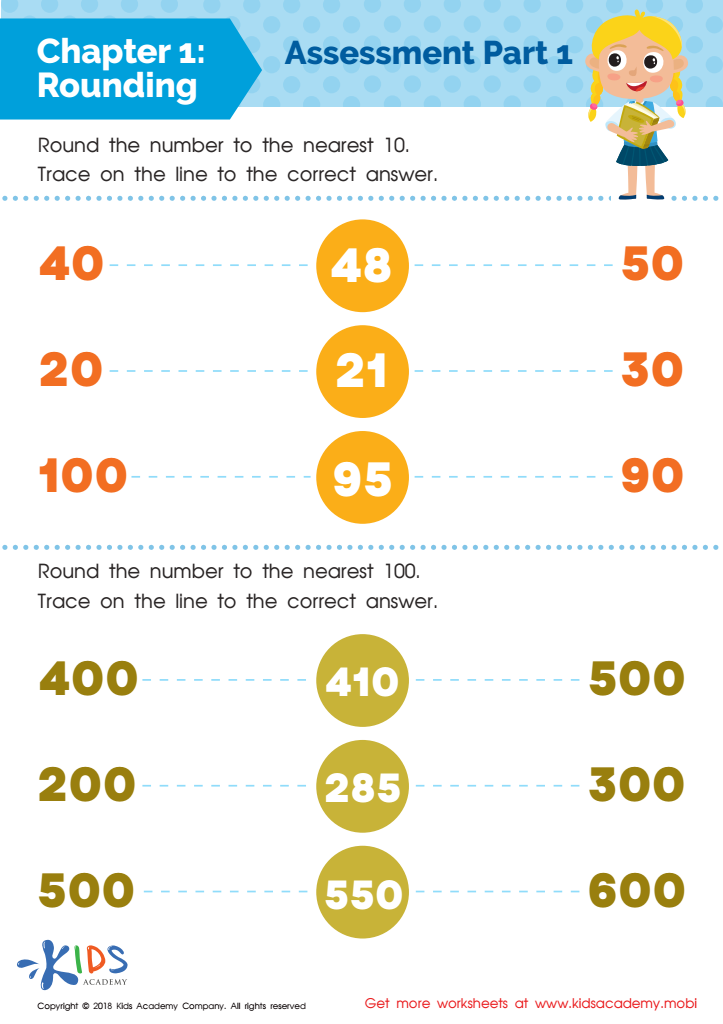
Rounding Worksheet 3rd Grade
Practice and refresh your child's 3rd grade rounding skills with this quick worksheet! Have them round each set of numbers to the nearest 10s or 100s. This simple exercise will help maintain math fluency.
Rounding Worksheet 3rd Grade
Worksheet
Join Kids Academy for Free
Who is primarily going to use this learning content?





Mathematical understanding in children aged 5-8 is crucial for several reasons. During these formative years, children develop foundational skills that will underpin their future learning in mathematics and other subjects. A strong grasp of math concepts like numbers, patterns, and basic operations encourages logical thinking and problem-solving abilities.
Through engaging with math, children learn to apply reasoning to real-world situations, fostering critical thinking skills that extend beyond the classroom. This foundation not only serves academic purposes but also enhances everyday life skills, from budgeting to time management.
Moreover, early mathematical understanding builds confidence. Children who feel competent in math are more likely to embrace challenges rather than shy away from them, cultivating a growth mindset that extends beyond mathematics.
Teachers and parents play a vital role in supporting this development. Their encouragement and positive reinforcement can make math an enjoyable and integral part of learning. Furthermore, recognizing children’s unique learning styles and providing tailored support helps them to thrive. By prioritizing mathematical understanding in early education, we equip children with essential skills that will benefit them throughout their educational journey and personal lives.








