Mental math development Worksheets for Ages 5-8
3 filtered results
-
From - To
Discover engaging Mental Math Development Worksheets for children aged 5-8 that make math fun and interactive! Our carefully designed worksheets help young learners strengthen their mental math skills, promoting quick thinking and problem-solving abilities. With a variety of activities that cover essential concepts like addition, subtraction, and number recognition, these worksheets cater to different learning styles and levels. Ideal for classroom use or at-home practice, they encourage independent learning while making math enjoyable. Equip your child with the tools they need to build confidence and succeed in their mathematical journey! Start nurturing their mental math skills today with our exciting resources!
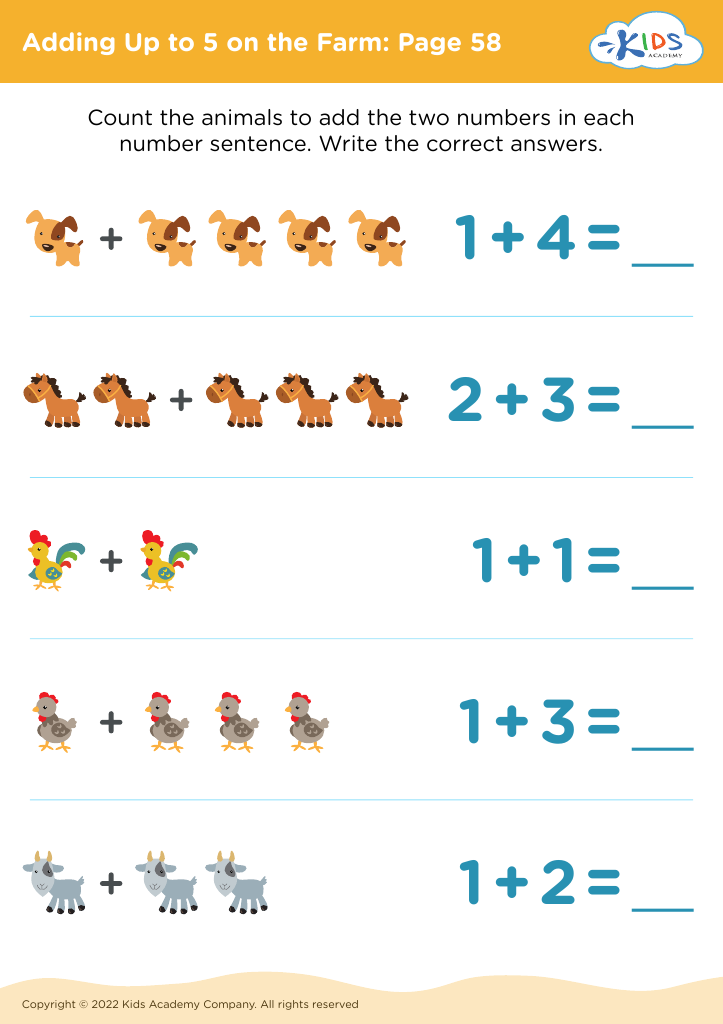
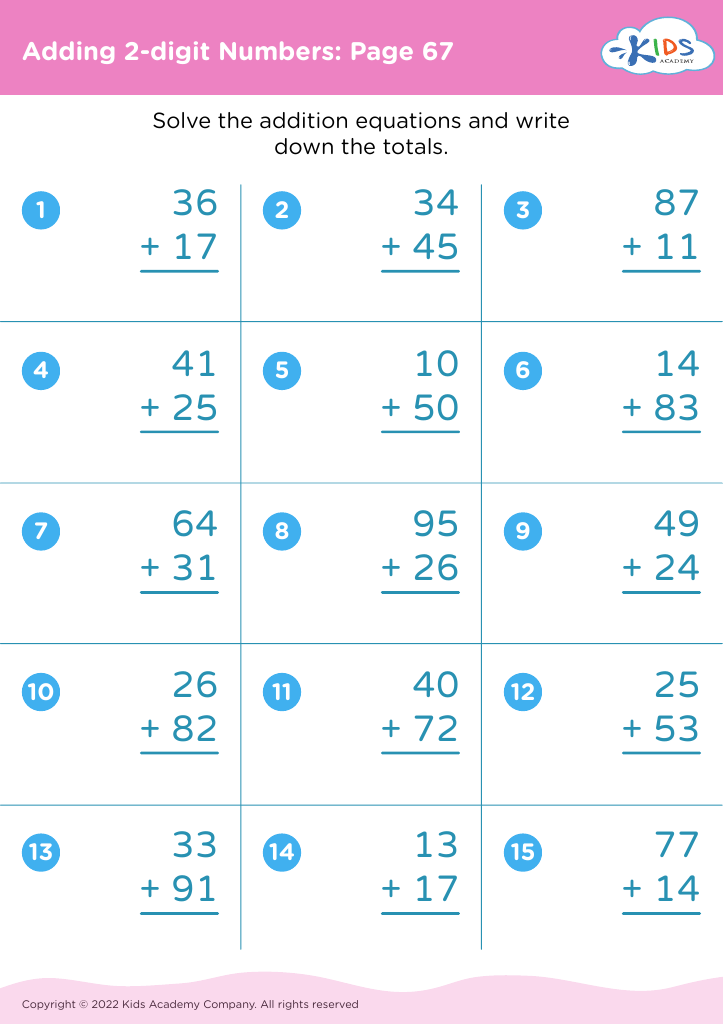
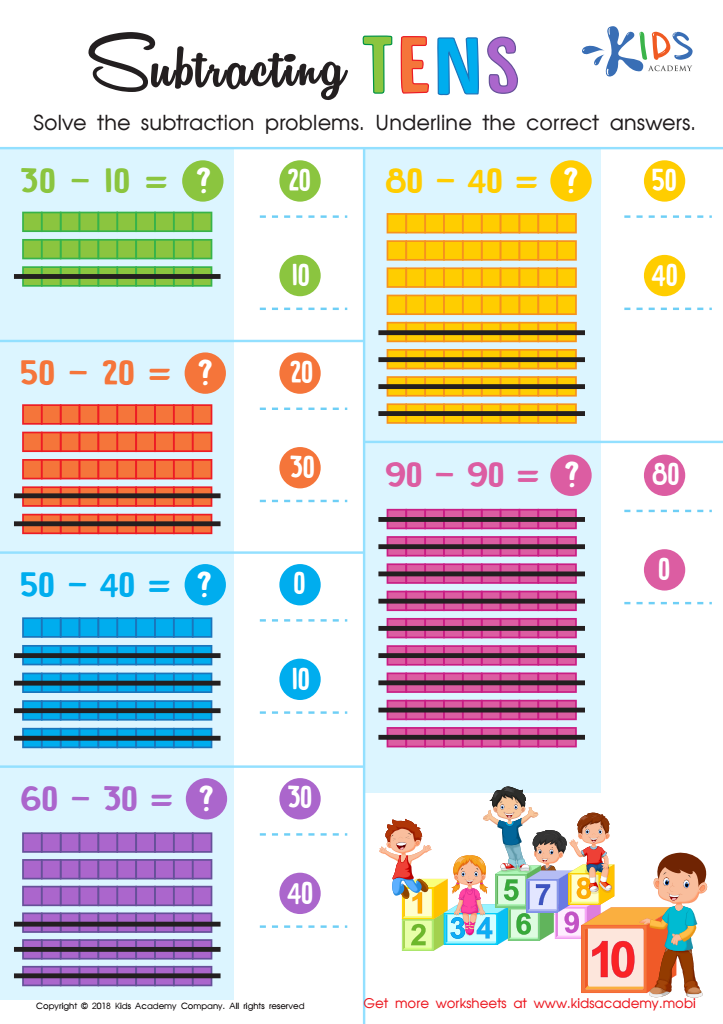
Subtracting Tens Worksheet
 Assign to My Students








Mental math development for children aged 5-8 is crucial for various reasons, making it essential for parents and teachers to prioritize this skill. First, engaging in mental math fosters cognitive development, enhancing problem-solving skills and critical thinking. It encourages children to visualize numbers and manipulate them mentally, which lays a strong foundation for more complex mathematical concepts in the future.
Moreover, mental math builds confidence. When children can solve problems without reliance on calculators or written methods, they develop a sense of accomplishment and independence. Confidence in mathematical abilities promotes a positive attitude towards math and learning overall, reducing anxiety regarding the subject later on.
Additionally, mental math is widely applicable in real-life situations, from calculating change to estimating distances, which improves children's practical life skills. It promotes number sense, as children learn to understand values, patterns, and relationships between numbers more intuitively.
Finally, in a world increasingly driven by data, having strong mental math skills equips children with essential tools to navigate challenges they may encounter academically and professionally. Therefore, fostering mental math in early education is not just about arithmetic; it’s about nurturing well-rounded, confident learners ready to face the future.








