Multiplication practice Worksheets for Ages 5-8 - Page 4
83 filtered results
-
From - To
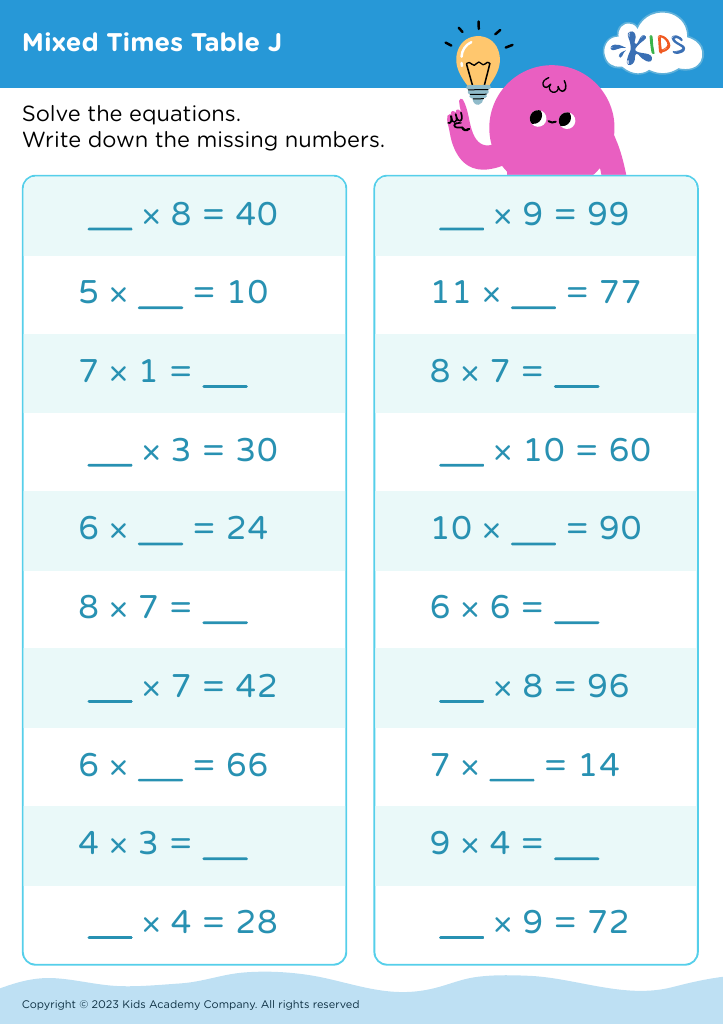
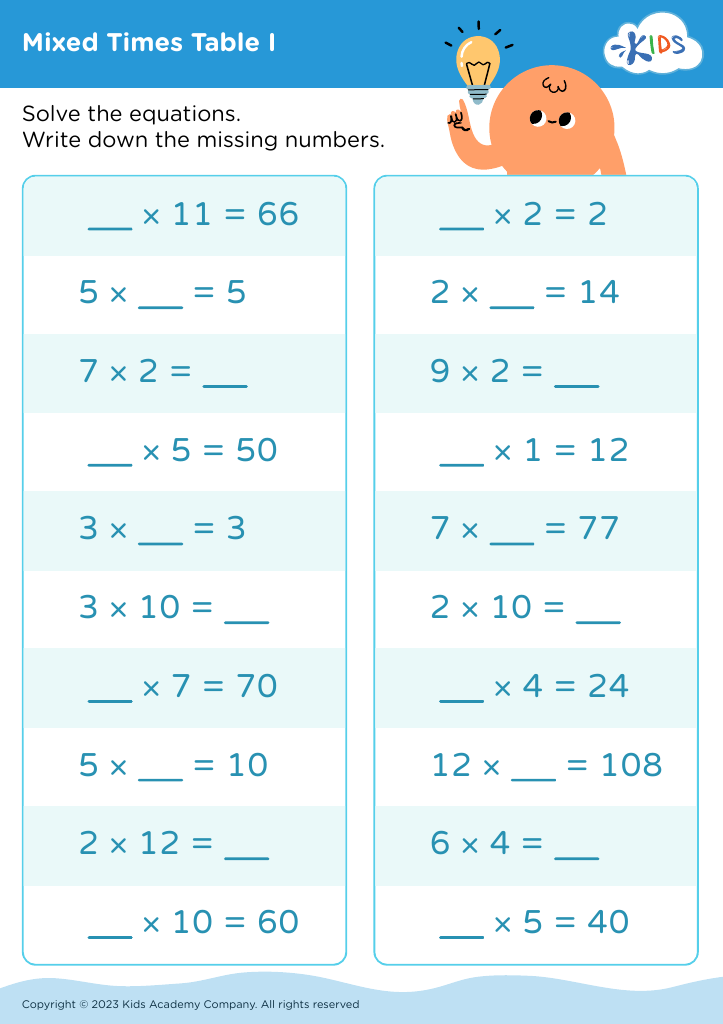
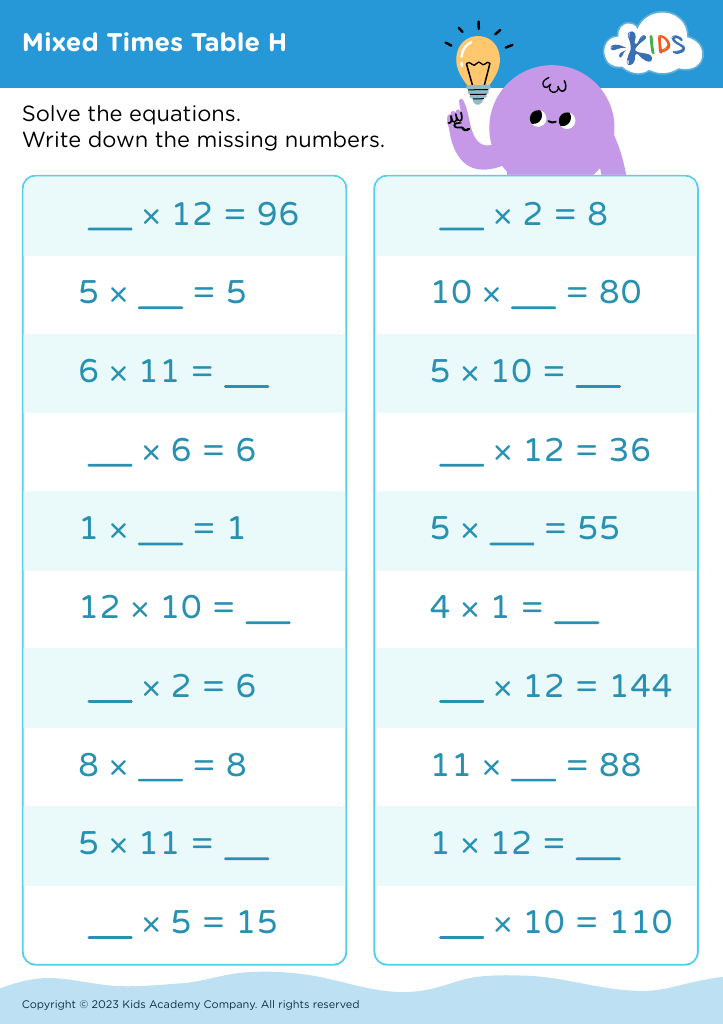
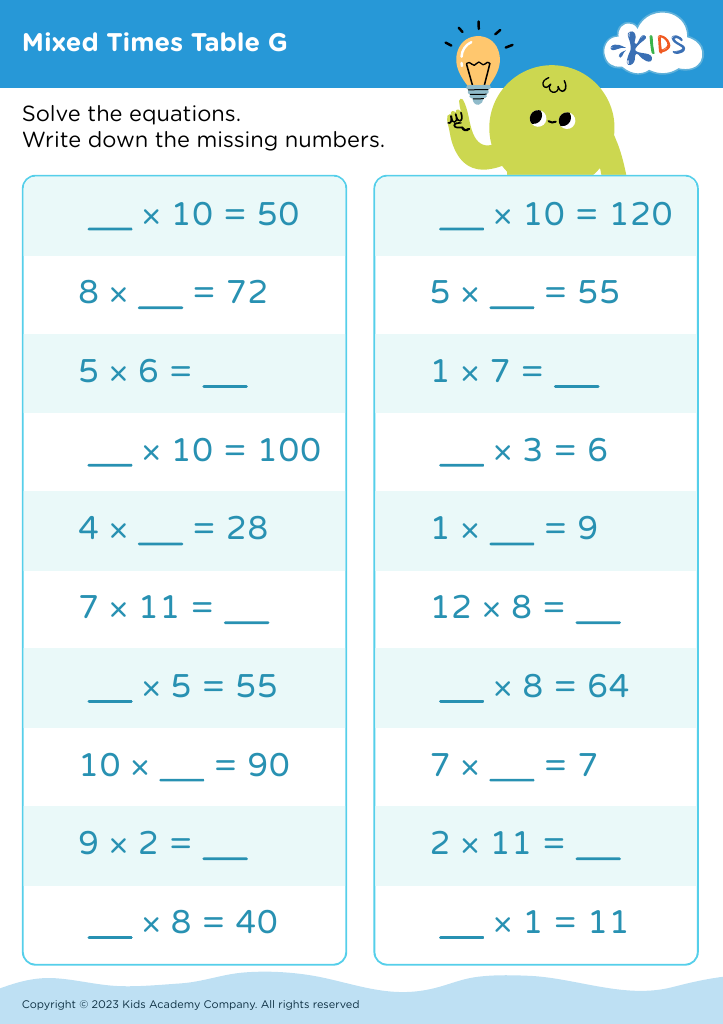
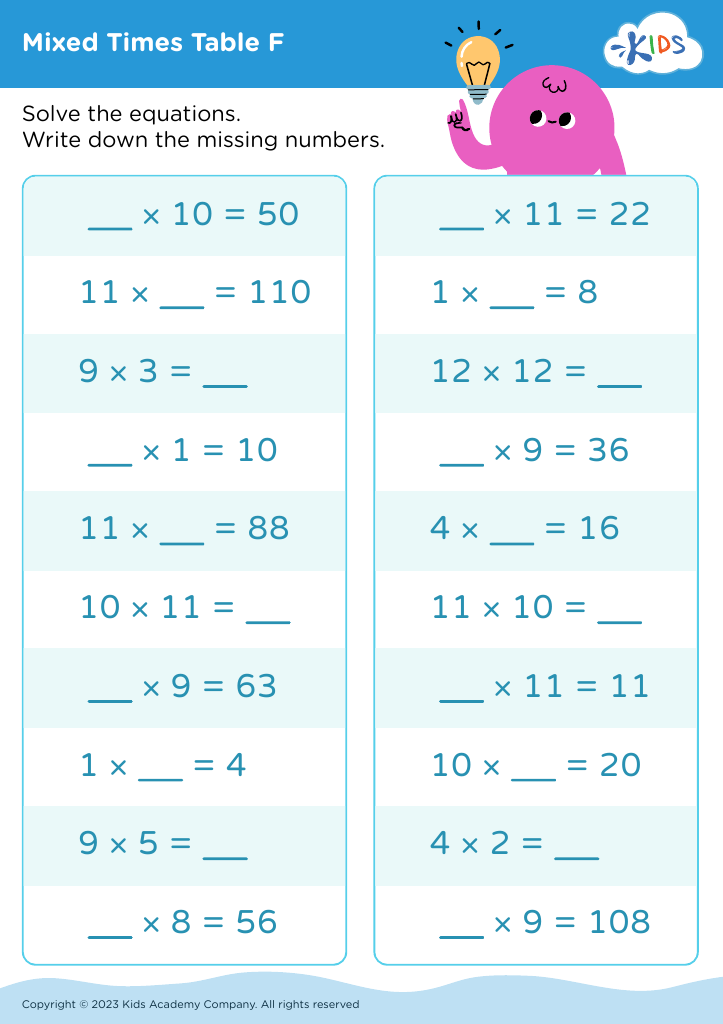
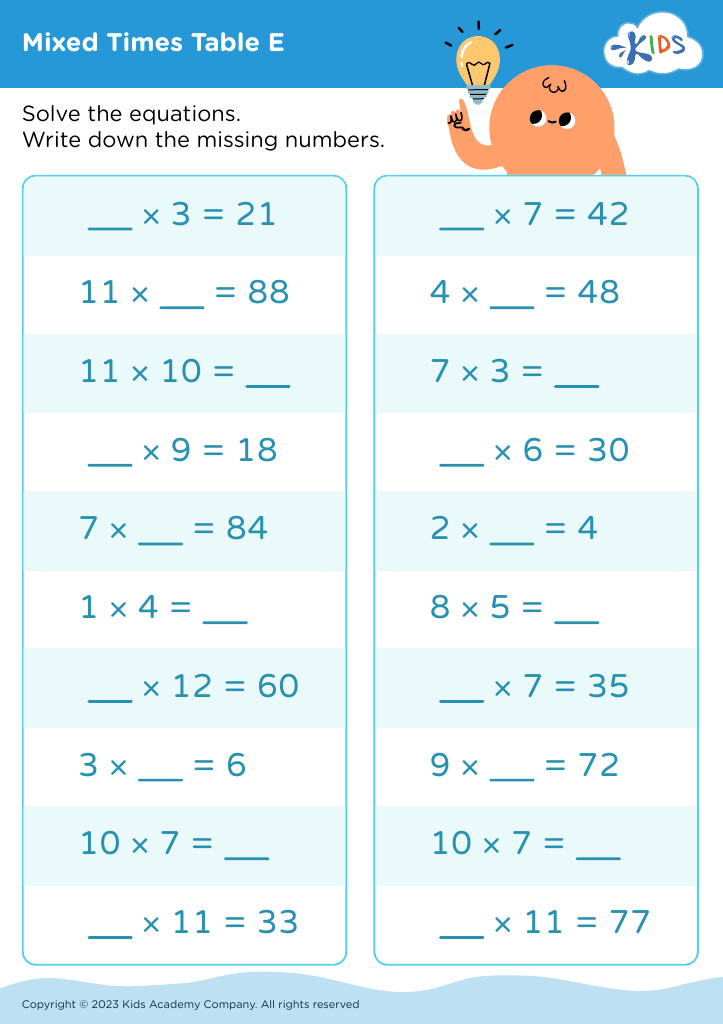
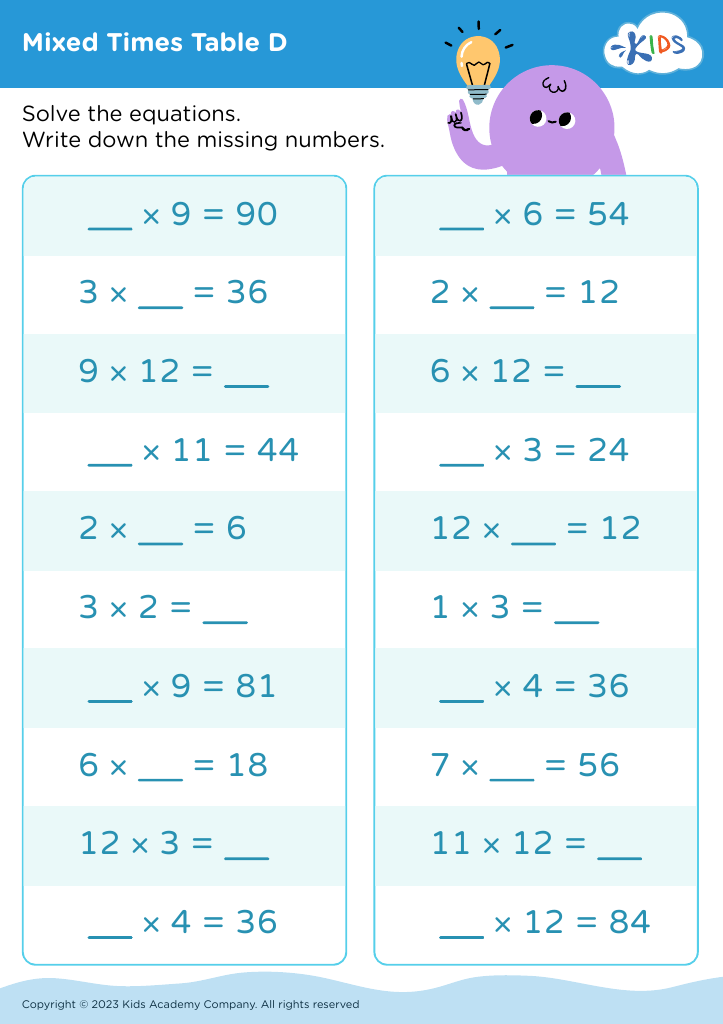
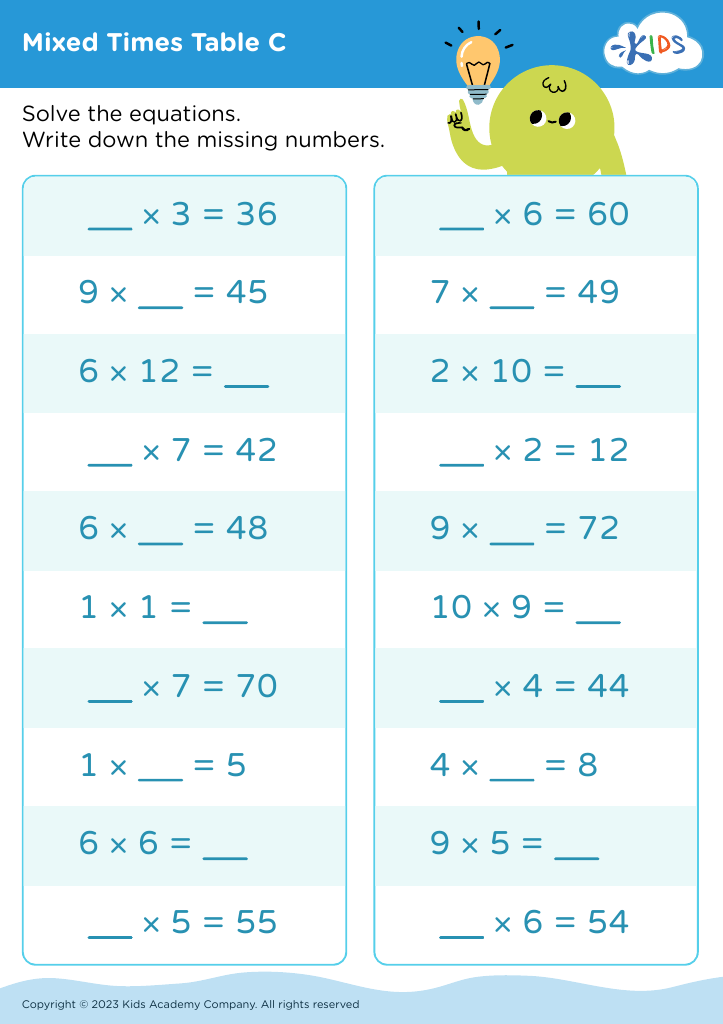








Multiplication practice for children aged 5-8 is crucial for several reasons. At this stage, kids are laying the foundation for their future mathematical understanding. Learning multiplication helps them grasp the concept of repeated addition, which facilitates the understanding of more complex mathematical operations later on. Strong multiplication skills enhance children's problem-solving abilities, enabling them to tackle not just math problems but real-world scenarios requiring calculation.
Moreover, regular practice fosters confidence in young learners. Mastery of multiplication tables gives students a sense of accomplishment and reduces math-related anxiety, which can affect their overall attitude toward learning. The ability to quickly recall multiplication facts improves fluency, making it easier for students to handle more advanced topics such as division, fractions, and algebra.
In addition, multiplication is prevalent in everyday life—whether it involves cooking, shopping, or measuring—understanding multiplication equips children with essential life skills. For parents and teachers, prioritizing multiplication practice can contribute to a child's academic success and personal growth. Engaging children in interactive and enjoyable multiplication activities can create positive associations with math, laying the groundwork for a lifelong appreciation of learning. Thus, investing time in multiplication now reaps long-term benefits for children's educational journeys.








