Musical instruments recognition Worksheets for Ages 5-8
3 filtered results
-
From - To
Discover our engaging Musical Instruments Recognition Worksheets designed for children aged 5-8! These fun and interactive resources will help young learners identify and distinguish between various musical instruments while developing their cognitive skills. Each worksheet features vibrant illustrations and simple activities that promote creativity, enhance fine motor skills, and foster a love for music. Ideal for home or classroom use, these worksheets encourage critical thinking and provide opportunities for discussion about sounds and music-making. Perfect for parents and educators alike, our Musical Instruments Recognition Worksheets are an enjoyable way to incorporate music into early childhood education. Let the learning begin!
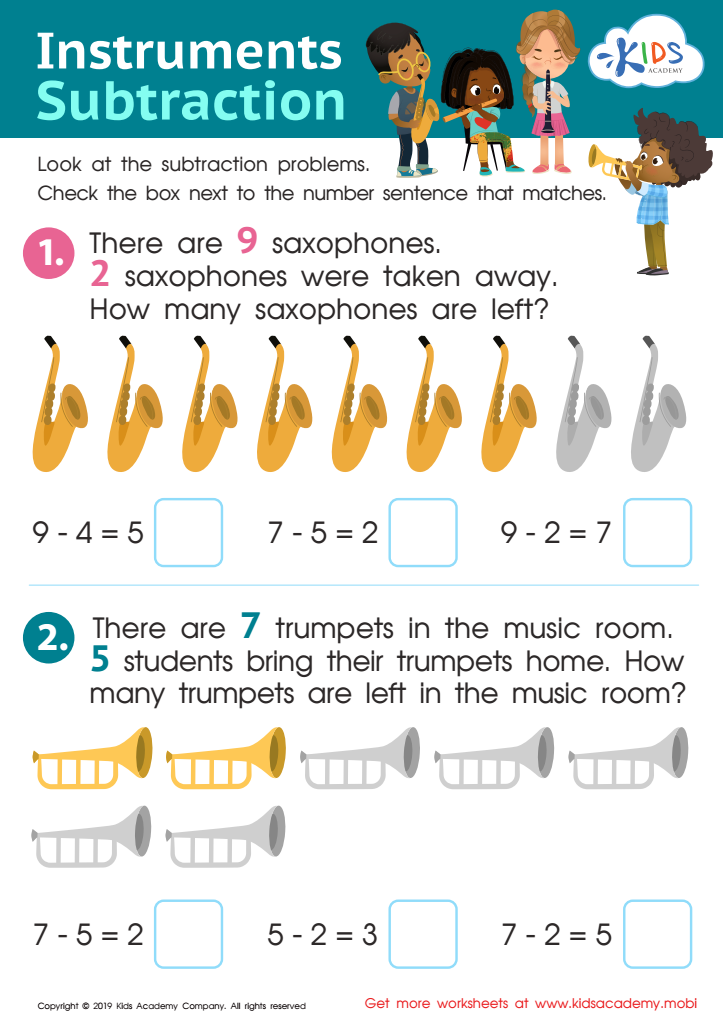
Instrument Subtraction Worksheet
 Assign to My Students
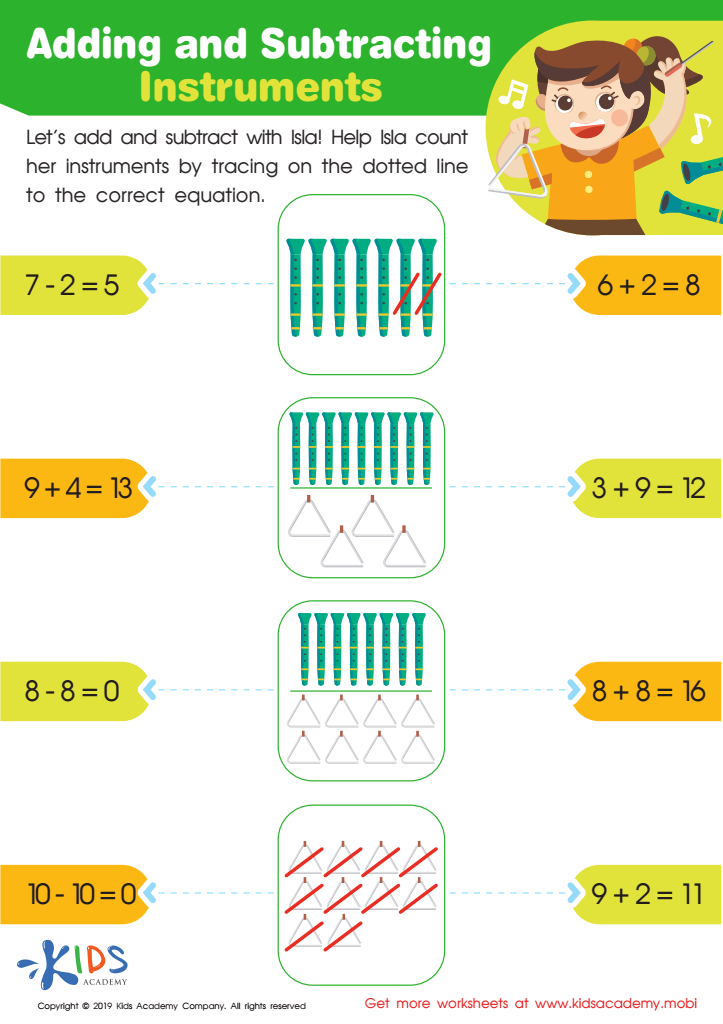
Adding and Subtracting: Instruments Worksheet
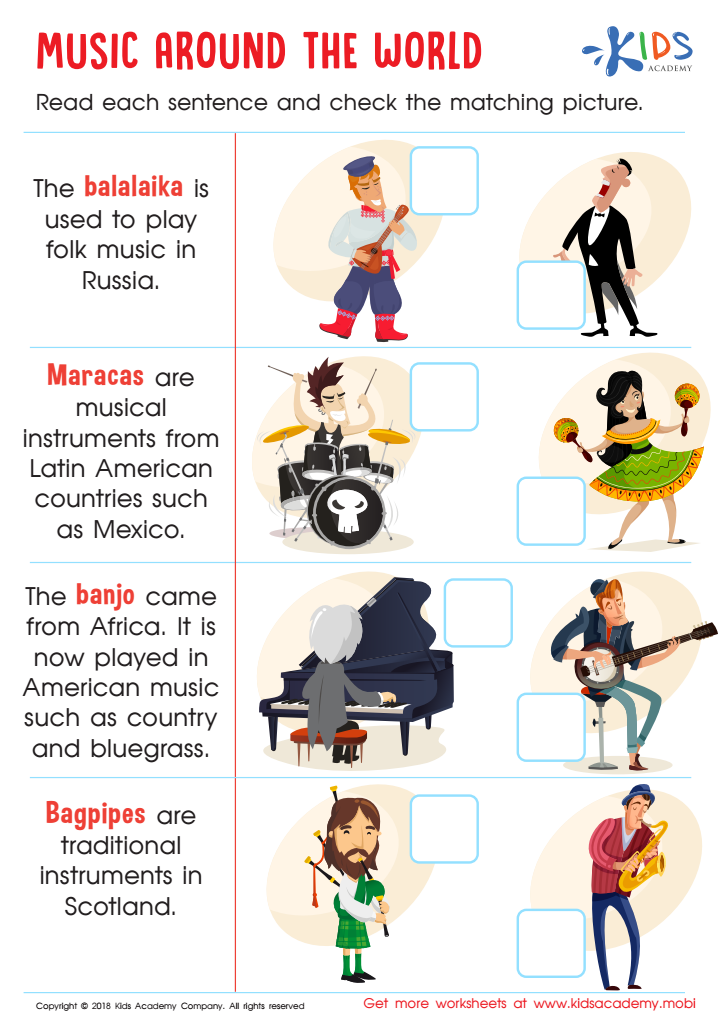
Music Around the World Worksheet





Musical instrument recognition is an essential skill for children aged 5-8, and parents or teachers should care about its development for several reasons. First, learning to recognize musical instruments fosters auditory discrimination skills, which enhance overall listening abilities—a critical component in effective communication and learning across subjects. By engaging with various instruments, children not only enjoy music but also develop an appreciation for different sounds, cultures, and musical styles.
Additionally, musical instrument recognition aids cognitive development. It stimulates memory and reinforces pattern recognition, as children learn to associate specific sounds with corresponding physical instruments. This enrichment can translate into better problem-solving skills and creativity in other academic areas.
Furthermore, involving children in music can boost their social skills and emotional intelligence. Instrument recognition often occurs in group settings or musical activities, promoting collaboration, teamwork, and shared enjoyment among peers. This social interaction is crucial for building lasting friendships and self-confidence.
Lastly, cultivating an interest in music early on can encourage lifelong engagement with the arts, fostering a well-rounded upbringing. Recognizing instruments creates a gateway into these enriched discussions, fostering growth and learning through music. In essence, promoting musical instrument recognition can significantly contribute to a child's holistic development.








