
Practicing division Worksheets for Ages 5-8
3 filtered results
Difficulty Level
Grade
Age
-
From - To
Subject
Activity
Standards
Welcome to our Practicing Division Worksheets for Ages 5-8! Designed to help young learners grasp the fundamentals of division, these engaging worksheets provide a fun and interactive way to develop essential math skills. Ideal for kids just starting their mathematical journey, our resources include visual aids, relatable scenarios, and themed exercises that make learning division exciting. With clear instructions and varied problem types, young students will build confidence as they explore the concept of sharing and grouping. Perfect for classroom use or at-home practice, our worksheets meet early educational standards and promote foundational understanding in young mathematicians. Start their division adventure today!
Favorites
With answer key
Interactive
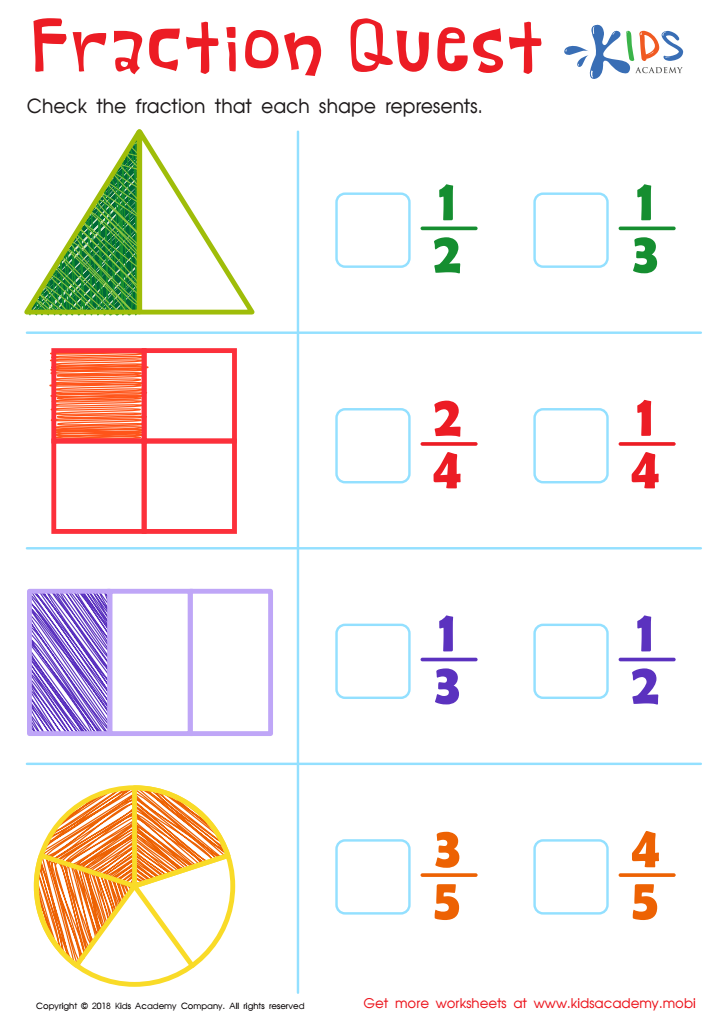
Fraction Quest Worksheet
This colorful and educative worksheet can help kids conquer their fractions struggles. Ask them to identify the four shapes, then the fractions they represent. They can then check the correct answers from the options given.
 Assign to My Students
Fraction Quest Worksheet
Worksheet
Join Kids Academy for Free
Who is primarily going to use this learning content?






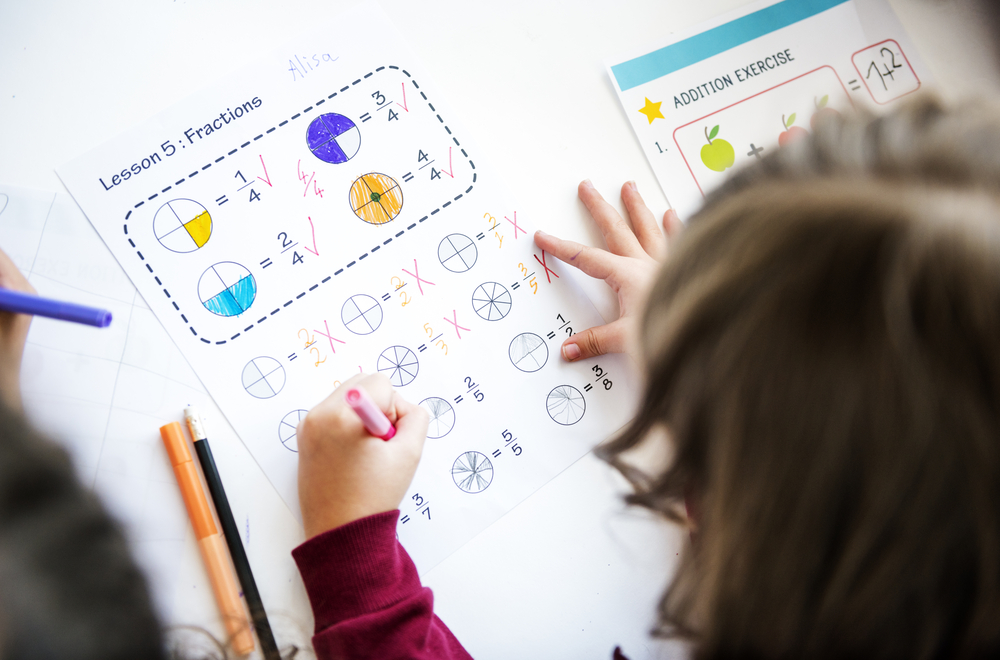
Practicing division between the ages of 5-8 is crucial for foundational math skills, as this is a formative period for children's cognitive development. During these years, children are mastering basic arithmetic concepts that will serve as the building blocks for more advanced mathematics. Understanding division aids in developing their problem-solving skills and critical thinking.
Moreover, division helps children grasp the concept of sharing and equal distribution, which relates directly to real-life situations. Whether distributing snacks among friends or understanding how to share resources in a classroom, division fosters social skills and teamwork.
Additionally, division is interconnected with multiplication, reinforcing the relationship between these two operations. By practicing division early, children become more confident and fluent in math, which can lead to a more positive attitude toward learning overall.
Finally, curriculum standards increasingly emphasize early numeracy skills, including division, to prepare students for future success in mathematics. Parents and teachers who prioritize practices that build these skills ensure that children are adequately equipped for academic challenges ahead and are cultivating a lifelong appreciation of the subject. Encouraging practice in a supportive manner can greatly enhance a child's learning experience and boost their confidence.








