
Prefix understanding Worksheets for Ages 5-8
3 filtered results
Difficulty Level
Grade
Age
-
From - To
Subject
Activity
Standards
Enhance your child's linguistic prowess with our engaging "Prefix Understanding Worksheets for Ages 5-8", designed to build foundational language skills. Tailored for young learners, these worksheets simplify complex prefix concepts through fun and interactive activities. Each worksheet is crafted to improve reading comprehension and vocabulary by introducing common prefixes. As children familiarize themselves with words like “un-“, “re-“, and “pre-“, they become confident readers and writers. Whether used in classrooms or at home, these educational tools transform learning into an exciting journey, promoting early academic success and a lifelong love for language. Download our worksheets and watch your child’s skills grow!
Favorites
With answer key
Interactive
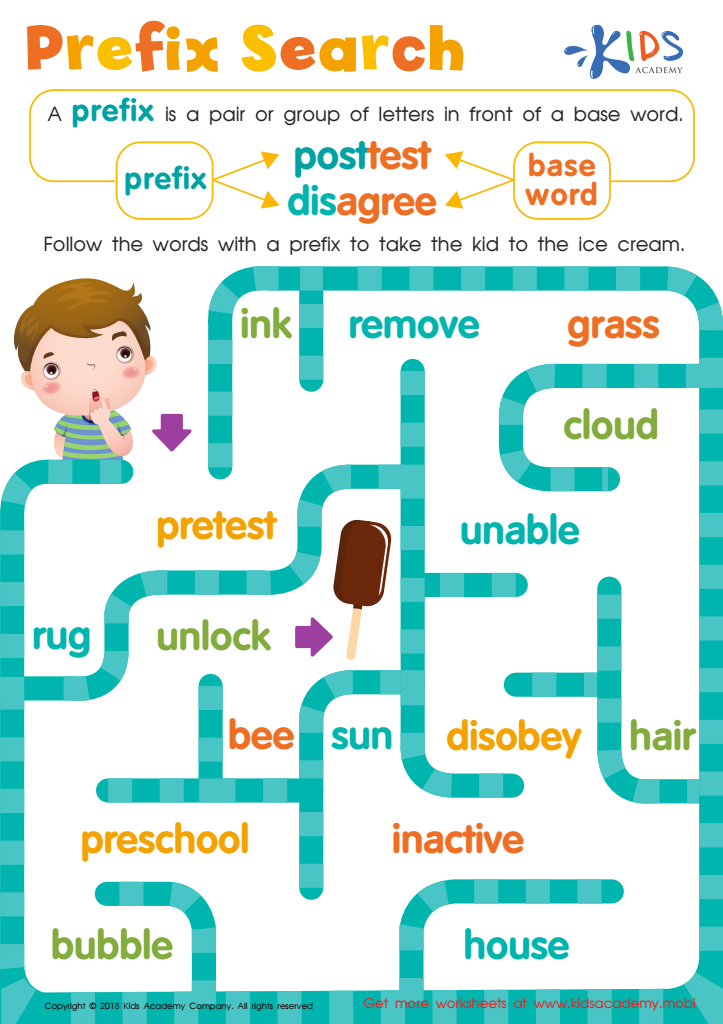
Reading: Prefix Search Worksheet
Maze your way through prefixes! This worksheet helps students practice reading new words with a prefix and figuring out the base word. An understanding of prefixes gives students the skills to comprehend new words. A fun and useful activity for the reading classroom!
 Assign to My Students
Reading: Prefix Search Worksheet
Worksheet
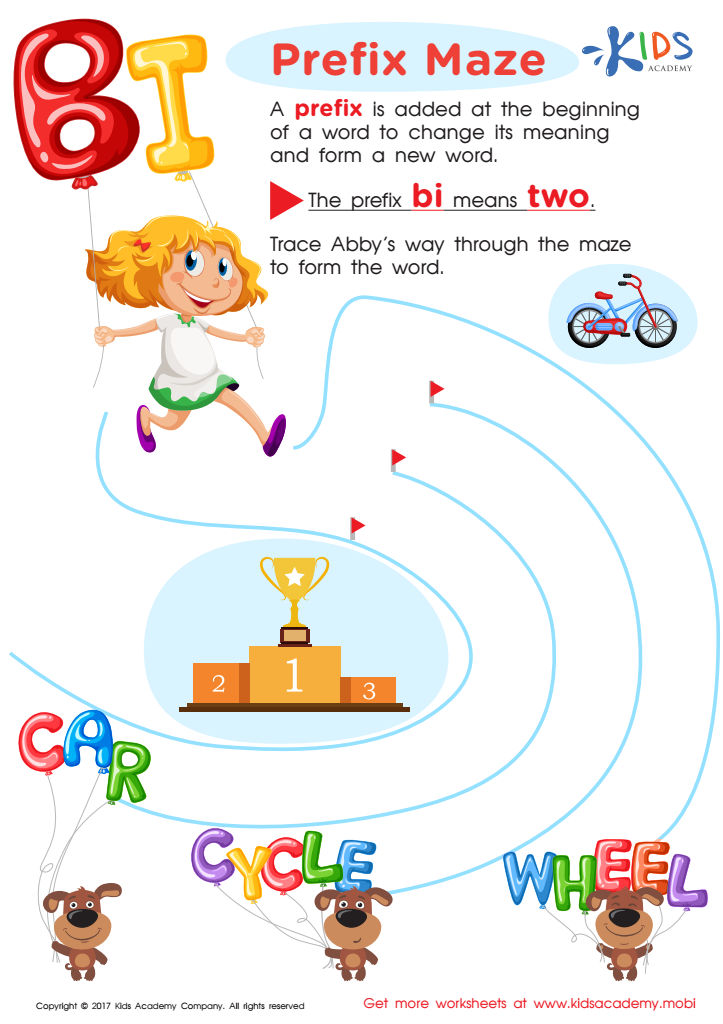
Prefix Bi Words Worksheet
Help "bi" find its root word in this fun and colorful prefix worksheet! Your child will learn how words are built while having a great time!
Prefix Bi Words Worksheet
Worksheet
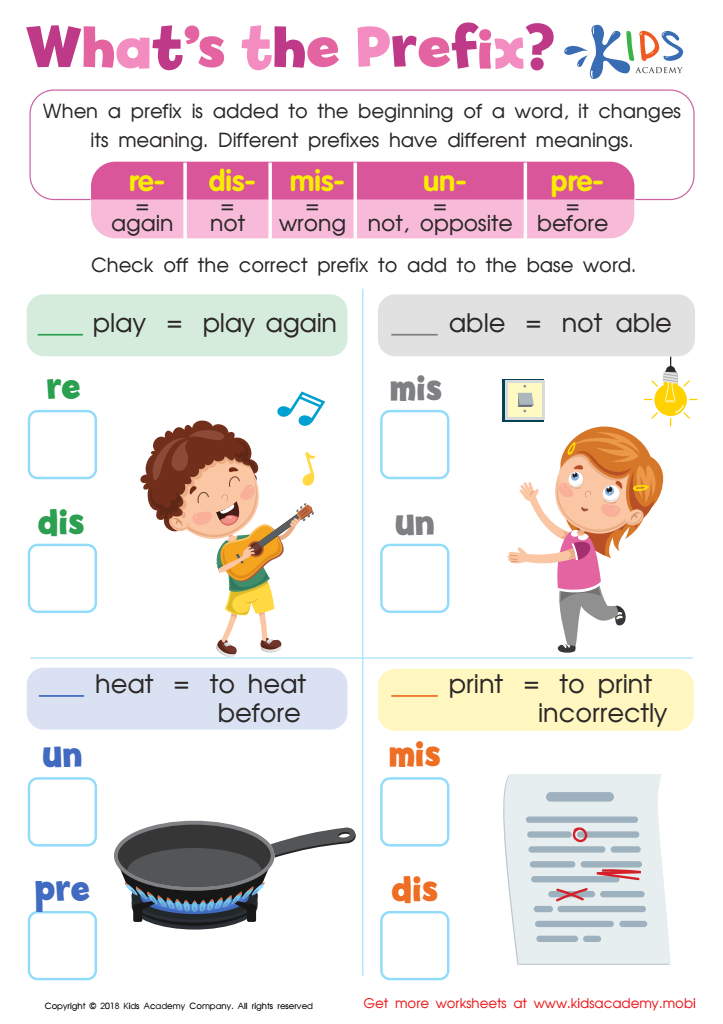
Reading: What Is the Prefix Worksheet
This worksheet helps children learn about prefixes by matching pictures and base words with the correct prefix. Learning these prefixes and their meanings is essential for reading and vocabulary comprehension. Use this free download to check your students' understanding.
Reading: What Is the Prefix Worksheet
Worksheet
Join Kids Academy for Free
Who is primarily going to use this learning content?






Understanding prefixes is an essential component of early literacy that can significantly benefit children aged 5-8. At this critical developmental stage, children are in the process of building their fundamental language and reading skills. Introducing them to prefixes helps expand their vocabulary repertoire by allowing them to understand the meanings of new words through familiar roots. For example, understanding that "un-" means "not" enables a child to grasp the meanings of words like "unhappy" or "uncertain."
Teaching prefixes also improves reading comprehension. When children can break down complex words into smaller, meaningful units, they navigate texts more fluently and with higher understanding. This skill plays a crucial role in boosting children's confidence in their reading abilities, making them more likely to enjoy and engage with texts. Furthermore, familiarity with prefixes lays the foundation for more advanced language skills such as decoding and spelling, as it helps children recognize patterns in word formation.
Lastly, understanding prefixes nurtures cognitive skills, including critical thinking and problem-solving. When children learn to dissect words and infer meanings, they become more adept at logical thinking and applying their knowledge to various contexts. Thus, emphasizing prefix education for young children is invaluable for their linguistic, cognitive, and academic development.








