Pronunciation practice Worksheets for Ages 5-8
3 filtered results
-
From - To
Enhance your child's speaking skills with our engaging Pronunciation Practice Worksheets designed for ages 5-8! These worksheets are crafted to make learning fun and effective, helping young learners master the sounds and syllables essential for clear speech. Each worksheet features colorful illustrations and interactive activities that focus on phonics, sound recognition, and articulation. Perfect for classrooms or at-home practice, our resources will foster confidence in your child's communication abilities. Explore a variety of themes and activities that support early literacy while ensuring your child enjoys the learning process. Start their journey to effective pronunciation today!
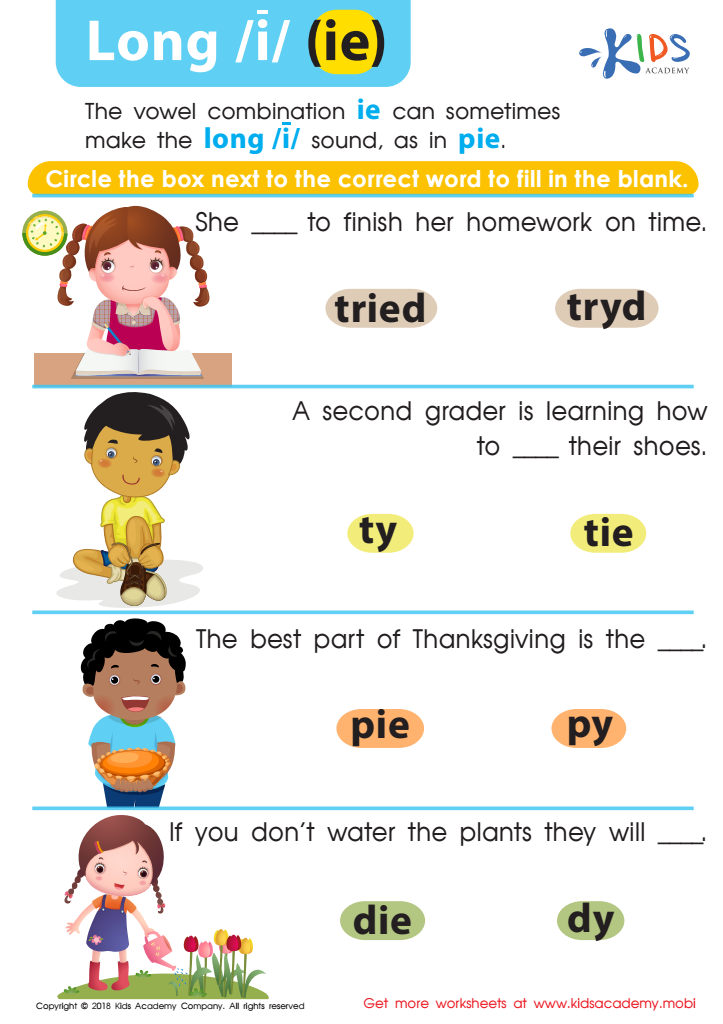
Reading: Long I and IE Worksheet
 Assign to My Students
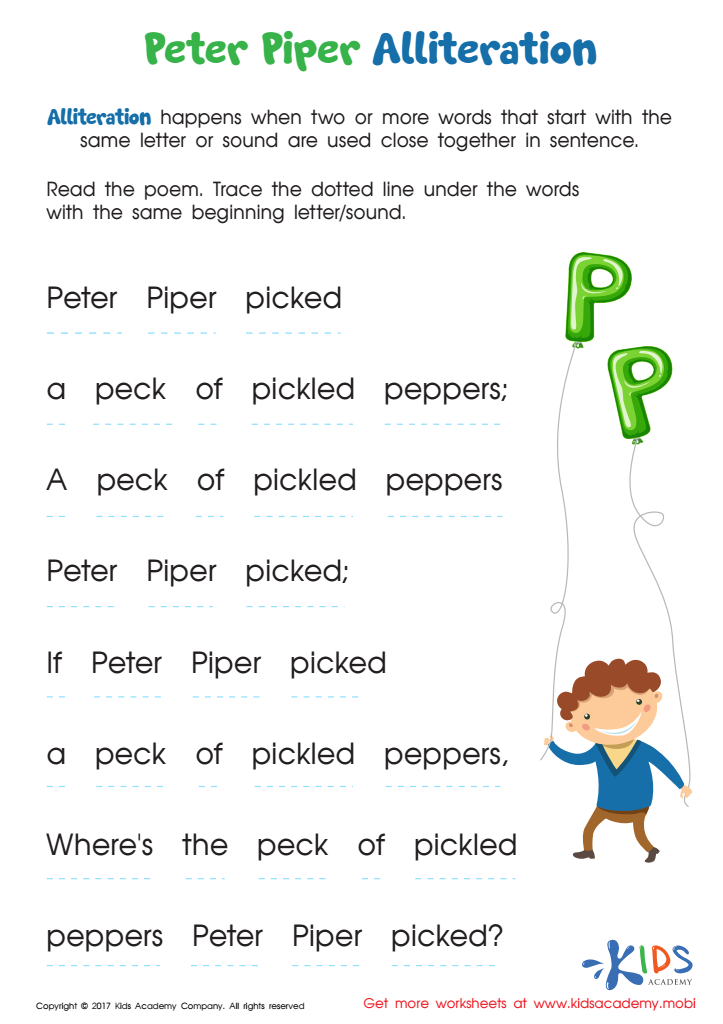
Peter Piper Alliteration Worksheet
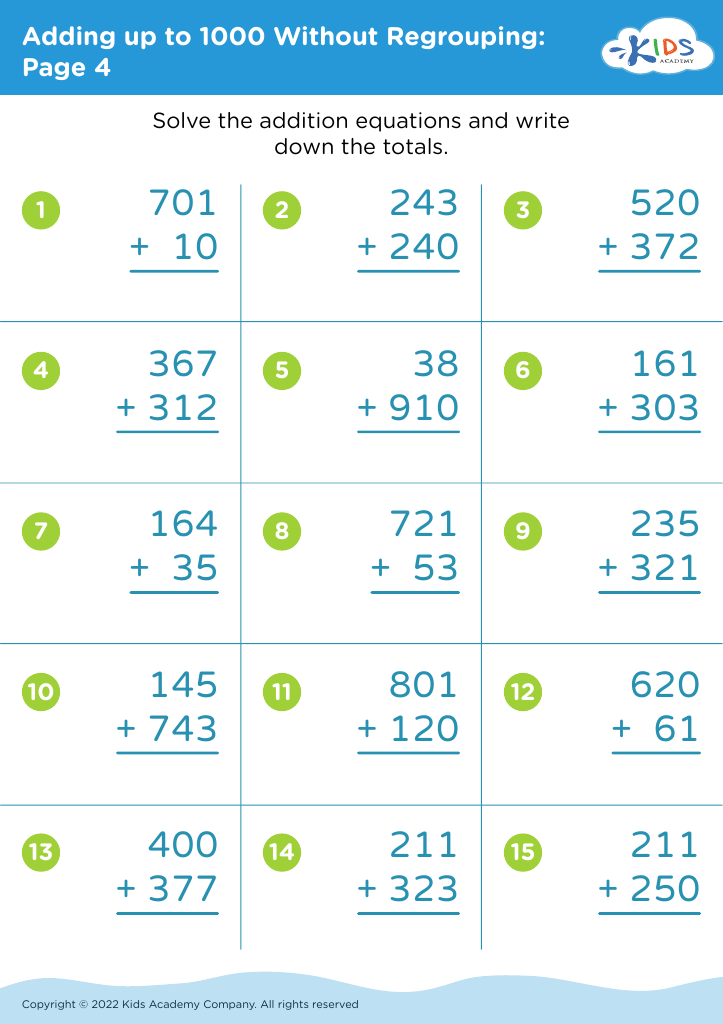



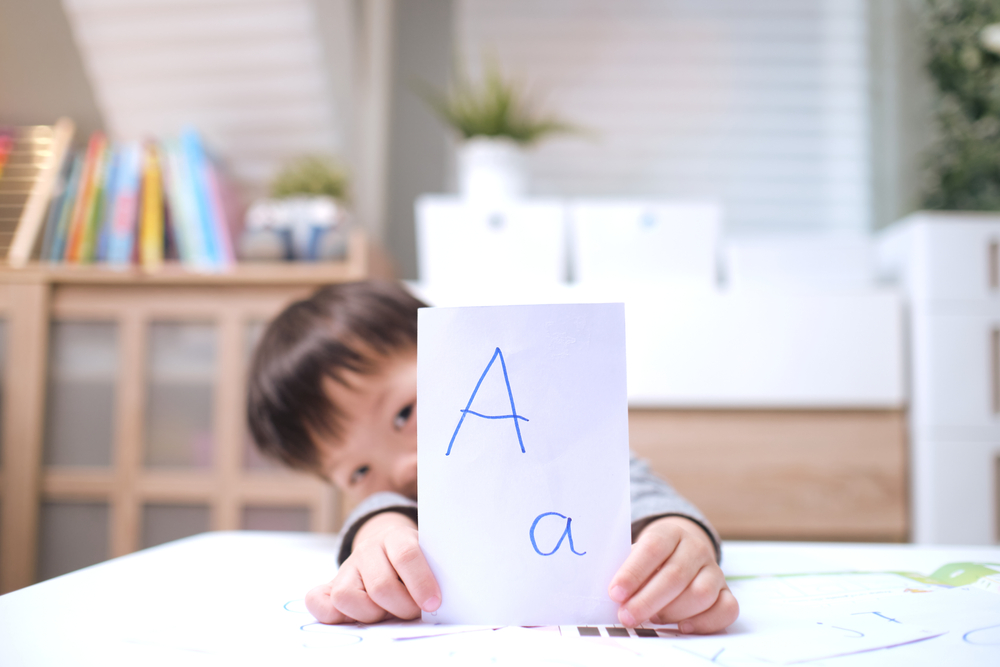
.jpg)

Pronunciation practice is crucial for children aged 5-8 as it lays the foundation for effective communication and literacy development. At this early age, children's brains are especially capable of picking up sounds and language patterns, making it an optimal time for them to learn proper pronunciation. Clear pronunciation not only enhances their ability to be understood by others, but it also boosts their confidence in speaking.
Practicing pronunciation helps in phonic awareness, improving reading skills as children begin to decode words more effectively. When children articulate sounds correctly, they become more proficient in recognizing and manipulating language, which is essential for their overall literacy growth. Additionally, good pronunciation fosters social skills, enabling kids to create relationships through better verbal interactions. Teachers and parents play a pivotal role in modeling and guiding these practices, ensuring that children hear and use language effectively.
In a world increasingly driven by communication, competency in pronunciation is a vital life skill, impacting academic performance and social interactions. By prioritizing pronunciation practice, parents and teachers ultimately pave the way for children's success in language acquisition and overall cognitive development. It’s an investment in their future as confident, articulate communicators.








