Recognizing Patterns Worksheets for Ages 5-8 - Page 2
35 filtered results
-
From - To
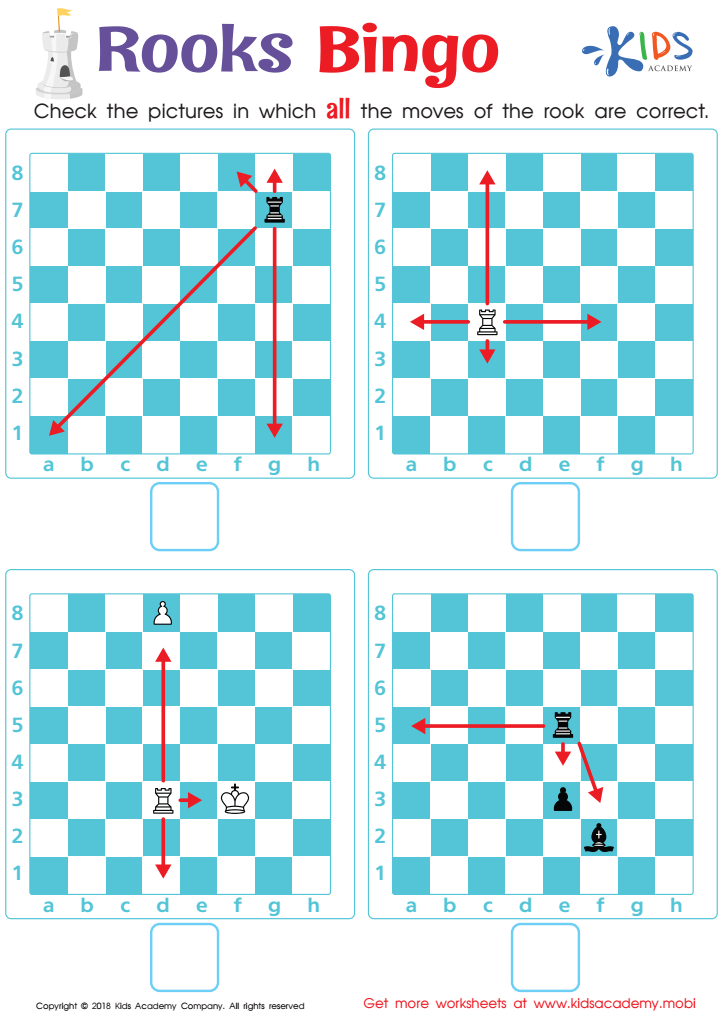
Rooks Bingo Worksheet





.jpg)

Recognizing patterns plays a fundamental role in early childhood development for children ages 5-8. Patterns are foundational in helping young learners understand and predict the world around them, enhancing their cognitive development and reasoning skills. When parents and teachers focus on pattern recognition, they help cultivate critical thinking, problem-solving, and analytical abilities.
In mathematics, recognizing patterns assists children in understanding numbers, structures, and the concept of sequencing. It lays the groundwork for more complex mathematical concepts such as addition, subtraction, multiplication, and division. Beyond math, pattern recognition aids in reading skills. Understanding patterns in words and sentences helps with decoding words, improving fluency and comprehension.
Moreover, pattern recognition is not limited to academics. It pervades daily activities, fostering organizational skills and time management. For instance, routines and schedules are patterns. Children who grasp these patterns can manage their tasks more efficiently, knowing what to expect next.
Lastly, recognizing patterns nurtures creativity and innovation. When children identify and predict patterns, they often explore creating their own in arts, music, and storytelling, ensuring a well-rounded, balanced development. Therefore, parents and teachers’ focus on these skills is crucial for nurturing intelligent, adaptive, and imaginative minds.








