Sequencing numbers Worksheets for Ages 5-8
3 filtered results
-
From - To
Welcome to our Sequencing Numbers Worksheets, specially designed for children ages 5-8! These engaging and interactive worksheets help young learners develop essential number sequencing skills crucial for early math success. Our carefully crafted activities encourage kids to arrange numbers in order, enhancing their understanding of numerical patterns and boosting confidence in problem-solving. Perfect for homeschooling or classroom use, these worksheets offer a fun and effective way to practice sequencing through vibrant illustrations and interactive exercises. Let your child explore the world of numbers while nurturing their critical thinking abilities. Download our worksheets today and watch them thrive in their mathematical journey!
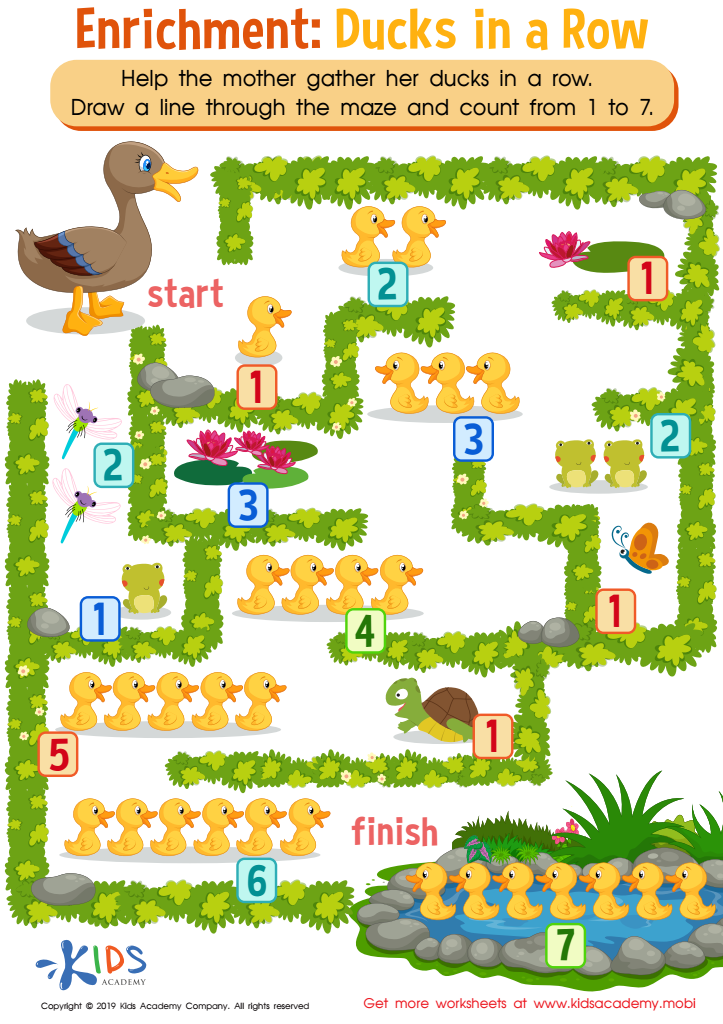
Ducks in a Row Worksheet
 Assign to My Students
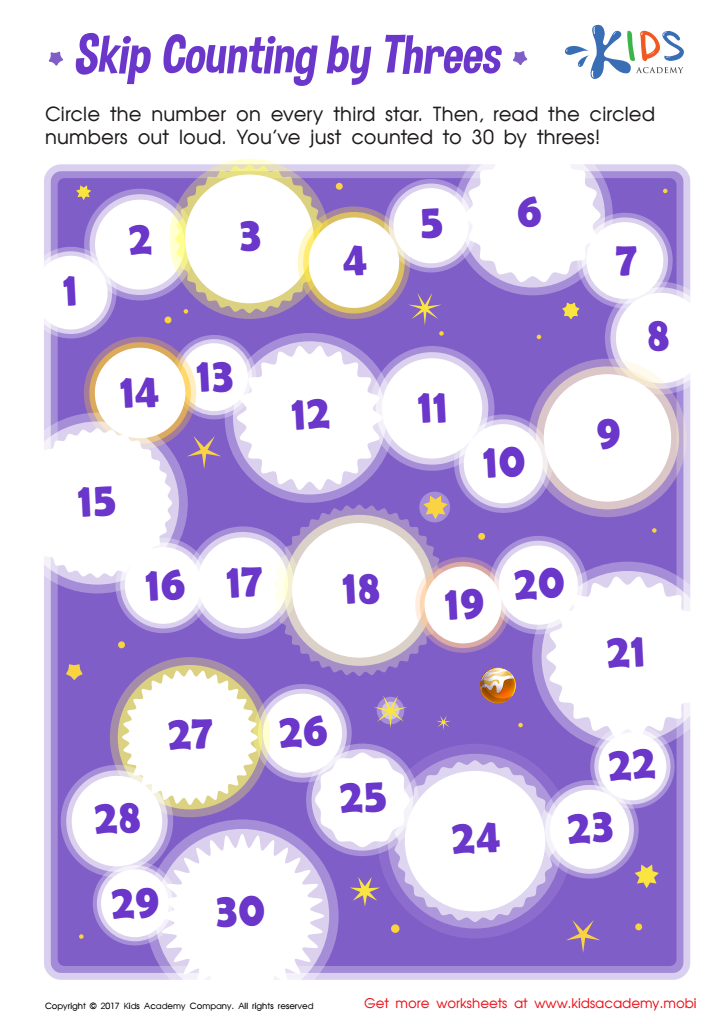
Skip Counting By Three Printable
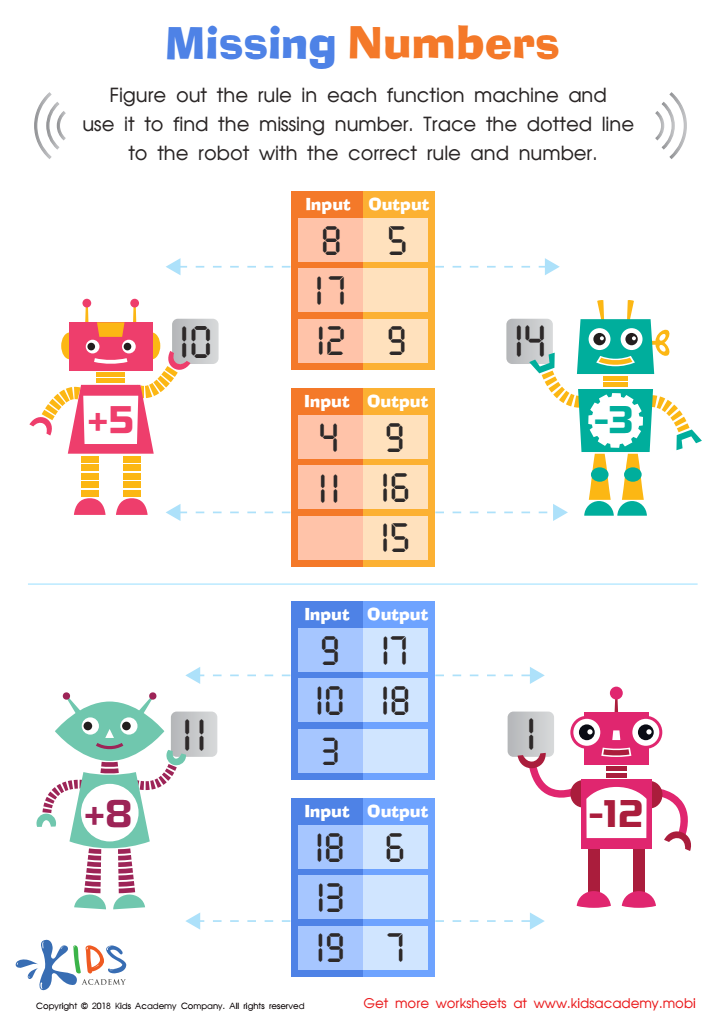
Missing Numbers Worksheet








Sequencing numbers is a fundamental skill for children aged 5-8 that significantly impacts their cognitive development and mathematical understanding. At this age, children are beginning to grasp basic numerical concepts, and sequencing helps them understand the order and relationships between numbers. It lays the groundwork for more complex math skills, such as addition, subtraction, and even future concepts like multiplication.
Understanding how to sequence numbers also enhances critical thinking and problem-solving skills. Children learn to recognize patterns, which can boost their ability to make predictions and understand consequences—essential skills in both math and everyday life. Sequencing encourages children to organize their thoughts logically, a practice that is useful across subjects.
Moreover, when parents and teachers emphasize sequencing, they provide a framework for children to develop a sense of time and sequence in storytelling, scientific processes, and historical events. Engaging in number sequencing activities can be both fun and educational, often involving games or interactive exercises that capture children's interest.
Investing time in teaching numbers sequencing helps establish a strong foundation for a child's educational journey, equipping them with necessary skills for higher-level math and enhancing their overall cognitive competency. Ultimately, parents and teachers play a crucial role in fostering these foundational skills.








