Shape comparison Worksheets for Ages 5-8
4 filtered results
-
From - To
Explore our engaging Shape Comparison Worksheets designed for children ages 5-8! These worksheets provide a fun and interactive way for young learners to develop their understanding of shapes through comparison activities. With colorful visuals and diverse exercises, kids will learn to identify, compare, and contrast various shapes, enhancing their observational skills and critical thinking. Perfect for both classroom and at-home learning, our resources help reinforce geometric concepts while fostering creativity and problem-solving abilities. Download these worksheets today to make shape comparison an enjoyable adventure for your little ones! Challenge their understanding and enjoy the learning process together!
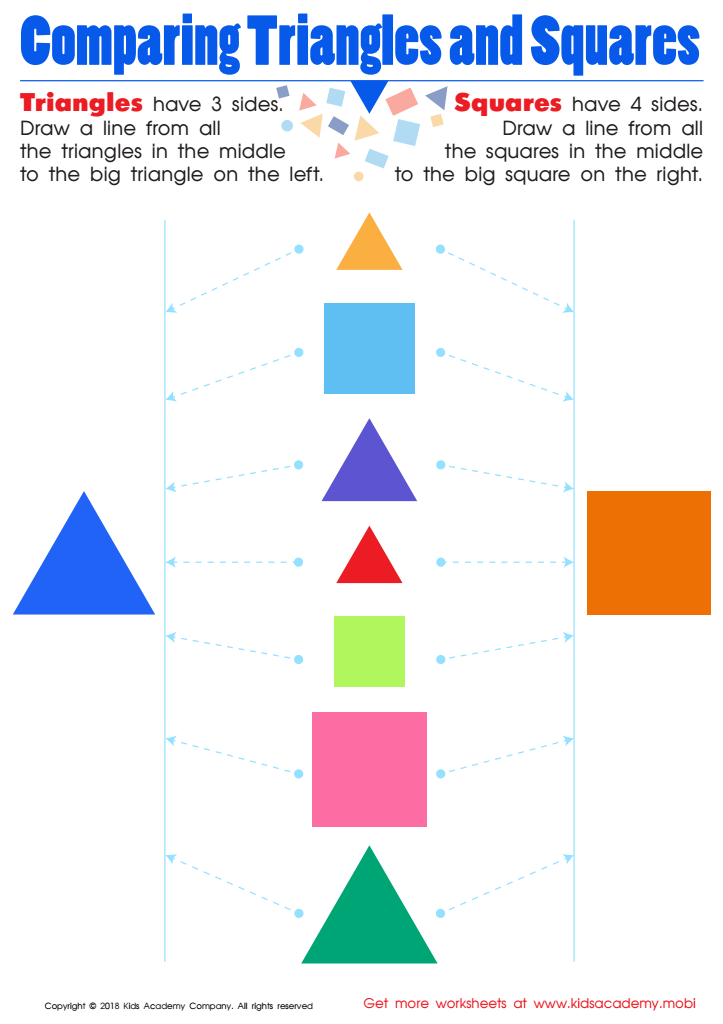
Comparing Triangles Squares Worksheet
 Assign to My Students
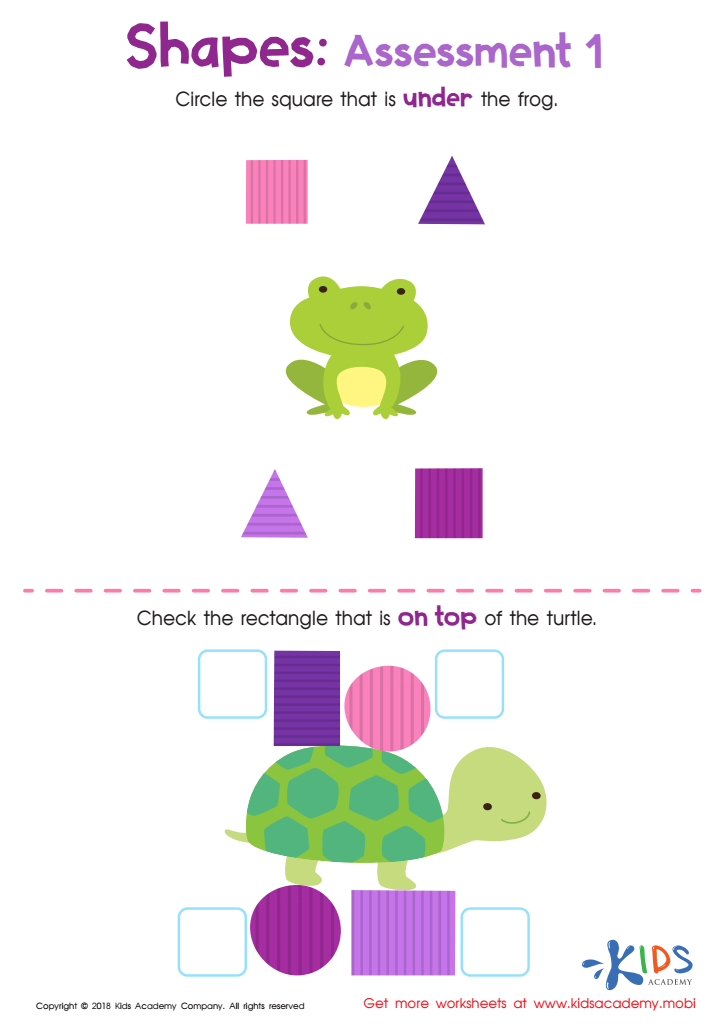
Geometry – Assessment 1 Worksheet
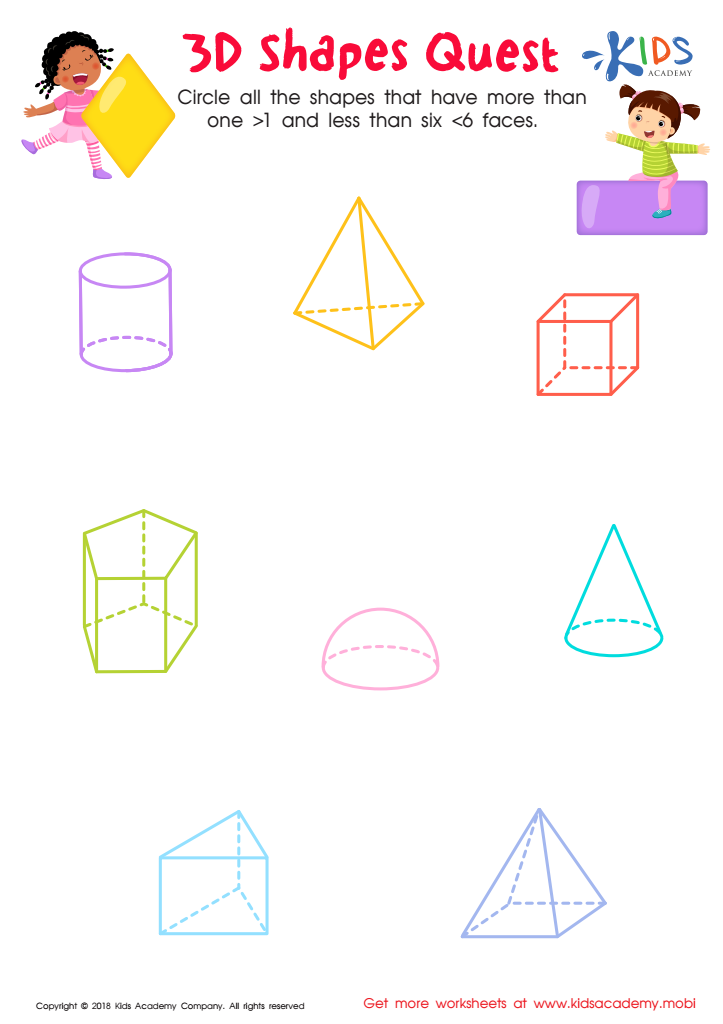
3D Shapes Quest Worksheet
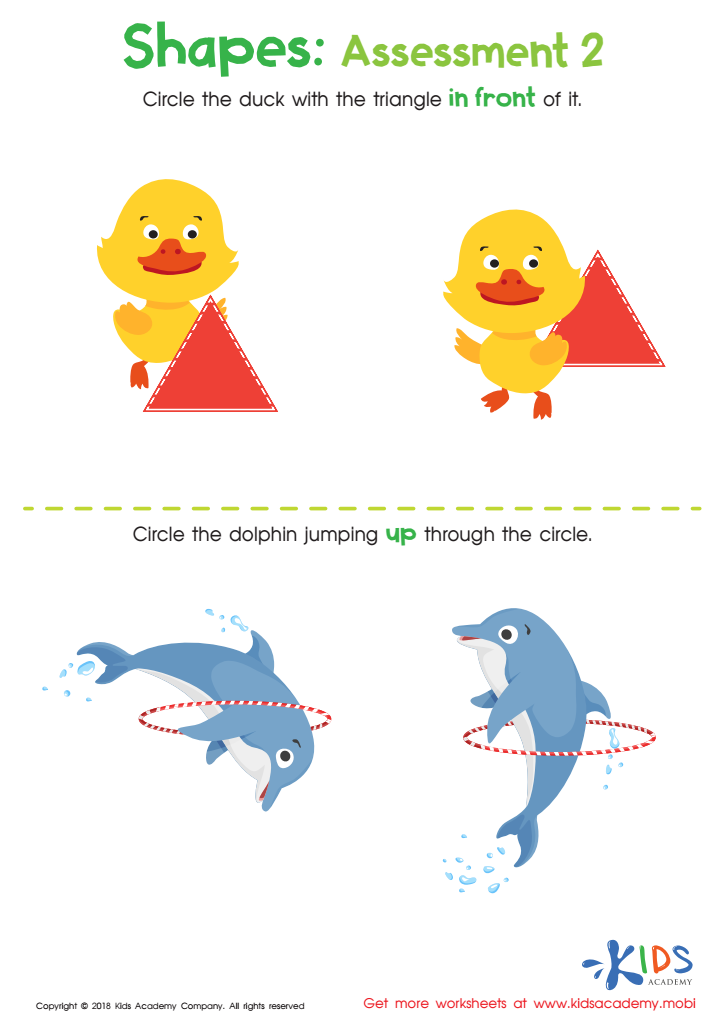
Geometry – Assessment 2 Worksheet








Shape comparison is a crucial competency for children aged 5-8, and parents and teachers should prioritize it for several reasons. First, understanding shapes and their attributes is foundational for mathematical skills. By comparing shapes based on size, number of sides, or angles, children develop critical thinking and analytical skills essential for problem-solving in mathematics and beyond.
Additionally, shape comparison fosters cognitive development. As children distinguish between different geometric shapes, they enhance their spatial awareness, which is vital for later skills in reading maps, engaging in construction activities, and understanding more complex mathematical concepts, such as fractions and geometry.
Moreover, discussing shapes encourages language development. Children learn to articulate their observations and comparisons, enriching their vocabulary and communication skills. This is particularly important in early education, as effective communication forms the basis for collaboration and learning in group settings.
Finally, introducing shape comparison in a fun and engaging way—through games, puzzles, or hands-on activities—can instill a love for learning in children. This enjoyable approach not only supports their mathematical development but also nurtures curiosity and creativity, setting the stage for lifelong learning. Hence, parents and teachers should actively engage children in shape comparison activities for their holistic growth and development.








