
Sound discrimination Worksheets for Ages 5-8
4 filtered results
Difficulty Level
Grade
Age
-
From - To
Subject
Activity
Standards
Enhance your child's auditory skills with our Sound Discrimination Worksheets, designed specifically for ages 5-8. These engaging worksheets help children develop their ability to differentiate between various sounds, a crucial skill for reading and language development. Activities include listening exercises, sound matching, and identification tasks, fostering foundational literacy skills in a fun and interactive way. Perfect for home or classroom use, our worksheets encourage critical thinking and listening skills essential for early learners. Explore our diverse range of sound discrimination activities to support your child’s educational journey and boost their confidence in recognizing and interpreting different sounds effectively!
Favorites
With answer key
Interactive
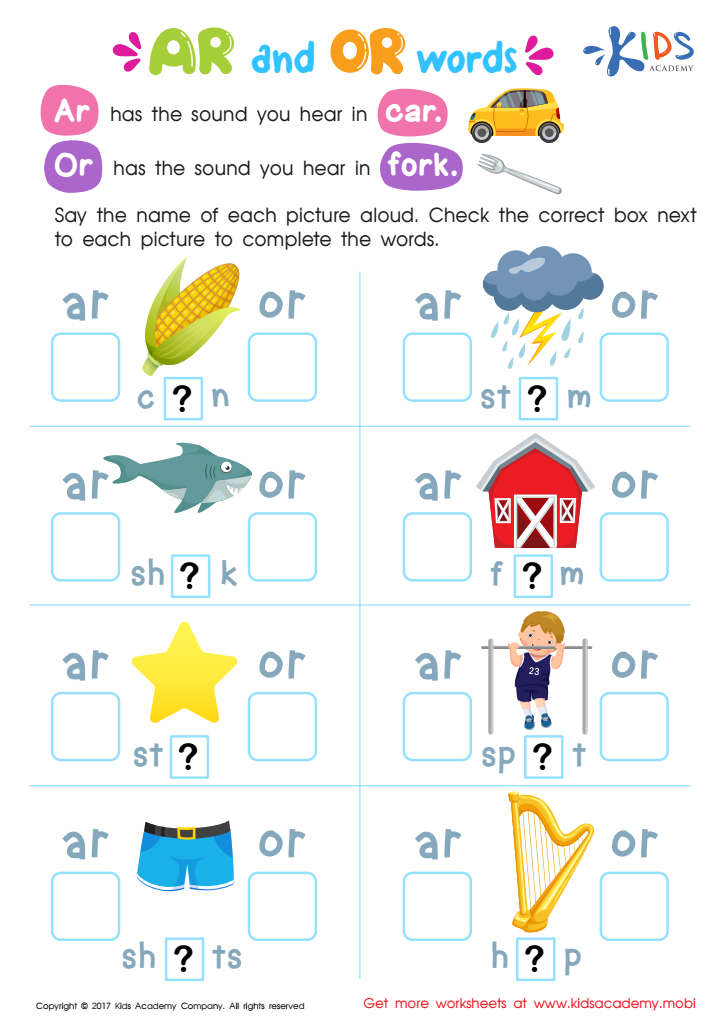
Ar and Or Words Phonics Worksheet
Master the distinct digraphs 'ar' and 'or' with this fun phonics worksheet from Kids Academy! With meaningful illustrations, it'll guide your child to choose the right one. Get ready for the great results!
 Assign to My Students
Ar and Or Words Phonics Worksheet
Worksheet
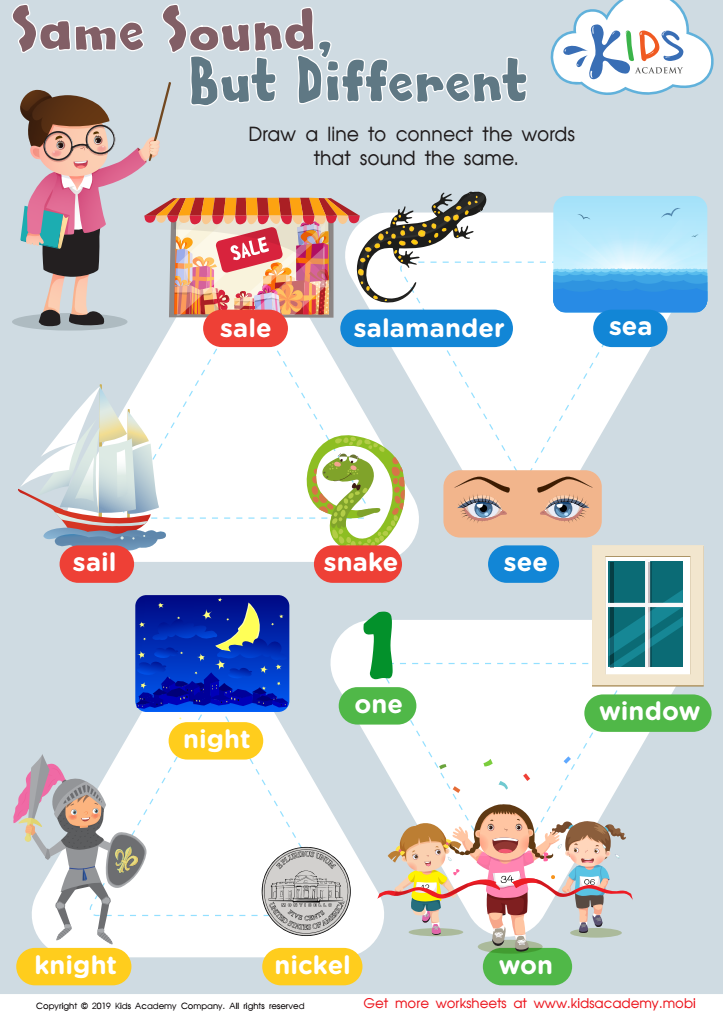
Sound Different Worksheet
Homophones can be tricky for new readers and writers. This PDF worksheet helps kids understand the differences using pictures. It asks them to draw lines to connect the homophones and provides concrete imagery for reference. It's a great way to learn the right definition and spelling of words that sound the same.
Sound Different Worksheet
Worksheet
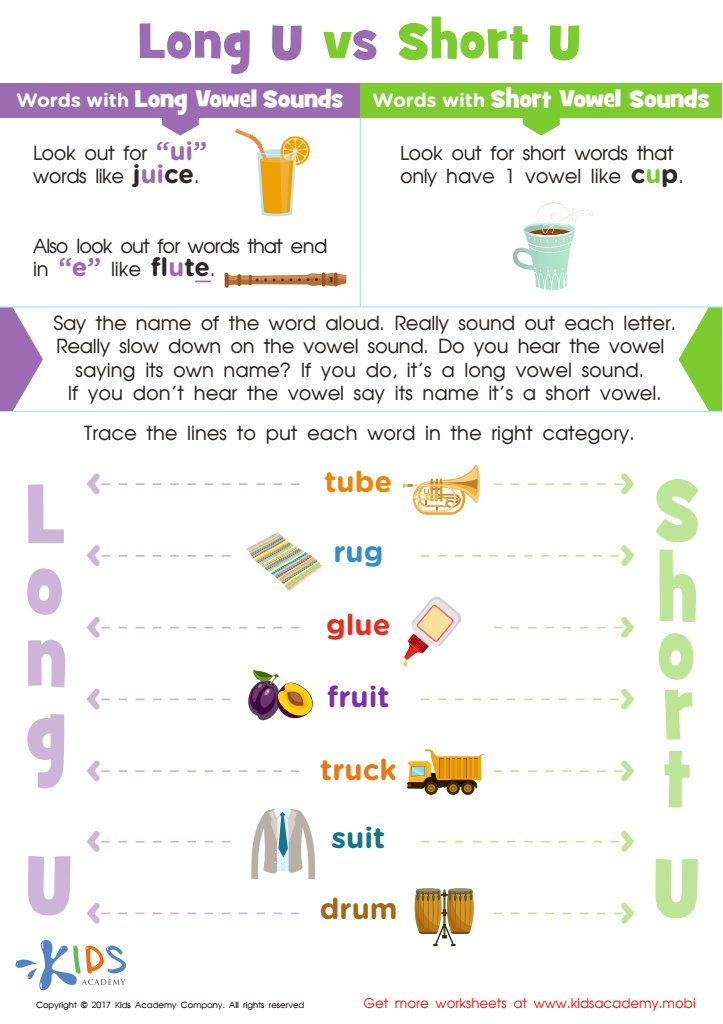
Long and Short Vowel U Spelling Worksheet
Help your child learn long and short vowel sounds with this fun long and short vowel U worksheet! Kids can become proficient spellers by mastering simple spelling tricks and sounding out letters.
Long and Short Vowel U Spelling Worksheet
Worksheet
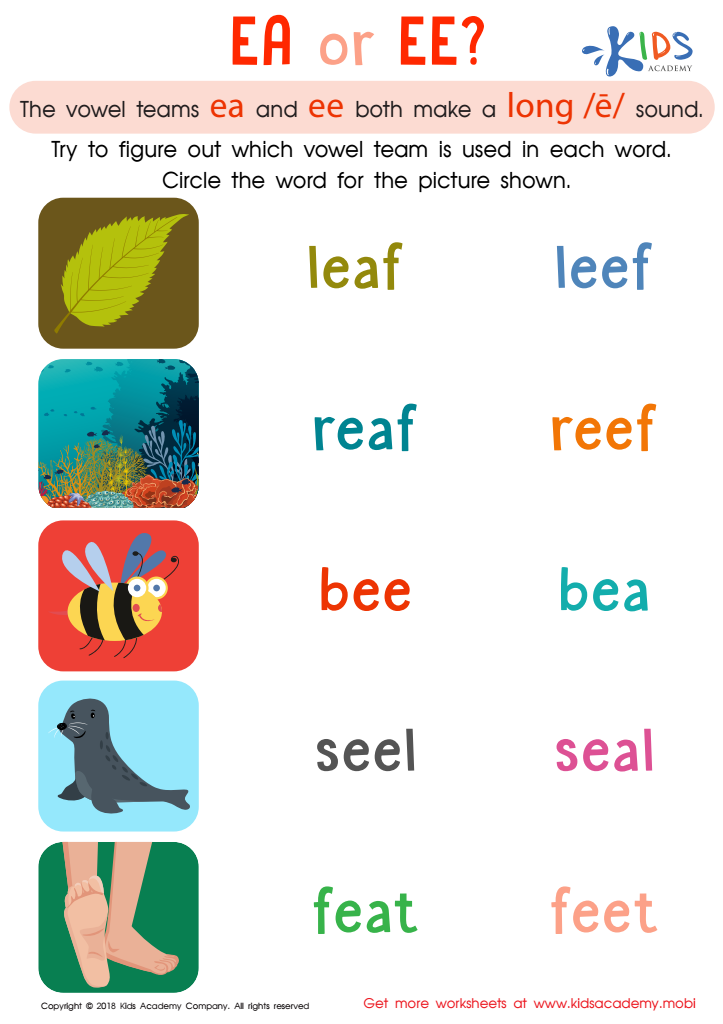
Reading: EA and EE Worksheet
Confused by the long E sound's varying spellings? Give students practice with this printable. It will improve their reading and spelling skills by helping them identify the correct spellings for words with the /ee/ and /ea/ vowel teams. Clear up the confusion and sharpen their skills.
Reading: EA and EE Worksheet
Worksheet
Join Kids Academy for Free
Who is primarily going to use this learning content?






Sound discrimination, the ability to differentiate between different sounds, is crucial for children aged 5-8 as it lays the foundation for phonemic awareness, a key component of reading and language skills. During these formative years, children are developing their language, literacy, and communication abilities. When parents and teachers prioritize sound discrimination, they actively contribute to a child’s ability to recognize, differentiate, and manipulate sounds in words, which is essential for reading fluency and comprehension.
Improved sound discrimination helps children recognize the individual phonemes within words, crucial for phonics and spelling. As children become adept at distinguishing sounds, they enhance their vocabulary, pronunciation, and overall language development. This skill is also important for listening comprehension; as children become better listeners, they can follow directions and engage more deeply in discussions.
Additionally, sound discrimination can have emotional and social benefits. When children feel confident in their ability to communicate, they are more likely to participate in classroom activities and collaborate with peers. This fosters social connections and reduces anxiety around language use. Ultimately, sound discrimination is vital for academic achievement, social skills, and building a strong foundation for lifelong learning, making it a priority for parents and educators alike.








