Sound-letter correlation Worksheets for Ages 5-8
4 filtered results
-
From - To
Unlock your child's reading potential with our engaging Sound-Letter Correlation Worksheets designed for ages 5 to 8! These worksheets focus on helping young learners associate sounds with their corresponding letters, a crucial skill in literacy development. Packed with fun activities, matching exercises, and visual aids, our resources make learning enjoyable and effective. Carefully crafted to cater to different learning styles, these worksheets foster phonemic awareness and boost confidence in early readers. Perfect for parents and teachers alike, our sound-letter correlation activities encourage practice at home or in the classroom. Explore our collection today and watch your child thrive!
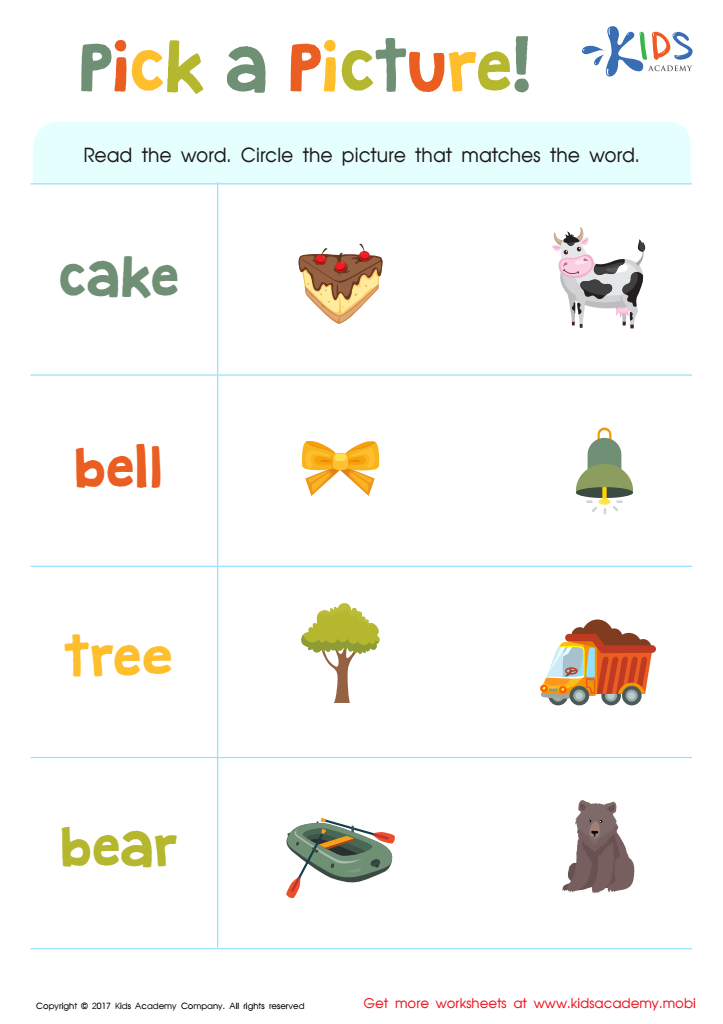
Pick a Picture Word Recognition Worksheet
 Assign to My Students
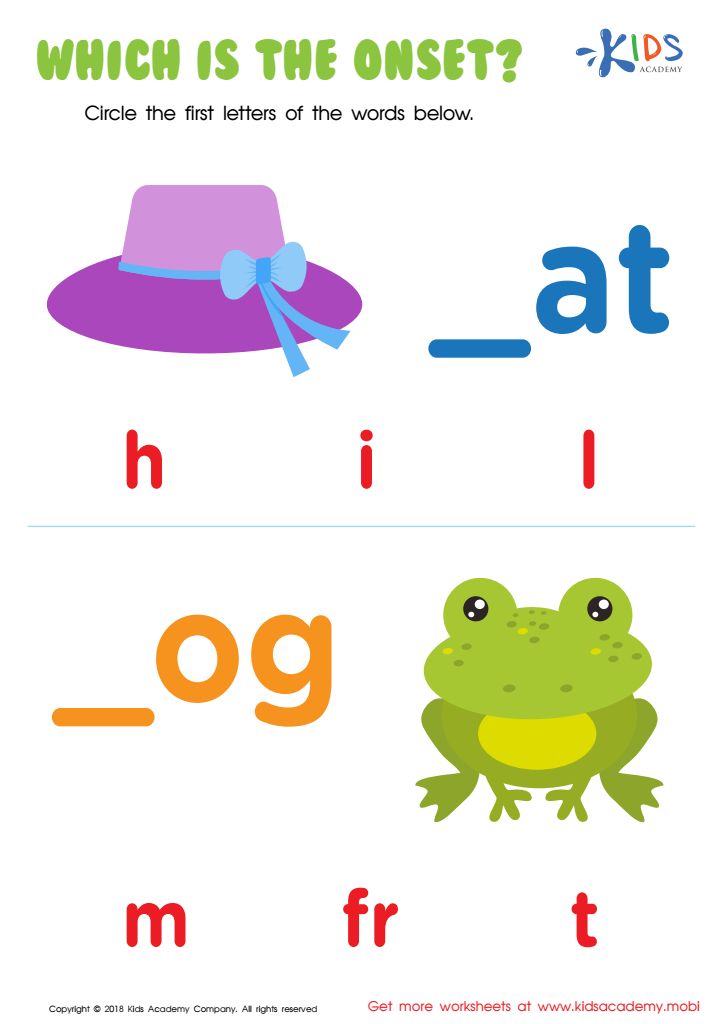
Which Is the Onset? Worksheet
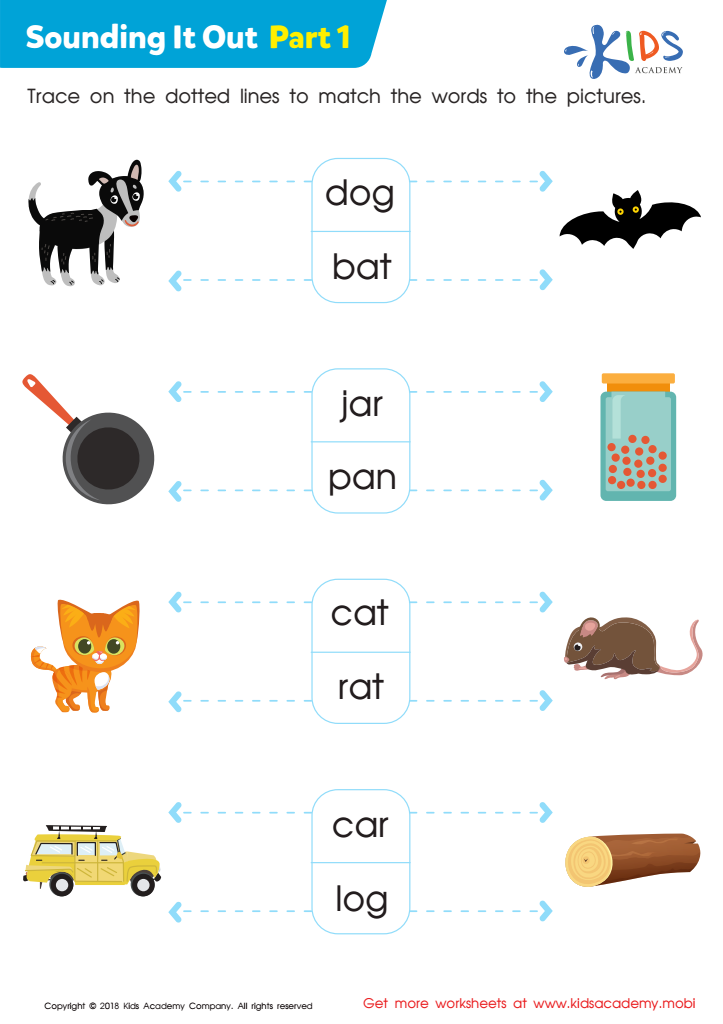
Sounding it Out: Part 1 Worksheet
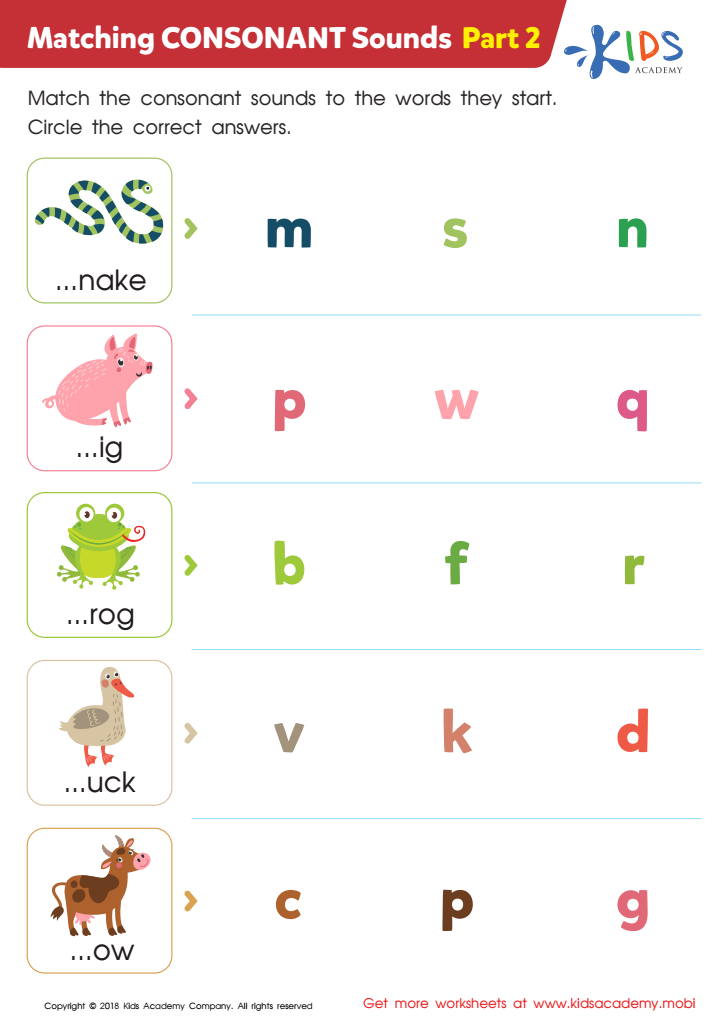
Matching Consonant Sounds: Part 2 Worksheet








Sound-letter correlation, or phonics, is crucial for children ages 5-8 as it establishes the foundation for reading and writing skills. Teaching children the relationships between sounds and their corresponding letters or letter combinations nurtures early literacy development, enabling them to decode new words independently. This ability significantly boosts a child’s confidence and motivation to engage with texts, fostering a love for reading that can last a lifetime.
Moreover, understanding sound-letter correlation enhances spelling skills. When children grasp how sounds correspond to letters, they can better predict and construct words, reducing frustration in writing tasks. This skill is particularly critical in the early grades, where students often transition from learning to read to reading to learn.
Parents and teachers play a vital role in reinforcing sound-letter correlations through engaging activities and consistent practice. By doing so, they encourage cognitive development and critical thinking, as children learn not just to read but also to comprehend and derive meaning from texts. In essence, prioritizing sound-letter correlations supports overall academic success and paves the way for proficient literacy—the cornerstone of education—enabling children to access knowledge and partake fully in their learning experiences.








