Time calculation skills Worksheets for Ages 5-8
3 filtered results
-
From - To
Boost your child's confidence with our engaging Time Calculation Skills Worksheets, designed for kids ages 5-8! Our expertly crafted worksheets help young learners master reading clocks, understanding AM and PM, and performing simple time calculations. Each activity is colorful, fun, and educational, ensuring that children stay motivated while practicing essential time-telling skills. Parents and teachers will appreciate the structured, easy-to-follow format that promotes independent learning. Perfect for use at home or in the classroom, these worksheets provide a solid foundation in time management, setting your child up for success in their early academic journey.
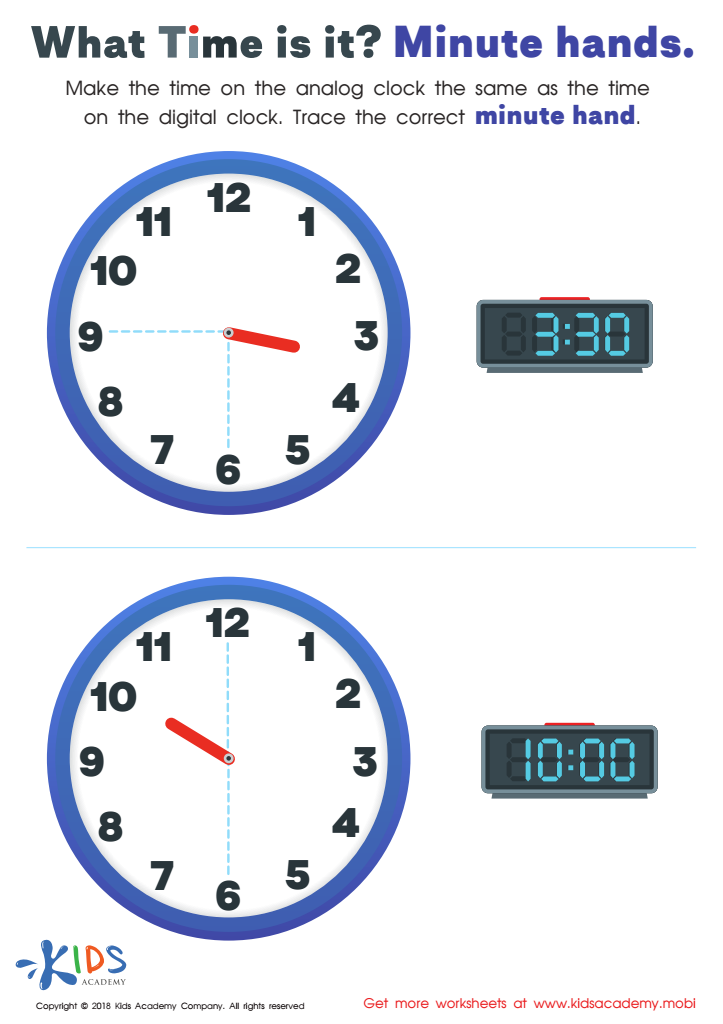
What Time Is it? Minute Hands Worksheet
 Assign to My Students
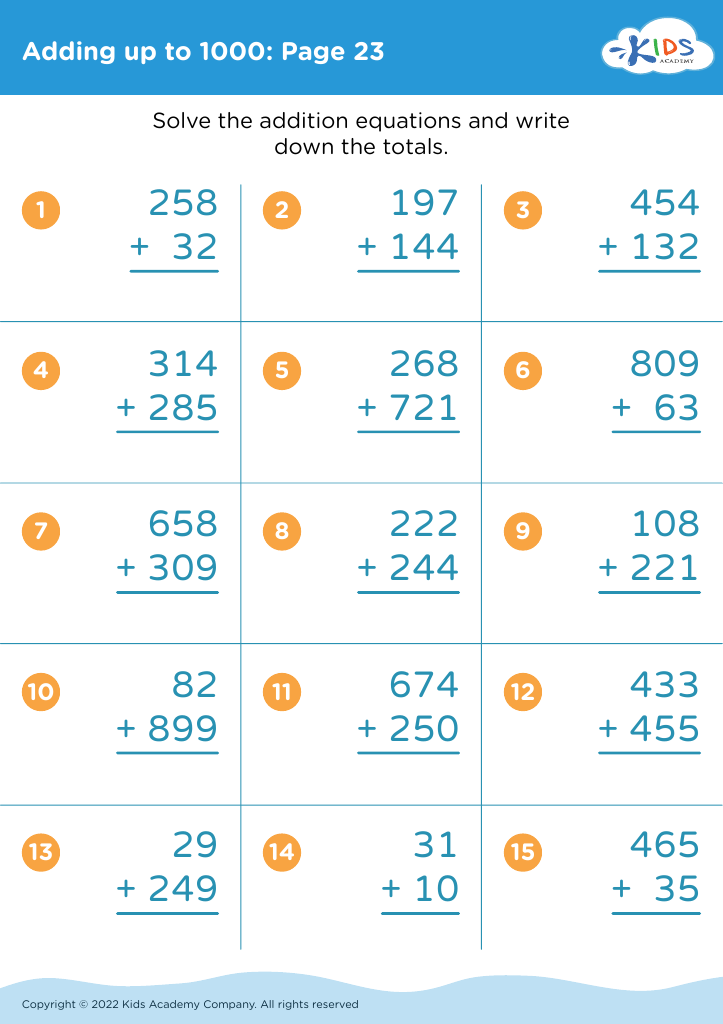
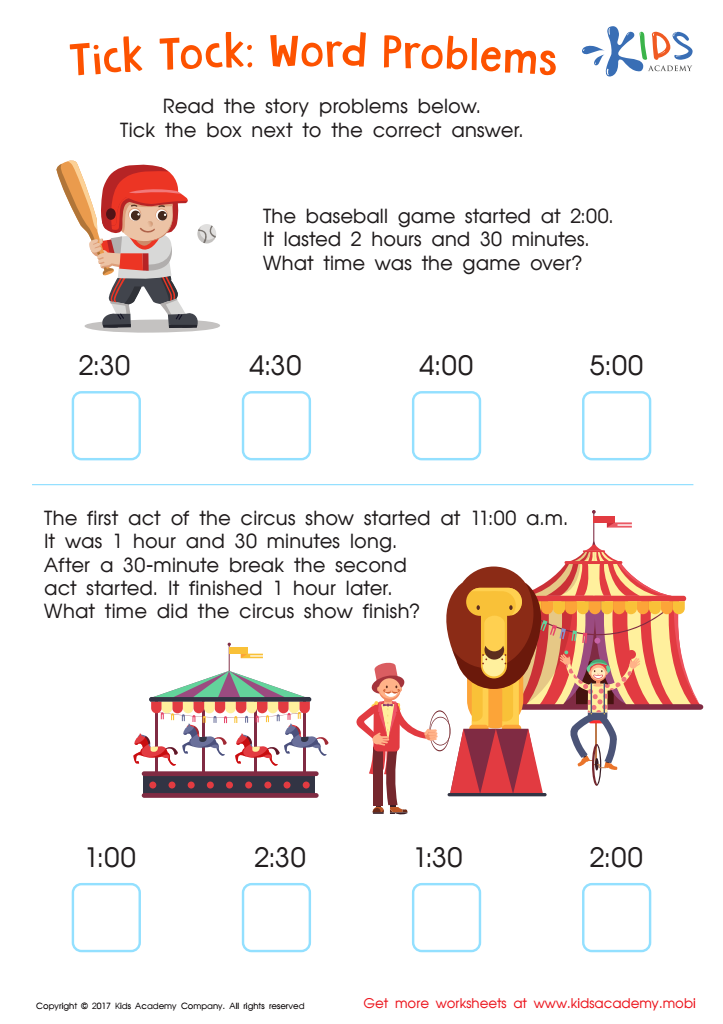
Tick Tock Word Problems Time Worksheet








Parents and teachers should highly value the development of time calculation skills in children aged 5-8 because these skills are foundational for everyday life and future learning. During these early years, children begin to understand concepts of time such as hours, minutes, days, and weeks. Mastering these ideas helps them develop a sense of routine and enhances their ability to manage daily activities like getting ready for school, completing tasks, and participating in extracurricular activities.
Learning time calculations also strengthens mathematical thinking and problem-solving abilities. Concepts like addition and subtraction are embedded in time-telling as kids calculate intervals or understand sequences. This early exposure builds confidence and a positive attitude toward math, encouraging a lifelong comfort with numerical concepts.
Moreover, knowing how to tell time fosters independence and responsibility. When children grasp time management, they can take on small responsibilities, feel more self-sufficient, and understand the importance of punctuality.
Socially, time-telling aligns children with the schedules of those around them, promoting smooth social interactions and cooperative behavior in settings like school or family outings. Therefore, parents and teachers nurturing these skills during the ages of 5-8 lay down crucial blocks for overall developmental growth, academic success, and future life skills.








